Statistics
Pp / Ppk Calculator
Measure long-term process performance using overall standard deviation — and compare it to short-term capability to reveal instability, drift, and variation that only appears over time.
Was this useful?

Measure long-term process performance using overall standard deviation — and compare it to short-term capability to reveal instability, drift, and variation that only appears over time.
Use the overall (long-term) standard deviation — calculated from all measurements, not within subgroups.
Enter your specification limits, process mean, and overall standard deviation. Optionally add within-subgroup standard deviation to compare long-term vs short-term performance.
Watch: Pp vs Ppk Explained: Which Metric Really Matters
Fill weight spec 500g ±5g. Full production study with overall and within-subgroup variation. Enter the lab and compare Pp vs Ppk.
Use the calculator above to compute Pp and Ppk from long-term data — the overall standard deviation across all sources of variation. Comparing Ppk against Cpk reveals how much performance is lost to drift, shift and instability that only show up over time.
Pp and Ppk are long-term process performance indices. Pp compares spec width to total variation (overall standard deviation, including drift and shift). Ppk additionally accounts for centring. Unlike Cp / Cpk, which represent the capability of a stable process, Pp / Ppk represent what is actually being delivered.
Pp = (USL − LSL) ÷ (6σ_overall). Ppk = min((USL − x̄) ÷ (3σ_overall), (x̄ − LSL) ÷ (3σ_overall)). σ_overall is the standard deviation of all data combined, not the within-subgroup σ used for Cp / Cpk. Ppk is always ≤ Cpk; the gap quantifies the cost of long-term instability.
A process shows Cpk of 1.5 (short-term capability) but Ppk of 0.9 (long-term performance). The Cpk says the process is theoretically capable; the Ppk says it isn’t delivering — drift, operator effects and tool wear are eating the headroom.
Closing the Cpk-vs-Ppk gap by addressing the special causes of drift recovers the headroom without any equipment investment. That is why Pp / Ppk are essential for honest long-term performance reporting — Cpk alone is too optimistic.
Pp / Ppk expose the gap between potential and actual performance. Where Cpk is healthy but Ppk is poor, the issue is drift and instability rather than fundamental capability — a very different improvement plan.
Use Pp / Ppk for long-term reporting, PPAP submissions, supplier scorecards, and any time you need an honest performance figure rather than a best-case capability figure.
Ppk = 1.0 corresponds to about 3σ long-term; Ppk = 1.33 to 4σ; Ppk = 1.5 to ~4.5σ; Ppk = 2.0 to 6σ. Long-term Ppk maps to the conventional Six Sigma scale (which assumes a 1.5σ long-term shift).
If Cpk is much higher than Ppk, attack the sources of drift — tool wear, operator differences, raw material variation, environmental changes. Chart the data with control charts to separate special-cause from common-cause variation.
Pair Pp / Ppk with Cp / Cpk, control charts and Measurement System Analysis for a complete picture of long-term performance.
Cp / Cpk use short-term within-subgroup variation and represent potential capability. Pp / Ppk use long-term overall variation and represent actual performance. Ppk is always ≤ Cpk.
1.33 is the common minimum for non-critical features. 1.67 for critical features. 2.0 corresponds to long-term 6σ. Anything below 1.0 means defects are being produced regularly.
Because Pp / Ppk capture long-term drift, shift and instability that the within-subgroup Cp / Cpk calculation excludes. The gap is a measure of how unstable the process is.
Use Cp / Cpk for initial qualification on a stable, in-control short sample. Use Pp / Ppk for long-term performance reporting and supplier scorecards.
Generally at least 30 sub-groups (around 100-125 measurements) spread over a representative production window — long enough to capture real long-term variation, not just one shift.
Want to understand the difference between Pp/Ppk and Cp/Cpk and when each applies? The Green Belt covers this in full.
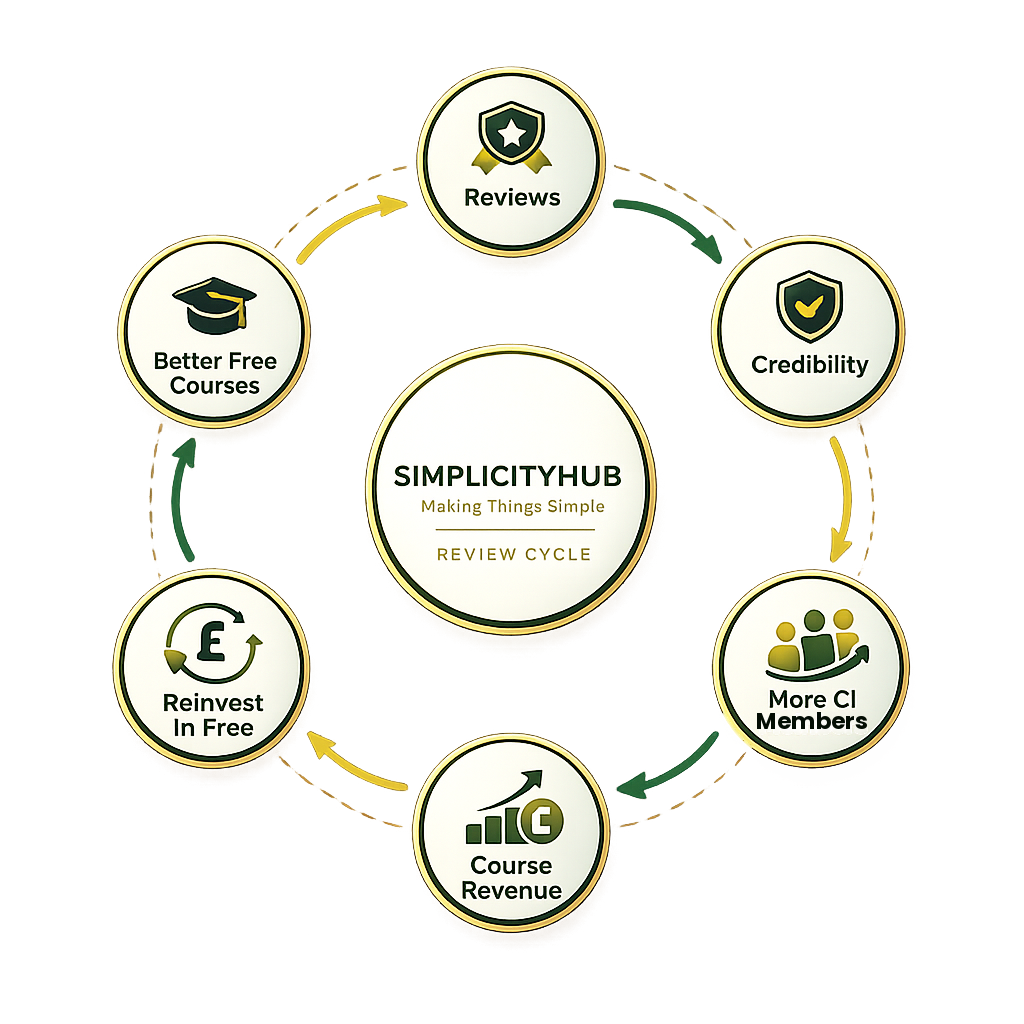
View Green Belt →Free courses take time and money to create. Your review gives us credibility, brings in more learners, and we plough that revenue straight back into free resources.