Team Charter Template
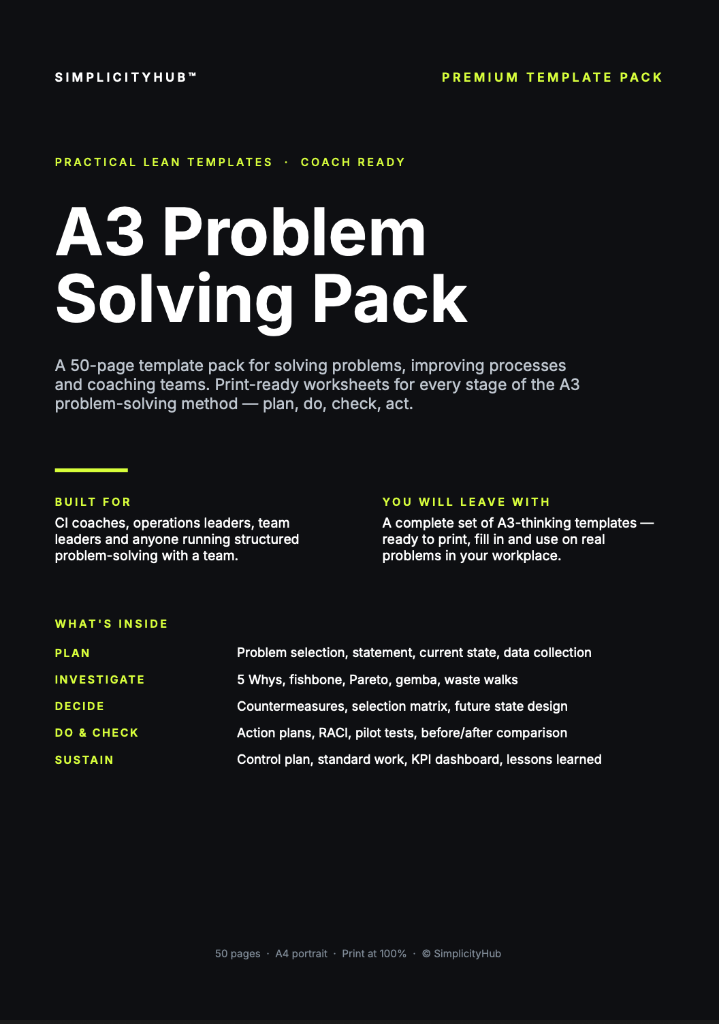
Align your team on purpose, scope, roles and ground rules before the project gathers pace.


What is a Team Charter Template?
A Team Charter Template is a document that establishes the shared operating principles, roles, communication norms and decision-making approach for a project or improvement team.
When to use a Team Charter Template
Use it at project kick-off, immediately after the Project Charter is signed. A one-hour team session to complete it pays back many times over in avoided conflict and confusion.
Who should use a Team Charter Template
- Black Belts and Green Belts — establishing team norms and operating principles at project kick-off
- Project leads and facilitators — creating alignment across a multi-functional project team before work begins
- Team leaders — setting expectations and working agreements for newly formed operational teams
- Sponsors — reviewing and endorsing the team's operating principles to signal their importance
Vote yes and we’ll prioritise a quick walkthrough showing you exactly how to use it.
How to use a Team Charter — step by step
-
1Write the problem statement at the top
Start with a clear, factual problem statement. 'Machine stopped' or 'Customer received wrong item' — specific, observable, factual. Vague problems produce vague root causes.
-
2Ask 'Why did this happen?' — Why 1
Write down the first-level cause. This is usually a symptom or a direct cause — not yet the root. Examples: 'Machine overheated', 'Wrong item was picked'.
-
3Ask 'Why did that happen?' — Why 2
Challenge the previous answer. Keep the team focused on causes, not blame. If the answer is 'human error', push further — why did the human make the error?
-
4Continue to Why 3, 4 and 5
Keep going until you reach a cause that is systemic — a missing process, a failed control, a gap in training or a design flaw. The number five is a guide, not a rule.
-
5Check the logic by reading upward
Read the chain back to front: 'Because of X, Y happened, which caused Z.' If the logic holds, you have a valid chain. If it breaks, revisit the step where it breaks.
-
6Identify the actionable root cause
The root cause is the deepest level where a corrective action can prevent recurrence. Document it clearly — this feeds your Improve phase solution design.
-
7Validate before acting
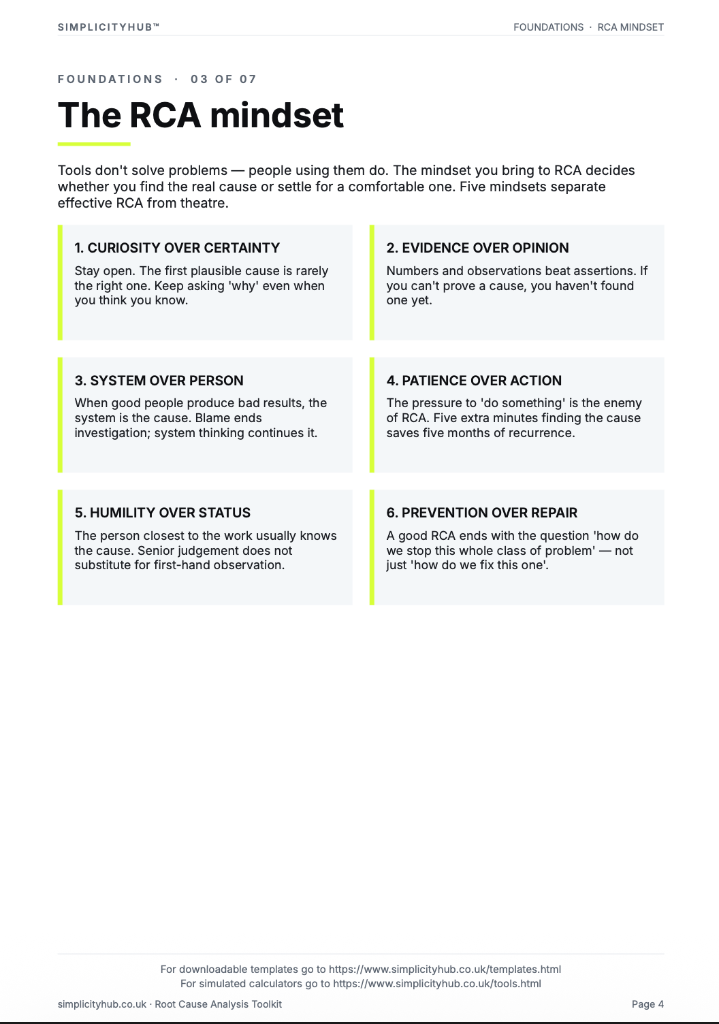
Do not jump to solution immediately. Check whether data or observation confirms the root cause is real and significant before committing resource to fixing it.
Worked example — Cross-Functional DMAIC Team
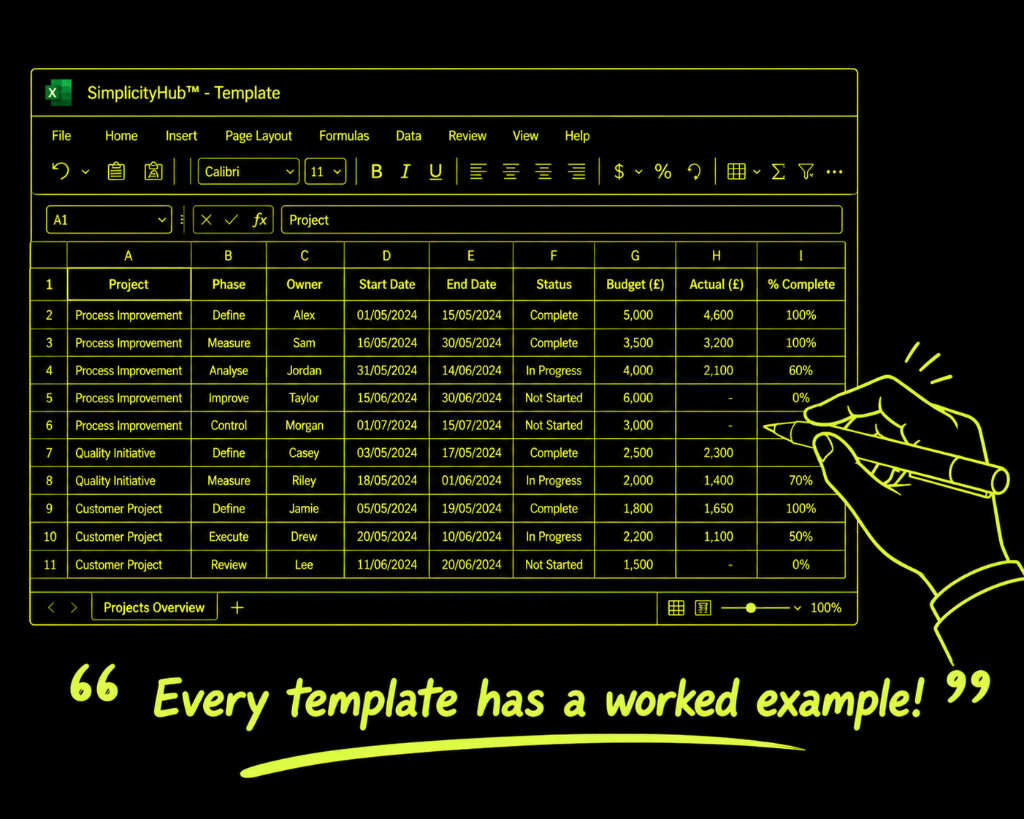
A 7-person DMAIC team spent 90 minutes at kick-off completing a Team Charter — agreeing decision-making norms, communication channels, meeting cadence and 6 ground rules. They referenced it three times during the project to resolve disagreements constructively.
Common mistakes — and how to avoid them
Completing it alone before the meeting. A Team Charter written by the project lead and presented to the team is not a Team Charter — it is a set of instructions. Build it together.
Too many ground rules. More than 8 ground rules become unenforceable. Focus on the 5–6 behaviours that matter most to this specific team and context.
Not revisiting it when problems arise. When a team conflict or communication breakdown occurs, go back to the charter. It was designed for exactly these moments.
Filing it away after kick-off. The charter only has value if the team can access it. Keep it visible — posted in the team's workspace or shared folder.
Tips for getting better results
Get every member to sign it. A physical signature creates a stronger commitment than just discussing and agreeing verbally. It is a small act with a meaningful psychological effect.
Revisit it when new members join. When team membership changes, update the charter with the new member involved. Don't assume they adopt existing norms automatically.
Use it to onboard the sponsor. Share the charter with the sponsor at kick-off. It gives them confidence the team is aligned and sets expectations about how they will be engaged.
Frequently asked questions
What is a team charter?
A team charter is a document that defines the team's purpose, membership, roles, decision-making processes, meeting cadence and ground rules. It creates alignment at the start of a project and gives the team a shared reference point when conflicts arise.
How is a team charter different from a project charter?
A project charter defines what the project will achieve — the problem, scope, goals and timeline. A team charter defines how the team will work together — roles, responsibilities and behaviours. Both are valuable; the project charter is for the sponsor, the team charter is for the team.
Who should complete the team charter?
The full project team should create it together in the first team meeting, facilitated by the project lead. This collaborative process builds ownership and ensures everyone genuinely agrees to the ways of working rather than just signing a document.