
What is a Project Charter?
A Project Charter is a short, structured document — typically one page — that defines everything a Lean Six Sigma project needs before it officially begins. It captures the problem, the goal, the scope, the team, the business case and the timeline in a single agreed document.
Think of it as the contract between the project team and the sponsor. Once it is signed off, everyone knows what they are working on, why it matters, and what is out of bounds. Without it, projects drift, scope expands and sponsors lose confidence.
The Project Charter is the first deliverable of the Define phase in DMAIC. It sets the direction for everything that follows — the data you collect in Measure, the root causes you explore in Analyse, and the solutions you test in Improve.
When to use a Project Charter
Use a Project Charter at the very start of any structured improvement project — before you begin collecting data or investigating causes. Specifically, you need one when:
- You are running a formal DMAIC project at Green Belt or Black Belt level
- A project requires cross-functional involvement and you need clear boundaries
- You need sponsor approval before committing time and resources
- The project will span several weeks or months and risks losing direction
- Multiple stakeholders need to agree on what success looks like
You do not need a full Project Charter for a quick Kaizen event. For smaller, contained improvements, a simpler A3 or problem statement is often enough.
How to get the most from this template
- Complete the problem statement before filling in anything else — a vague problem statement makes every other section harder
- Keep the scope section narrow: one process, one site, one team
- Get sign-off from the project sponsor before moving to the Measure phase
Common mistake: writing the business case after the project is already underway, which makes it harder to measure true impact.
Who should use it
- Green Belts and Black Belts — to structure and lead a DMAIC project
- CI Managers — to prioritise and scope improvement work across a portfolio
- Operations Managers — when sponsoring or commissioning a project
- Process Improvement Teams — when agreeing shared goals before starting work
- Lean Six Sigma students — practising the Define phase as part of training
Watch: a quick explainer
New to this? This short video walks you through writing a project charter that sets your project up to succeed — a helpful primer before you download and use the template.

How to complete the Project Charter
Work through each section in order. Do not skip ahead to the goal statement before you have nailed the problem statement — each section builds on the last. The sponsor should be in the room for this, not just sent the finished document to sign.
How to complete the Project Charter — step by step
-
1Write the problem statement
Describe the problem in factual terms — what is happening, where, how often, and the impact. Avoid causes and solutions at this stage. Use data where you have it.
Weak: "Our order process is inefficient." Strong: "Customer order lead time averaged 6.4 days in Q1 2026 against a 3-day target, causing a 14% increase in escalations."
-
2Write the goal statement
State the measurable improvement you are aiming for — same metric as the problem statement, but with a target figure and a target date. Use SMART format.
Example: "Reduce average order lead time from 6.4 days to 3.0 days by 30 September 2026, without increasing headcount."
-
3Define the project scope
List what is in scope and what is out of scope. Be specific about the process start and end point. A tight scope keeps the project deliverable.
-
4Write the business case
Link it to a measurable cost, customer impact, compliance risk or strategic priority. Make it concrete — estimated savings, volume of customers affected, regulatory exposure.
-
5Name the team and stakeholders
List the sponsor, project lead, team members and process owner. Include job titles — this clarifies accountability.
-
6Set indicative milestones
Add target completion dates for each DMAIC phase. Typical timelines: Define 2 weeks, Measure 4–6 weeks, Analyse 3–4 weeks, Improve 4–8 weeks, Control ongoing.
-
7Get sponsor sign-off
Walk through the charter with your sponsor section by section. Resolve disagreements before you move forward. The sponsor's approval is the green light to start Measure.
Worked example
Here is a fully completed Project Charter — taken directly from the template you can download below. This is what a finished charter looks like before a project moves into the Measure phase.
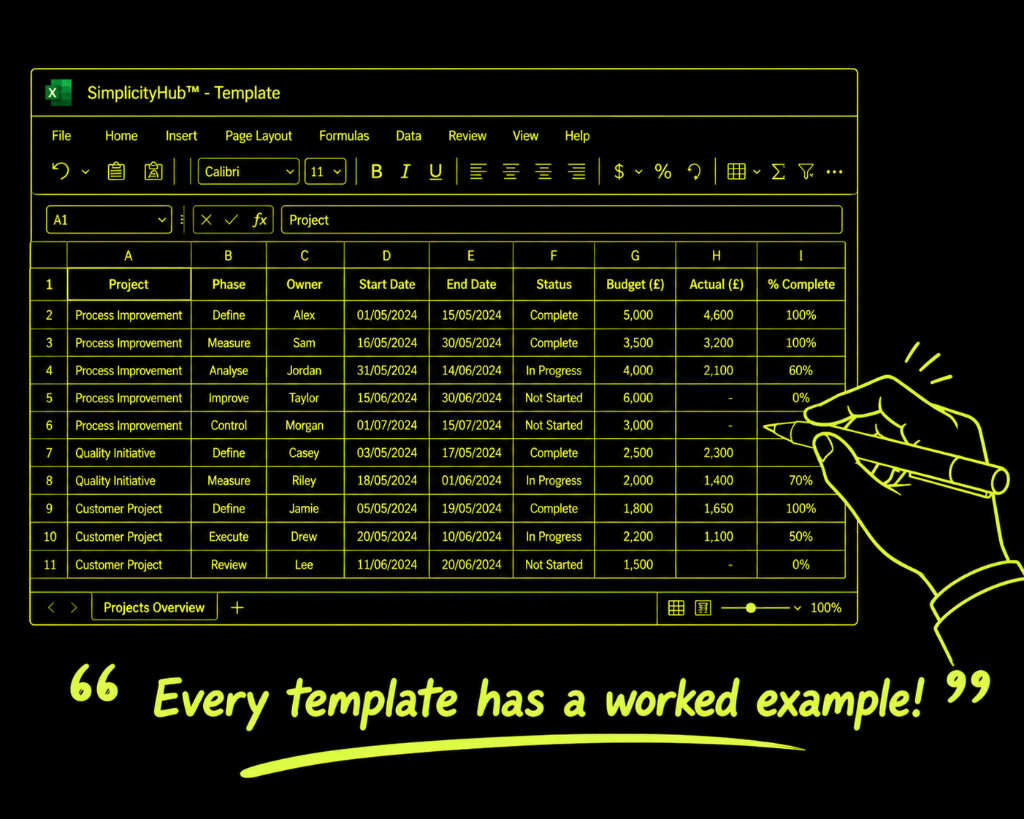
This example uses a customer complaint response time project. The same structure applies to any Lean Six Sigma improvement project.
Common mistakes — and how to avoid them
Writing a solution into the problem statement. "We need a new system" is not a problem statement. Describe what is broken, not how to fix it. The solution comes in Improve.
Scope that is too wide. "Improve the entire supply chain" will never be completed. Narrow it to a single process, site or product line.
A goal statement without a number. "Improve customer satisfaction" cannot be measured. State the specific metric, baseline, target and date.
No sponsor involvement. If the sponsor has not read and agreed the charter, they have not approved the project. Get them in the room — do not just email it for a signature.
Treating the charter as locked. It is a living document during Define. Update it if scope changes — just keep the sponsor informed.
Tips for getting better results
Write the problem statement before you look at the data. Then check it against the data and tighten the wording. This stops you fitting the statement to your preferred solution.
Use the charter as a communication tool, not just a form. Share it with anyone who will be affected — it answers "what is this project actually trying to do?" before it gets asked.
Validate your baseline before the charter review. Pull the data, sanity-check it, and be ready to show your source. Nothing undermines a charter faster than a disputed baseline figure.
Keep it to one page. Use the Sigma Level Calculator to quantify the performance gap — it sharpens the business case before you write the goal statement.
Pair the charter with a SIPOC diagram. A SIPOC template gives you a high-level picture of the process which naturally informs your scope boundaries. Complete both at the same time.
Download the Project Charter Template
A clean, editable Excel template for immediate use. Includes a blank template and a completed example with prompts in every field.
Advanced Toolkit Packs — available now
Structured, ready-to-use template packs designed for real improvement work. Pick the pack that matches your project and get started straight away.
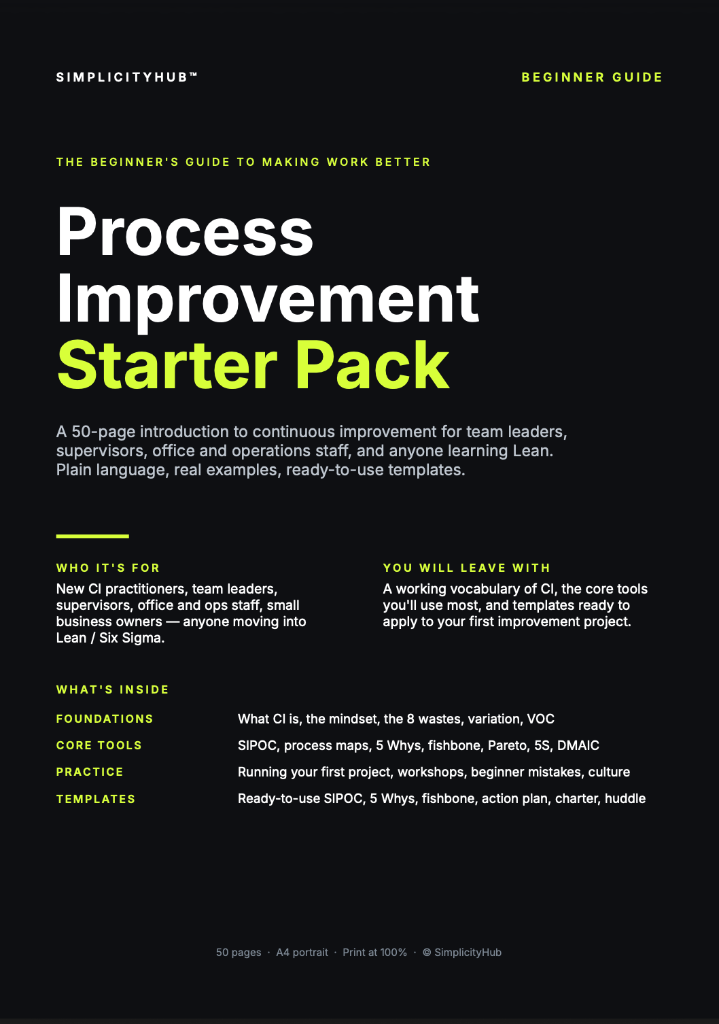
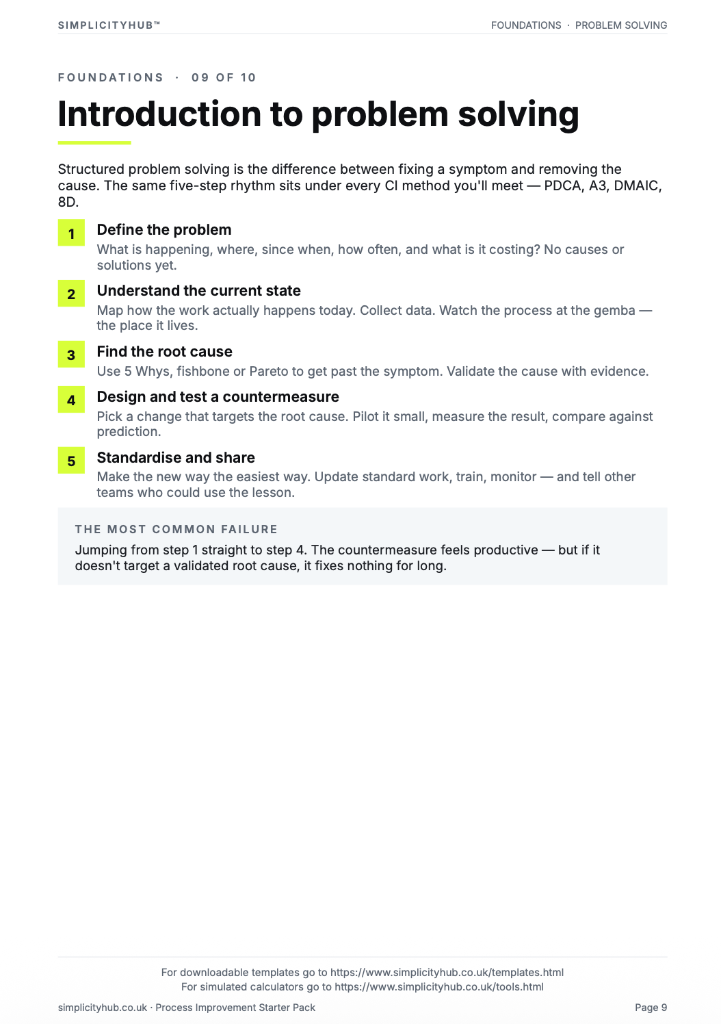
Process Improvement Starter Pack
A starter pack for identifying improvement opportunities, measuring baselines and planning action.
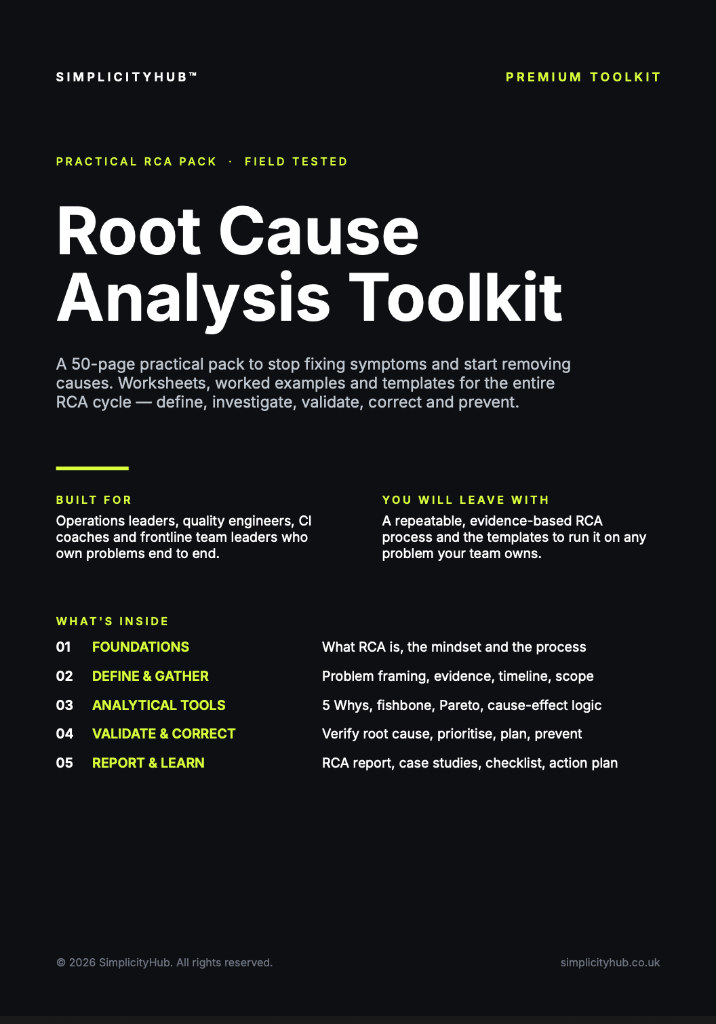
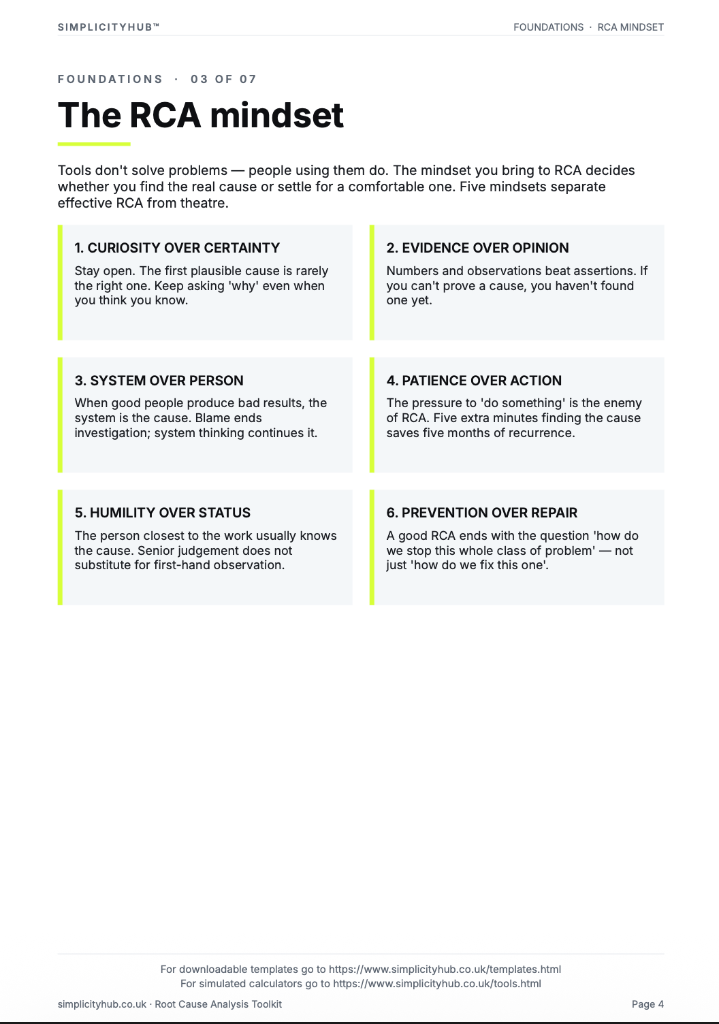
Root Cause Analysis Toolkit
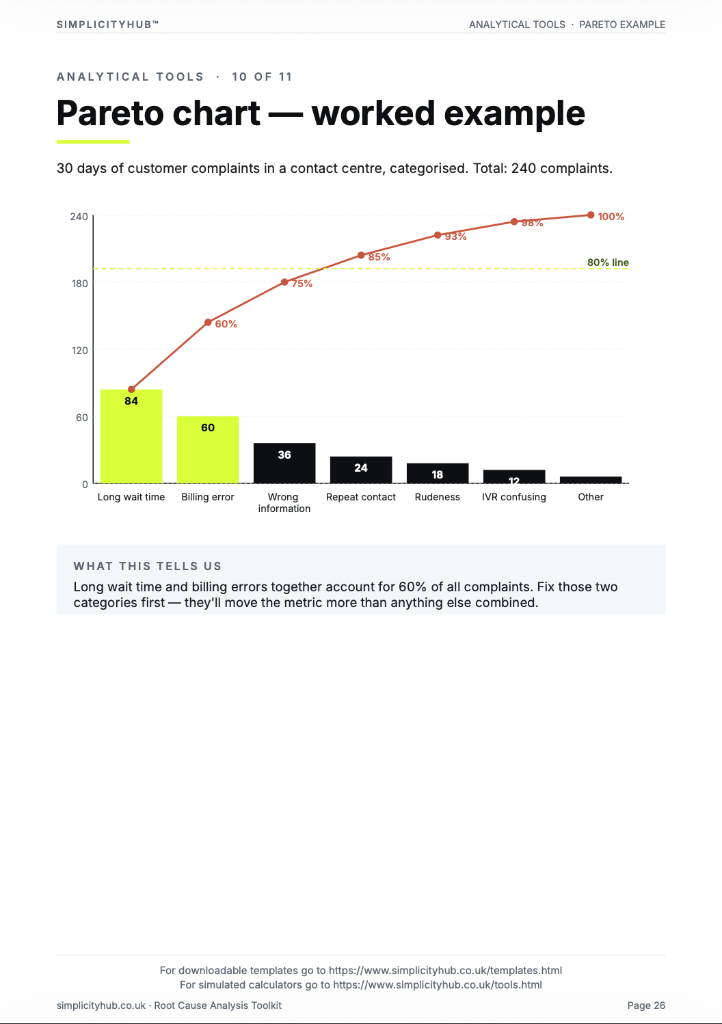
A practical RCA toolkit for defining problems, finding causes, validating evidence and creating action.
A3 Template Pack
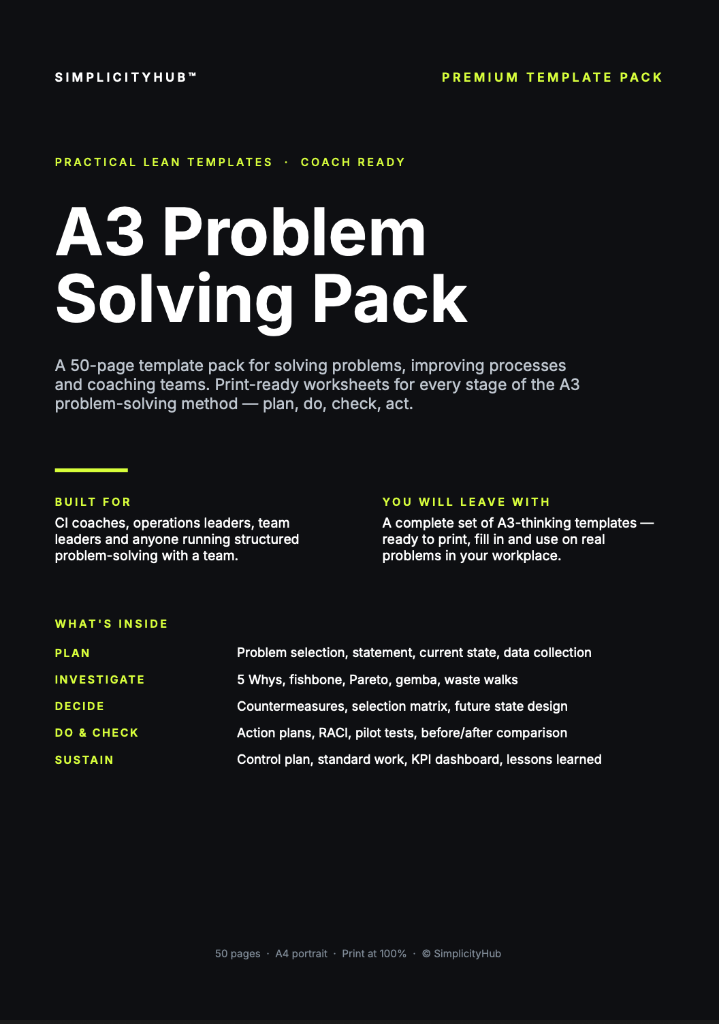
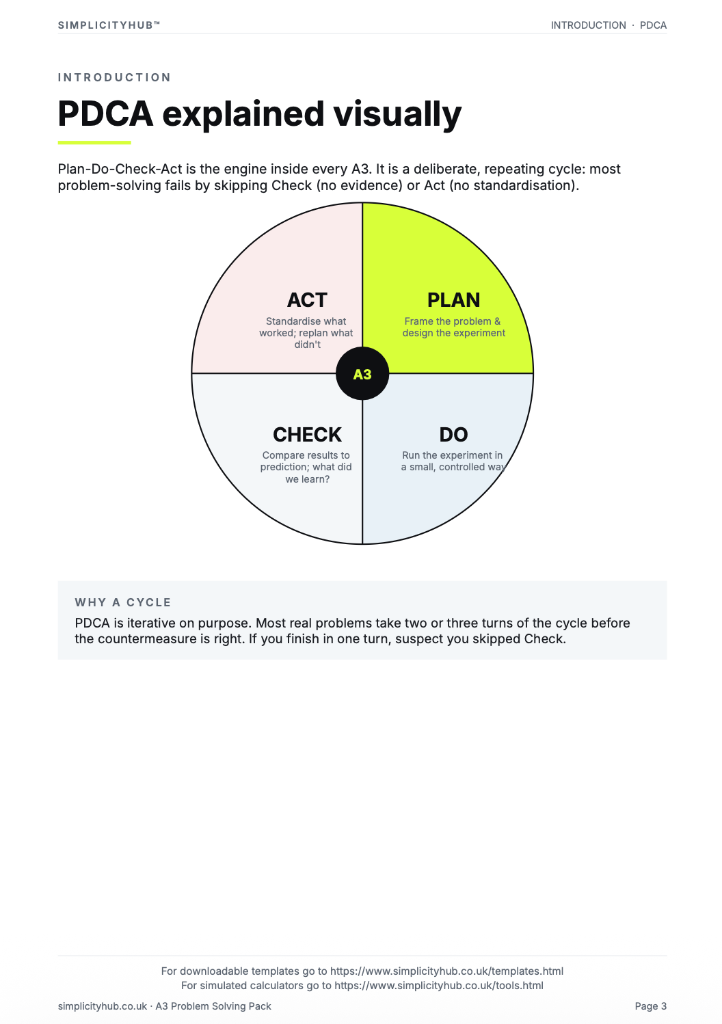
A clean A3 problem-solving pack for concise, visual improvement thinking and follow-through.
Frequently asked questions
What is the difference between a Project Charter and a Business Case?
A Business Case justifies why the project should happen — it quantifies the cost of the problem and the value of fixing it. The Project Charter defines what the project will do, who will do it and when. In DMAIC, you typically write the Business Case first, then use it to complete the Project Charter.
How long should a Project Charter be?
One page is the goal. If your charter runs to three or four pages, it is too detailed. The charter sets direction — it is not a project plan. Keep each section tight and data-driven.
Can the Project Charter change during the project?
Yes — it is a living document during Define. If scope changes, or new data reframes the problem, update the charter and re-confirm with the sponsor. Do not let the charter become outdated and ignored.
Who signs off the Project Charter?
The project sponsor signs off the charter. In some organisations the process owner also signs. The project lead (Green Belt or Black Belt) is the author but not the approver — the sponsor's signature means the project has official backing.
Do you need a Project Charter for a Kaizen event?
Not always. A Kaizen event is a short, focused improvement sprint — typically 3 to 5 days. A simple problem statement and scope agreement is usually enough. Save the full charter for DMAIC projects that will run for several weeks or months.