
What is a RACI Matrix Template?
A RACI matrix is a responsibility assignment tool that defines four roles for every task or decision in a project: Responsible (does the work), Accountable (owns the outcome), Consulted (provides input) and Informed (kept up to date).
The matrix maps every key task or decision against every stakeholder, making ownership explicit and preventing the two most common project failure modes: tasks with no clear owner, and decisions made without the right people involved.
In Lean Six Sigma, the RACI is built during the Define phase and updated as the project progresses through each DMAIC phase.
When to use a RACI Matrix Template
Build a RACI at the start of any project involving more than two or three people. You need it when:
- Multiple teams or departments are involved and ownership is unclear
- The same tasks have been duplicated or missed on previous projects
- Decisions are being made without the right people in the room
- A new project requires sign-off from multiple stakeholders at different levels
Who should use a RACI Matrix Template
- Green Belts and Black Belts — to define ownership across the project team in the Define phase
- Project Managers — whenever a project involves multiple teams or functions
- CI Managers — to clarify accountability on programme-level improvement work
- Operations Leaders — when redesigning processes that cross departmental boundaries
Vote yes and we’ll prioritise a quick walkthrough showing you exactly how to use it.

How to build a RACI matrix
Build the RACI in a workshop with the project team — not alone. The discussion that happens as you fill in each cell is where the value lies. Assumptions surface, conflicts emerge and ownership gets properly agreed.
How to build a RACI matrix — step by step
-
1List all key tasks and decisions as rows
Include every significant deliverable, task or decision in the project. These become the rows of the matrix. Be specific — 'Approve the pilot plan' is better than 'Pilot'.
-
2List all roles as columns
Add every role involved in the project as a column header. Use roles, not names — this makes the RACI reusable as team members change.
-
3Assign R — Responsible
Who actually does the work? This is the person who completes the task. There can be more than one R, but keep it to the minimum needed.
-
4Assign A — Accountable
Who owns the outcome? This is the one person answerable for the result. There must be exactly one A per task — no more, no less.
-
5Assign C — Consulted
Who needs to provide input or expertise before the task is complete? These people are in a two-way communication — their input must be sought.
-
6Assign I — Informed
Who needs to know the outcome once the task is done? These people receive one-way communication — updates, not decisions.
-
7Validate for common errors
Check: Does every row have exactly one A? Does any column have too many As (overloaded)? Are there any blank rows (unowned tasks)? Fix before sharing.
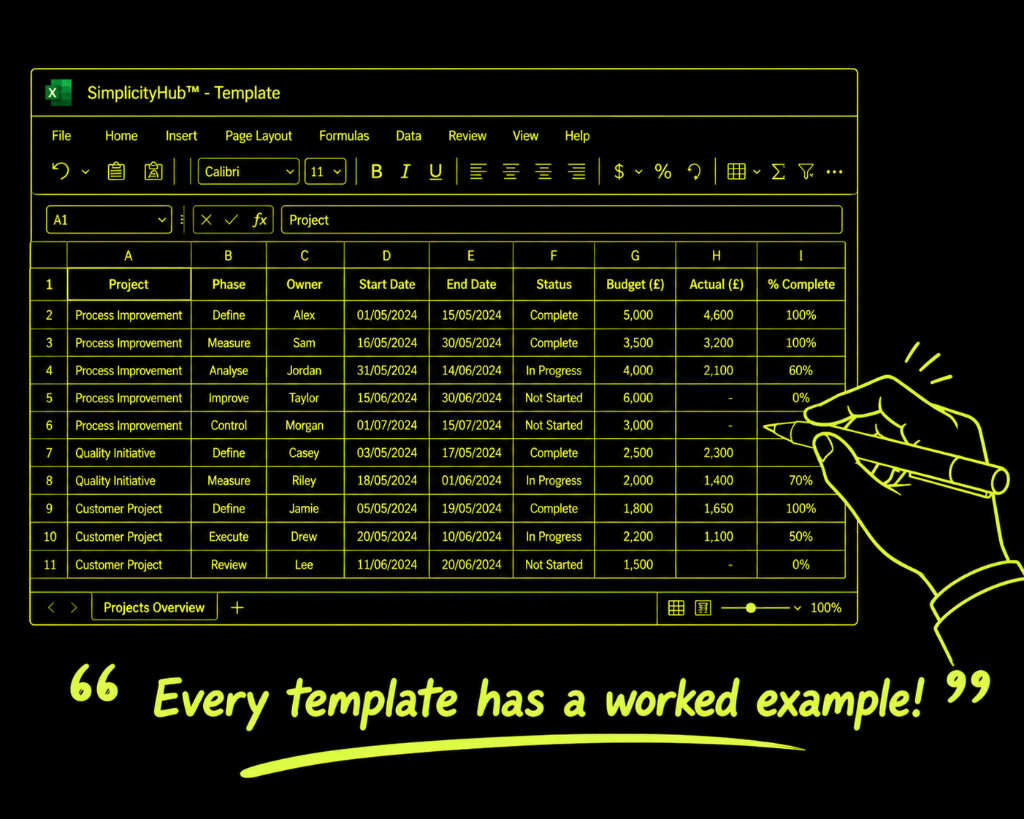
Worked example — Process Redesign Project RACI
A completed RACI matrix for a process redesign project, showing ownership across six key deliverables and five project roles.
Common mistakes — and how to avoid them
Multiple Accountables on one task. If two people are both Accountable, neither is. Every task must have exactly one A. When accountability is shared, it is absent.
Confusing R and A. The person Accountable does not have to be the person who does the work. The sponsor may be Accountable for the charter sign-off even if the project lead writes it.
Too many Cs. If everyone is Consulted on everything, the matrix becomes noise. Consult only those whose input is genuinely needed to make a good decision. Inform everyone else.
Building it once and never reviewing it. RACI changes as the project progresses. Review it at each phase gate — the people involved in Define are often different from those needed in Control.
Tips for getting better results
Challenge every A during the workshop. For each row, ask 'Who is truly accountable if this goes wrong?' This surfaces assumptions and ensures the right person owns each outcome.
Keep the number of columns manageable. A RACI with 20 columns is unreadable. Group individuals into roles. If a role has only one person in it, that is fine — the role label makes the matrix future-proof.
Use it to design your communication plan. Everyone in the I column needs to be included in your communication plan. Everyone in the C column needs to be part of your stakeholder engagement schedule.
Download the RACI Matrix Template
A clean, editable Excel template for immediate use — structured, professional and ready to fill in.
Frequently asked questions
What does each letter stand for?
Responsible (does the work), Accountable (owns the outcome — one per task), Consulted (provides input), Informed (kept updated).
Can one person hold both R and A?
Yes, common on smaller projects. On larger projects separating them creates clearer governance.
Most common mistake?
Too many As on one task. There should be exactly one Accountable per task.
How often should it be updated?
At each phase gate and whenever team composition or scope changes.
Advanced Toolkit Packs — available now
Structured, ready-to-use template packs designed for real improvement work. Pick the pack that matches your project and get started straight away.
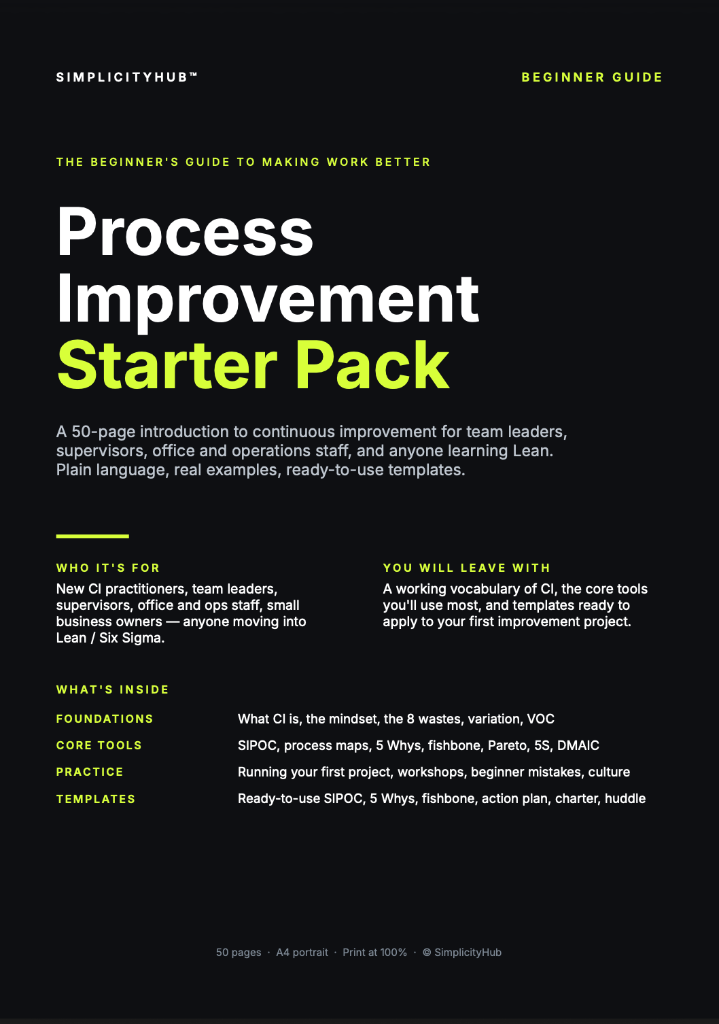
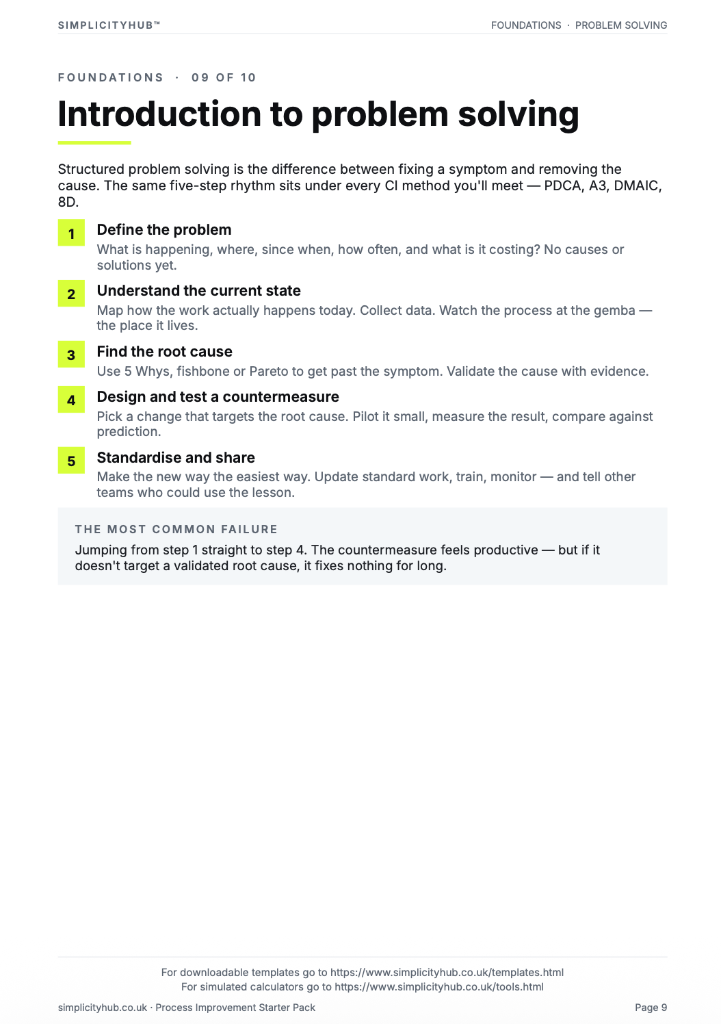
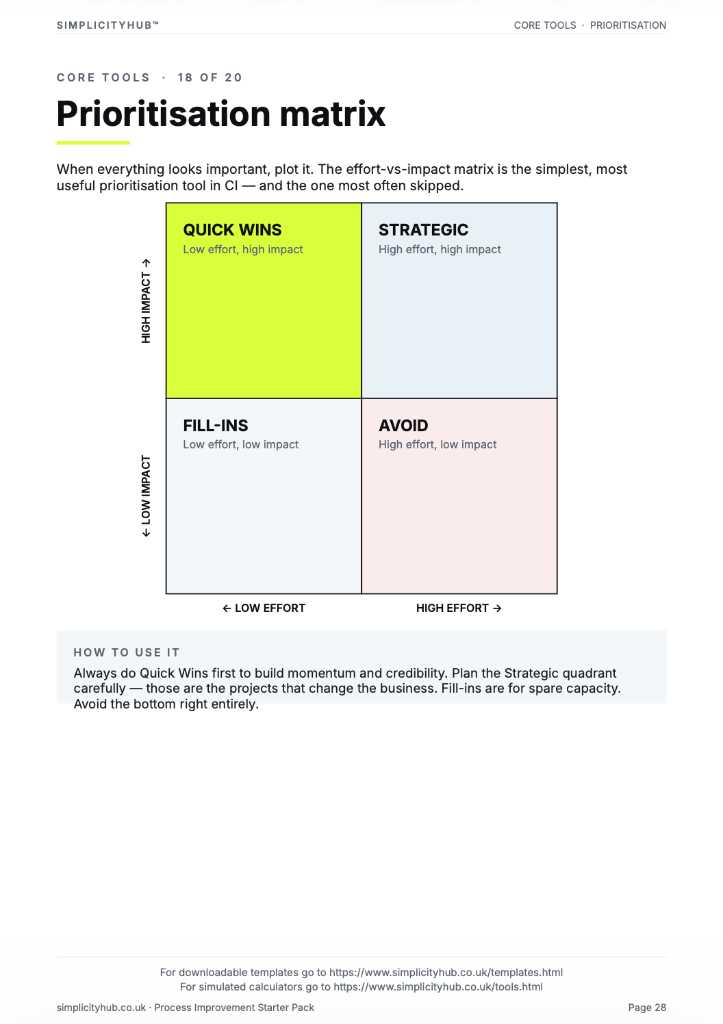
Process Improvement Starter Pack
A starter pack for identifying improvement opportunities, measuring baselines and planning action.
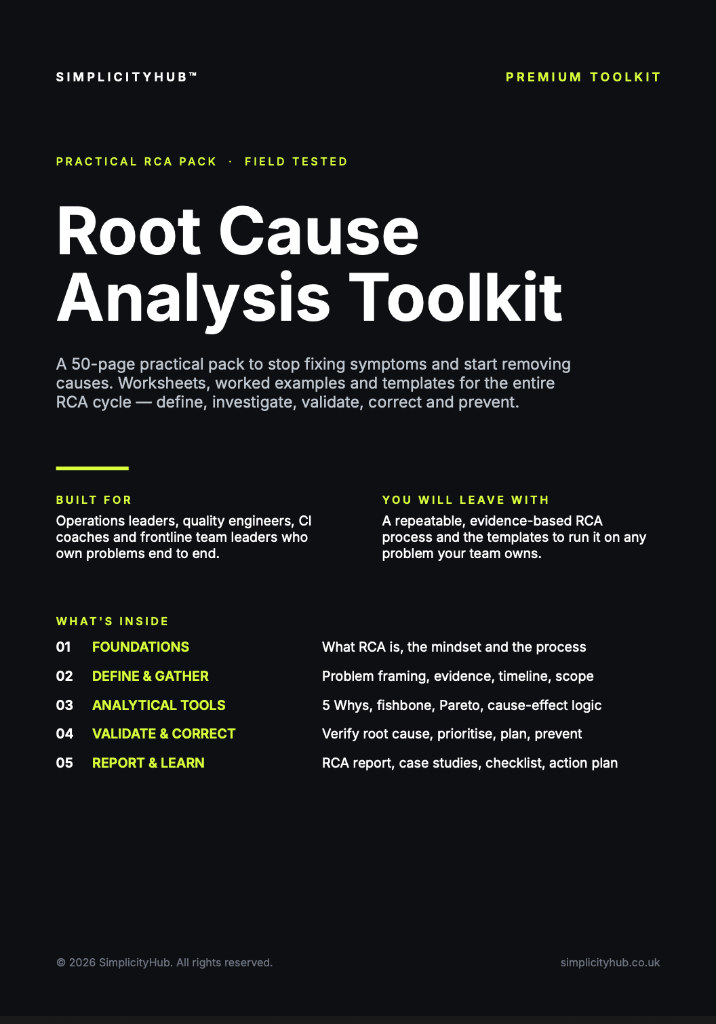
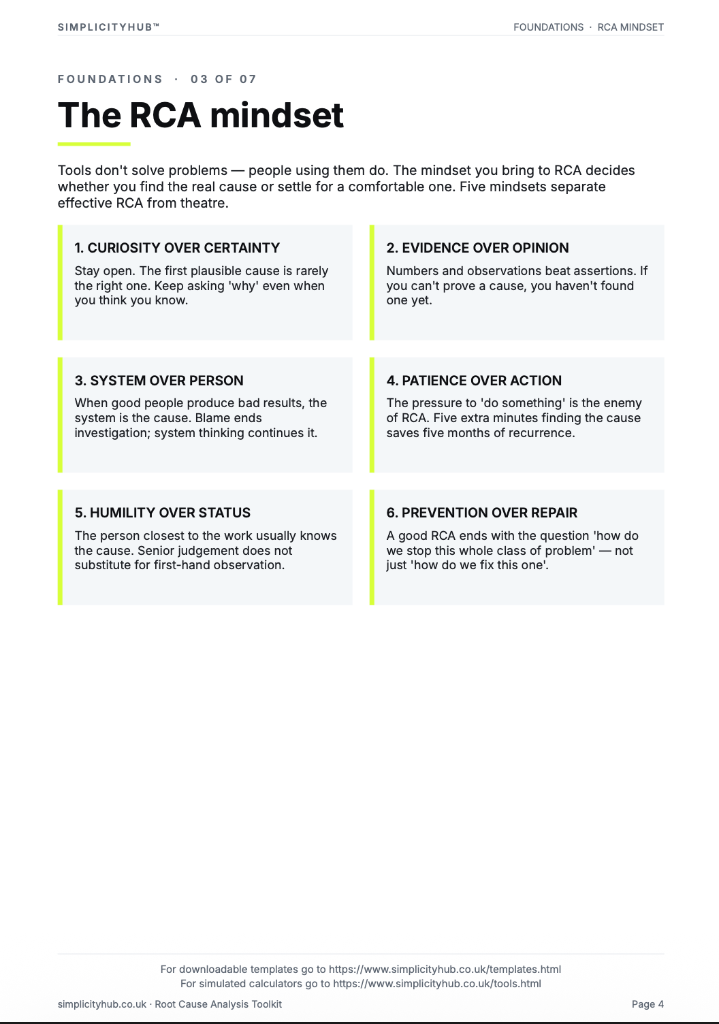
Root Cause Analysis Toolkit
A practical RCA toolkit for defining problems, finding causes, validating evidence and creating action.
A3 Template Pack
A clean A3 problem-solving pack for concise, visual improvement thinking and follow-through.