Quality & Six Sigma
Sigma Level Calculator
Enter your DPMO and instantly see where your process sits on the Six Sigma scale — from 1σ all the way to world-class 6σ performance.
Was this useful?

Enter your DPMO and instantly see where your process sits on the Six Sigma scale — from 1σ all the way to world-class 6σ performance.
Sigma reference
Enter your DPMO value on the left and press Calculate to see your Sigma Level.
Watch: Sigma Levels and DPMO: Measure Process Quality Fairly
A call centre with 340 wrong-information complaints out of 10,000 enquiries. Enter the lab and find your sigma level.
Use the calculator above to convert DPMO into a Sigma Level on the universal Six Sigma scale — from 1σ (low-performing) through 4σ (typical industry) to 6σ (world-class). Sigma Level is the most recognisable benchmark in quality management and turns a defect rate into a single number leadership instantly understands.
Sigma Level is a measure of process quality on a normalised scale from 1 to 6 (and beyond). It converts the defect rate (DPMO) into a number of standard deviations the nearest specification limit sits from the process mean. A higher Sigma Level means fewer defects and tighter, more capable performance.
Sigma Level is derived from DPMO by looking up the corresponding tail probability of the normal distribution. By convention a 1.5σ "long-term shift" is added so the short-term capability of a typical process can be compared to the long-term performance — which is why 6σ corresponds to 3.4 DPMO, not the strict 2 parts per billion the maths would give.
A process delivers 233 defects per million opportunities. That corresponds to a Sigma Level of 5σ — strong performance, roughly typical of best-in-class manufacturing and well above average service-industry quality.
To move from 5σ to 6σ the team must reduce DPMO from 233 to 3.4 — a 68-times improvement. Each Sigma Level jump is exponentially harder than the last, which is why most improvement programmes target a one-Sigma-Level lift per year, not the headline 6σ.
Sigma Level gives leadership a single quality score on a universal scale. It turns "2,500 DPMO" into "4.3 sigma" — making benchmarking, target-setting and progress reporting concrete and comparable.
Use Sigma Level as the headline quality score for any Six Sigma programme, scorecard or benchmarking exercise. Combine with DPMO and Pareto for a full picture of where the defects sit.
Sigma Level is the title of the methodology. Most organisations sit between 3σ and 4σ; world-class sits at 5σ-6σ. The gap defines the size of the improvement opportunity.
Set a one-Sigma-Level annual improvement target rather than chasing 6σ directly. Pareto the top defect causes and run a DMAIC project on each. Re-measure DPMO and Sigma quarterly to confirm progress.
Combine Sigma Level with DPMO, Pareto and DMAIC project structure to convert the headline score into specific improvement actions.
A normalised quality score on a 1-to-6+ scale derived from DPMO. It expresses how many standard deviations the nearest specification limit lies from the process mean.
3σ is average, 4σ is above average, 5σ is best-in-class, 6σ is world-class (3.4 DPMO). Most organisations operate between 3σ and 4σ before launching a structured programme.
Strict statistics give 2 parts per billion at 6σ. A 1.5σ long-term shift is conventionally added to account for drift over time, producing the 3.4 DPMO figure used in practice.
Reduce DPMO. Each Sigma Level requires roughly a 10x reduction in defects. Use Pareto and DMAIC to focus on the biggest defect categories first.
Operationally yes, but with diminishing returns. Moving from 3σ to 4σ usually delivers more business value than 5σ to 6σ at a fraction of the cost.
Want to understand what your Sigma Level means and how to act on it? The Yellow Belt covers this in full.
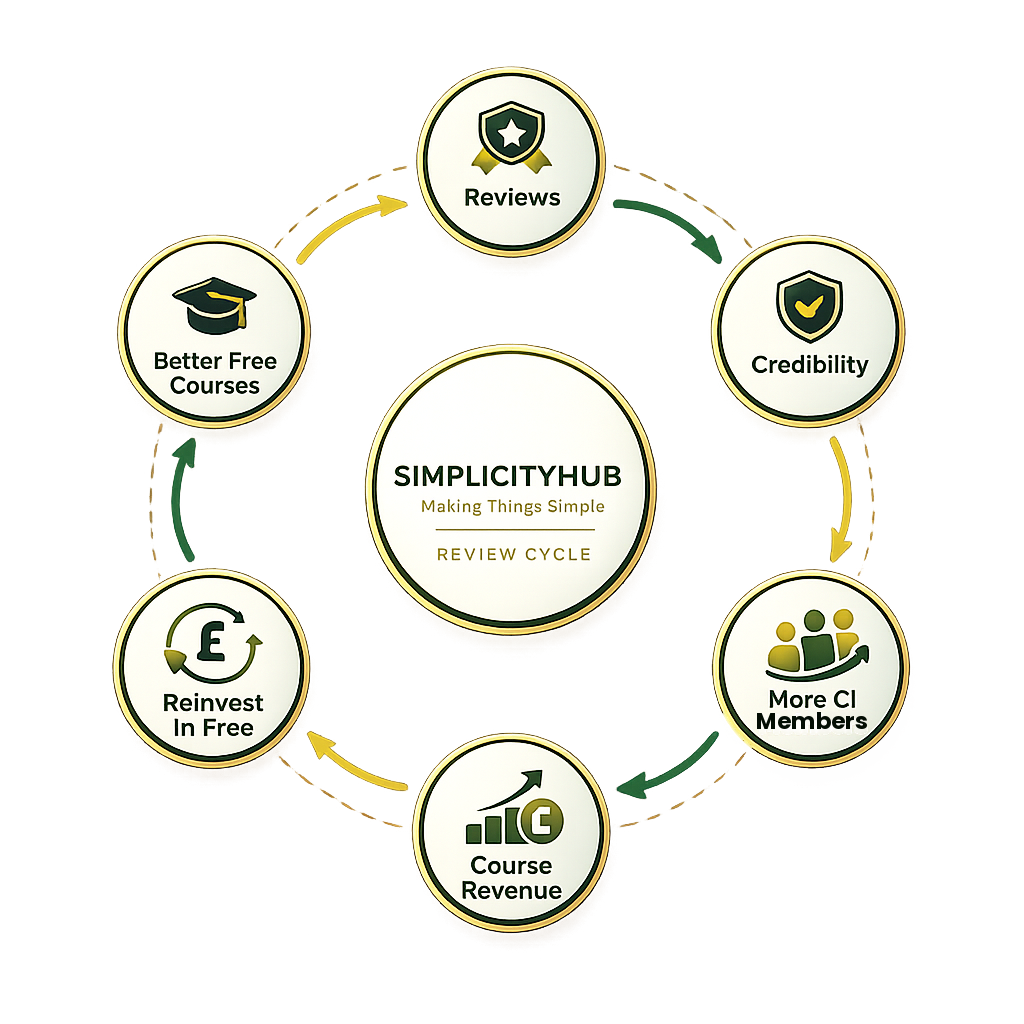
View Yellow Belt →Free courses take time and money to create. Your review gives us credibility, brings in more learners, and we plough that revenue straight back into free resources.