What is a Stakeholder Analysis Template?
A stakeholder analysis is a structured exercise that identifies every person or group who can affect or be affected by your project, then maps them by influence and interest so you can plan targeted engagement.
The output is typically a 2x2 influence/interest grid — sometimes called a power/interest matrix — plus a contact and engagement plan for each stakeholder group.
Stakeholder analysis is a core tool in the Define phase. Projects that skip it routinely hit resistance mid-delivery from people who were never consulted. Understanding your stakeholder landscape early is one of the highest-leverage things you can do on any improvement project.
When to use a Stakeholder Analysis Template
Complete your stakeholder analysis early in Define — before you start gathering data or running interviews. Use it when:
- Your project involves change that will affect multiple teams or departments
- You need buy-in from people outside your direct team
- You have a sponsor but need to identify who else has influence over the outcome
- You anticipate resistance and want to plan engagement before it becomes a blocker
Who should use a Stakeholder Analysis Template
- Green Belts and Black Belts — as part of Define phase project setup on any cross-functional project
- CI Managers — when planning organisational change or process redesign programmes
- Project Managers — whenever a project has more than two or three affected parties
- Change Managers — to plan communication and engagement strategies alongside the technical work
Watch: a quick explainer
New to this? This short video walks you through mapping and analysing your project stakeholders — a helpful primer before you download and use the template.

How to complete the Stakeholder Analysis
Stakeholder analysis works best when done collaboratively. Run a 45-minute workshop with your project team to brainstorm every stakeholder before you start scoring influence and interest.
How to complete the Stakeholder Analysis — step by step
-
1Brainstorm all stakeholders
List every person, team, department or external party who is affected by or can affect the project. Cast the net wide at this stage — you can refine later. Include resistors as well as supporters.
-
2Score influence and interest
For each stakeholder, score their level of influence over the project outcome (High/Medium/Low) and their level of interest in the outcome (High/Medium/Low).
-
3Plot the power/interest grid
Place each stakeholder in the appropriate quadrant: Manage Closely (High influence, High interest), Keep Satisfied (High influence, Low interest), Keep Informed (Low influence, High interest), Monitor (Low influence, Low interest).
-
4Identify current stance
For each key stakeholder, note their current position: Champion, Supporter, Neutral, Sceptic or Blocker. Be honest — this is for your planning only.
-
5Define the engagement approach
For each stakeholder, write one sentence on how you will engage them: frequency, format and who on the team owns the relationship.
-
6Identify the key risks
Which stakeholders, if unengaged or onside, could derail the project? Flag these and add them to your risk log.
-
7Review at each phase gate
Stakeholder positions change during a project. Revisit the analysis at the end of each DMAIC phase and update engagement plans accordingly.
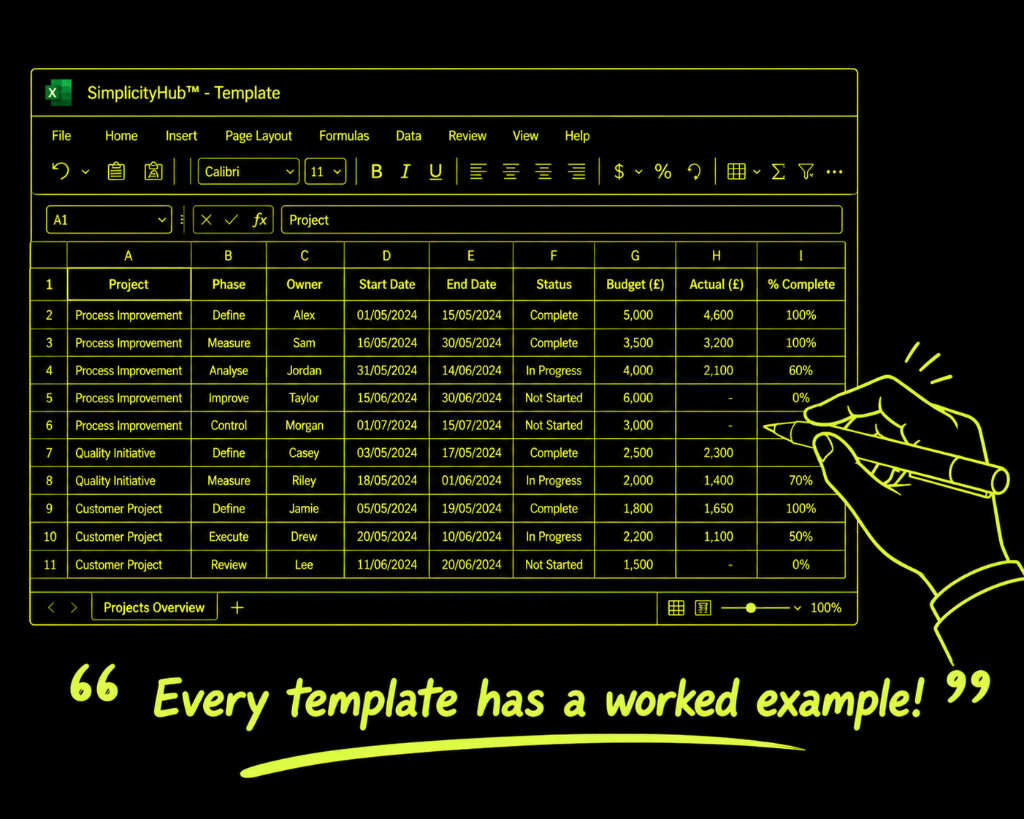
Worked example — CRM System Redesign Project
A completed stakeholder analysis for a CRM redesign project, showing the power/interest grid with engagement notes for each stakeholder group.
Common mistakes — and how to avoid them
Only listing supporters. A stakeholder analysis that only includes people who are already on board is not an analysis — it is a contact list. Identify sceptics and blockers explicitly so you can plan how to bring them along.
Doing it alone. The project lead rarely knows all the stakeholders. Run this as a team exercise — each person will know different parts of the organisation and surface people you would not have thought of.
Filing it and forgetting it. Stakeholder positions change. A resistant department head may become a champion once they understand the benefits. Review and update the analysis at every phase gate.
Confusing interest with support. High interest does not mean the stakeholder is in favour. A union representative may be highly interested and actively opposed. Interest means they care about the outcome — not that they want it to succeed.
Tips for getting better results
Start with the obvious blockers. Identify who is most likely to resist and plan their engagement first. It is much easier to bring a sceptic along early than to manage an active opponent mid-project.
Keep the detail confidential. The assessment of someone's current stance ('Blocker', 'Sceptic') should stay within the project team. Share the engagement plan, not the raw assessment.
Link to your communication plan. The stakeholder analysis feeds directly into the communication plan. Use the engagement column to define the frequency and format for each stakeholder group.
Download the Stakeholder Analysis Template
A clean, editable Excel template for immediate use — structured, professional and ready to fill in.
Frequently asked questions
Who is a stakeholder?
Anyone who affects or is affected by the project — team members, sponsor, process staff, customers, suppliers, regulators.
What is an interest-influence matrix?
A 2x2 grid plotting stakeholders by interest and influence to guide your engagement strategy.
How often should it be updated?
At each phase gate and whenever the stakeholder landscape changes.
What to do with resistant stakeholders?
Understand their specific concerns. Address legitimate ones in the solution design and involve them in decisions.
Advanced Toolkit Packs — available now
Structured, ready-to-use template packs designed for real improvement work. Pick the pack that matches your project and get started straight away.
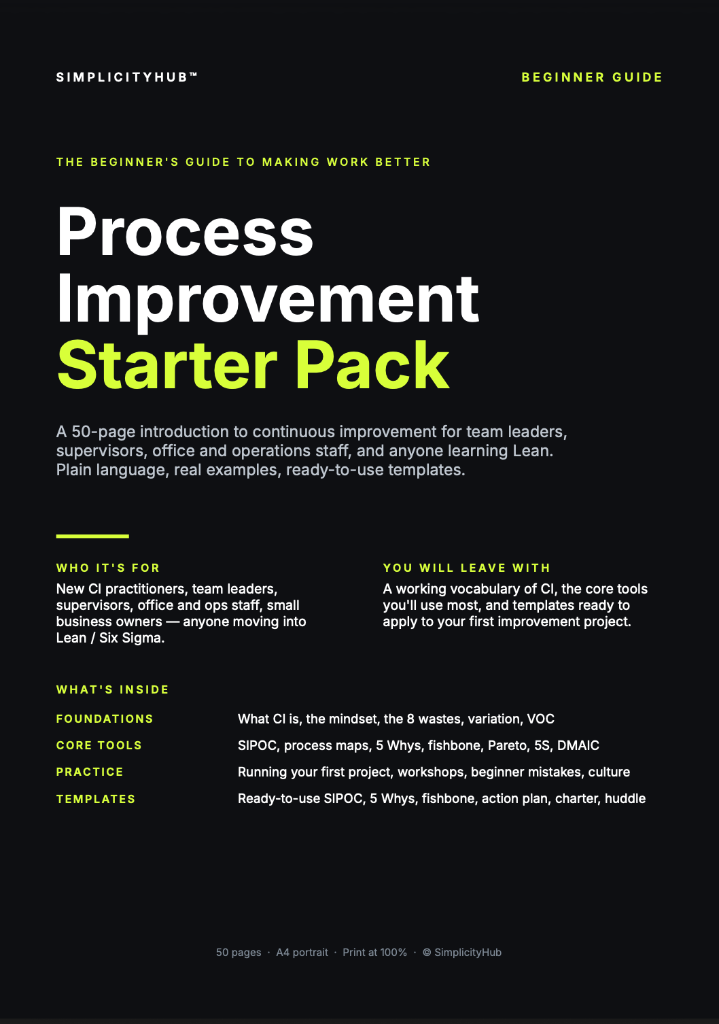
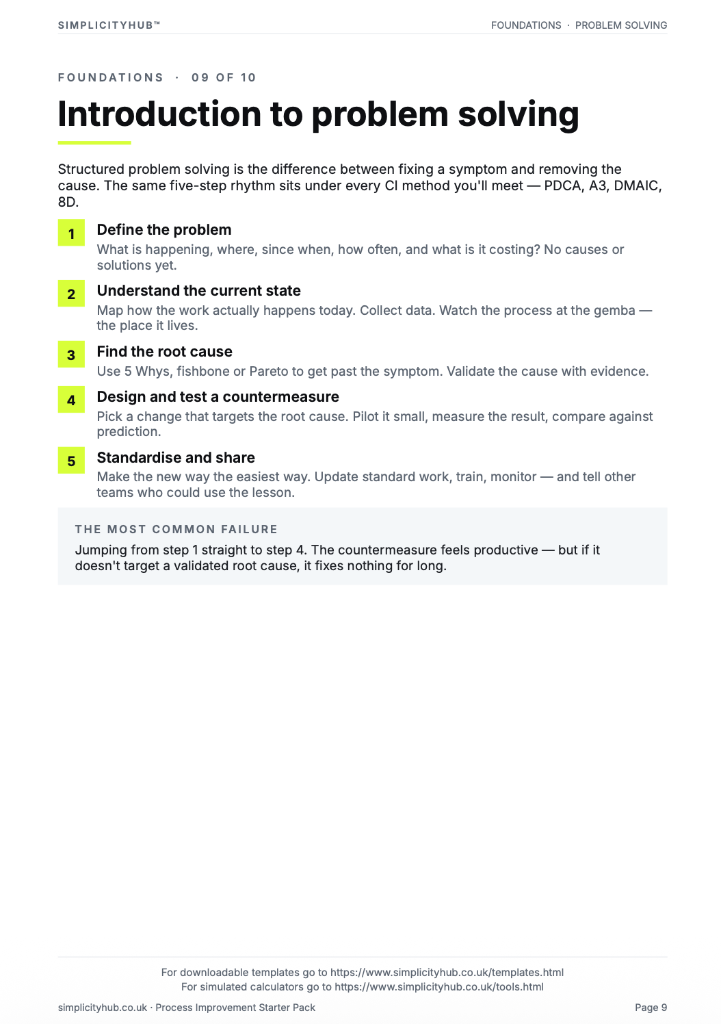
Process Improvement Starter Pack
A starter pack for identifying improvement opportunities, measuring baselines and planning action.
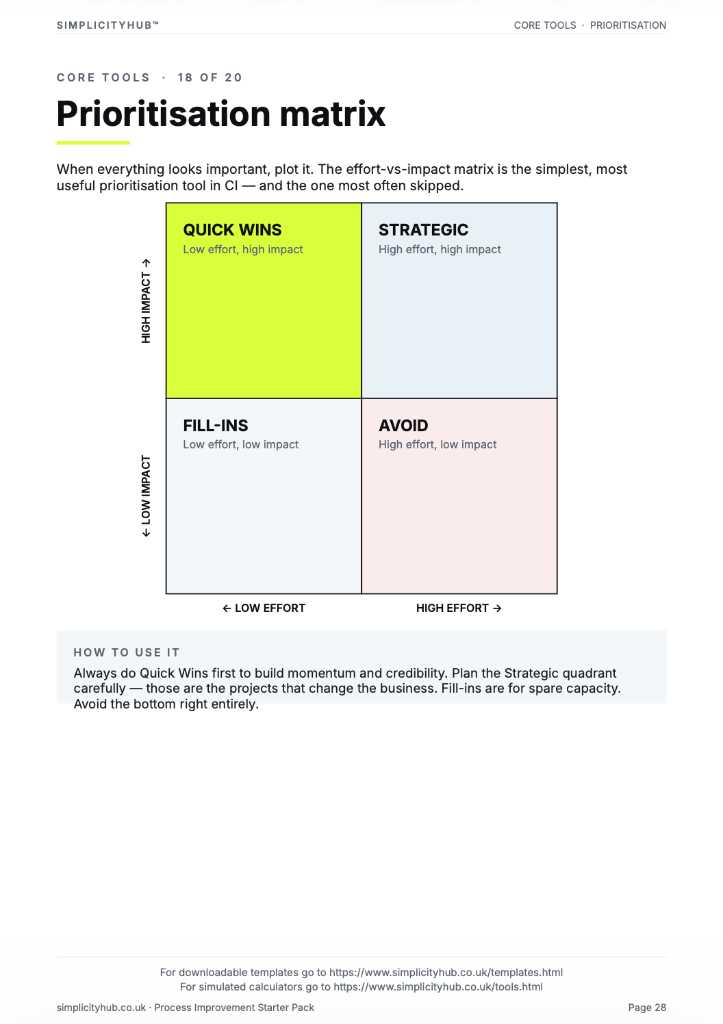
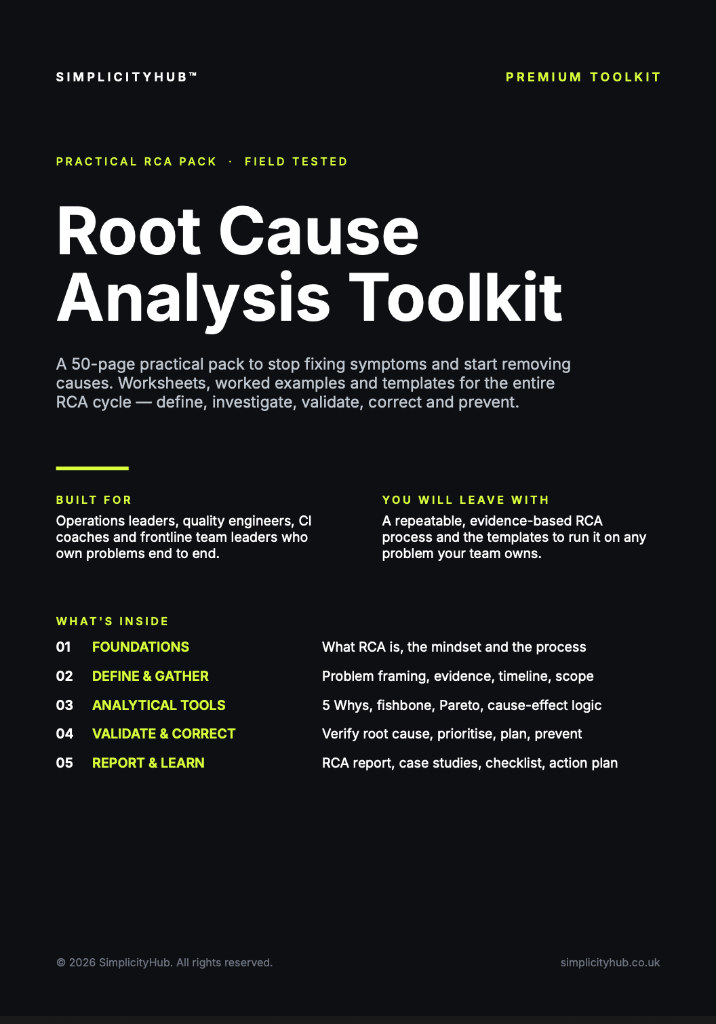
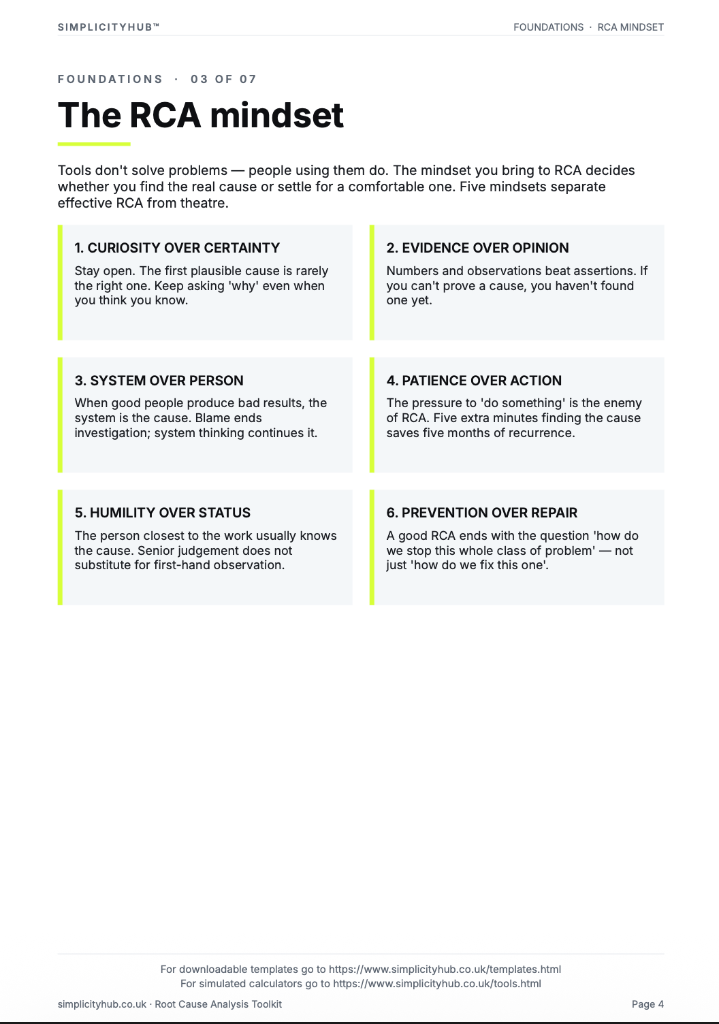
Root Cause Analysis Toolkit
A practical RCA toolkit for defining problems, finding causes, validating evidence and creating action.
A3 Template Pack
A clean A3 problem-solving pack for concise, visual improvement thinking and follow-through.