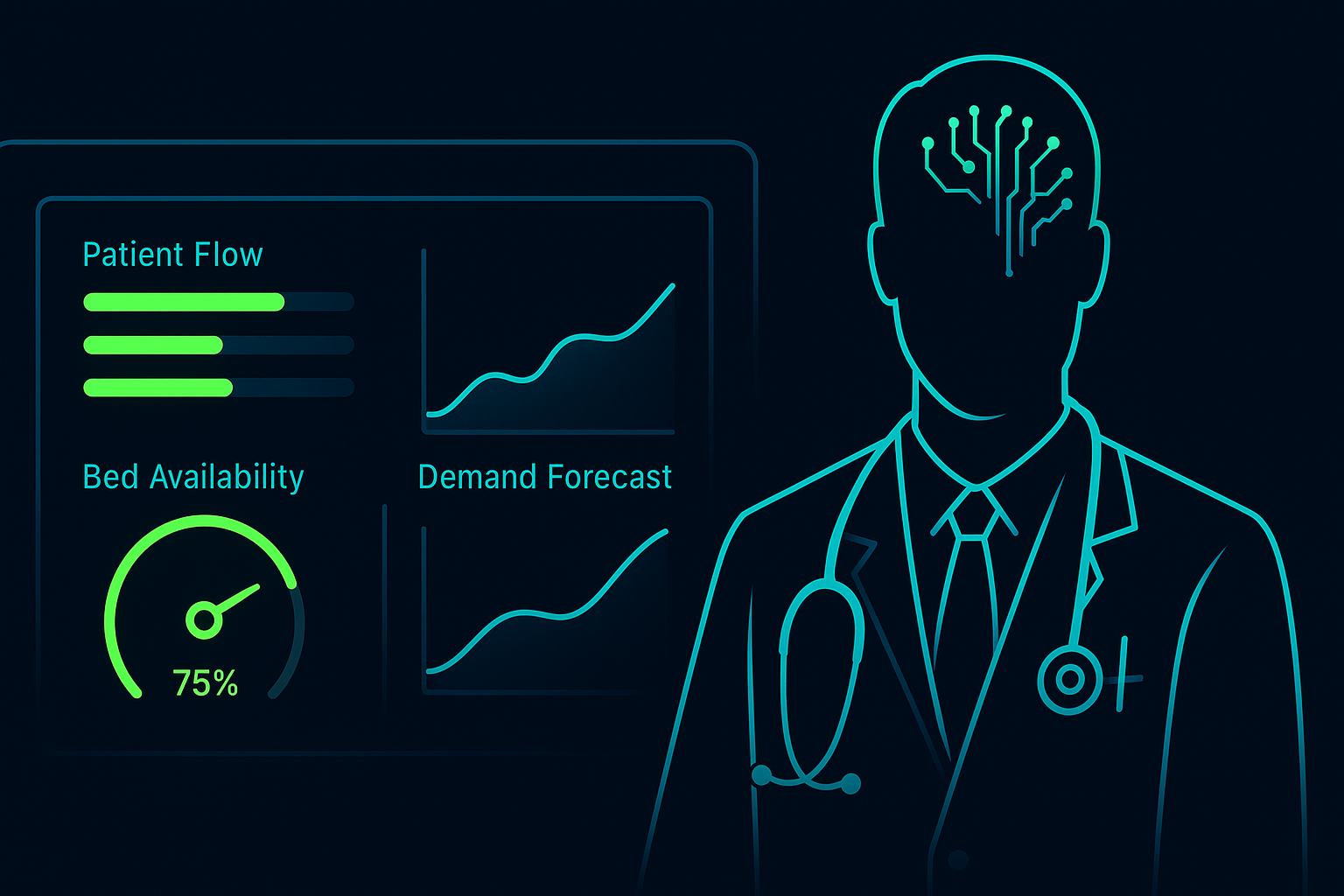
What is Lean AI in Healthcare?
Healthcare has long embraced Lean principles to reduce waste and improve patient flow — but traditional Lean in hospitals relies heavily on manual observation, clipboard audits and periodic improvement events. AI changes this entirely, processing data from patient records, bed management systems and clinical workflows in real time to surface improvement opportunities that no human team could spot alone.
The combination delivers measurable results: shorter patient journeys, fewer adverse events, smarter staff deployment and care pathways that continuously self-improve. Healthcare organisations applying Lean AI are consistently achieving better outcomes at lower cost.
AI-Powered Patient Flow Management
Stop reactive bed management. Start predicting demand before it arrives.
AI analyses historical admission patterns, seasonal trends, current bed occupancy and incoming emergency data to predict patient flow hours — sometimes days — in advance. Bed managers can proactively allocate resources, reducing the scramble that causes delays, cancelled procedures and patient safety risks.
- Reduce average length of stay by 10–20%
- Predict bed shortfalls 24–48 hours ahead
- Automatically trigger discharge planning earlier in the patient journey
- Integrate with existing PAS and EPR systems
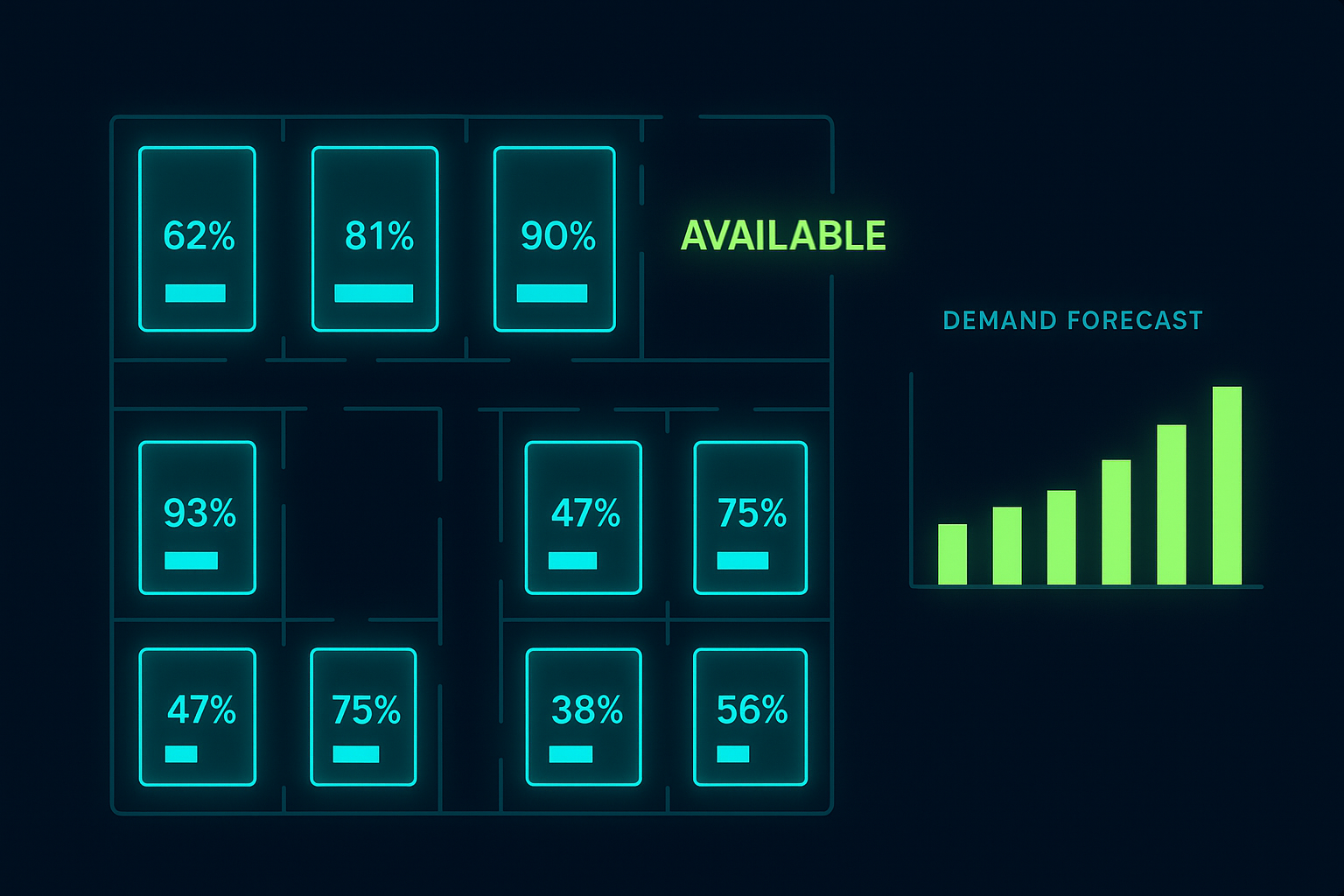
Predictive Readmission & Deterioration Alerts
Identify at-risk patients before they become emergencies.
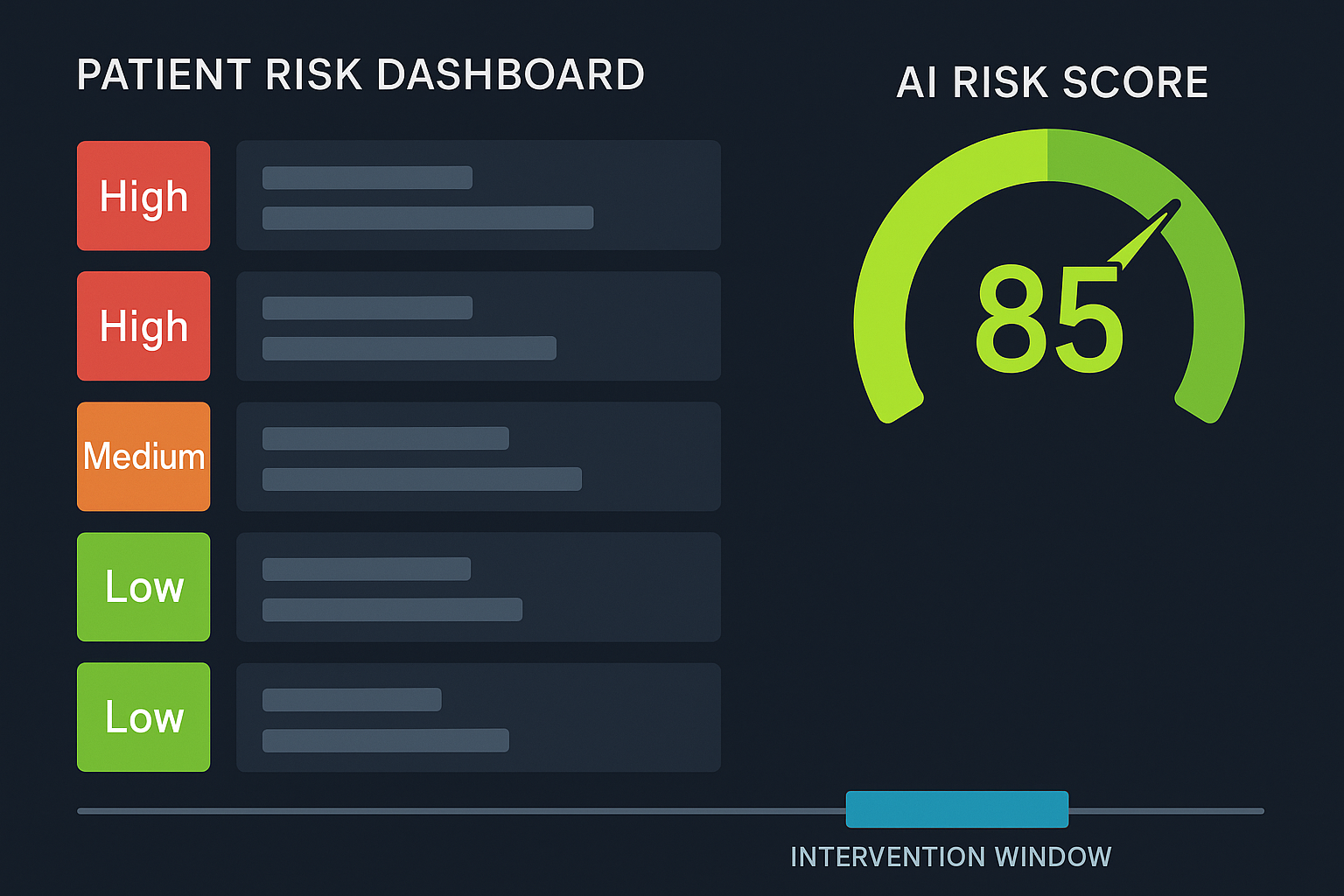
Machine learning models trained on patient records, vital signs and social determinants of health can flag patients at high risk of readmission or deterioration — giving clinical teams time to intervene. This shifts care from reactive to preventive, reducing emergency readmissions and improving patient safety.
- Reduce 30-day readmission rates by up to 25%
- Early warning scores enhanced with AI pattern recognition
- Flag social risk factors that traditional scoring misses
- Integrate with nursing handover and ward round workflows
All Key Applications
- Patient Flow Management: AI predicts demand and allocates beds proactively — reducing delays and cancellations.
- Readmission Prevention: ML models flag high-risk patients before discharge so teams can intervene early.
- Diagnostic Support: AI assists clinicians with differential diagnosis, flagging patterns in imaging and test results.
- Staff Scheduling: AI matches staffing levels to predicted patient demand, reducing both overstaffing and unsafe understaffing.
- Medication Safety: AI cross-references prescriptions against patient records to catch dangerous interactions.
- Care Pathway Optimisation: AI identifies deviations from best-practice pathways and recommends corrections in real time.
How to Get Started
Healthcare AI doesn't need to start with a full EPR integration. The most impactful first step is typically patient flow — map your current state using a Value Stream Map, identify your biggest bottleneck, then deploy an AI demand forecasting tool against that single constraint.
Our free DMAIC templates guide you through a structured pilot, and our process calculators help you quantify the improvement — so you have the evidence to secure the next round of investment.
FREE RESOURCES
Ready to put this into practice?
Download free Lean Six Sigma templates, use our interactive calculators, and start your improvement project today.