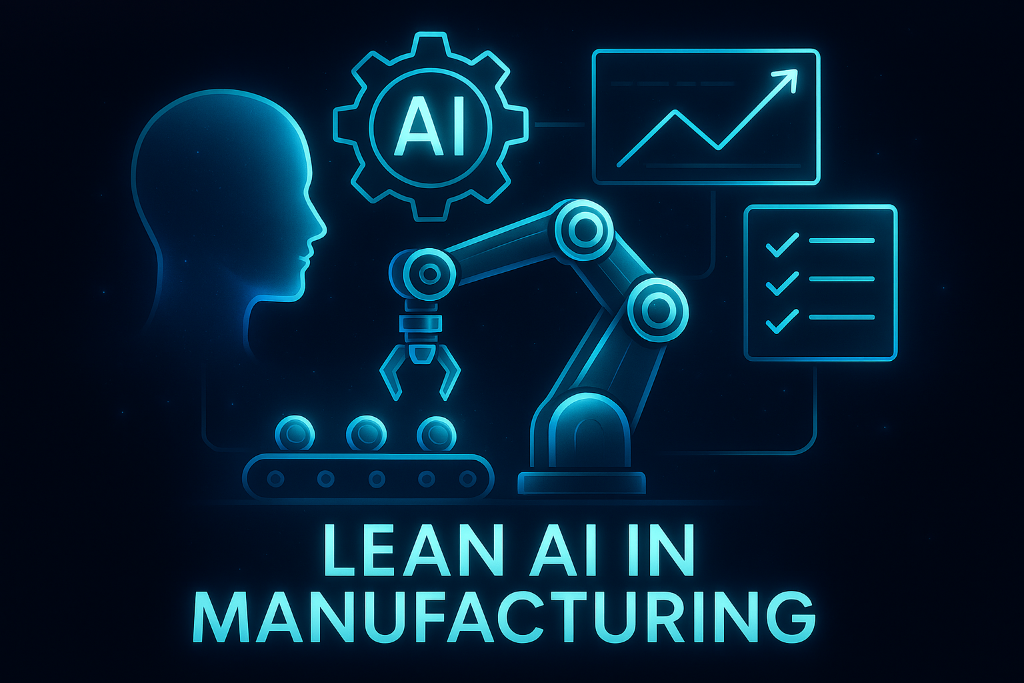
What is Lean AI in Manufacturing?
Lean AI combines the waste-elimination principles of Lean manufacturing with the predictive and analytical power of artificial intelligence. Where traditional Lean relies on human observation and manual data collection, AI processes thousands of data points in real time — spotting patterns, predicting failures, and recommending actions before problems escalate.
The result: faster improvement cycles, more accurate root cause analysis, and a Lean programme that self-optimises over time. Manufacturing leaders who combine the two disciplines are consistently outperforming those using Lean or AI alone.
Predictive Maintenance
Stop fixing machines after they break. Start preventing it before it happens.
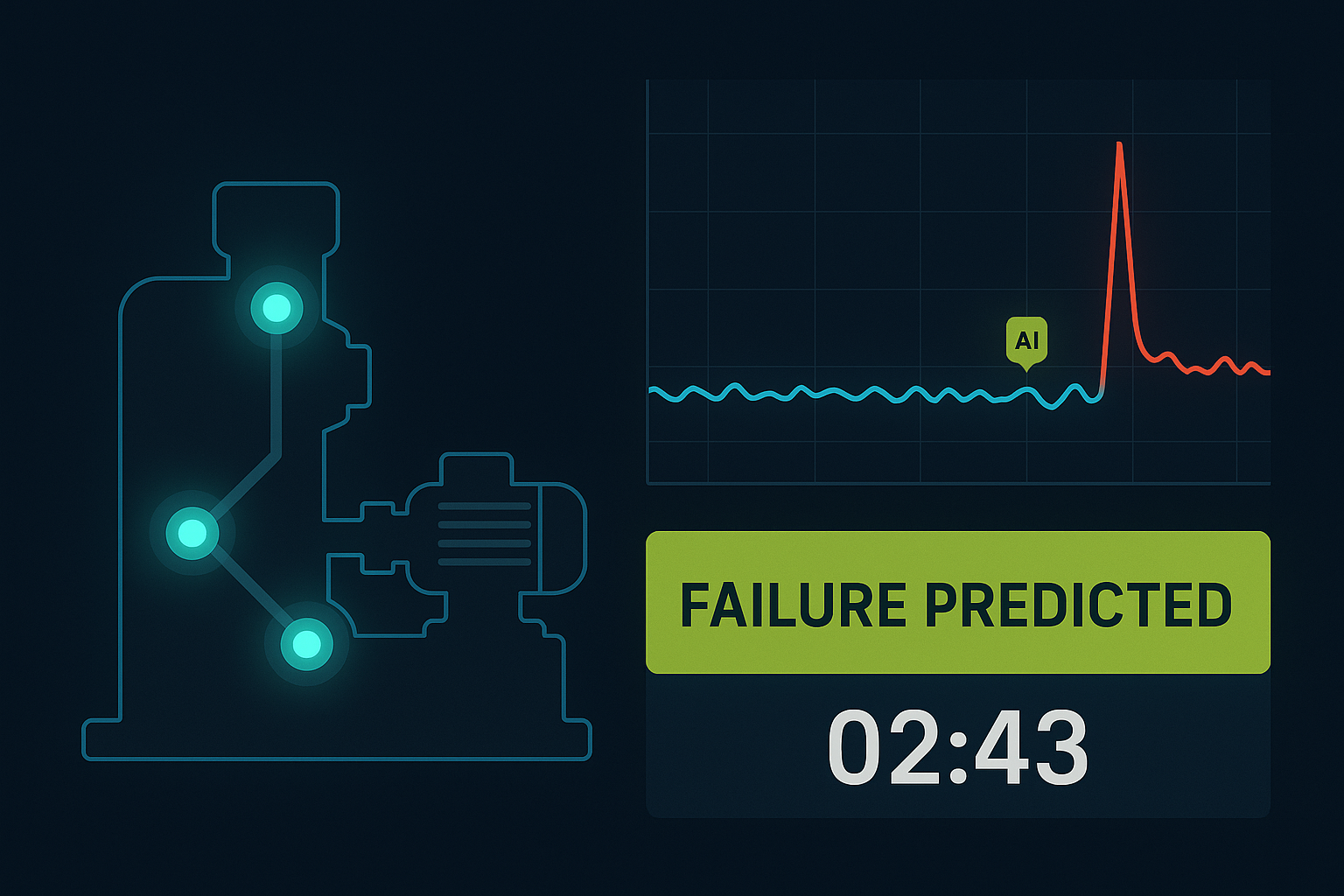
AI monitors vibration, temperature, current draw and acoustic signatures from machine sensors — continuously, 24/7. Machine learning models learn what "normal" looks like for each machine, and alert maintenance teams the moment a pattern indicates an impending failure.
- Reduce unplanned downtime by up to 30–45%
- Extend equipment lifespan through optimised maintenance intervals
- Eliminate unnecessary preventive maintenance — only service when needed
- Integrate with existing CMMS and ERP systems
Computer Vision Quality Control
Inspect 100% of your output at line speed — with zero sampling error.
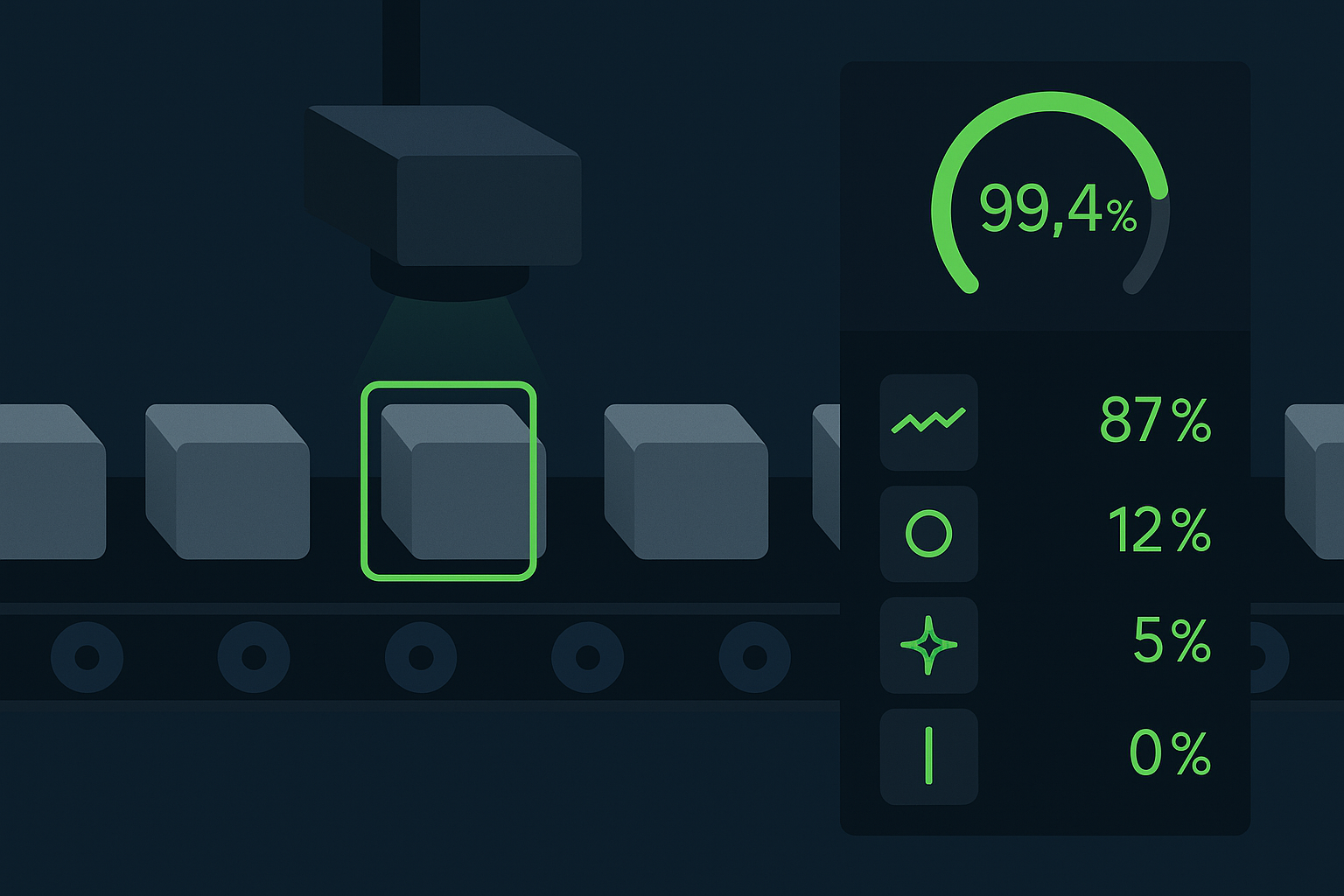
Traditional quality inspection relies on sampling — which means defects slip through. Computer vision systems trained on defect images can inspect every single unit at production speed, classifying defects with greater consistency and accuracy than any human inspector.
- Achieve 99%+ detection accuracy on trained defect types
- Eliminate sampling-based quality escape risk
- Capture defect images automatically for root cause analysis
- Scales to multiple lines without additional headcount
All Key Applications
- Predictive Maintenance: AI monitors machine sensors and flags failures before they cause downtime — reducing unplanned stoppages by up to 30%.
- Defect Detection: Computer vision systems inspect products at speed and accuracy no human can match — catching defects the moment they occur.
- Production Scheduling: AI dynamically adjusts schedules based on demand signals, machine availability and supplier lead times.
- Process Optimisation: Machine learning identifies the ideal process parameters — temperature, pressure, speed — to maximise yield and minimise waste.
- Inventory Management: AI predicts demand with greater accuracy, reducing both excess stock and stockouts.
- Energy Optimisation: AI identifies patterns in energy consumption and recommends or automatically adjusts settings to reduce waste.
AI Production Scheduling
Replace static schedules with a dynamic, self-optimising production plan.
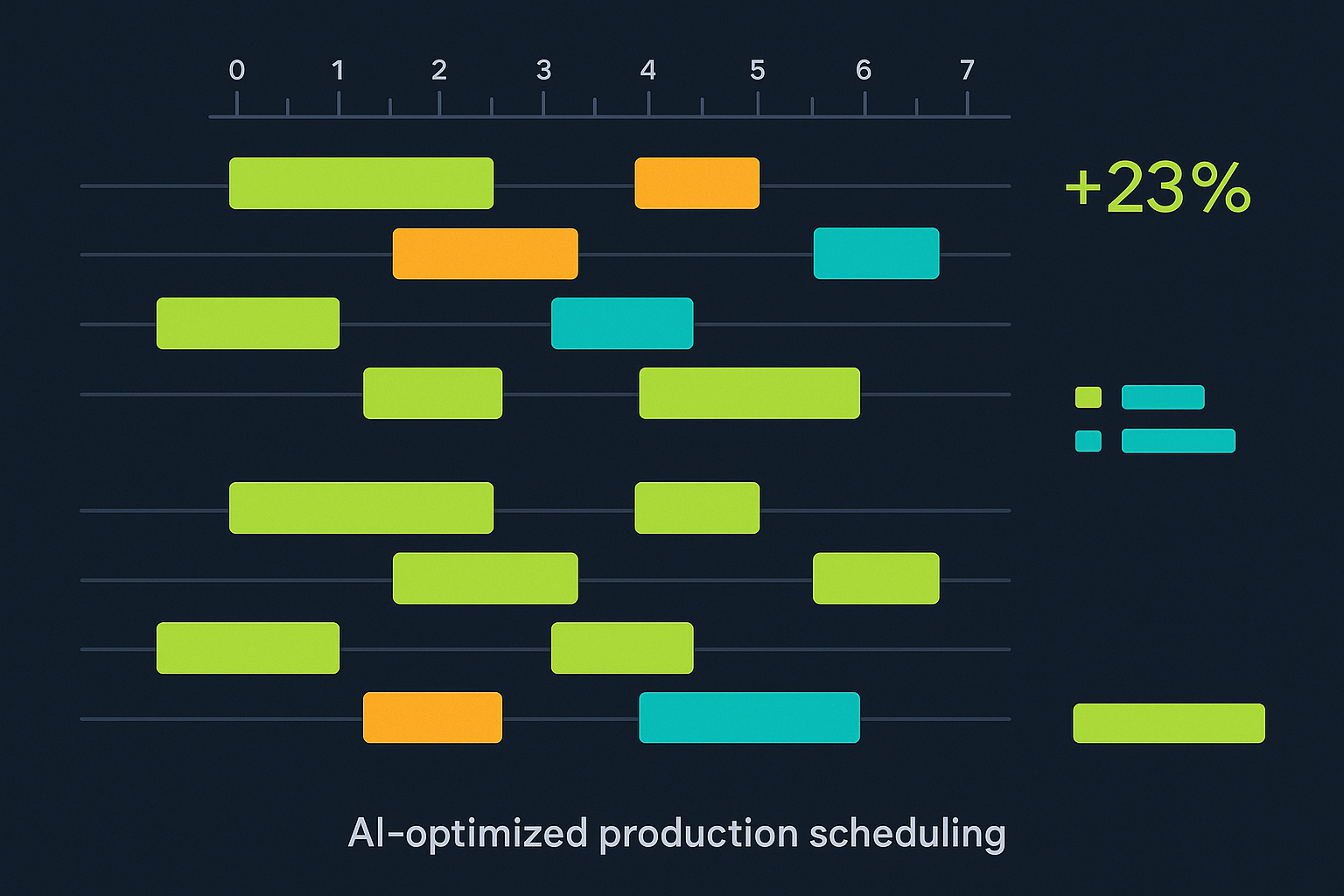
Traditional production scheduling is done weekly in a spreadsheet and breaks the moment anything changes. AI scheduling systems continuously re-optimise based on real-time inputs — machine availability, workforce, material supply, demand changes — keeping production flowing even when disruptions hit.
- Improve OEE by 15–25% through smarter sequencing
- Reduce changeover waste with AI-optimised run sequences
- Automatically replan when machine downtime or supply issues occur
- Balance workload across cells to eliminate bottlenecks
How to Get Started
You don't need to overhaul everything at once. Start with one high-impact area — typically predictive maintenance or defect detection — and run a structured DMAIC pilot. Use your existing Lean data as the training foundation for your AI model.
Our free DMAIC templates walk you through each phase of the pilot, and our built-in calculators help you quantify the impact before and after your AI intervention.
FREE RESOURCES
Ready to put this into practice?
Download free Lean Six Sigma templates, use our interactive calculators, and start your manufacturing improvement project today.