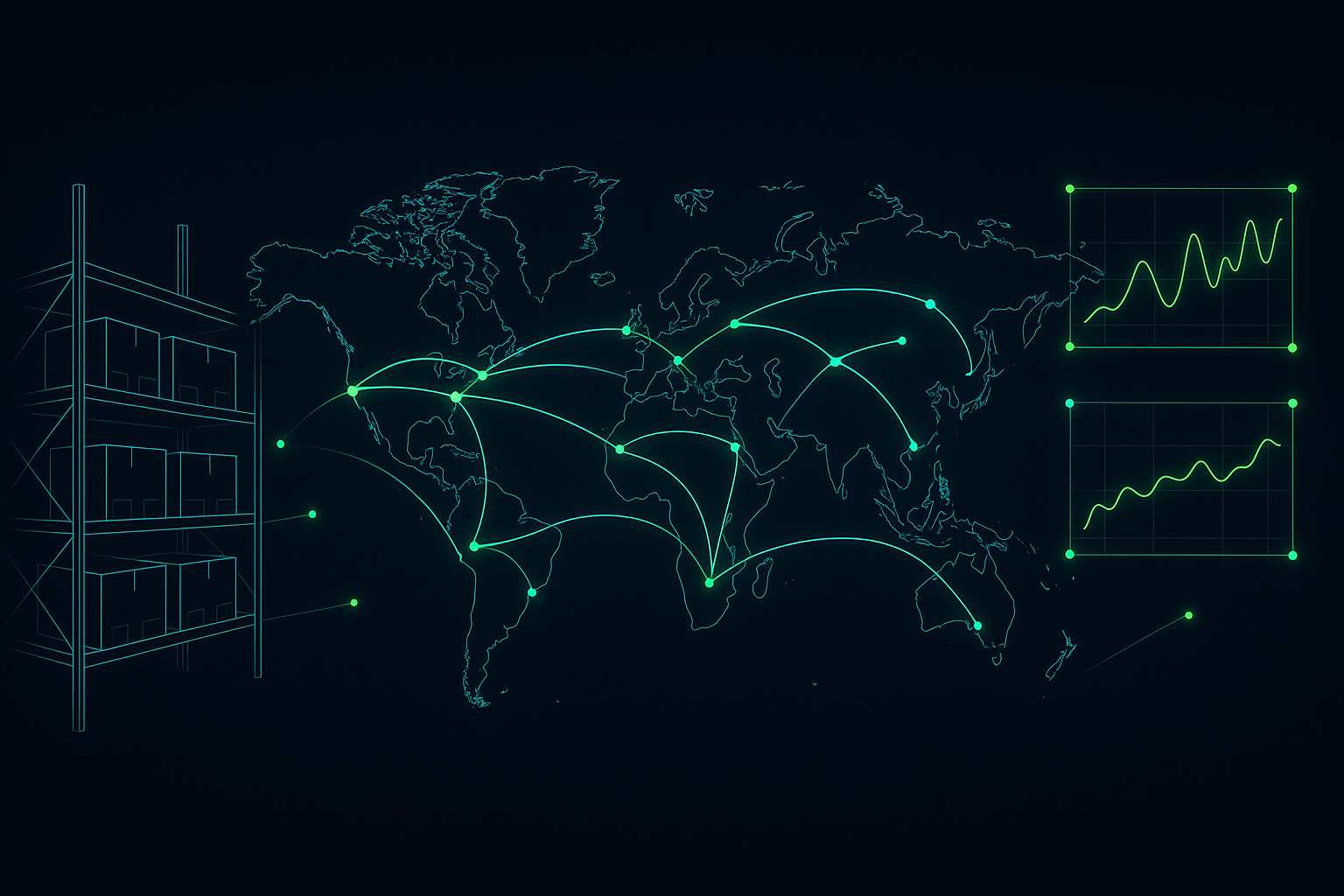
What is Lean AI in Supply Chain?
Lean supply chain management aims to eliminate all forms of waste — overproduction, excess inventory, transportation inefficiency, waiting — across the end-to-end flow from supplier to customer. AI takes every one of these traditional Lean tools and supercharges them with real-time data processing, predictive analytics, and autonomous decision-making at a scale no human team could match.
The result is a supply chain that doesn't just respond to disruption — it anticipates it. AI-enabled Lean supply chains carry less inventory, achieve higher service levels, manage supplier risk more proactively, and continuously improve without requiring dedicated improvement events.
AI Demand Forecasting
Replace gut-feel ordering with data-driven demand intelligence.
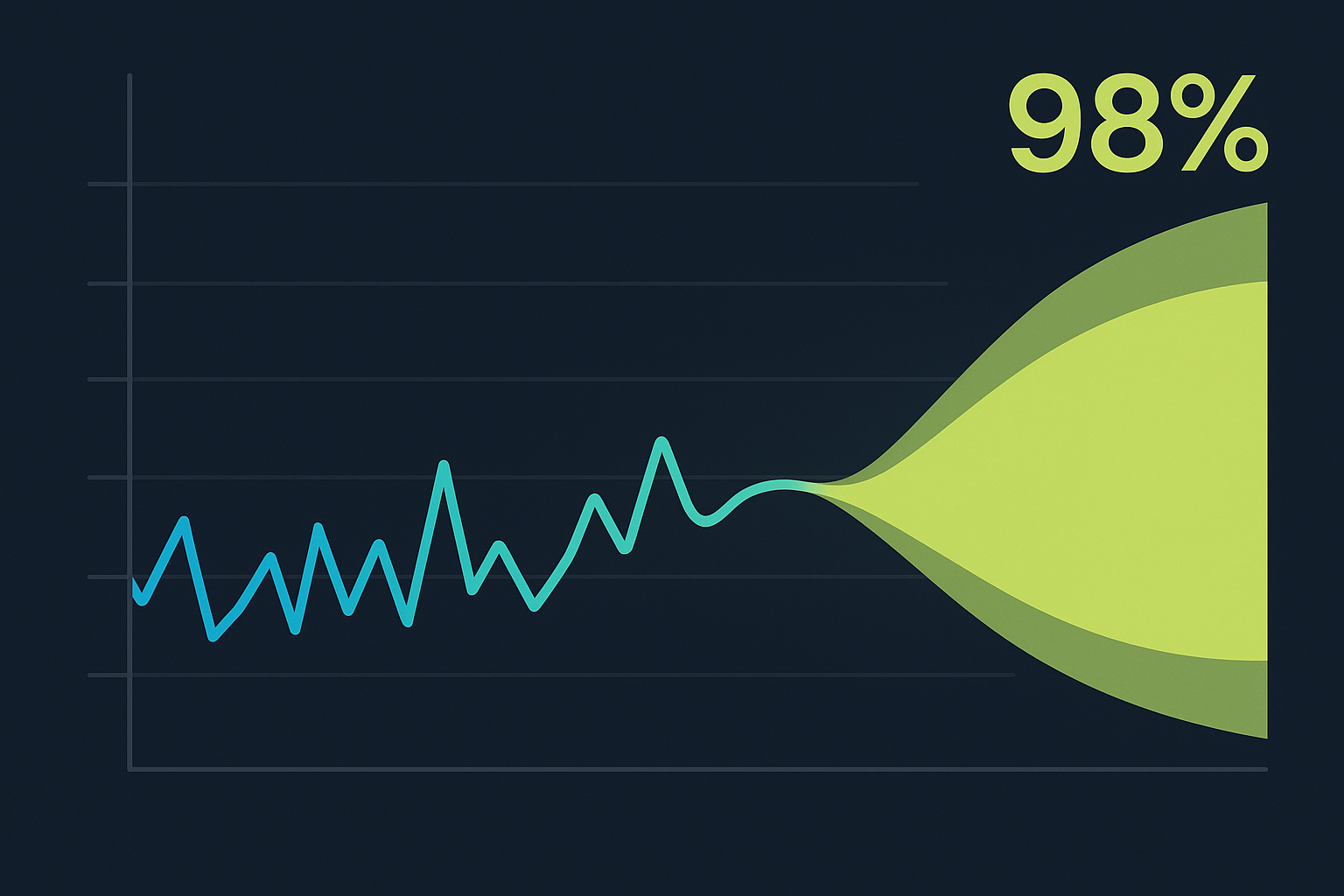
Traditional demand forecasting relies on historical averages and human judgement — both of which fail during demand spikes or disruptions. AI models incorporate hundreds of variables — seasonality, promotions, weather, economic indicators — to produce forecasts that are consistently more accurate, updated in real time, and disaggregated to SKU and location level.
- Achieve 95%+ forecast accuracy at SKU level
- Reduce safety stock requirements by 20–40%
- Automatically recalibrate models when patterns change
- Integrate with ERP and planning systems for automated replenishment
Real-Time Supplier Risk Management
Know about supplier problems before they become your problems.
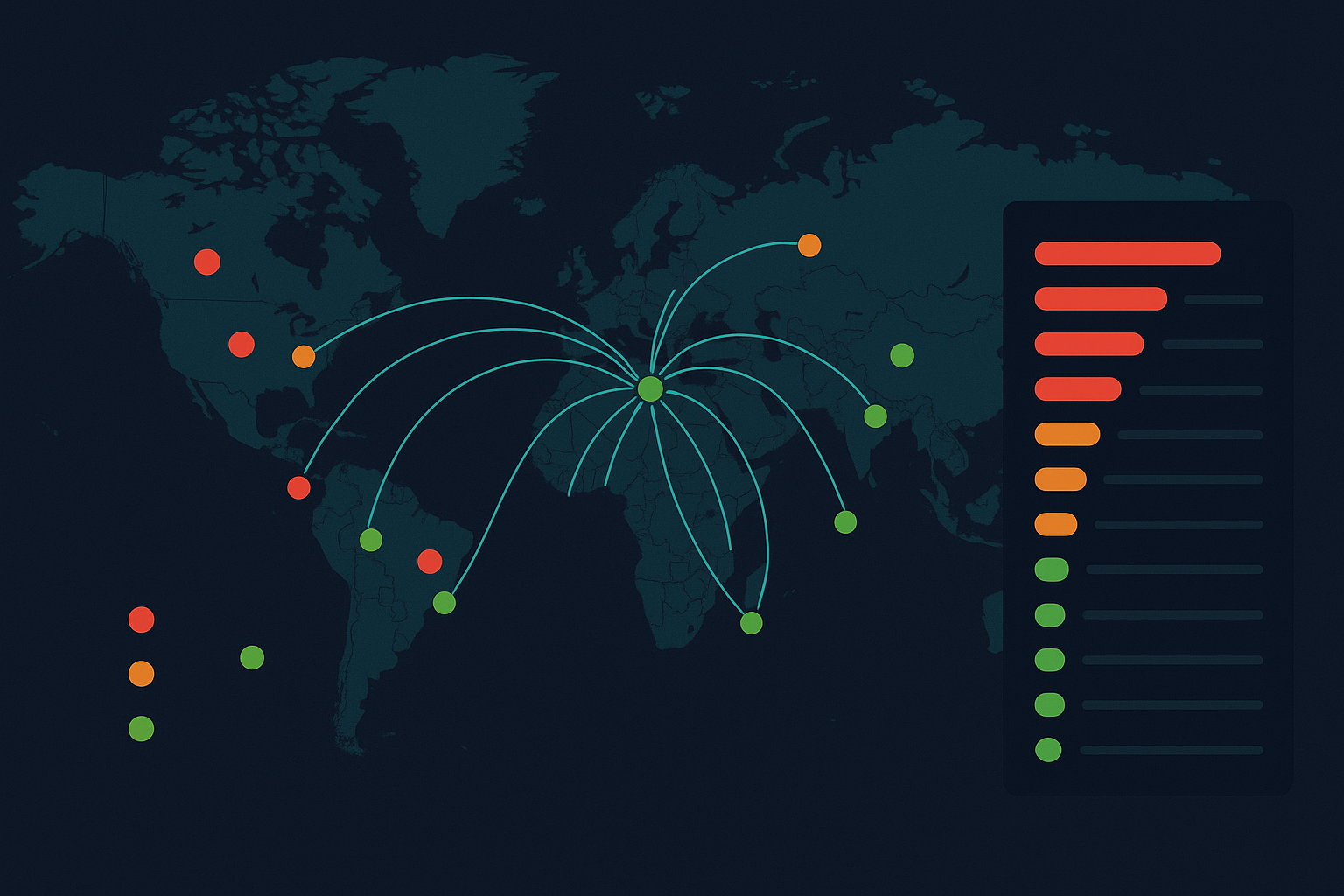
AI continuously monitors your supplier base — scanning news feeds, financial reports, logistics data and quality metrics — to generate real-time risk scores for every supplier. When a supplier's score deteriorates, procurement teams are alerted automatically and alternative sourcing options are surfaced before a disruption occurs.
- Monitor 100% of your supplier base continuously
- Detect financial, geopolitical and operational risks early
- Automatically trigger dual-sourcing reviews for high-risk suppliers
- Reduce supply disruptions by up to 35%
All Key Applications
- Demand Forecasting: AI processes hundreds of variables to deliver SKU-level forecasts with 95%+ accuracy.
- Inventory Optimisation: AI dynamically sets reorder points and safety stock levels based on real-time demand and lead time variability.
- Supplier Risk Management: AI continuously monitors supplier health, flagging risks before they cause disruptions.
- Route & Logistics Optimisation: AI calculates optimal delivery routes in real time, reducing transport costs and carbon footprint.
- Warehouse Slotting: AI optimises product placement to minimise pick time and reduce handling waste.
- Returns Management: AI predicts return rates and automates routing decisions to minimise reverse logistics waste.
How to Get Started
Start with demand forecasting — it has the clearest ROI and fastest payback. Map your current forecasting process, quantify the error rate and cost of the resulting inventory, then run a parallel AI forecast for 8–12 weeks to prove the accuracy improvement.
Our free DMAIC templates and supply chain calculators give you the framework to structure the pilot properly — with the before/after metrics you'll need to justify the investment.
FREE RESOURCES
Ready to put this into practice?
Download free Lean Six Sigma templates, use our interactive calculators, and start your improvement project today.