Escalation Matrix Template
Define clear escalation paths — who is contacted, when and with what information — so issues get resolved at the right level, fast.


What is a Escalation Matrix Template?
An Escalation Matrix Template maps problem severity levels to the appropriate escalation contacts, response times and resolution authorities. It ensures issues are resolved at the right level without delay.
When to use a Escalation Matrix Template
Use it in the Control phase as a companion to the response plan and KPI dashboard. It should be displayed alongside the visual management board so the team can act immediately when a problem arises.
Who should use a Escalation Matrix Template
- Process owners — managing issue escalation from the team floor to management as part of daily operations
- Team leaders and supervisors — knowing when and how to escalate problems before they cause significant impact
- Black Belts and Green Belts — building the escalation framework as part of Control phase handover
- Operations and quality managers — receiving escalated issues and taking authorised corrective action
Vote yes and we’ll prioritise a quick walkthrough showing you exactly how to use it.
How to use a Escalation Matrix — step by step
-
1Write the problem statement at the top
Start with a clear, factual problem statement. 'Machine stopped' or 'Customer received wrong item' — specific, observable, factual. Vague problems produce vague root causes.
-
2Ask 'Why did this happen?' — Why 1
Write down the first-level cause. This is usually a symptom or a direct cause — not yet the root. Examples: 'Machine overheated', 'Wrong item was picked'.
-
3Ask 'Why did that happen?' — Why 2
Challenge the previous answer. Keep the team focused on causes, not blame. If the answer is 'human error', push further — why did the human make the error?
-
4Continue to Why 3, 4 and 5
Keep going until you reach a cause that is systemic — a missing process, a failed control, a gap in training or a design flaw. The number five is a guide, not a rule.
-
5Check the logic by reading upward
Read the chain back to front: 'Because of X, Y happened, which caused Z.' If the logic holds, you have a valid chain. If it breaks, revisit the step where it breaks.
-
6Identify the actionable root cause
The root cause is the deepest level where a corrective action can prevent recurrence. Document it clearly — this feeds your Improve phase solution design.
-
7Validate before acting
Do not jump to solution immediately. Check whether data or observation confirms the root cause is real and significant before committing resource to fixing it.
Worked example — Customer Order Fulfilment Escalation
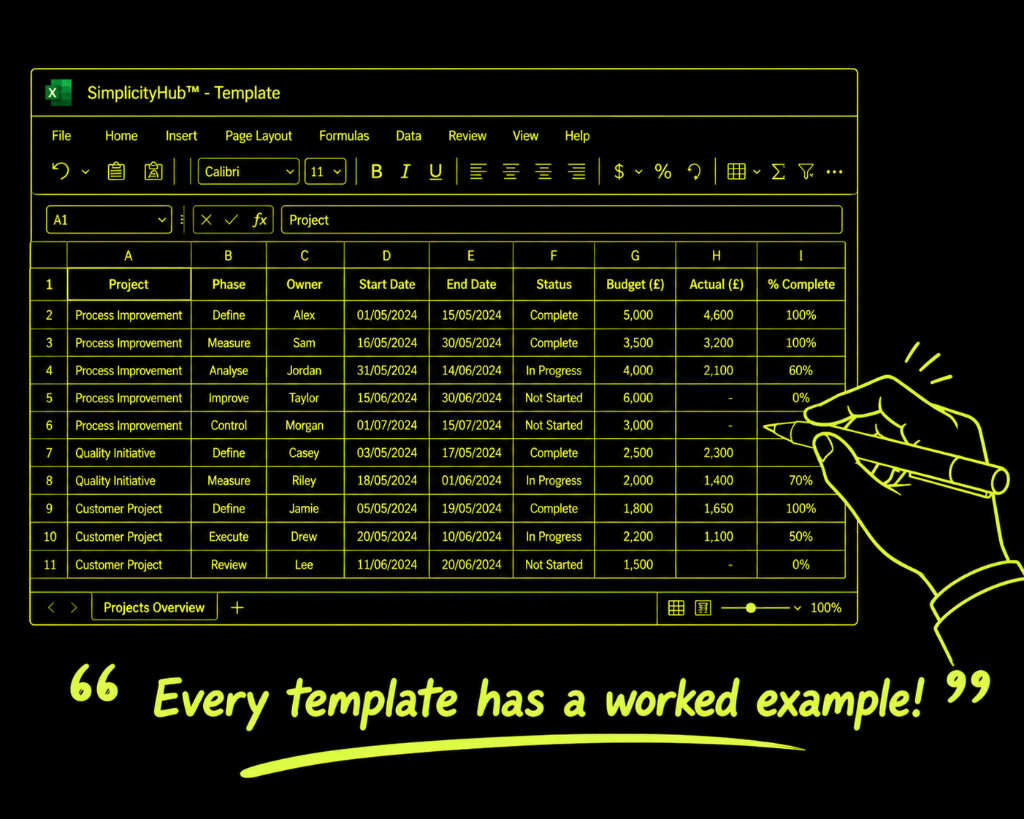
An e-commerce team built a 4-level escalation matrix for order fulfilment — from operator self-correction at Level 1 to director intervention for system outages at Level 4 — with defined response times at each level.
Common mistakes — and how to avoid them
Unnamed or unavailable contacts. An escalation matrix with a job title but no named person and no backup contact is not a working plan. Name individuals and always include a secondary.
No response time expectations. Without defined response times, escalation stalls as the responder decides how urgent to treat it. Define maximum response times at each level.
Matrix too complex to use under pressure. If the team has to read 10 conditions to decide which level to escalate to, it won't be used in a real incident. Keep it simple and visual.
Not reviewing after incidents. After every significant escalation event, review whether the matrix worked as intended. Update it based on what you learn.
Tips for getting better results
Display the matrix visibly at the workstation. Post Level 1 and Level 2 contacts at the point of work. People need to find contacts in seconds, not minutes.
Test it with a simulated incident. Run a tabletop walk-through with the team before go-live. You will find gaps and ambiguities before they matter.
Align with your organisation's existing escalation processes. Where a corporate or site-level escalation process already exists, design your matrix to fit within it — not to replace it.
Frequently asked questions
What is an escalation matrix?
An escalation matrix defines who should be notified and what action should be taken when a process goes out of control or an issue cannot be resolved at the current level. It sets clear thresholds, timescales and named contacts.
When should I use an escalation matrix?
Use it in the Control phase once your control plan is in place. The escalation matrix handles the 'what do we do when it goes wrong' question that the control chart alone cannot answer.
What levels should an escalation matrix include?
Typically three levels: Level 1 is the operator or team leader (immediate response), Level 2 is the supervisor or CI lead (same shift), Level 3 is management or specialist support (within 24 hours).