
What is a Escalation Guide Template?
An Escalation Guide Template provides clear, simple instructions for frontline staff on when and how to escalate a problem — who to contact, what information to provide and what to expect in response. It removes ambiguity at the moment when fast action matters most.
When to use a Escalation Guide Template
Use it in the Control phase as a simplified, frontline-facing companion to the more detailed Escalation Matrix. Display it visibly at the point of work so staff can act immediately when a problem arises.
Who should use a Escalation Guide Template
- Frontline operators and staff — knowing exactly what to do when a process problem exceeds their authority to resolve
- Team leaders — understanding when to act themselves and when to escalate to the next level of management
- Black Belts and process owners — providing the frontline team with clear escalation instructions as part of the Control phase handover
- New starters and agency staff — following a clear guide without needing to know the full organisational context
Vote yes and we’ll prioritise a quick walkthrough showing you exactly how to use it.
How to use an Escalation Guide — step by step
- 1Define the scope of the guide
Which process or area does this guide cover? Be specific — one process, one area.
- 2Define the trigger conditions
What events or signals should prompt the operator to escalate? Use simple, observable language — not statistical jargon.
- 3Map the escalation path
Level 1 (operator self-resolves) → Level 2 (team leader) → Level 3 (manager/specialist). Three levels is enough for most frontline processes.
- 4Name contacts for each level
For each level, provide name, role and contact method. Include a backup for when the primary contact is unavailable.
- 5Define what information to pass on
Tell the escalator exactly what information to communicate: what happened, when, how many times, any immediate action taken.
- 6Specify the expected response time
For each level, state the maximum response time. This prevents ambiguity about urgency.
- 7Display the guide at the workstation
Laminate it and post it where it will be seen. A guide in a folder is not a guide.
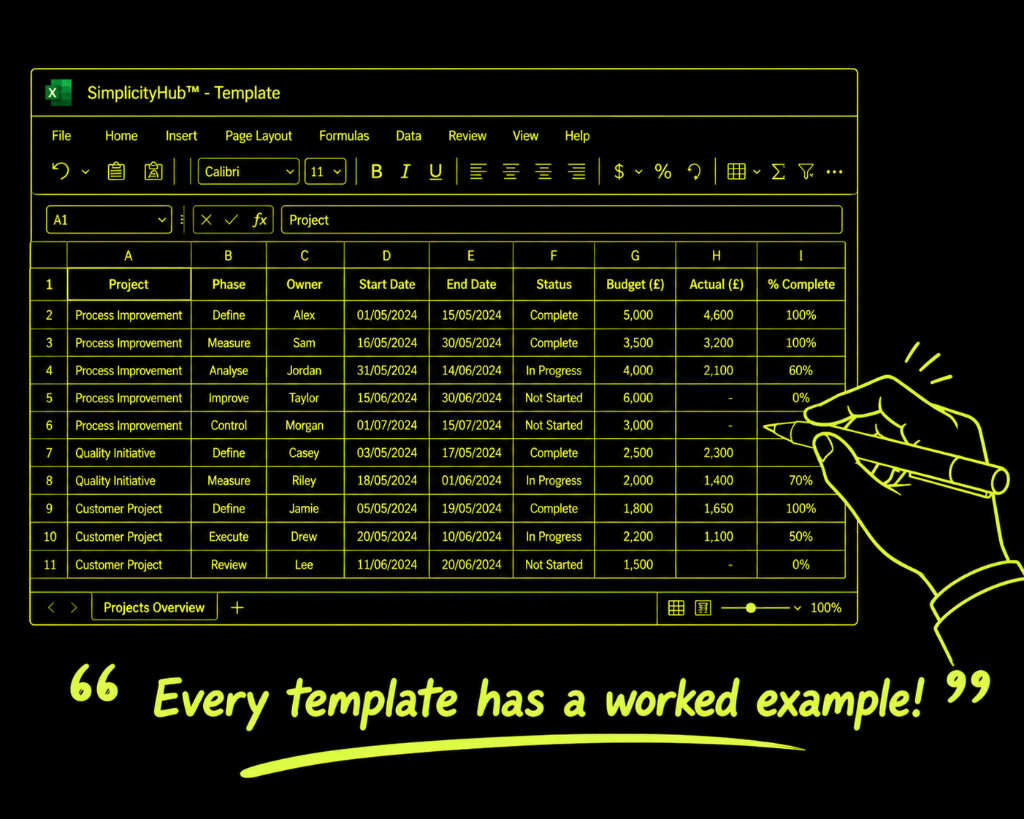
Worked example — Production Line Quality Escalation Guide
A production team created a one-page escalation guide for their assembly line — with three trigger conditions, two escalation levels and direct contact details for the quality engineer and shift manager, laminated and posted at each workstation.
Common mistakes — and how to avoid them
Too much detail for frontline use. A 4-page escalation document will not be read under pressure. The guide must fit on one laminated sheet.
Out-of-date contact details. Escalation guides with wrong names or numbers destroy trust and create delays. Review and update every time contacts change.
No response time expectations. Without defined response times, the escalator doesn't know how long to wait before escalating further. Every level needs a maximum response time.
Confusing it with the full escalation matrix. The guide is for frontline use — simplified and visual. The matrix is for management — detailed and comprehensive. Keep them separate.
Tips for getting better results
Use pictures or icons. Visual cues (traffic lights, simple diagrams) make the guide easier to follow under pressure than text-only formats.
Test it with a new starter. If a new starter can follow the guide correctly without help, it is well designed. If they hesitate or ask questions, simplify it.
Review after every escalation event. Each real escalation reveals whether the guide worked as intended. Update it based on what you learn.
Frequently asked questions
What triggers an escalation?
Define specific measurable triggers — a metric breaches a control limit, a critical step fails, or an issue cannot be resolved within a defined time.
How many escalation levels?
Typically three: team level, team leader level, and sponsor level. More levels slow response time.
Who decides the escalation path?
The process owner and sponsor agree it during Control and document it in the control plan.
How should escalation be communicated?
Specify the channel and expected response time for each level.
Advanced Toolkit Packs — available now
Structured, ready-to-use template packs designed for real improvement work. Pick the pack that matches your project and get started straight away.
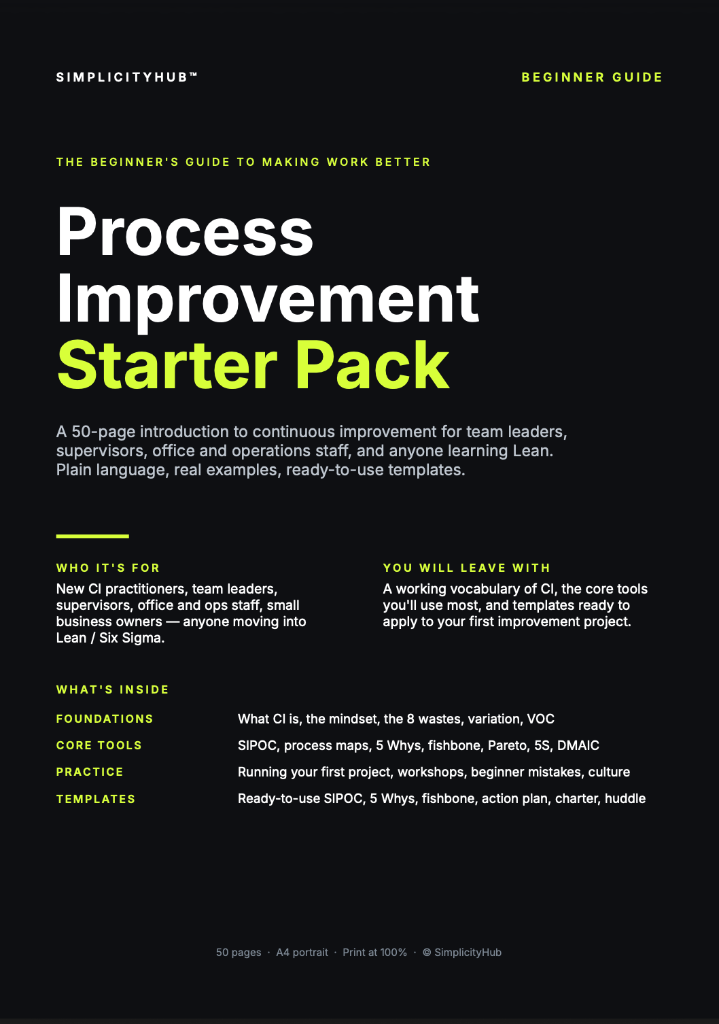
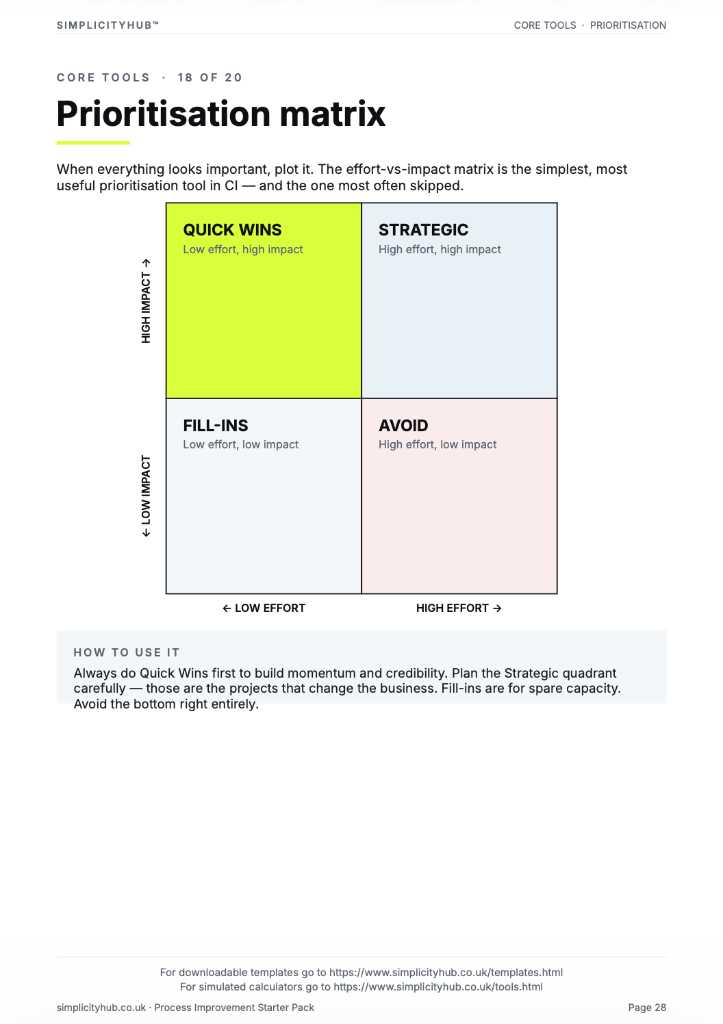
Process Improvement Starter Pack
A starter pack for identifying improvement opportunities, measuring baselines and planning action.
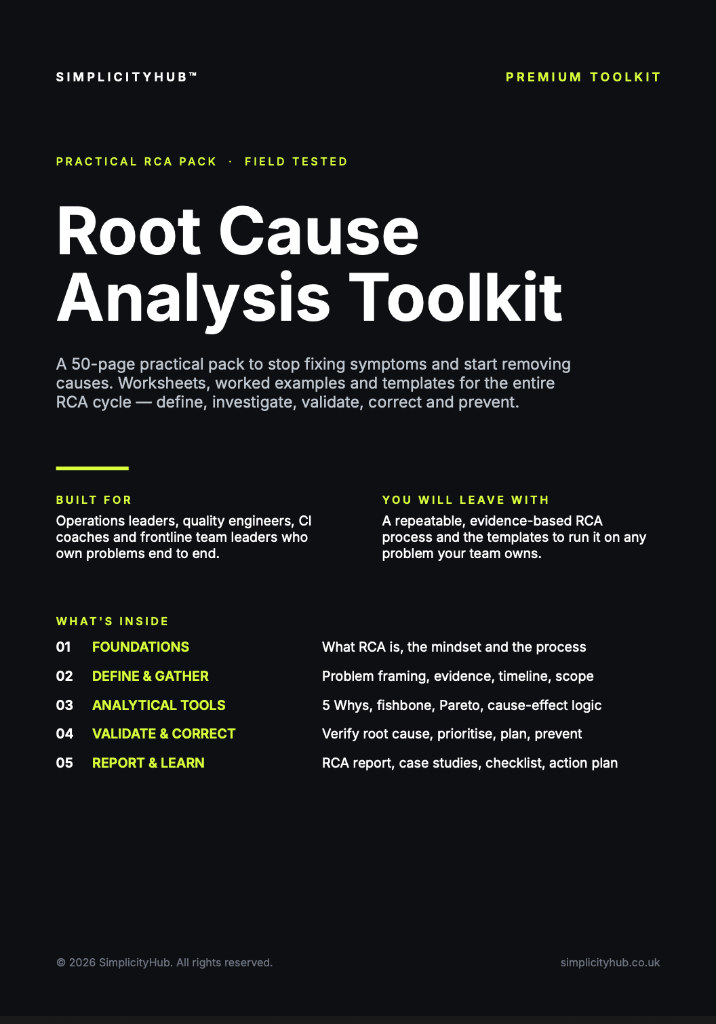
Root Cause Analysis Toolkit
A practical RCA toolkit for defining problems, finding causes, validating evidence and creating action.
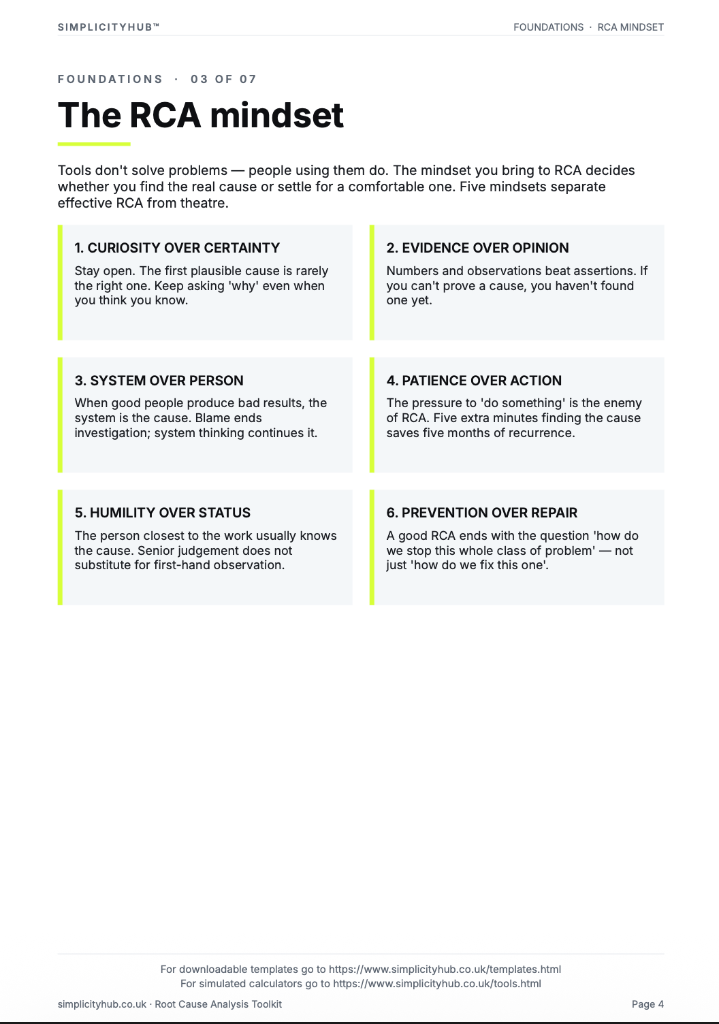
A3 Template Pack
A clean A3 problem-solving pack for concise, visual improvement thinking and follow-through.