What is a Control Plan Template?
A Control Plan is a living document that defines how the improved process will be monitored, measured and maintained after the improvement team hands back to operations. It specifies what to measure, how often, who is responsible, and what to do if the process goes out of control.
The Control Plan is the primary handover document of the Control phase. It ensures that the improvement is sustained beyond the project — and that the process owner has everything they need to detect and respond to problems without the project team's involvement.
A well-written Control Plan makes the difference between an improvement that lasts and one that reverts within six months.
When to use a Control Plan Template
Create the Control Plan before you close the project — ideally in the Improve phase, as solutions are being tested, so it is ready for handover at Control. Use it when:
- You are moving from Improve to Control and need to hand back to the process owner
- The improved process needs ongoing monitoring to detect regression
- You want to define clear reaction plans so the team knows what to do if KPIs slip
- The sponsor needs evidence that the improvement will be sustained
How to get the most from this template
- Complete the control plan during the Control phase, not after handover — it should be ready before the project closes
- Specify the control method for each parameter: statistical process control, inspection, or automated alarm
- Include the reaction plan — what happens when the process goes out of control, not just the monitoring frequency
Common mistake: listing every measurable parameter instead of the critical ones — a control plan that tries to monitor everything becomes impossible to maintain.
Who should use a Control Plan Template
- Green Belts and Black Belts — as the primary Control phase deliverable on every DMAIC project
- Process Owners and Operations Managers — to understand what they are taking ownership of at handover
- Quality Teams — to maintain process standards and detect drift over time
- CI Managers — to verify that completed projects have adequate controls in place before closure
Vote yes and we’ll prioritise a quick walkthrough showing you exactly how to use it.
How to complete the Control Plan
Build the Control Plan with the process owner, not just for them. If the person responsible for sustaining the process does not understand or agree with the controls, they will not follow them.
How to complete the Control Plan — step by step
-
1List the critical process parameters and outputs
Identify the key input variables (X's) and output measures (Y's) that most affect process performance. These become the rows of your Control Plan.
-
2Define the specification and target for each
For each measure, write the target value and acceptable limits. These should align with customer requirements and your project goal statement.
-
3Define the measurement method
How will each measure be tracked? Manual check, system report, automated sensor, sample audit? Specify the tool, the system and the measurement procedure.
-
4Set the sample size and frequency
How often will it be measured, and how many units or records will be checked each time? Be realistic — a control that requires four hours of daily effort will not be sustained.
-
5Name the responsible owner
For each control measure, name the specific role responsible for measuring and recording. Avoid naming a team — individual accountability is what makes controls stick.
-
6Write the reaction plan
For each control, define what happens if the measurement goes outside the target range: who is notified, what immediate action is taken, and when to escalate.
-
7Review with the process owner and sponsor
Walk through the completed Control Plan with the process owner before handover. Confirm they understand every row and agree to the ownership. Get sponsor sign-off.
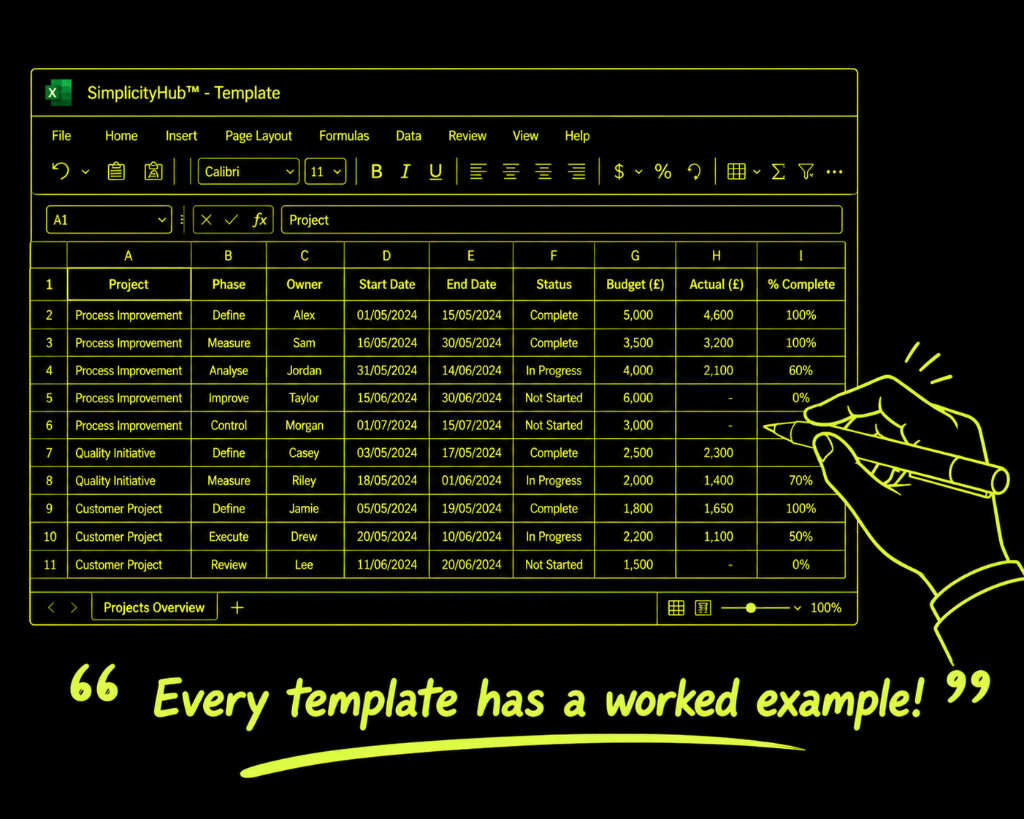
Worked example — Complaint Response Time Control
A completed Control Plan for a complaint response time improvement, showing KPIs, measurement frequency, owners and reaction plans for each control measure.
Common mistakes — and how to avoid them
Writing a Control Plan nobody reads. A Control Plan filed in a SharePoint folder is not a control. The document only has value if the process owner uses it regularly. Make it accessible, visual and simple.
Specifying unrealistic measurement frequency. Daily manual counts of 500 data points will not happen. Design controls that are achievable with the resources available — weekly system reports are more sustainable than daily manual checks.
No reaction plan. A Control Plan that tells you what to measure but not what to do when it goes wrong is incomplete. Every row needs a clear reaction plan with a named escalation path.
Handing over without training. The process owner cannot follow a Control Plan they do not understand. Walk them through every row, explain the rationale, and confirm they can interpret the data before you leave.
Tips for getting better results
Keep it to one page if possible. A Control Plan that fits on one page gets used. One that runs to ten pages gets filed. Prioritise the three to five most critical controls rather than documenting everything.
Link it to a visual dashboard. The most effective controls are visible. Post the key metrics on a team board or digital dashboard so performance is visible to everyone, not just the person doing the measurement.
Schedule a 90-day review. Before you close the project, schedule a follow-up review 90 days after handover. This gives you one final checkpoint to confirm the controls are working and the process owner is confident.
Download the Control Plan Template
A clean, editable Excel template for immediate use — structured, professional and ready to fill in.
Frequently asked questions
What is the purpose of a control plan?
To sustain gains made during Improve. It defines what to monitor, acceptable limits, and response actions if limits are breached.
Who owns it after the project closes?
The process owner — not the project lead. Handing it over is a key milestone in the Control phase.
How detailed should it be?
Detailed enough to be self-contained — anyone picking it up should know what to measure, how, and the response plan.
When should it be updated?
When the process changes, monitoring data shows controls are insufficient, or a new risk is identified.
Advanced Toolkit Packs — available now
Structured, ready-to-use template packs designed for real improvement work. Pick the pack that matches your project and get started straight away.
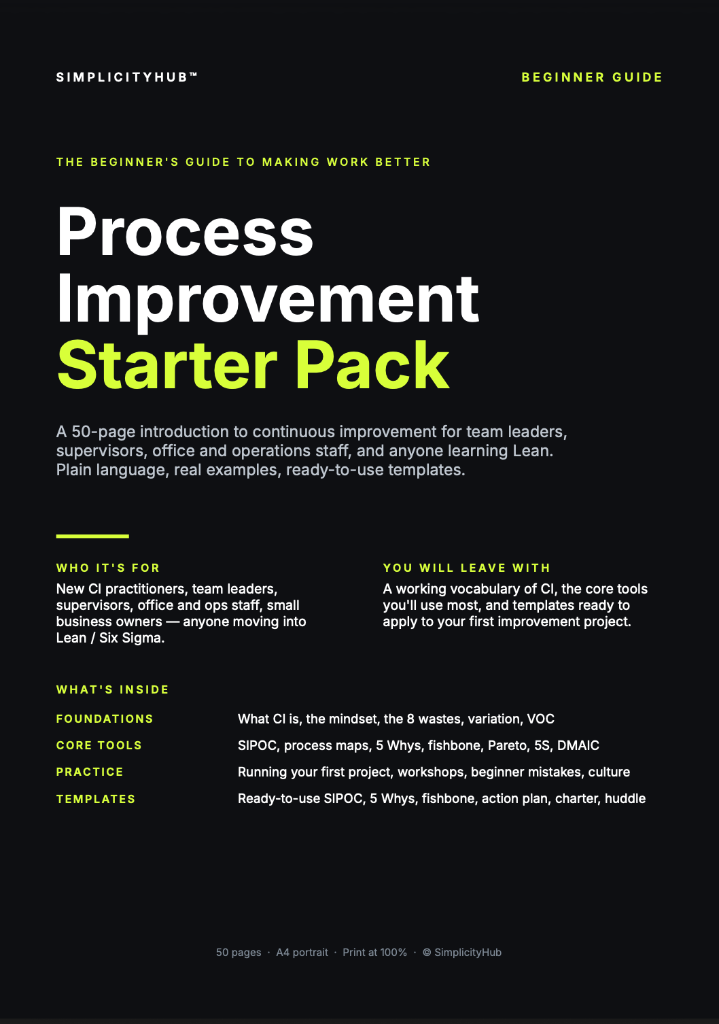
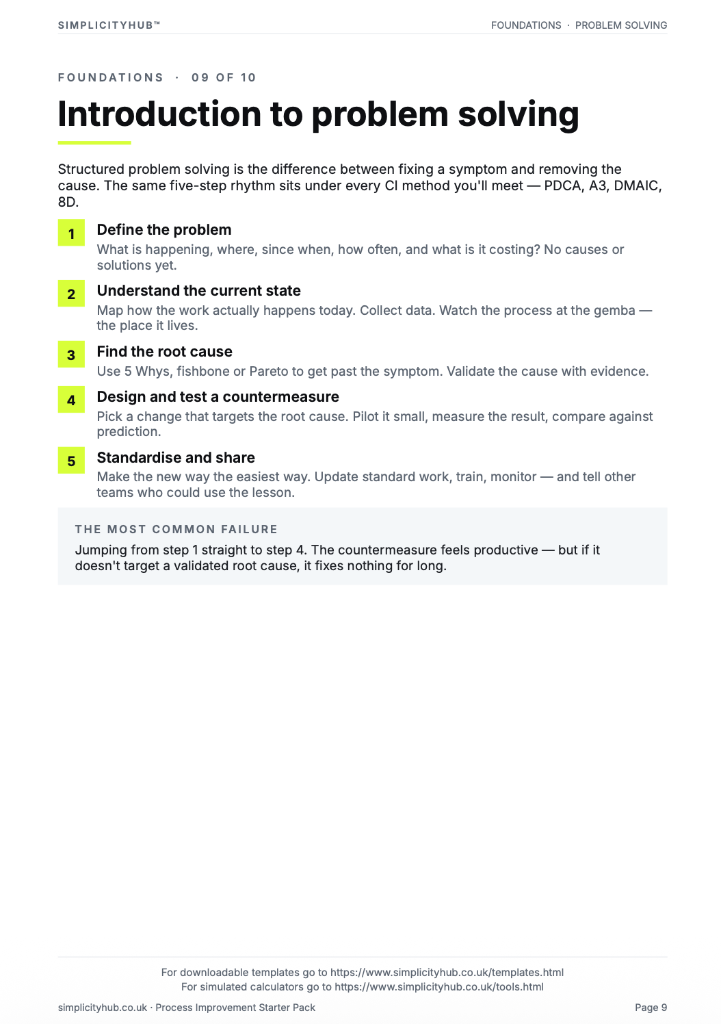
Process Improvement Starter Pack
A starter pack for identifying improvement opportunities, measuring baselines and planning action.
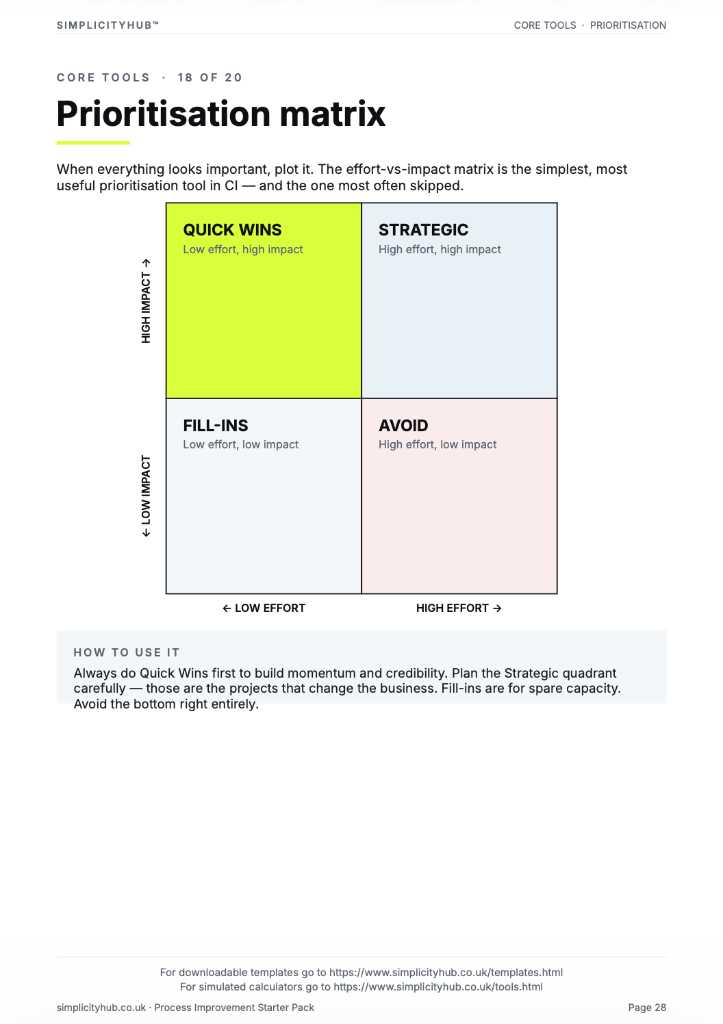
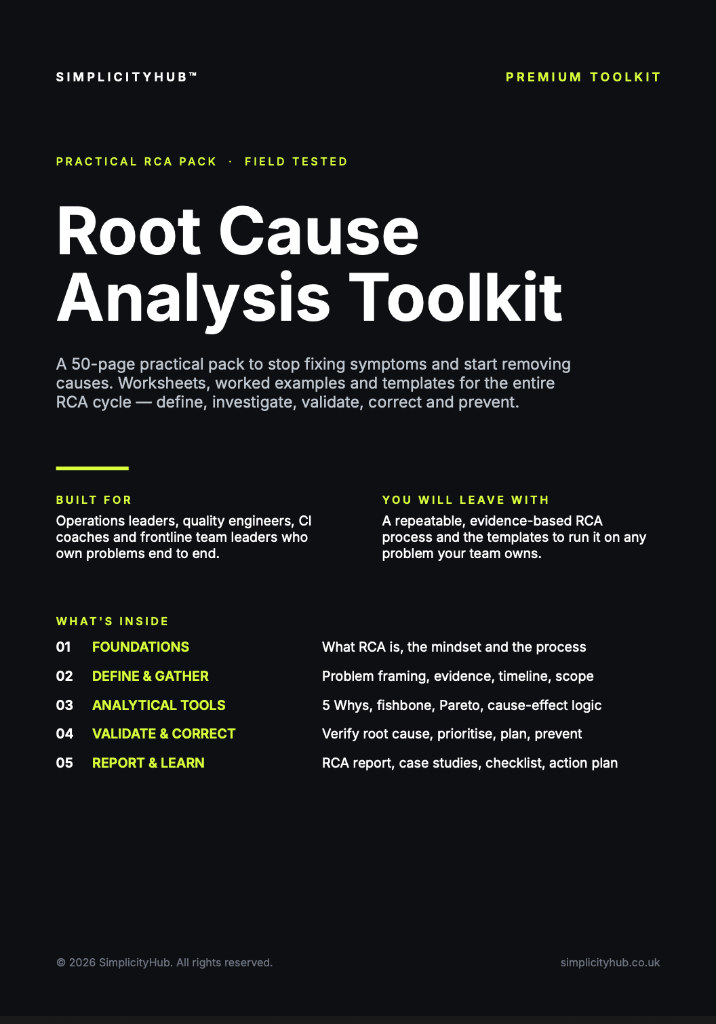
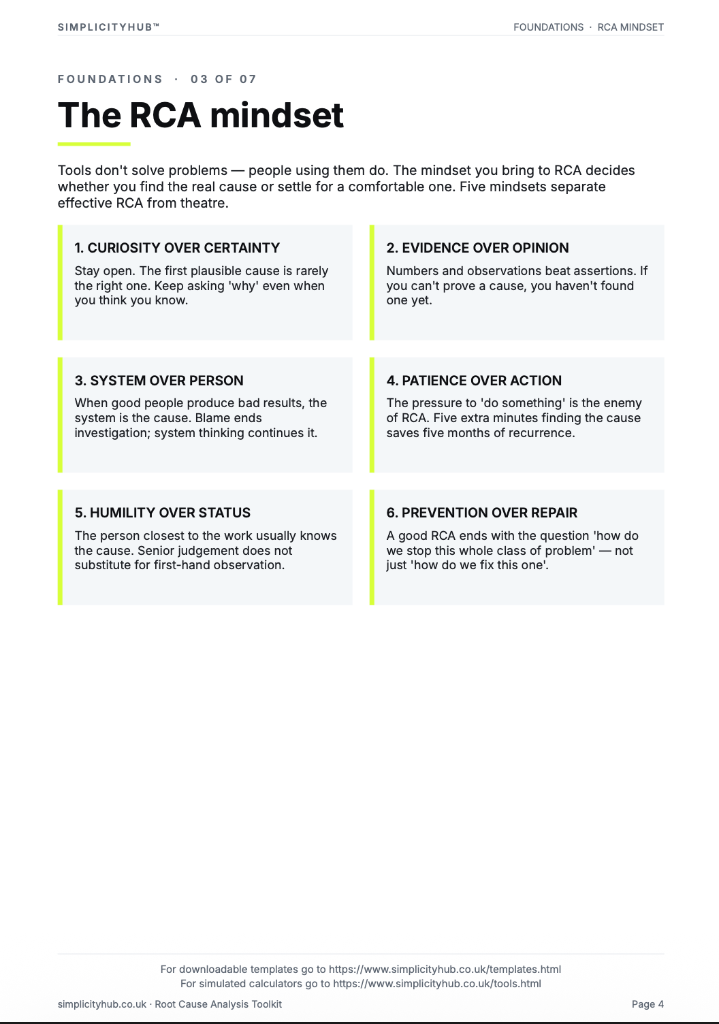
Root Cause Analysis Toolkit
A practical RCA toolkit for defining problems, finding causes, validating evidence and creating action.
A3 Template Pack
A clean A3 problem-solving pack for concise, visual improvement thinking and follow-through.