Kano Analysis Template
Categorise customer requirements into Must-Be, Performance and Delighter attributes so you know what to fix first.


What is a Kano Analysis Template?
A Kano Analysis Template provides a structured framework for categorising customer requirements into Must-Be, Performance and Delighter (Attractive) attributes based on customer survey responses.
When to use a Kano Analysis Template
Use it in the Define or Measure phase after gathering Voice of the Customer data. Kano analysis is particularly powerful before prioritising improvement scope or designing a new product or service.
Who should use a Kano Analysis Template
- Black Belts and Green Belts — prioritising customer requirements for improvement focus in the Define or Measure phase
- Product managers and owners — deciding which features to invest in based on their actual impact on customer satisfaction
- Customer experience teams — understanding which service attributes create loyalty versus which merely prevent dissatisfaction
- Innovation and design teams — identifying the Attractive features that will differentiate their product or service in the market
Vote yes and we’ll prioritise a quick walkthrough showing you exactly how to use it.
How to use a Kano Analysis — step by step
-
1Write the problem statement at the top
Start with a clear, factual problem statement. 'Machine stopped' or 'Customer received wrong item' — specific, observable, factual. Vague problems produce vague root causes.
-
2Ask 'Why did this happen?' — Why 1
Write down the first-level cause. This is usually a symptom or a direct cause — not yet the root. Examples: 'Machine overheated', 'Wrong item was picked'.
-
3Ask 'Why did that happen?' — Why 2
Challenge the previous answer. Keep the team focused on causes, not blame. If the answer is 'human error', push further — why did the human make the error?
-
4Continue to Why 3, 4 and 5
Keep going until you reach a cause that is systemic — a missing process, a failed control, a gap in training or a design flaw. The number five is a guide, not a rule.
-
5Check the logic by reading upward
Read the chain back to front: 'Because of X, Y happened, which caused Z.' If the logic holds, you have a valid chain. If it breaks, revisit the step where it breaks.
-
6Identify the actionable root cause
The root cause is the deepest level where a corrective action can prevent recurrence. Document it clearly — this feeds your Improve phase solution design.
-
7Validate before acting
Do not jump to solution immediately. Check whether data or observation confirms the root cause is real and significant before committing resource to fixing it.
Worked example — Online Banking Feature Prioritisation
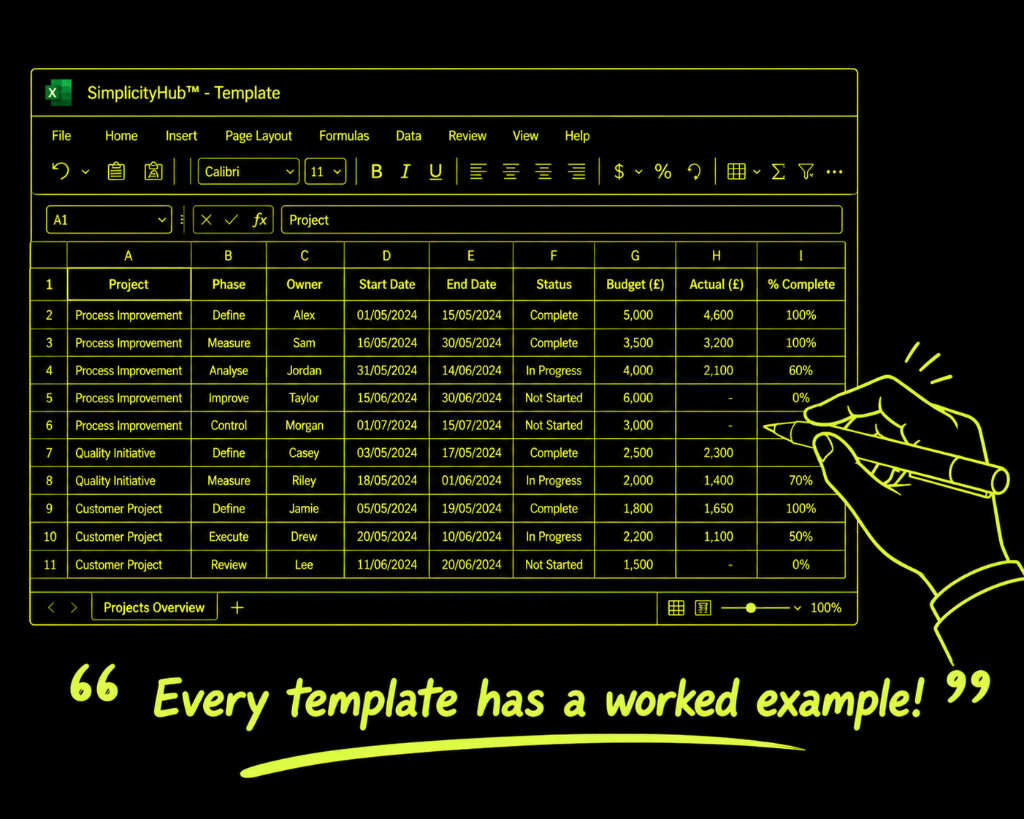
A digital team ran Kano analysis on 12 proposed app features with 65 customers — finding that instant notifications were Must-Be (absence caused strong dissatisfaction), financial dashboards were Performance (more detail = more satisfaction) and voice commands were Attractive (unexpected delight).
Common mistakes — and how to avoid them
Using Kano to justify features already selected. Kano analysis should inform decisions, not validate them. If the survey is run after the feature roadmap is set, it has no influence.
Too small a sample. A sample of fewer than 20 customers produces unreliable classifications. Aim for 30+ for initial insights and 80+ for statistical confidence.
Ignoring category shifts over time. Attractive features become Performance features and then Must-Be features as customer expectations rise. Re-run Kano analysis periodically.
Not acting on the Must-Be findings. Must-Be failures cause strong dissatisfaction. If your analysis reveals Must-Be attributes that are not being consistently delivered, fix them before investing in Attractive features.
Tips for getting better results
Include the dysfunctional question for every feature. The dysfunctional question (how do you feel if this feature is absent?) is essential for correct classification. Don't shortcut the survey by omitting it.
Use Kano to deprioritise as well as prioritise. Indifferent features (customers don't care either way) are investment traps. The analysis gives you permission to stop working on them.
Cross-segment the results. Different customer segments may classify the same feature differently. Segmenting by customer type often reveals important strategic insights.
Frequently asked questions
What are the Kano categories?
Kano analysis classifies requirements into five categories: Must-Be (basic expectations), One-Dimensional (more is better), Attractive (delighters), Indifferent (neither satisfies nor dissatisfies) and Reverse (features some customers actively dislike).
How do I conduct a Kano survey?
For each feature, ask two questions: a functional question (how do you feel if this feature is present?) and a dysfunctional question (how do you feel if this feature is absent?). The combination of answers determines the category.
Why is Kano analysis useful in Define?
It helps you focus your project on the features that will genuinely move the needle on customer satisfaction — rather than investing effort in things customers do not notice or value.