What is a Voice of the Customer Template?
Voice of the Customer (VOC) is a structured approach to capturing what customers actually need from a process or product — their requirements, expectations and pain points — in their own words. It translates customer feedback into specific, measurable requirements that the improvement project must address.
VOC distinguishes between what customers say they want, what they actually need, and what would delight them. This distinction prevents teams from solving the wrong problem or delivering improvements that customers do not value.
It is completed in the Define phase and directly feeds the Critical to Quality (CTQ) requirements that the project must achieve to deliver real customer value.
When to use a Voice of the Customer Template
Capture VOC at the very start of a project — before you define success criteria or scope. Use it when:
- The problem being solved has a direct impact on customers (internal or external)
- You want to ensure the project addresses what customers care about, not just what operations finds inconvenient
- Customer satisfaction data shows a problem but does not identify the specific driver
- You need to establish CTQ requirements for the Measure phase
Who should use a Voice of the Customer Template
- Green Belts and Black Belts — to capture customer requirements in the Define phase of DMAIC
- Customer Experience Teams — to systematically translate feedback into improvement priorities
- Operations and Quality Managers — to ensure improvement work addresses what customers actually care about
- Product and Service Teams — when designing or redesigning services to meet customer needs
Vote yes and we’ll prioritise a quick walkthrough showing you exactly how to use it.

How to capture and use Voice of the Customer
VOC is not a survey. It is a combination of methods — interviews, observation, complaints analysis, focus groups — that together give a rich picture of what customers need and where the current process falls short.
How to capture and use Voice of the Customer — step by step
-
1Identify your customers
Who are the customers of this process? There may be multiple customer groups — direct recipients, downstream users, end consumers. List them all. VOC from one group may be very different from another.
-
2Choose your VOC collection methods
Select two or three methods suited to your customer groups: direct interviews, focus groups, complaint and feedback data analysis, observation at the point of service, surveys. Each method reveals different types of insight.
-
3Collect customer statements
Gather verbatim customer statements — their exact words, not your interpretation. 'I never know where my order is' is a customer statement. 'Customers want better tracking' is your interpretation.
-
4Translate statements into needs
For each verbatim statement, identify the underlying need. 'I never know where my order is' → Need: visibility of order status throughout the process.
-
5Translate needs into CTQs
Convert each need into a measurable CTQ requirement: a specific, quantifiable standard the process must meet. Need: visibility → CTQ: customer can check order status at any point and receive an update within 1 hour.
-
6Prioritise CTQs
Not all CTQs are equally important. Use customer importance ratings or a Kano model to identify which CTQs are must-haves versus delighters. Focus improvement effort on the must-haves first.
-
7Validate with customers
Share the CTQ requirements back with customers to confirm they reflect what was meant. A CTQ your customers do not recognise as their need is not a real requirement.
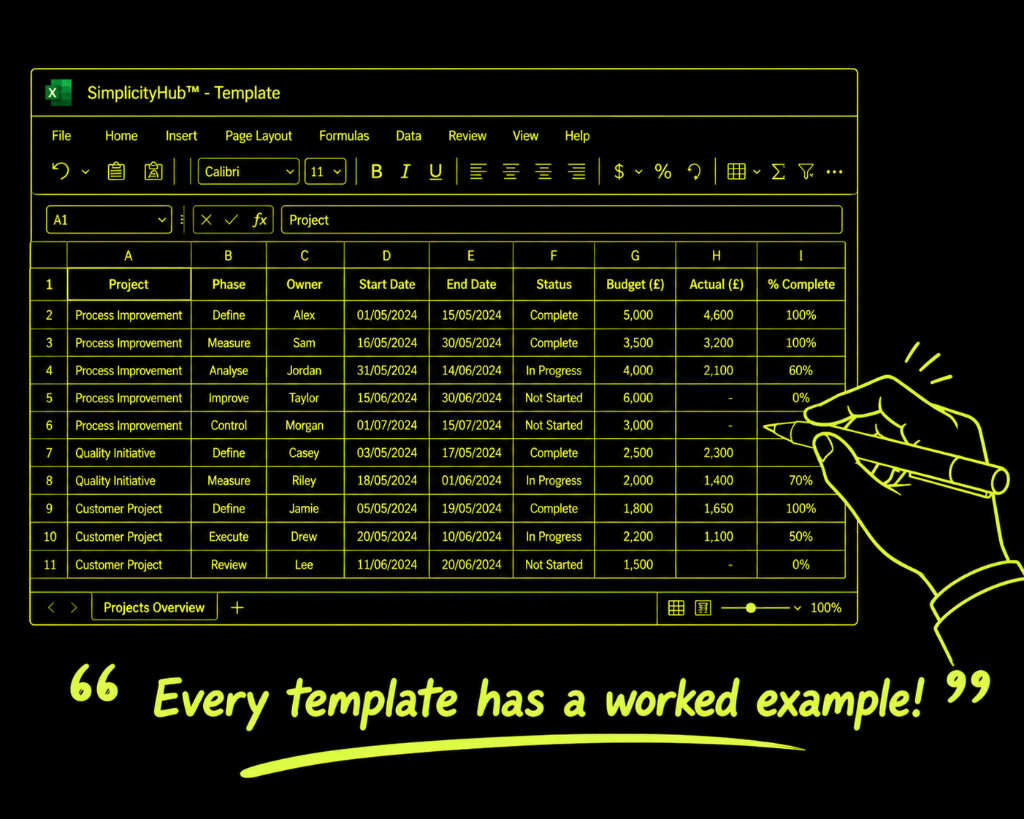
Worked example — Delivery Experience VOC Study
A completed VOC analysis for a delivery experience project, showing customer statements, translated needs and measurable CTQ requirements with importance ratings.
Common mistakes — and how to avoid them
Asking customers what they want rather than observing what they need. Customers often cannot articulate their deepest needs. 'What do you want?' produces feature requests. Observation and complaint analysis reveals actual pain points.
Collecting VOC from only satisfied customers. Feedback from customers who are already satisfied gives a misleading picture. Seek out dissatisfied customers and those who have left — they carry the most important signals.
Skipping the CTQ translation step. VOC without CTQ translation produces a list of anecdotes. The value of VOC is converting customer language into measurable requirements that the project can be designed around.
Only doing VOC once. Customer needs change over time. VOC collected two years ago may not reflect current expectations. Validate that your VOC data is current before designing your improvement around it.
Tips for getting better results
Use the Kano model to categorise CTQs. The Kano model separates basic requirements (must-haves customers never mention but notice when absent), performance requirements (more is better) and delighters (unexpected features that create loyalty). This prioritisation shapes where to invest improvement effort.
Triangulate across multiple VOC sources. One source of VOC can mislead. An interview study, complaints log and NPS survey covering the same customer group will converge on the real needs and highlight where sources disagree.
Share VOC findings with the wider business. The VOC data from one project often contains insights relevant to other teams and projects. Share findings with marketing, product, service design and operations beyond your immediate project team.
Download the Voice of the Customer Template
A clean, editable Excel template for immediate use — structured, professional and ready to fill in.
Frequently asked questions
What is Voice of the Customer?
A process for capturing customers stated and unstated needs and translating them into specific measurable requirements.
How do I collect VOC data?
Interviews, surveys, complaints data, direct observation, and focus groups. Use multiple methods.
What is a CTQ characteristic?
Critical to Quality — a specific measurable characteristic that directly links to a customer requirement.
Who is the customer in an internal process?
The next step in the process or the ultimate end customer.
Advanced Toolkit Packs — available now
Structured, ready-to-use template packs designed for real improvement work. Pick the pack that matches your project and get started straight away.
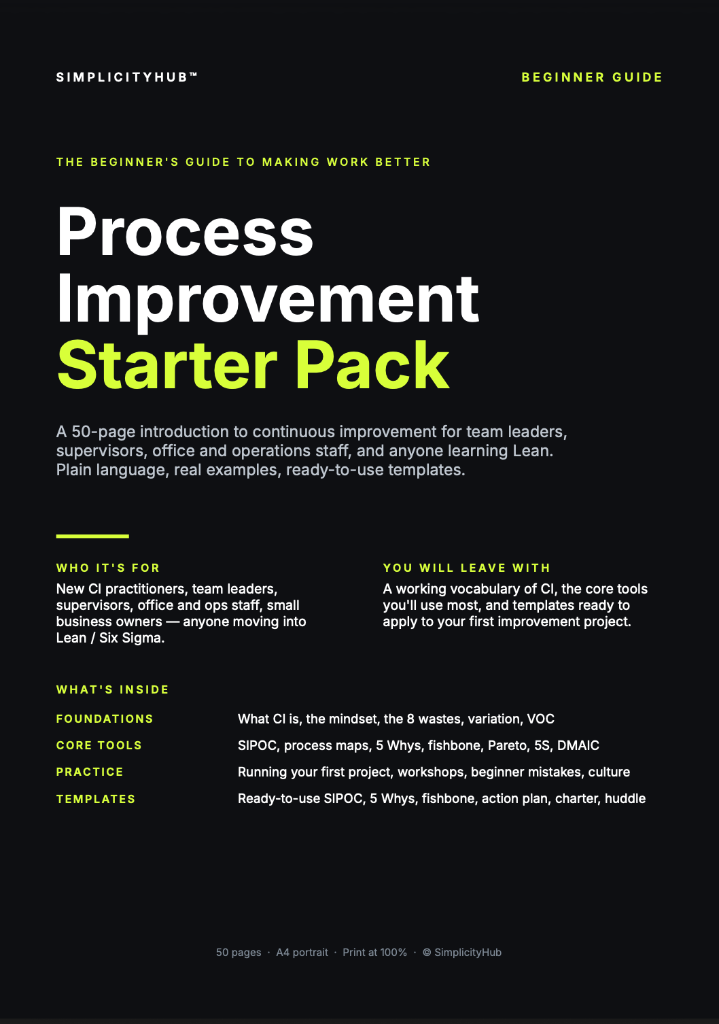
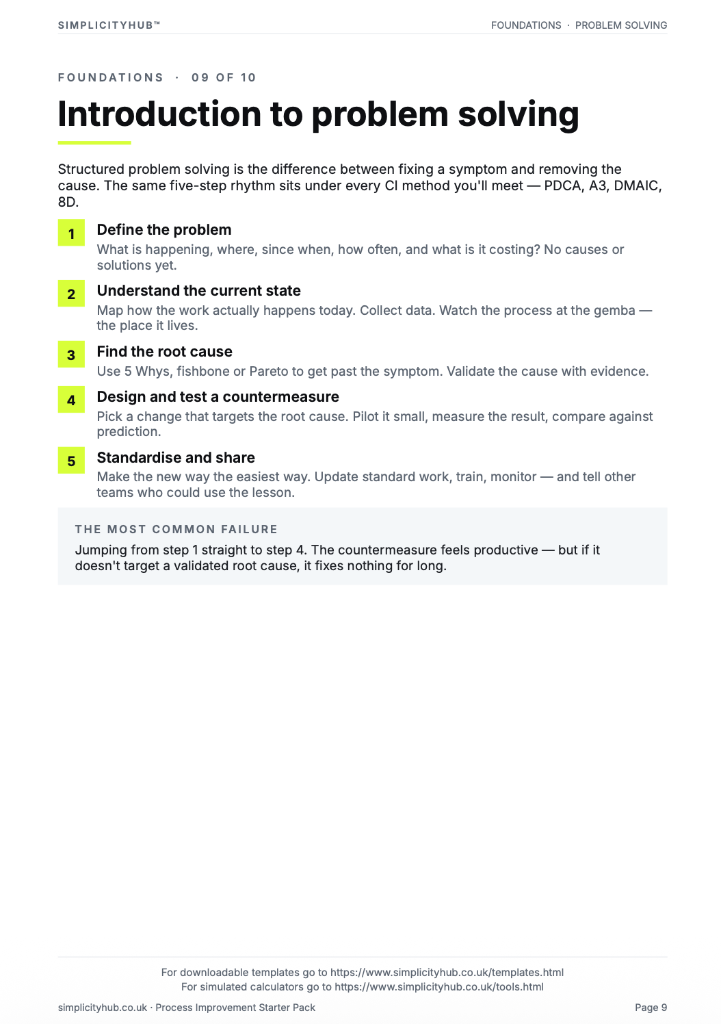
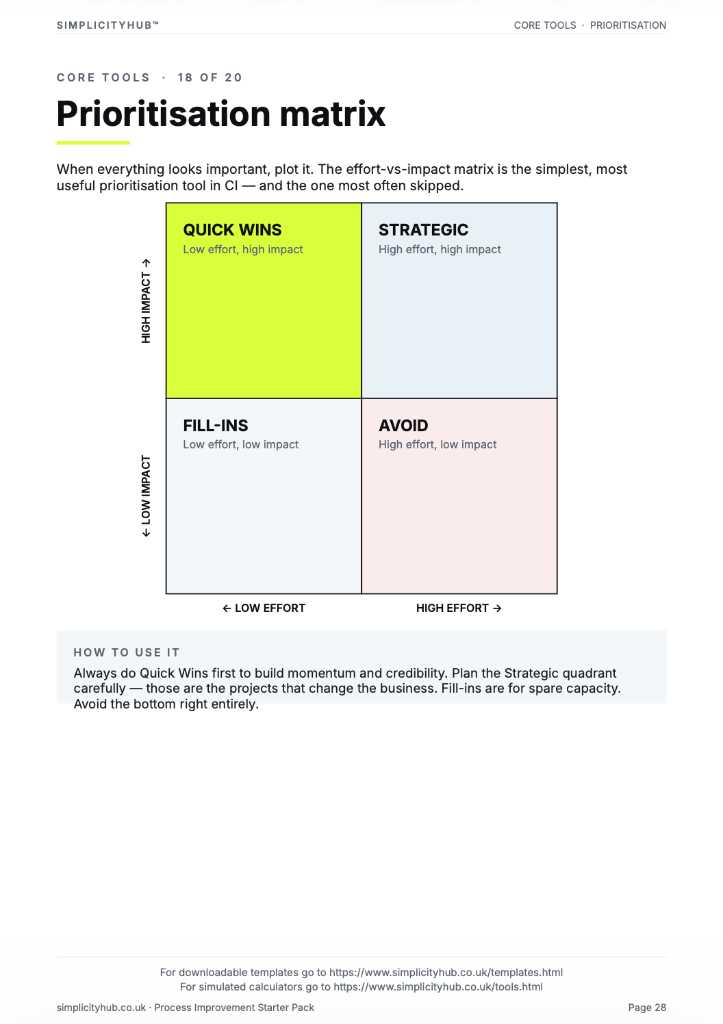
Process Improvement Starter Pack
A starter pack for identifying improvement opportunities, measuring baselines and planning action.
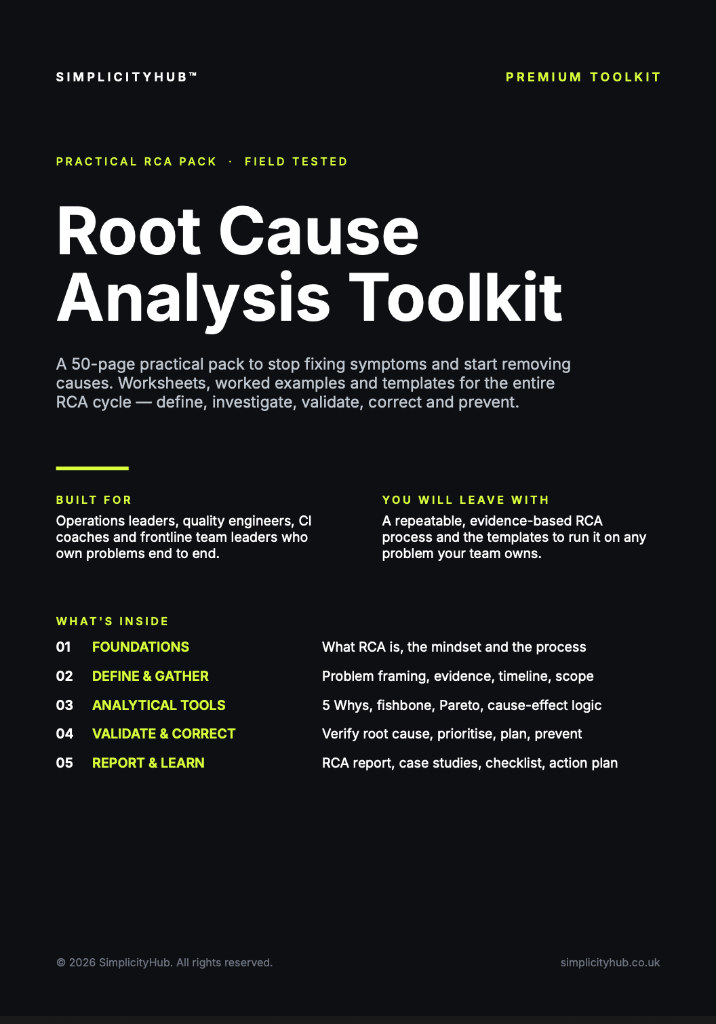
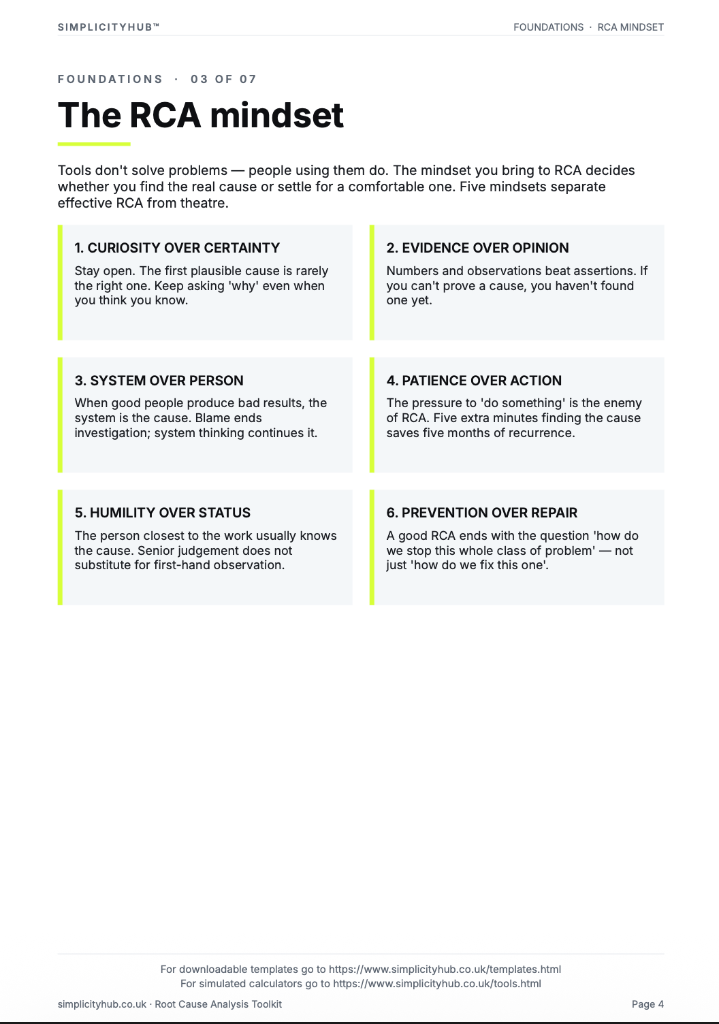
Root Cause Analysis Toolkit
A practical RCA toolkit for defining problems, finding causes, validating evidence and creating action.
A3 Template Pack
A clean A3 problem-solving pack for concise, visual improvement thinking and follow-through.