OEE is the most important metric in manufacturing — but most teams misunderstand it. This plain-English guide explains exactly what OEE is, how to calculate it and how to drive it up.
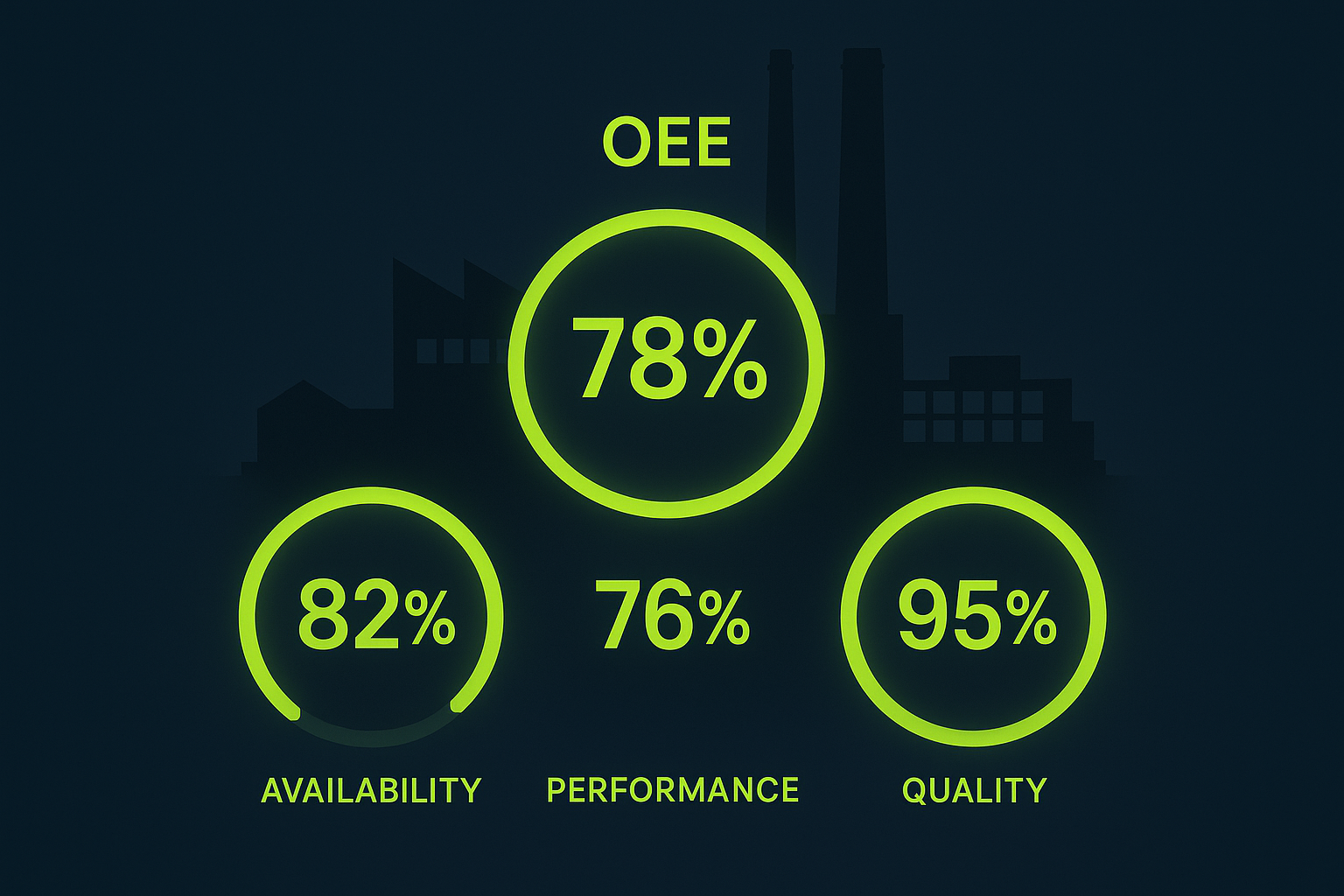
OEE stands for Overall Equipment Effectiveness. It's a single percentage that tells you how effectively a machine or production line is being used relative to its maximum potential.
An OEE of 100% means producing only good parts, as fast as possible, with no downtime. Even world-class manufacturers target 85%.
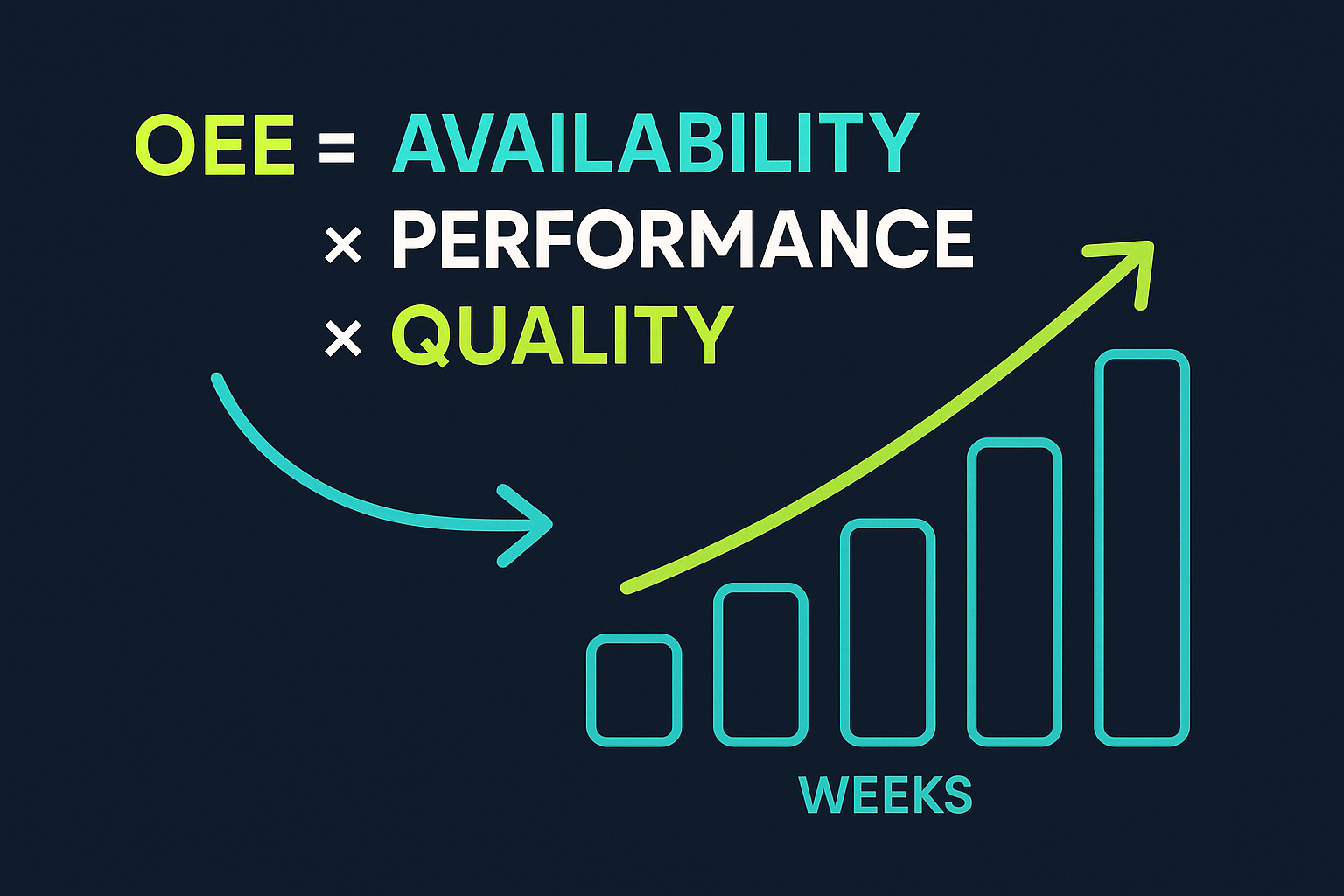
The formula: OEE = Availability × Performance × Quality
Use these benchmarks to interpret your OEE score:
| OEE Score | Rating | What It Means |
|---|---|---|
| <40% | Poor | Significant losses — urgent attention needed |
| 40–60% | Average | Typical for unmanaged plants — lots of opportunity |
| 60–75% | Fair | Some improvement activity in place |
| 75–85% | Good | World class within reach |
| 85%+ | World Class | Benchmark level for best-in-class manufacturers |
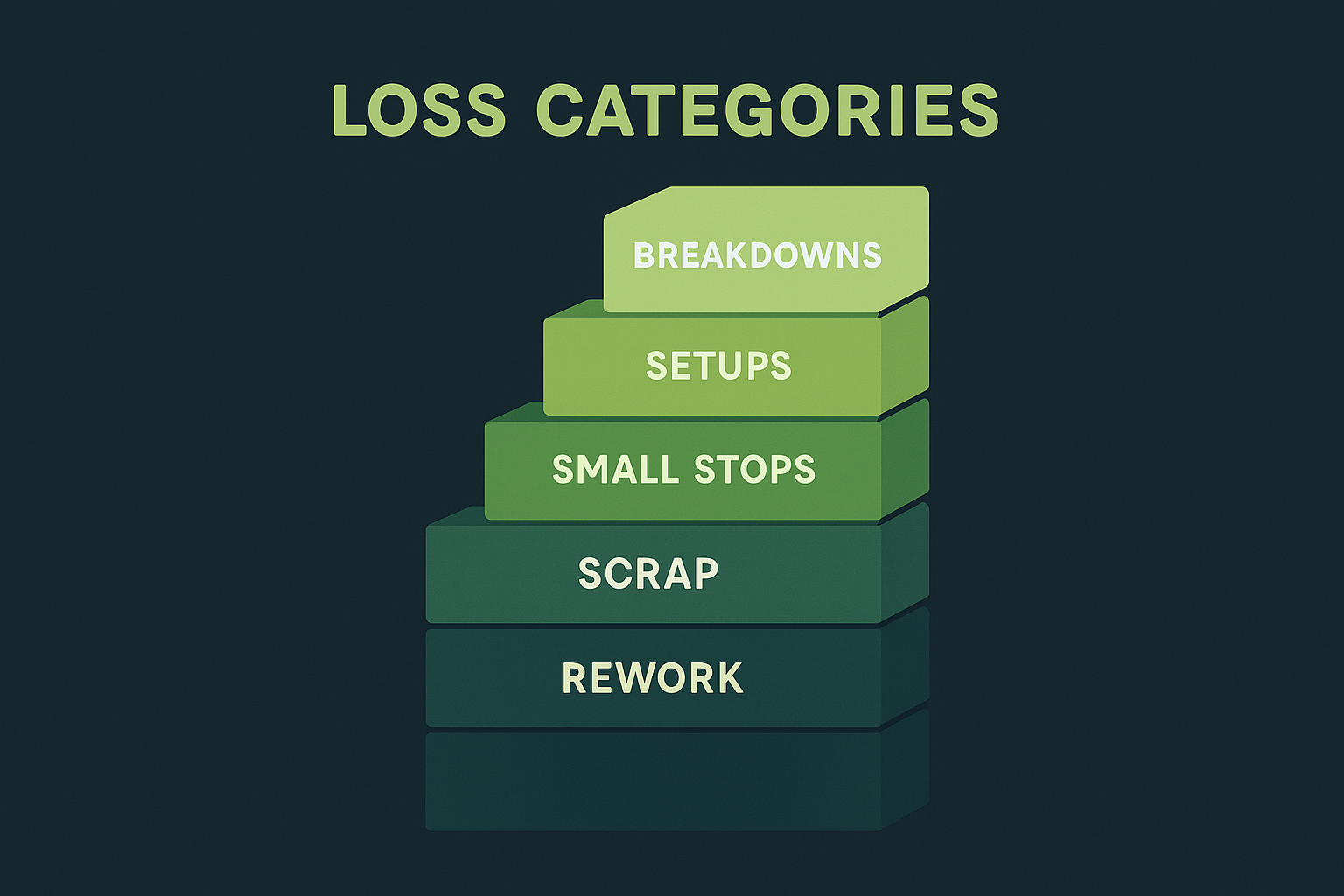
The fastest way to improve OEE is to identify which component (Availability, Performance or Quality) is your weakest link, then tackle the underlying Six Big Losses in that category.
Even a 5% improvement in OEE can represent significant additional output and cost savings — without any capital investment.
Open the Free OEE Calculator →