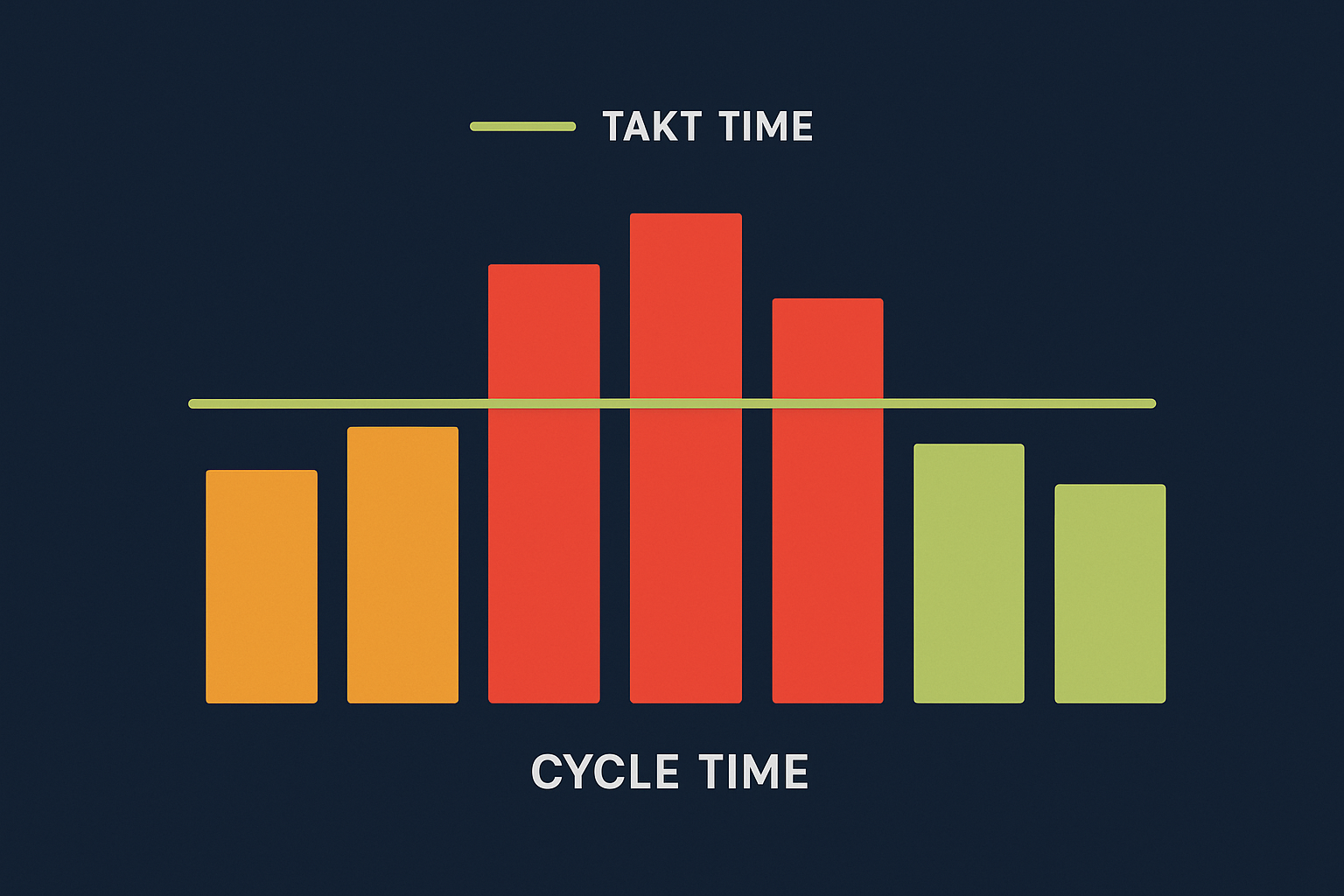
Three time metrics, three different things — and confusing them is one of the most common mistakes in Lean. Here's a plain-English breakdown of each, with examples and free calculators.
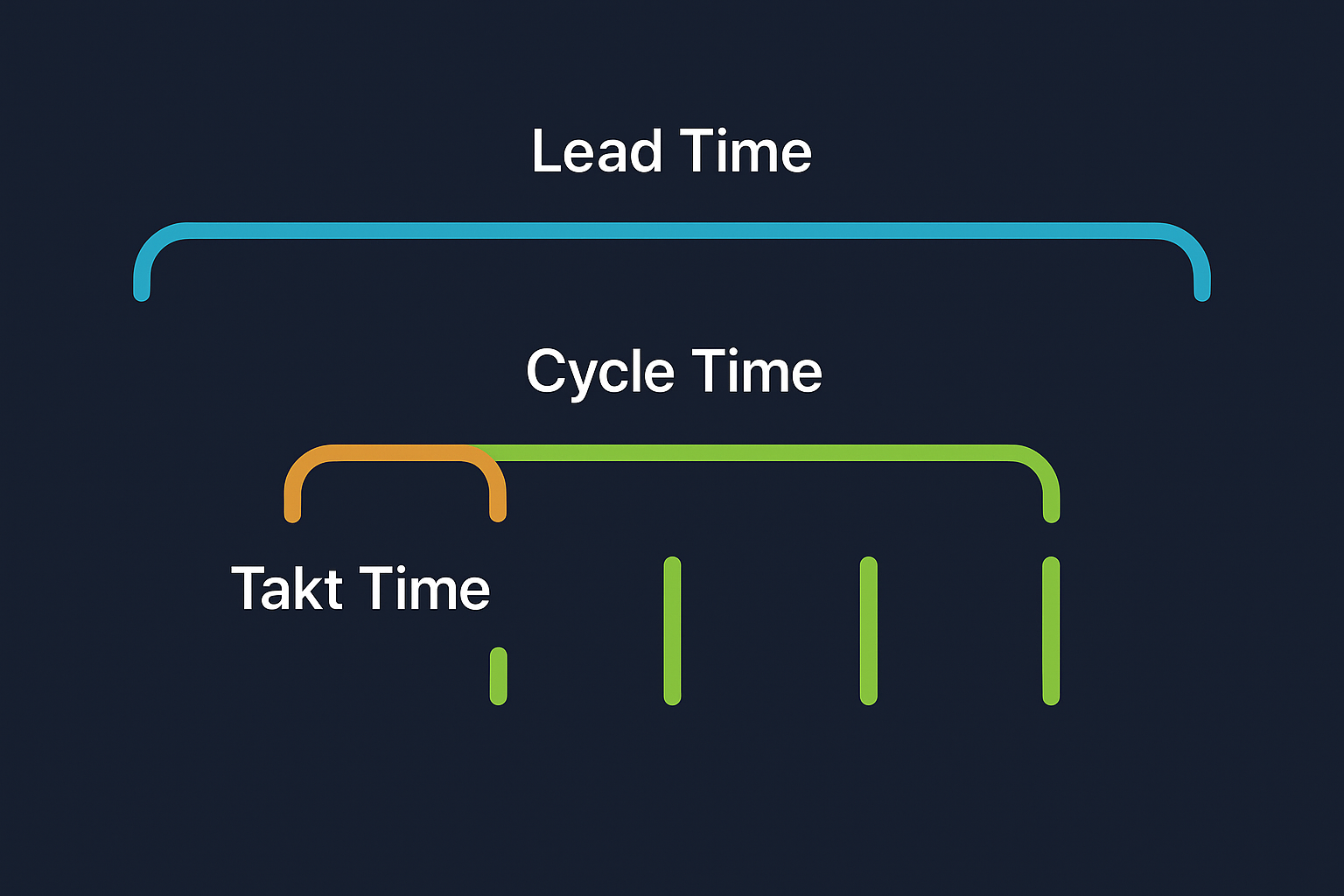
Cycle Time is how long it takes to complete one unit of output from start to finish of a process step. It's measured from when work starts on one unit to when work starts on the next.
Example: If your team processes 60 invoices in an 8-hour day, your cycle time is 8 minutes per invoice.
Takt Time is the rate at which you need to produce to meet customer demand. It's not how fast you can work — it's how fast you need to work.
Formula: Takt Time = Available Production Time ÷ Customer Demand
Example: If you have 450 minutes available and customers need 90 units, your Takt Time is 5 minutes per unit.
Lead Time is the total elapsed time from a customer placing an order to receiving it. It includes waiting time, queue time and all process steps — not just the active work.
This is why Lead Time is almost always much longer than the sum of all Cycle Times. All that waiting time in between is non-value-added time — the prime target for Lean improvement.