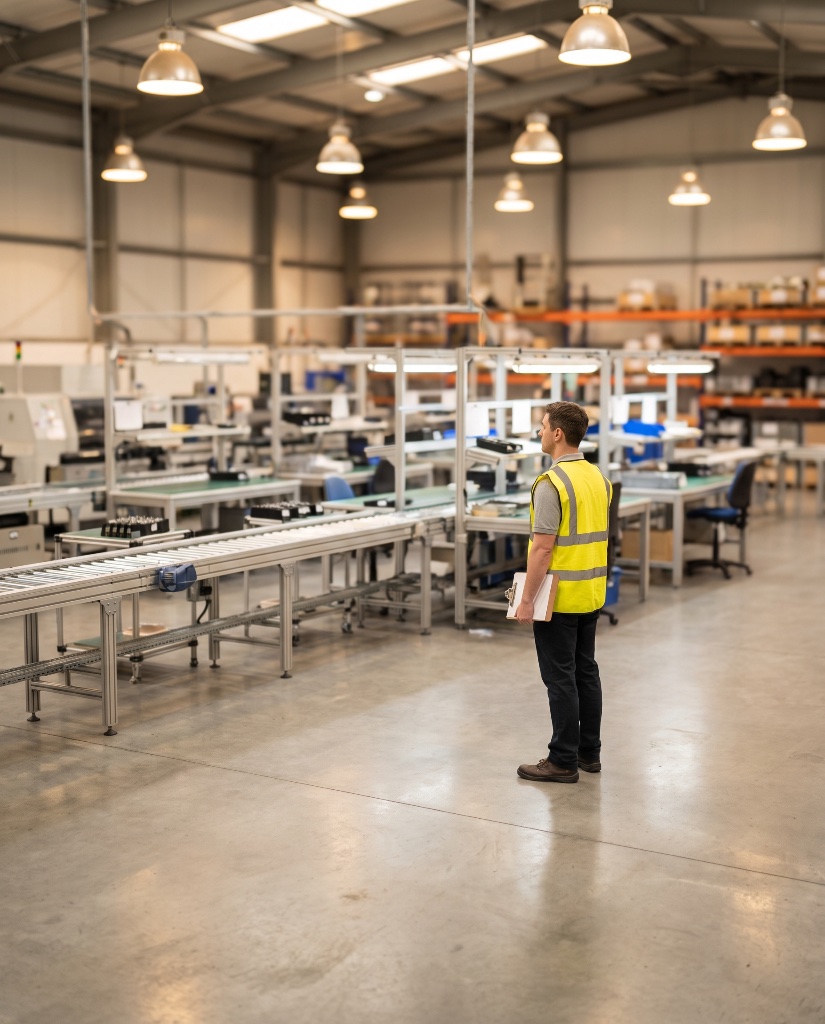
Most Gemba Walks fail before they start. A manager strolls through the shop floor, nods at a few operators, asks "everything okay?" and leaves. Nothing changes. The walk becomes a ritual stripped of its original purpose.
The Japanese word "gemba" means "the actual place." In manufacturing and process improvement, it refers to going where value is created, watching how work really happens, and using what you see to drive measurable change. Done well, a Gemba Walk is one of the sharpest diagnostic tools in continuous improvement. Done poorly, it is a scheduled interruption that teaches nobody anything.
Here is how to run one that works.
Prepare Before You Walk
Pick one process or area. A Gemba Walk that tries to cover an entire facility will produce vague observations and no follow-through. Narrow the scope to a single cell, line, or workflow.
Before you go, review available data for that area. Pull recent defect rates, downtime logs, or cycle-time figures. This does two things: it gives you specific things to watch for, and it prevents you from asking questions the data already answers.
Write down three to five questions in advance. Good Gemba questions are open-ended and process-focused:
- Where do you wait for materials, information, or approvals?
- Which step takes the most rework?
- What would you change if you could change one thing?
Avoid questions that put people on the spot about performance. The goal is to understand the process, not audit the person.
What to Do on the Floor
Stand and watch before you speak. Spend the first five to ten minutes simply observing the flow of work. Notice where materials queue up, where operators move between stations, where the pace changes.
Then talk to the people doing the work. They know things your data cannot show: workarounds they have invented, signals they watch for, frustrations they have accepted as normal. Listen more than you talk. Write down what they say in their words, not your interpretation.
A few things to track during the walk:
- Waiting: any point where work, materials, or information sits idle
- Motion: unnecessary movement between tools, stations, or screens
- Workarounds: steps operators added because the standard process does not work as designed
- Variation: differences in how two people perform the same task
Do not solve problems on the spot. The urge is strong, especially for experienced practitioners. Resist it. On-the-spot fixes bypass root-cause analysis and rarely stick. Record the observation, thank the person, and move on.
After the Walk: Turn Observations Into Actions
This is where most Gemba Walks quietly die. The notebook goes into a drawer. The observations never become actions.
Within 24 hours, sort your findings into three categories:
- Quick fixes that need no analysis (a missing label, a broken tool, a blocked pathway). Assign these immediately.
- Investigation items that need root-cause analysis. A 5 Whys or fishbone diagram is usually enough for mid-complexity problems.
- Systemic issues that feed into a broader DMAIC or improvement project. These go on the improvement board with an owner and a target date.
Share your findings with the team you observed. This is critical. If people give you their time and insight and never hear what came of it, they will stop talking next time.
Common Mistakes
Walking with an entourage. Three managers and a clipboard hovering over a workstation changes behaviour. Keep it to one or two people.
Skipping the follow-up. A Gemba Walk without follow-up is worse than no walk at all, because it signals that leadership watches but does not act.
Treating it as an audit. If operators feel they are being inspected, they will show you the process at its best rather than its most typical. Make the purpose clear before you begin: you are studying the process, not grading the people.
Walking too infrequently. A quarterly Gemba Walk is a tour. Weekly or fortnightly walks build the familiarity needed to spot changes and trends.
Building the Habit
The best Gemba programmes run on a visible schedule. Post the calendar. Rotate which leaders walk which areas. Track whether observations result in completed actions, not just how many walks happened.
For a conceptual overview of why Gemba Walks matter and how they fit into broader Lean methodology, Lean Manufacturing Online has a useful walkthrough of Gemba Walk fundamentals that covers the core principles and benefits.
The real measure of a Gemba Walk programme is simple: are problems getting found and fixed faster than before? If yes, keep walking. If no, revisit how you are preparing, observing, and following up. The tool works. The question is whether the discipline around it does too.