A practical, no-fluff guide to running your first DMAIC improvement project — from writing the problem statement to handing over the control plan. Real example included.
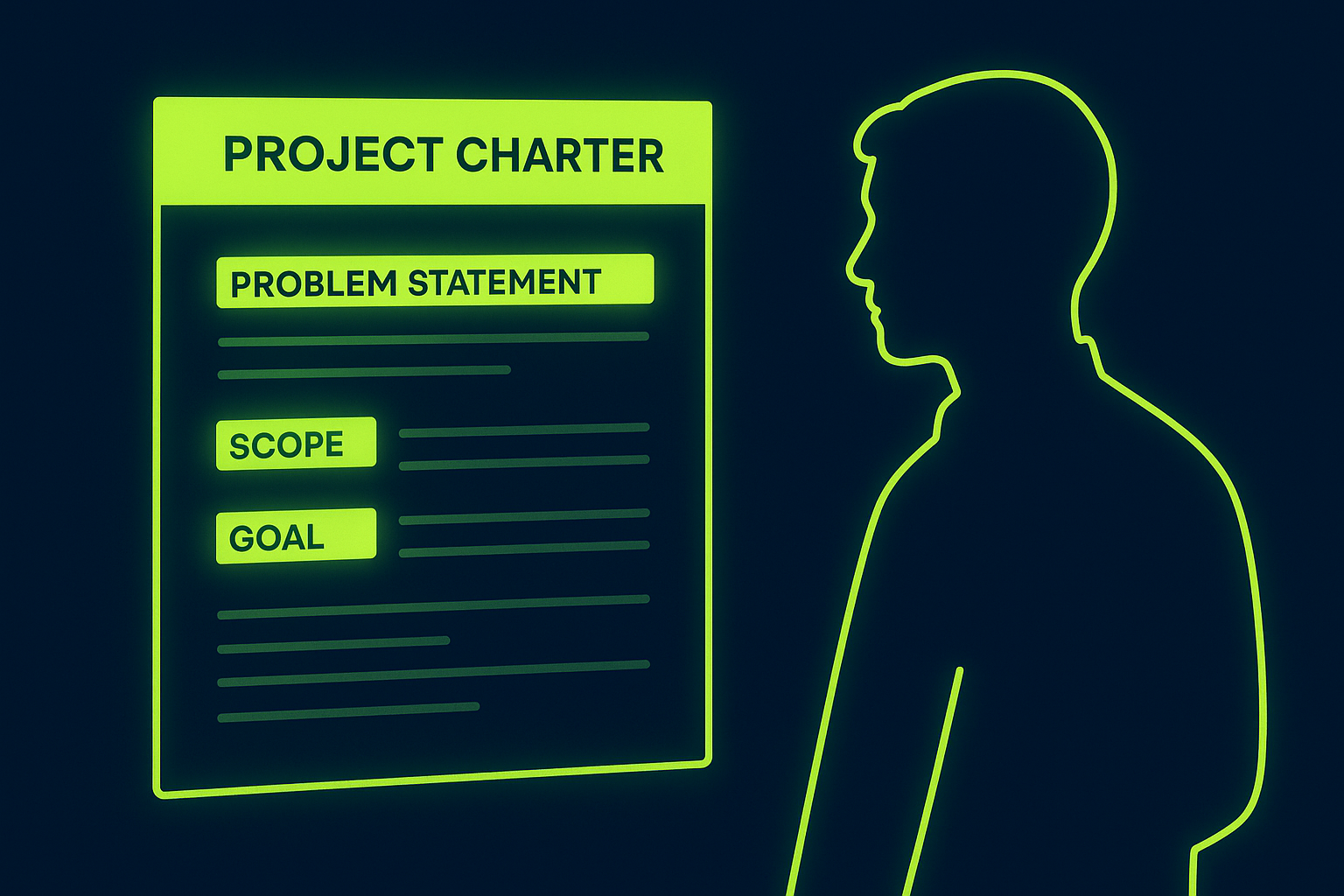
The most common mistake in Define is writing a solution statement instead of a problem statement. 'We need a new system' is not a problem statement. 'Invoice processing takes an average of 14 days against a target of 5 days, resulting in £40k in late payment penalties annually' is.
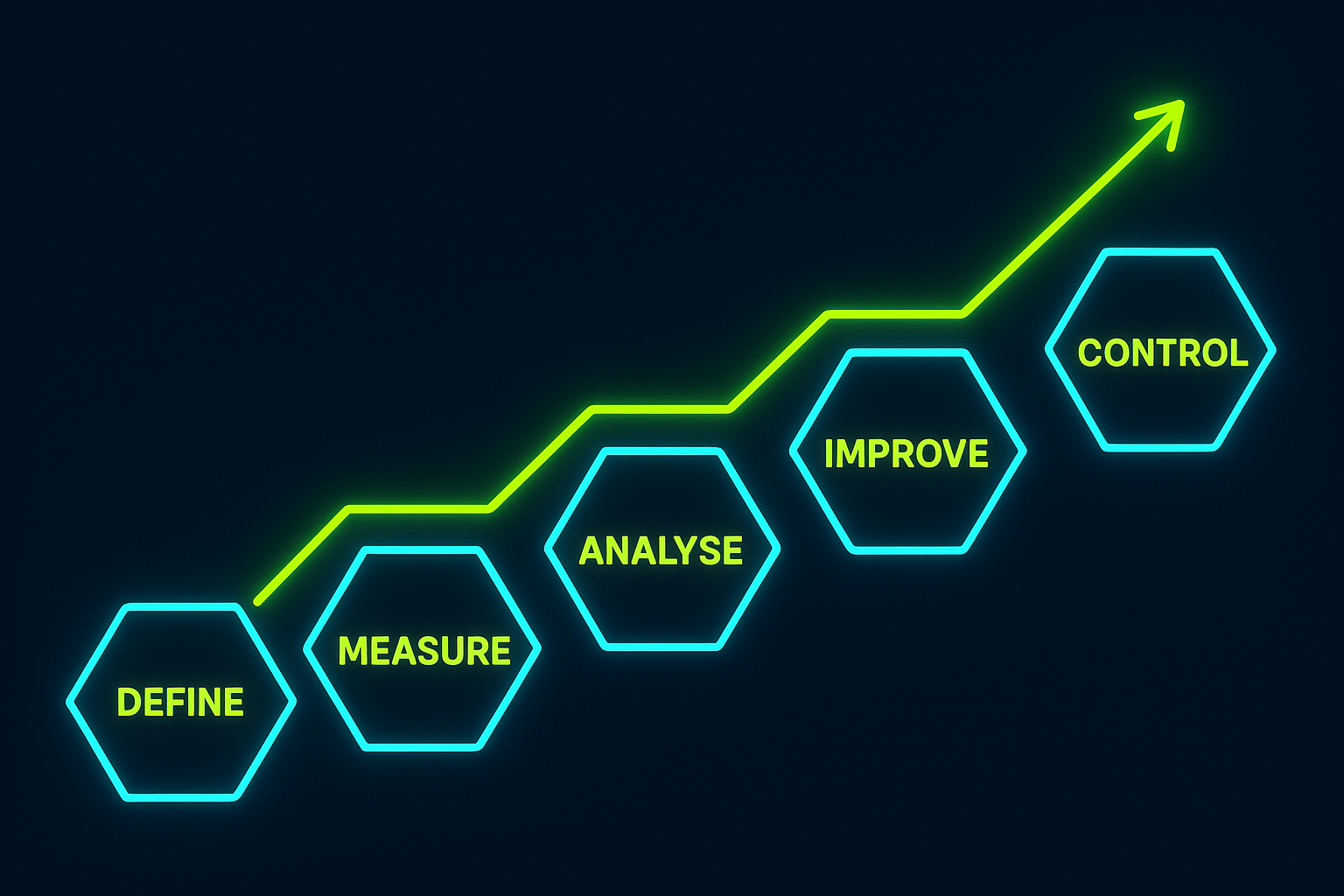
Your Define phase should produce:
In Measure, you're not looking for solutions — you're establishing a data-backed baseline. Collect at least 2–4 weeks of data before drawing conclusions.
In our invoice example: we tracked 200 invoices over 4 weeks. We found 68% of total lead time was spent waiting in two queues — approval and coding.
In Analyse, use a Fishbone Diagram and 5 Whys to drill into why those queues exist. Don't jump to solutions. Root cause: approvers had no visibility of invoice age and there was no escalation trigger.
Get Fishbone and 5 Whys Templates →
In Improve, pilot solutions before full rollout. In our example: we added an age-visible queue dashboard and a 3-day escalation trigger. Average lead time dropped from 14 days to 6 days in the pilot.
In Control, create a Control Plan — defining who monitors what, at what frequency, and what action to take if performance drops.
Without a control plan, improvements revert within 3–6 months in most cases.
Download a Free Control Plan Template →