What is a Risk Mitigation Plan Template?
A risk mitigation plan builds on the project risk assessment to define specific, actionable steps that will reduce the likelihood or impact of the top risks identified — before those risks materialise as issues that derail the project or rollout.
Where the risk assessment identifies and scores risks, the mitigation plan assigns owners, timelines and specific actions to each high-priority risk. It is the active management layer that turns risk awareness into risk prevention.
Built in the Improve phase ahead of solution rollout, and reviewed through the Control phase, it is the mechanism that keeps implementation on track when reality deviates from the plan.
When to use a Risk Mitigation Plan Template
Build the risk mitigation plan before implementing any significant solution. Use it when:
- A project is moving from Improve to Control and implementation carries meaningful risk
- A risk assessment has identified high-priority risks that require specific mitigation actions
- A sponsor wants assurance that the top risks have been planned for before approving go-live
- Previous rollouts have failed due to risks that were identified but not acted on
Who should use a Risk Mitigation Plan Template
- Green Belts and Black Belts — when planning solution rollout in the Improve phase
- Operations Managers — when implementing process changes with significant operational risk
- CI Managers — to ensure programme-level risks are being actively managed, not just identified
- Project Sponsors — to understand what specific actions are being taken to manage the top implementation risks
Watch: a quick explainer
New to this? This short video walks you through mapping failure paths so you can mitigate them — a helpful primer before you download and use the template.

How to build a Risk Mitigation Plan
Focus the mitigation plan on the high-priority risks — those with the highest likelihood/impact scores. Low-priority risks can be monitored without active mitigation. Trying to mitigate every risk dilutes effort and produces a plan that cannot be executed.
How to build a Risk Mitigation Plan — step by step
-
1Import the top risks from the risk assessment
Take the risks scored above the threshold from the risk assessment. These become the rows of the mitigation plan. Include the original likelihood, impact and risk score.
-
2Classify each risk as Avoid, Reduce, Transfer or Accept
Avoid: eliminate the risk by changing the approach. Reduce: take actions to lower likelihood or impact. Transfer: shift the risk (e.g. insurance, contractual). Accept: acknowledge the risk and prepare a contingency plan.
-
3Define specific mitigation actions
For each risk, write specific actions that will reduce its likelihood or impact: 'Conduct three-session engagement workshop with union representatives before announcing shift changes.' Not 'consult with unions.'
-
4Assign a risk owner for each mitigation action
Name one person responsible for implementing each mitigation action. They are also responsible for monitoring the risk and escalating if the mitigation is not working.
-
5Set a due date for each action
Mitigation actions must be completed before the risk window opens. If the risk is associated with go-live, mitigation must be complete before go-live. Set specific, realistic dates.
-
6Define the contingency plan for residual risk
Even with mitigation, some risk remains. For each high-severity risk, define a contingency: what will you do if the risk materialises despite the mitigation? Who decides to activate the contingency?
-
7Review at every implementation milestone
Risk levels change as implementation progresses. Review the mitigation plan at every milestone — pre-training, go-live, week 1 review. Close mitigated risks and add new risks as they emerge.
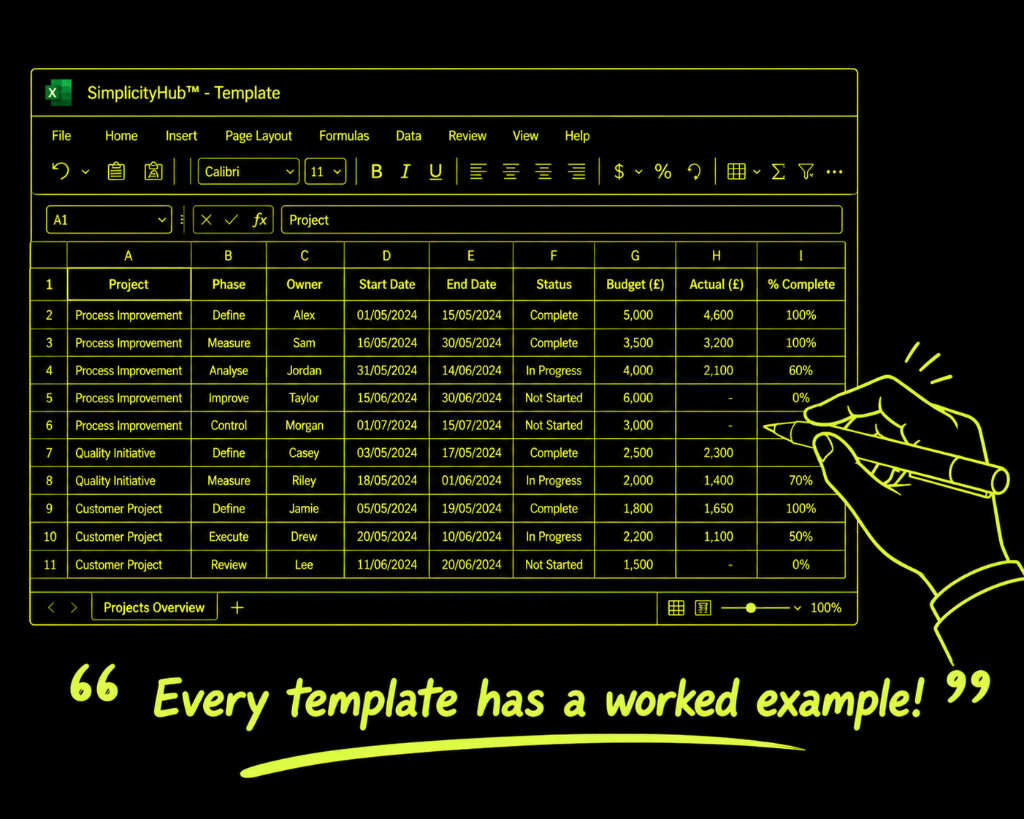
Worked example — Process Change Risk Mitigations
A completed risk mitigation plan for a process change rollout, showing the top five risks, mitigation strategies, specific actions, owners, due dates and contingency plans.
Common mistakes — and how to avoid them
Treating mitigation as identical to the risk action plan. A risk action plan logs what you will monitor. A mitigation plan specifies what you will do to prevent the risk from occurring. The distinction is active prevention vs passive monitoring.
Generic mitigations. 'Communicate better' is not a mitigation. 'Brief all team leaders individually in a 30-minute session before the all-staff communication on 15 April' is a mitigation. Specificity is what makes a mitigation effective.
No contingency for high-severity risks. Mitigation reduces but rarely eliminates risk. For any risk where materialisation would be severely damaging, define a contingency plan that can be activated quickly if the mitigation is insufficient.
Never reviewing the plan during implementation. A mitigation plan completed before go-live and never reviewed afterwards is a plan that quickly becomes irrelevant. Review at every milestone and update as the situation changes.
Tips for getting better results
Involve the team in designing mitigations. The people doing the implementation know the practical constraints. Involve them in designing the mitigations — they will identify approaches the project lead would not have thought of and will be more committed to implementing them.
Use the mitigation plan in go/no-go decisions. Before go-live, confirm that all scheduled mitigation actions are complete. If high-priority mitigations are not done, the go-live decision should be reconsidered. Mitigation completion is a readiness condition.
Link to the issue log. When a risk materialises, move it from the mitigation plan to the issue log and track resolution there. Keeping risks and issues in separate logs maintains clarity about what has happened versus what might happen.
Download the Risk Mitigation Plan Template
A clean, editable Excel template for immediate use — structured, professional and ready to fill in.
Frequently asked questions
Mitigation vs contingency?
Mitigation reduces likelihood or impact before a risk happens. Contingency is your Plan B if it occurs despite mitigation.
How should I prioritise?
Focus on high-rated risks first (high likelihood times impact). Low-rated risks can be monitored.
Who owns each mitigation action?
One named individual per action — not the team.
How often should it be reviewed?
At each phase gate and after any significant event that changes the risk landscape.
Advanced Toolkit Packs — available now
Structured, ready-to-use template packs designed for real improvement work. Pick the pack that matches your project and get started straight away.
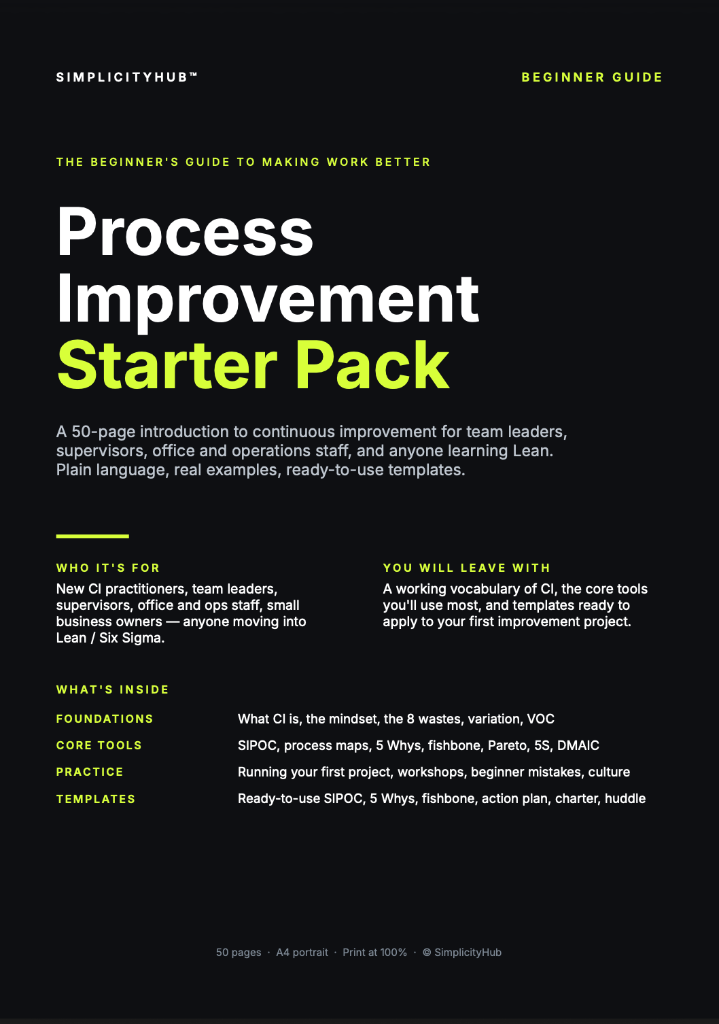
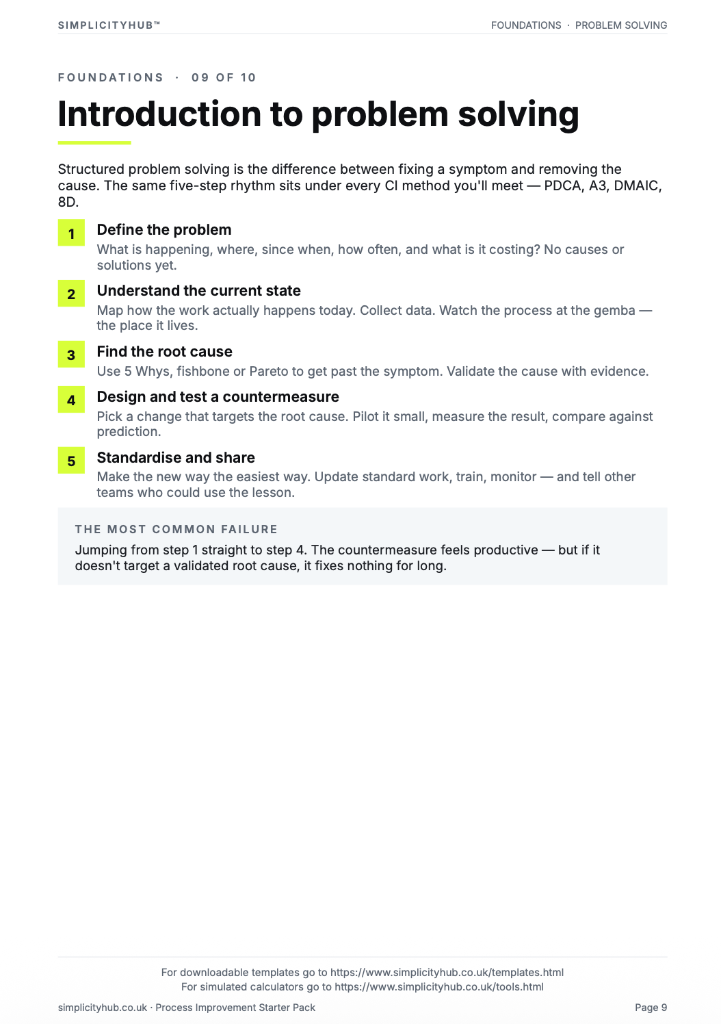
Process Improvement Starter Pack
A starter pack for identifying improvement opportunities, measuring baselines and planning action.
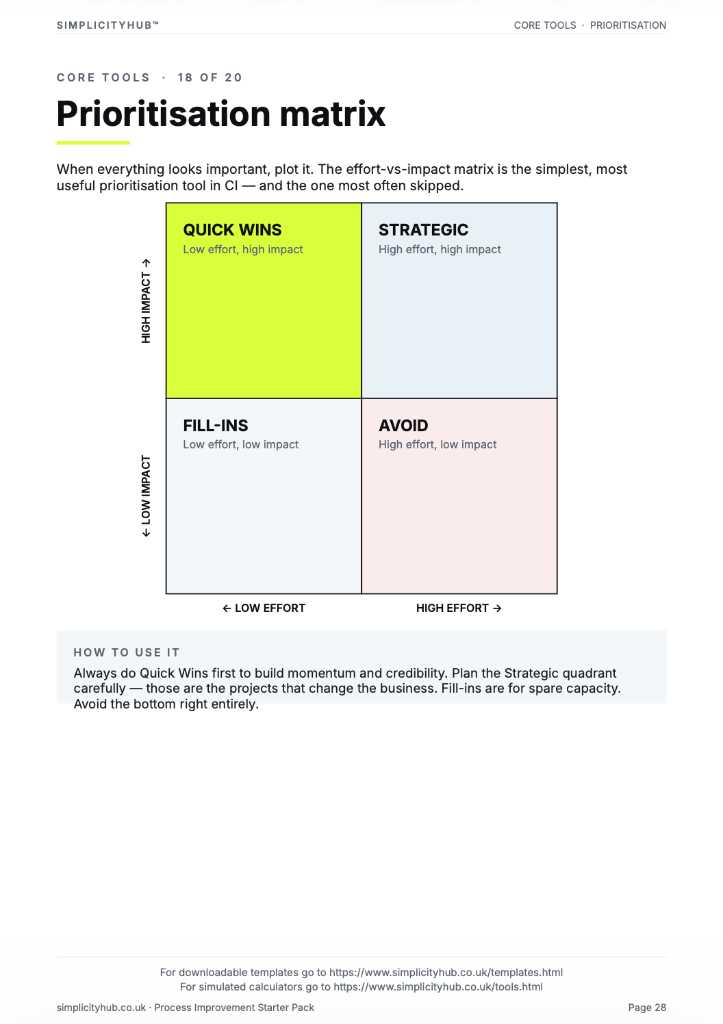
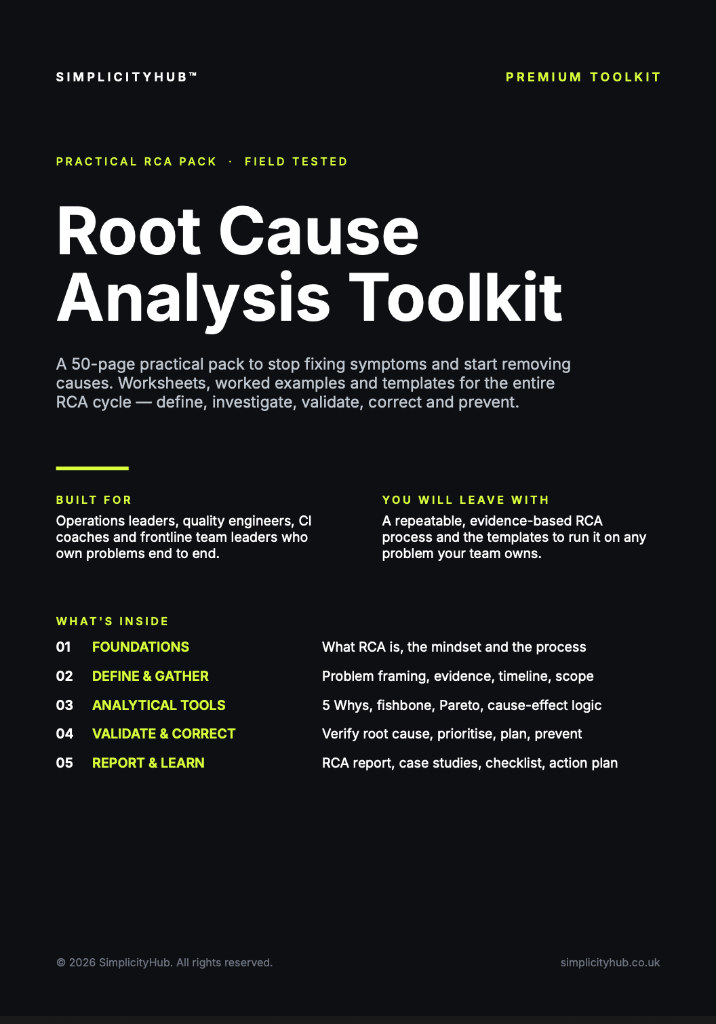
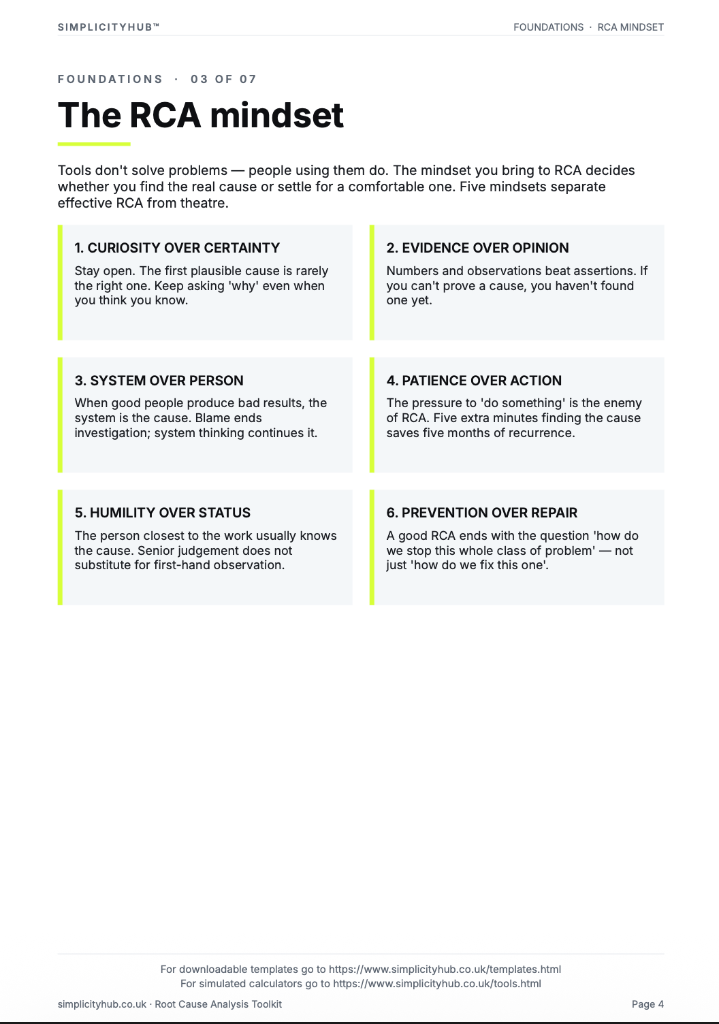
Root Cause Analysis Toolkit
A practical RCA toolkit for defining problems, finding causes, validating evidence and creating action.
A3 Template Pack
A clean A3 problem-solving pack for concise, visual improvement thinking and follow-through.