
What is a Change Implementation Plan Template?
A change implementation plan is a detailed, sequenced plan for rolling out an improvement solution — defining who does what, in what order, over what timeframe, with what communication, training and support. It is the operational blueprint for turning a tested solution into a working, sustained change.
The difference between a solution that works technically and one that works in practice is almost always in the quality of the implementation plan. Solutions fail not because they are wrong, but because the rollout was poorly planned, communicated or supported.
Used in the Improve phase, the change implementation plan runs from the point of pilot sign-off through to the handover of the improved process to operations in the Control phase.
When to use a Change Implementation Plan Template
Build a change implementation plan as soon as the pilot has been approved for full rollout. Use it when:
- A tested solution is ready for full-scale implementation across one or more sites or teams
- The change affects multiple people, systems or departments and requires coordinated delivery
- Training, communication and system changes need to be sequenced correctly before go-live
- A sponsor wants a clear picture of when, how and at what cost the solution will be delivered
Who should use a Change Implementation Plan Template
- Green Belts and Black Belts — to plan and manage solution rollout in the Improve phase
- Operations and Change Managers — to coordinate multi-site or multi-team implementation activities
- Project Sponsors — to understand the implementation timeline and resource requirements before approving go-live
- IT and Systems Teams — to plan and sequence system changes that support the process improvement
Vote yes and we’ll prioritise a quick walkthrough showing you exactly how to use it.
How to build a Change Implementation Plan
Build the implementation plan backwards from the go-live date. Start by identifying every dependency — what must happen before go-live — then sequence the activities and assign owners. Dependencies you miss will delay the rollout.
How to build a Change Implementation Plan — step by step
-
1Define the go-live date and scope
State when the new process goes live, for which teams/sites/systems. A phased rollout? A single go-live? Define the scope of each wave if phasing.
-
2List all pre-go-live activities
Everything that must be completed before go-live: SOPs updated, training materials created, systems configured, stakeholders briefed, communication sent. List every activity, no matter how small.
-
3Sequence the activities and identify dependencies
Which activities must be completed before others can start? System configuration must precede training. Manager briefing must precede all-staff communication. Draw the sequence and identify the critical path.
-
4Assign owners and due dates to every activity
Every activity has one named owner and a specific due date. Work backwards from go-live to set realistic dates that account for the critical path dependencies.
-
5Plan the communication timeline
What communications need to go out, to whom, and when? Managers briefed before staff. Staff briefed before go-live. Customers notified if affected. Map this onto the timeline.
-
6Plan the training delivery
Who needs training, in what format, delivered by whom, by when? Confirm the training schedule, the materials and the method for tracking completion before go-live.
-
7Define the go-live monitoring plan
How will the first week and first month of go-live be monitored? Who is the escalation point? What are the KPIs you will track in real time? Define a daily stand-up rhythm for the first two weeks.
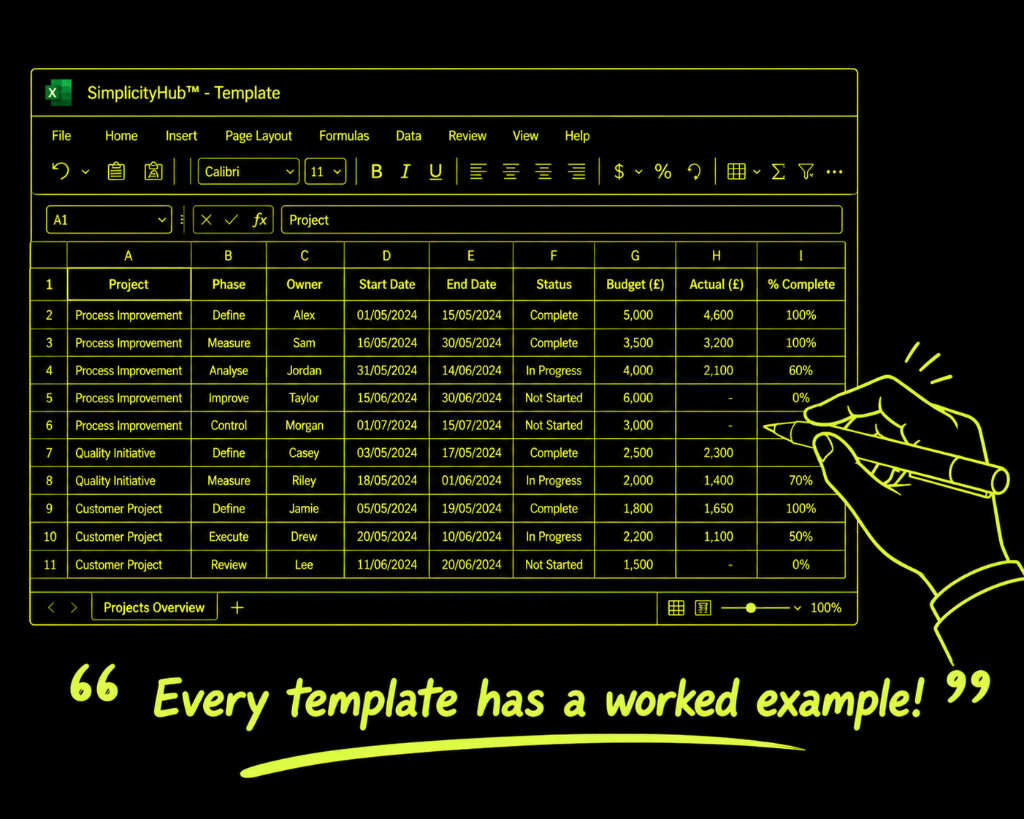
Worked example — New SLA Process Rollout Plan
A completed change implementation plan for a new SLA response process, showing pre-go-live activities, training schedule, communication timeline, owner assignments and go-live monitoring plan.
Common mistakes — and how to avoid them
Planning training too late. Training delivered the day before go-live does not stick. Allow at least one week between training completion and go-live. For complex changes, allow two to four weeks for practice and consolidation.
No go-live monitoring plan. The first week after go-live is the highest-risk period. Without daily KPI monitoring and a named escalation point, problems compound before anyone notices. Define the monitoring plan before go-live.
Communicating to everyone simultaneously. Sending the same communication to managers and their teams at the same time means managers cannot answer their team's questions because they received the information at the same moment. Brief managers first, every time.
Treating the implementation plan as fixed. Reality will deviate from the plan. When activities slip, update the plan and re-assess dependencies. A plan that is not maintained is worse than no plan — it creates a false picture of progress.
Tips for getting better results
Run a readiness assessment before go-live. 48 hours before go-live, confirm every pre-go-live activity is complete. Training done? Systems configured? Communications sent? Managers briefed? A readiness checklist prevents surprises on day one.
Assign a go-live day owner. Name one person as the point of contact for all go-live day issues. Not a committee — one person. Every issue is escalated to them and they make the call on whether to proceed, adjust or roll back.
Celebrate go-live. The team has worked hard to reach go-live. Acknowledge it — even briefly. Teams that feel their effort is recognised are more engaged in sustaining the improvement.
Download the Change Implementation Plan Template
A clean, editable Excel template for immediate use — structured, professional and ready to fill in.
Frequently asked questions
What is the difference between an action plan and an implementation plan?
An action plan tracks all project tasks. The implementation plan focuses specifically on the go-live transition sequence.
How far in advance should it be created?
Start during pilot planning. Finalise and get sponsor approval at least two weeks before go-live.
Should it include a rollback option?
Yes for any significant change. Define rollback triggers, who authorises it, and the exact revert steps.
Who needs to see it?
The sponsor, process owner, team leaders, and anyone with a task on the plan.
Advanced Toolkit Packs — available now
Structured, ready-to-use template packs designed for real improvement work. Pick the pack that matches your project and get started straight away.
Process Improvement Starter Pack
A starter pack for identifying improvement opportunities, measuring baselines and planning action.
Root Cause Analysis Toolkit
A practical RCA toolkit for defining problems, finding causes, validating evidence and creating action.
A3 Template Pack
A clean A3 problem-solving pack for concise, visual improvement thinking and follow-through.