
What is a Cause Validation Matrix Template?
A cause validation matrix is a structured scoring tool that evaluates potential root causes against multiple evidence criteria to determine which are most likely to be genuine contributors to the problem. It replaces gut-feel prioritisation with a transparent, evidence-based assessment.
After a brainstorm or fishbone exercise generates a list of potential causes, the validation matrix narrows the list to the vital few that are worth investing in fixing — based on data, observation, process knowledge and statistical evidence.
Used in the Analyse phase, it bridges the gap between brainstorming possible causes and confirming actual root causes before moving to solution design in Improve.
When to use a Cause Validation Matrix Template
Use a cause validation matrix when you have a list of potential causes from a brainstorm or fishbone and need to prioritise which to investigate or act on. Use it when:
- A fishbone or 5 Whys session has produced more potential causes than you have capacity to investigate fully
- Team members disagree on which causes are most important and you need an objective framework
- You want to demonstrate to a sponsor that cause selection was evidence-based, not arbitrary
- Data is limited and you need to weight causes by qualitative evidence as well as data
Who should use a Cause Validation Matrix Template
- Green Belts and Black Belts — to prioritise causes in the Analyse phase before designing solutions
- Quality Teams — during CAPA processes where multiple potential causes have been identified
- CI Facilitators — to facilitate structured cause prioritisation in team workshops
- Operations Managers — when reviewing investigation outputs and allocating resource to root cause remediation
Watch: a quick explainer
New to this? This short video walks you through validating a root cause with real data — a helpful primer before you download and use the template.

How to use the Cause Validation Matrix
The validation matrix is most powerful when completed as a team, with each scoring criterion discussed openly. The purpose is not to generate a number — it is to force an explicit, evidence-based conversation about each potential cause.
How to use the Cause Validation Matrix — step by step
-
1List all potential causes as rows
Transfer every cause from the fishbone, 5 Whys or brainstorm output onto the matrix — one cause per row. Do not pre-filter at this stage.
-
2Define the validation criteria as columns
Typical criteria: Data confirms the cause, Observed during Gemba walk, Process knowledge supports it, Statistically validated, Low effort to confirm. Weight each criterion by importance (1–3).
-
3Score each cause against each criterion
For each cause/criterion combination, score how strongly the criterion supports this cause: 0=No evidence, 1=Weak evidence, 2=Moderate evidence, 3=Strong evidence.
-
4Calculate weighted scores
Multiply each score by the criterion weight and sum across all criteria to get a total weighted score for each cause.
-
5Rank causes by score
Sort from highest to lowest total score. The top three to five causes are your priority for further investigation or direct action.
-
6Validate the top causes with targeted data collection
For each top-scoring cause, collect specific targeted data to confirm or rule it out. Do not move to Improve until at least the primary root cause is confirmed with evidence.
-
7Document the rationale for confirmed root causes
Write a clear statement for each confirmed root cause: 'Cause X is confirmed as a root cause based on [evidence]. It accounts for approximately [%] of the observed problem.'
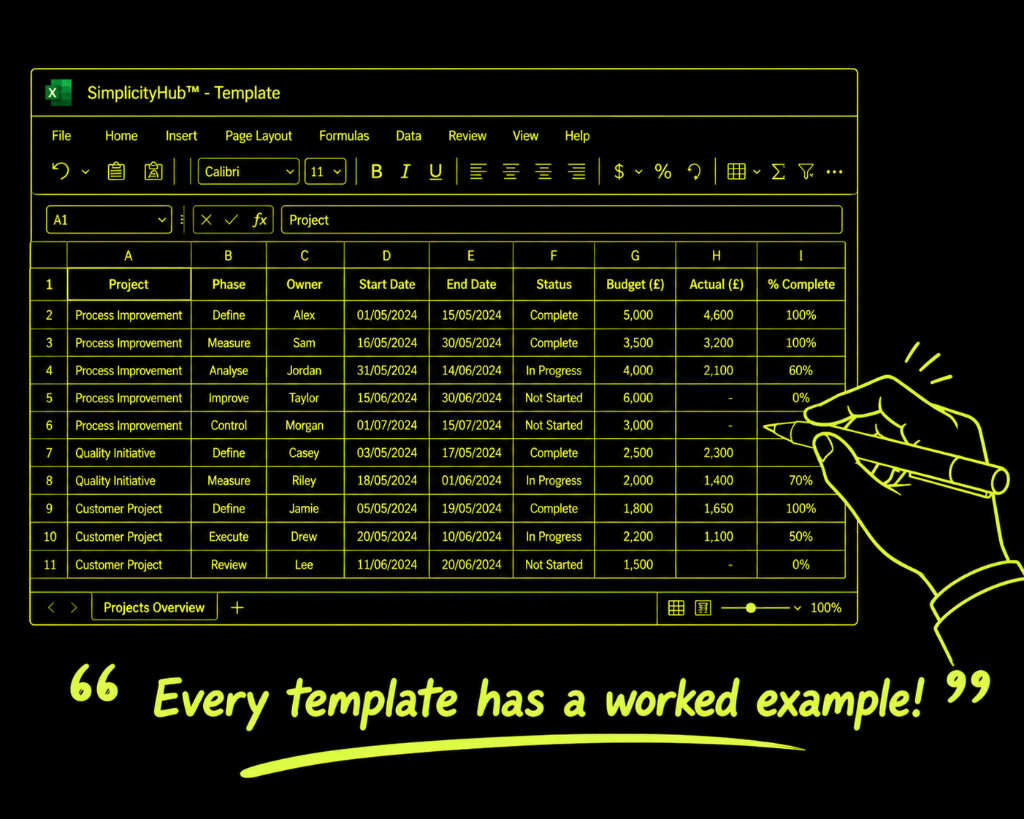
Worked example — Late Delivery Root Cause Validation
A completed cause validation matrix for a late delivery investigation, scoring six potential causes across four criteria to identify the two confirmed root causes.
Common mistakes — and how to avoid them
Scoring based on opinion rather than evidence. The validation matrix is only as good as the evidence base for each score. Score 0 when there is genuinely no evidence — resist the temptation to give a 1 just because something seems plausible.
Skipping validation and going straight to solutions. Jumping from potential causes to solutions without validation means solutions may address the wrong causes. Confirm root causes before designing solutions, even when the team feels certain.
Treating the highest score as automatically confirmed. A high score means the evidence suggests this cause is real. It does not confirm it. The top-scoring causes still need targeted investigation and data before they are treated as confirmed.
Including too many criteria. A matrix with ten criteria becomes unwieldy and the scores lose meaning. Three to five criteria are sufficient for most projects. Choose the criteria most relevant to your evidence base.
Tips for getting better results
Combine with a multi-voting exercise. Before completing the full matrix, use multi-voting to shortlist from a long list of causes to the eight to ten most plausible ones. This makes the matrix manageable without losing important causes.
Use the matrix to communicate prioritisation to the sponsor. A completed validation matrix shows a sponsor that cause selection was not arbitrary. The explicit evidence scores make the reasoning transparent and defensible.
Keep the discarded causes. Document the causes that scored low and why. If the confirmed root causes later prove incorrect, the discarded list may contain the real cause.
Download the Cause Validation Matrix Template
A clean, editable Excel template for immediate use — structured, professional and ready to fill in.
Frequently asked questions
What counts as validation?
Data analysis, direct observation, or a controlled test. Opinion alone does not count.
What if I cannot get data to validate?
Design a short data collection exercise. If not feasible, use structured expert judgment flagged as assumed.
How many causes should I validate?
All of them on the shortlist. Skipping validation leads to solutions that do not fix the problem.
What do I do with causes that are not validated?
Remove them from scope and document them for future reference.
Advanced Toolkit Packs — available now
Structured, ready-to-use template packs designed for real improvement work. Pick the pack that matches your project and get started straight away.
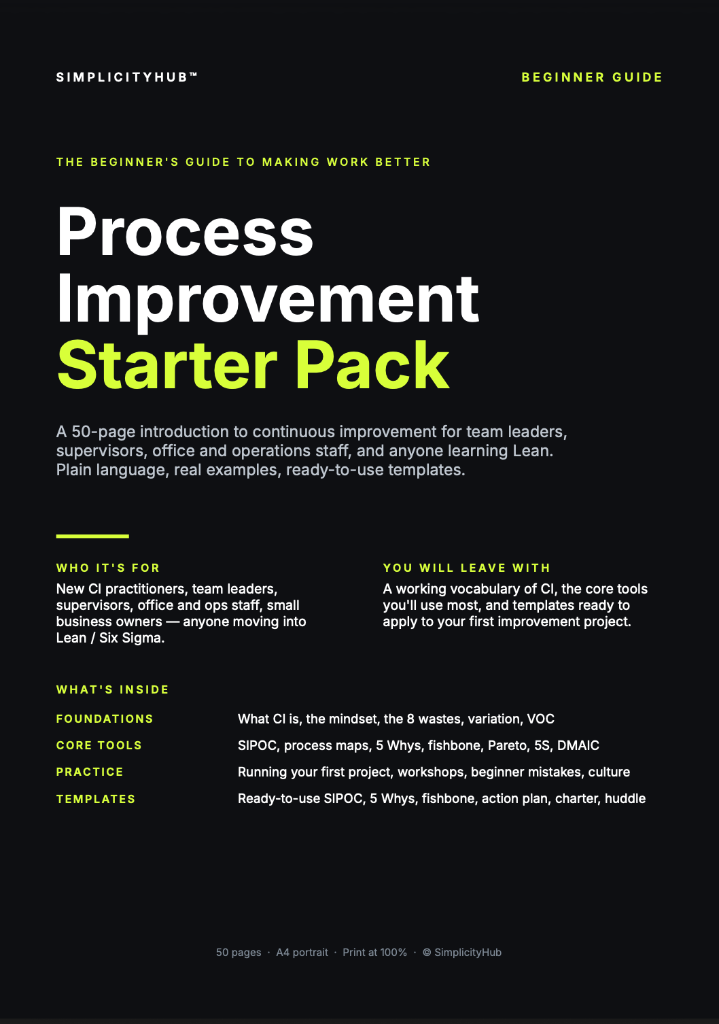
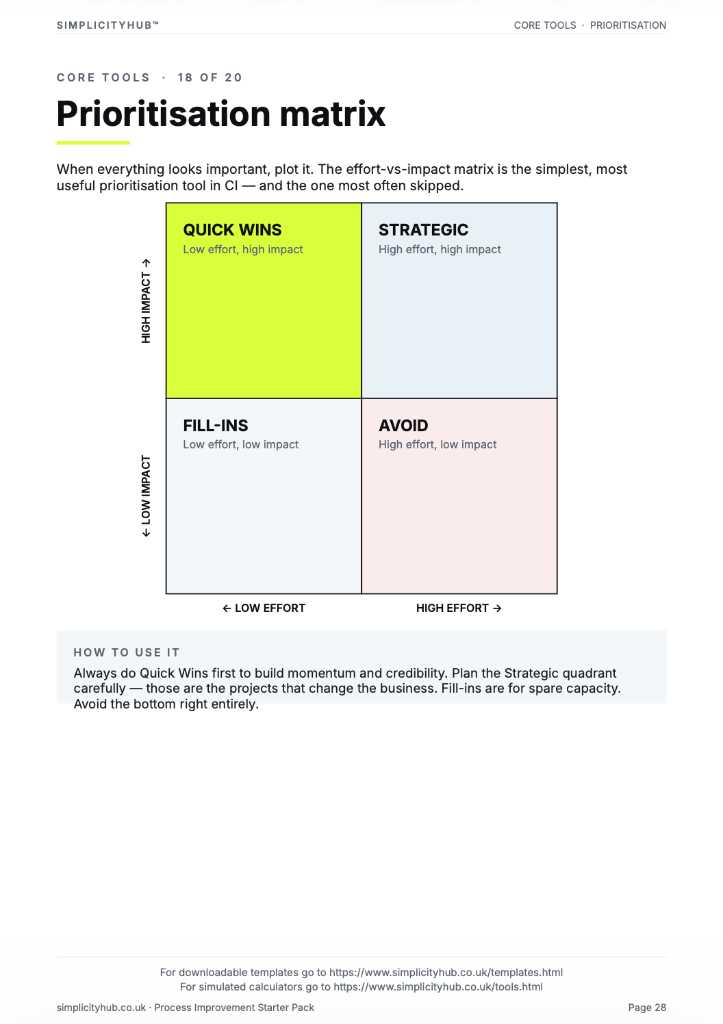
Process Improvement Starter Pack
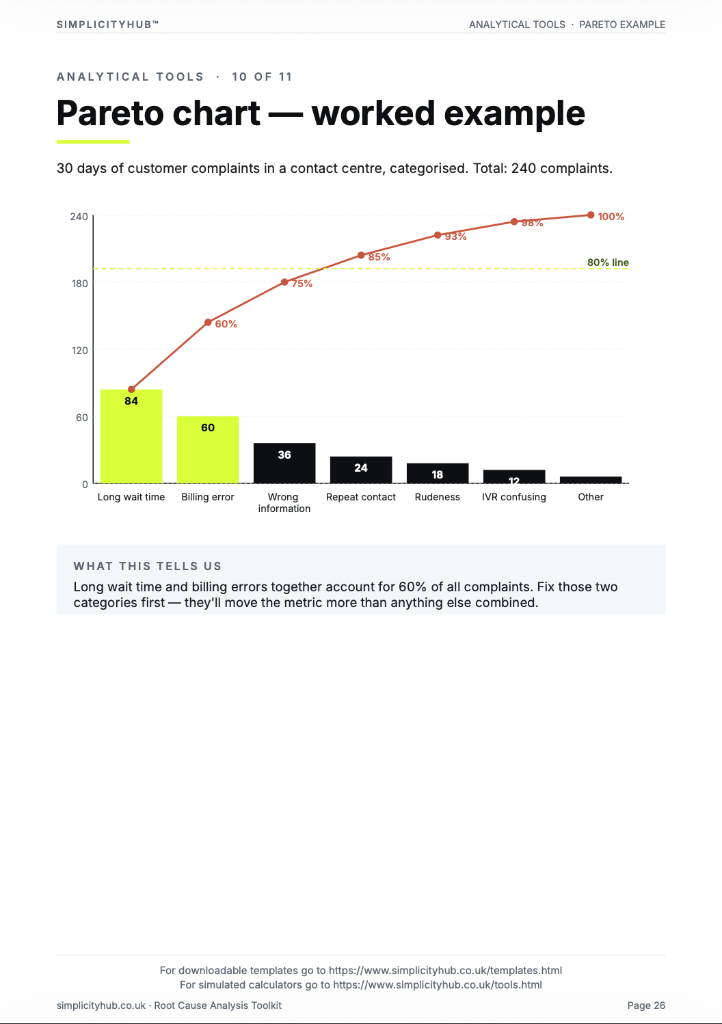
A starter pack for identifying improvement opportunities, measuring baselines and planning action.
Root Cause Analysis Toolkit
A practical RCA toolkit for defining problems, finding causes, validating evidence and creating action.
A3 Template Pack
A clean A3 problem-solving pack for concise, visual improvement thinking and follow-through.