What is a Cost Benefit Analysis Template?
A cost benefit analysis (CBA) quantifies all the costs of implementing a solution and all the expected benefits — financial and non-financial — to determine whether the investment is justified and when it will pay back.
It moves the project conversation from 'this feels like a good idea' to 'this will return £X for every £1 invested, breaking even in Y months'. This is the language sponsors and finance teams need to approve resource and track return.
Cost benefit analysis is completed in the Improve phase, typically after a solution has been selected and before it is implemented. It is also revisited at project closure to compare estimated versus actual returns.
When to use a Cost Benefit Analysis Template
Complete a cost benefit analysis for every solution that requires significant investment of time, money or resource. Use it when:
- A solution requires budget approval from a sponsor or finance team
- You are choosing between two or more potential solutions and need an objective comparison
- The project is formally tracked as part of a CI savings programme
- You want to demonstrate ROI at project closure
Who should use a Cost Benefit Analysis Template
- Green Belts and Black Belts — before implementing solutions in the Improve phase of DMAIC
- CI Managers — to build the financial case for improvement programmes
- Operations and Finance Teams — to validate claimed savings at project closure
- Project Sponsors — to understand the financial return before approving implementation
Vote yes and we’ll prioritise a quick walkthrough showing you exactly how to use it.

How to build a Cost Benefit Analysis
Build the CBA with your finance partner, not just from your own estimates. Numbers that have been validated by finance carry significantly more credibility with sponsors and are more likely to be accepted at project closure.
How to build a Cost Benefit Analysis — step by step
-
1List all implementation costs
Include every cost of implementing the solution: people's time (hours × hourly rate), training, system changes, external consultancy, materials, testing. Be thorough — missing costs will undermine the credibility of the analysis.
-
2List all ongoing running costs
If the solution adds ongoing costs (additional licences, regular training, monitoring time), capture these as annual costs that offset the saving.
-
3Quantify the financial benefits
Translate each benefit into £ value: time saved × hourly rate, errors reduced × cost per error, churn prevented × customer lifetime value. Every benefit should have a traceable calculation.
-
4Calculate net annual benefit
Subtract ongoing annual costs from annual benefits to get the net annual benefit. This is the recurring saving the project delivers each year after implementation.
-
5Calculate payback period
Divide total implementation cost by net annual benefit. This gives payback in years — multiply by 12 for months. Example: £12,000 cost / £18,000 annual saving = 8-month payback.
-
6Calculate 3-year ROI
(3-year net benefit minus implementation cost) divided by implementation cost, expressed as a percentage. Example: (£54,000 - £12,000) / £12,000 = 350% ROI.
-
7Document all assumptions
Every number in the CBA is based on an assumption. Document them all: hourly rates used, volume assumptions, attrition rates. This allows the analysis to be challenged, verified and updated at closure.
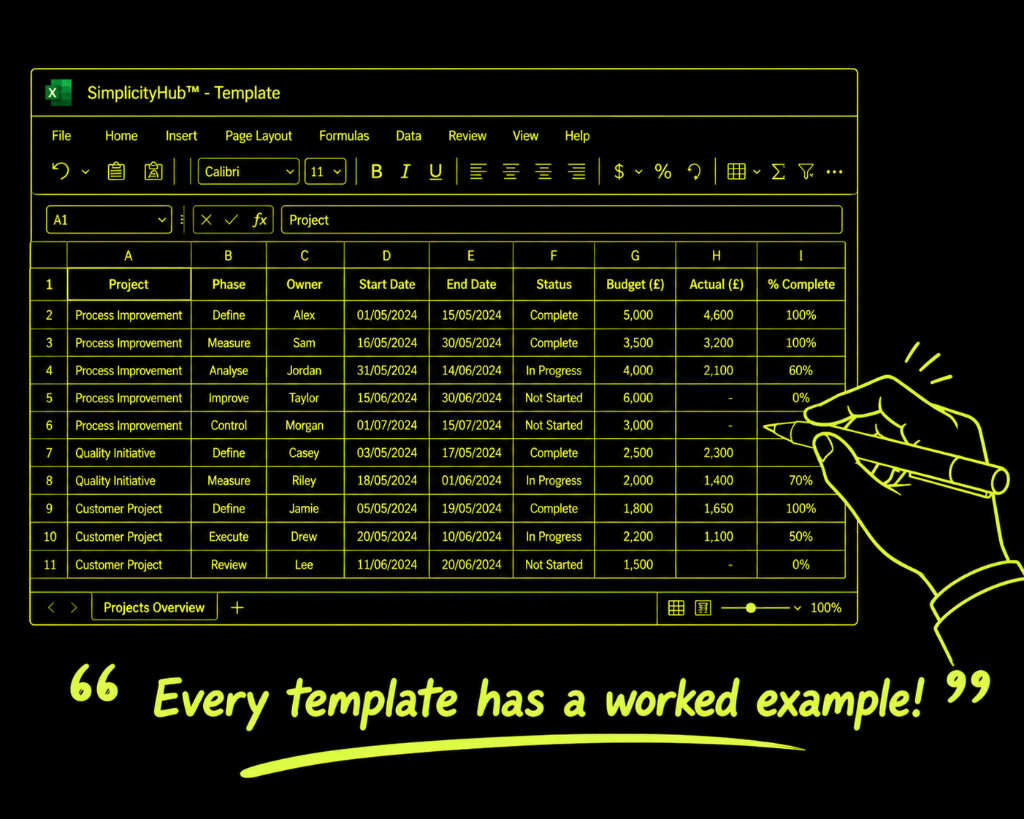
Worked example — Auto-Routing Implementation CBA
A completed cost benefit analysis for an auto-routing solution in a complaint handling project, showing implementation costs, annual savings, payback period and 3-year ROI.
Common mistakes — and how to avoid them
Ignoring the cost of people's time. Staff time spent on implementation, testing and training is a real cost — even if it does not appear on an invoice. Use an average fully loaded hourly rate to quantify it.
Not documenting assumptions. A CBA with no documented assumptions cannot be validated. If your hourly rate or volume assumption is wrong, the entire analysis changes. Write down every assumption.
Overstating benefits to get approval. Benefits that cannot be validated at closure damage your credibility for every future project. Be conservative and transparent. A CBA that delivers 80% of what was promised is a success. One that delivers 40% is a failure.
Only doing it once. The CBA built in Improve is an estimate. Revisit it at project closure with actual data. The comparison between estimated and actual ROI is one of the most valuable learning outputs of a project.
Tips for getting better results
Compare options, not just one solution. If you have two solution candidates, build a CBA for each and compare. The solution with the lower payback period and higher ROI is usually the better choice — but non-financial factors may shift the decision.
Express benefits in multiple units. £18,000 annual saving. 1.5 FTE of time recovered. 46% reduction in response time. Different stakeholders respond to different framings of the same value.
Use sensitivity analysis. Show the saving at optimistic, base and pessimistic case. This demonstrates rigour and gives the sponsor a range to plan against rather than a single point estimate that may feel arbitrary.
Download the Cost Benefit Analysis Template
A clean, editable Excel template for immediate use — structured, professional and ready to fill in.
Frequently asked questions
What should be included in costs?
All costs: project team time, systems or equipment investment, training, consultancy, and ongoing control costs.
What should be included in benefits?
Hard savings, soft savings, and revenue benefits. Be clear which are hard and which are soft.
What is payback period?
Time for cumulative benefits to exceed cumulative costs. Most organisations look for payback within 12 months.
What if benefits are hard to quantify?
Use ranges rather than point estimates and document your assumptions clearly.
Advanced Toolkit Packs — available now
Structured, ready-to-use template packs designed for real improvement work. Pick the pack that matches your project and get started straight away.
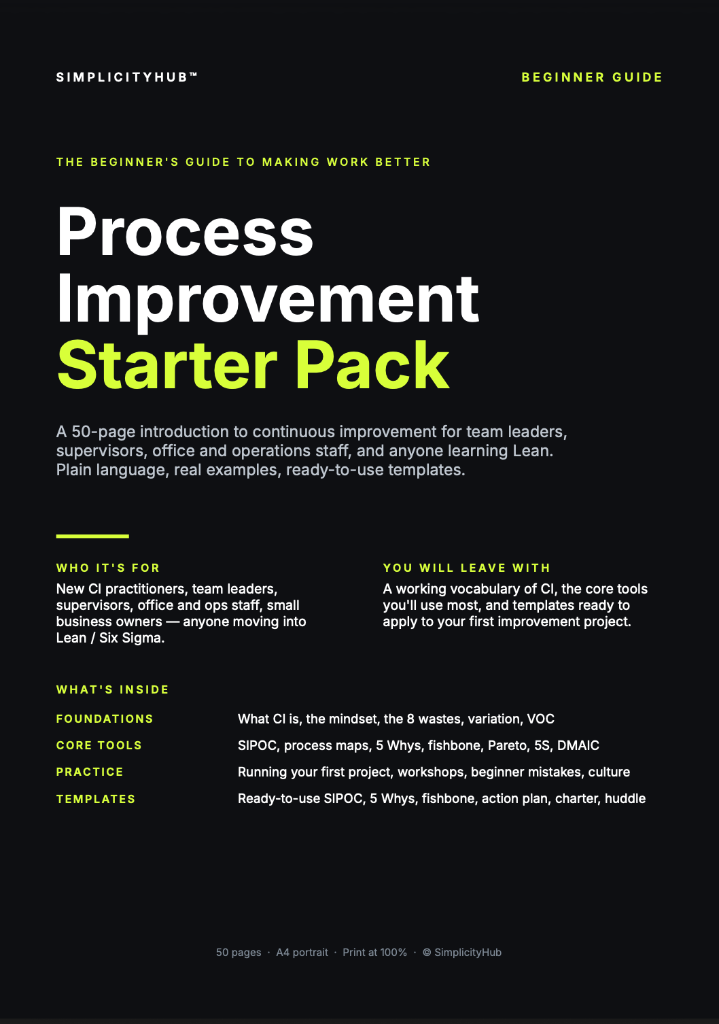
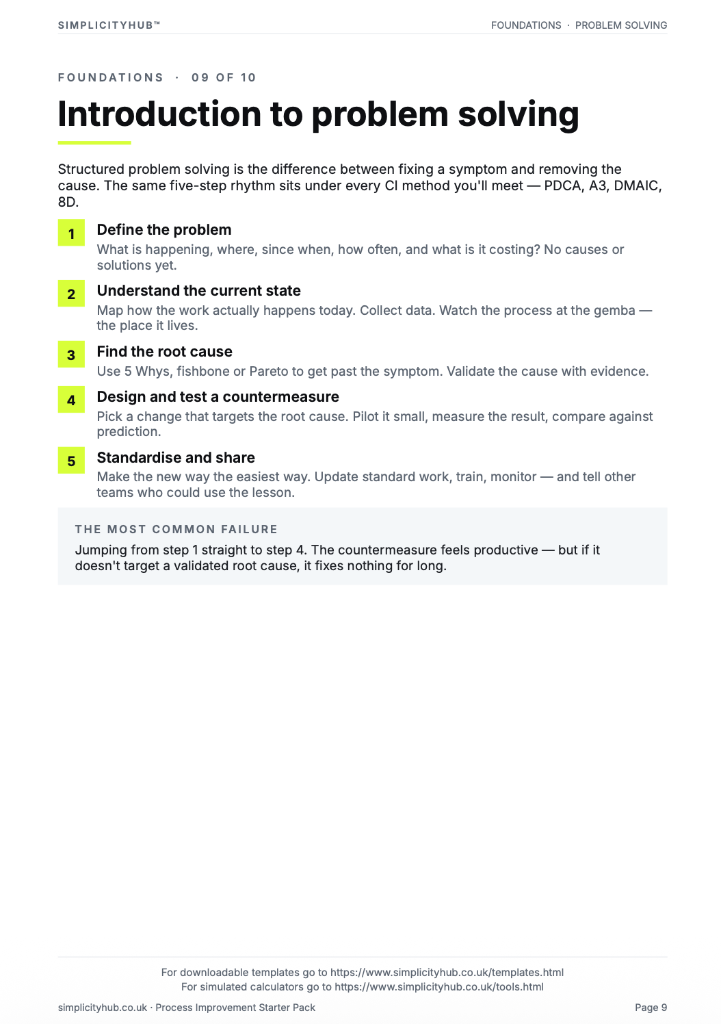
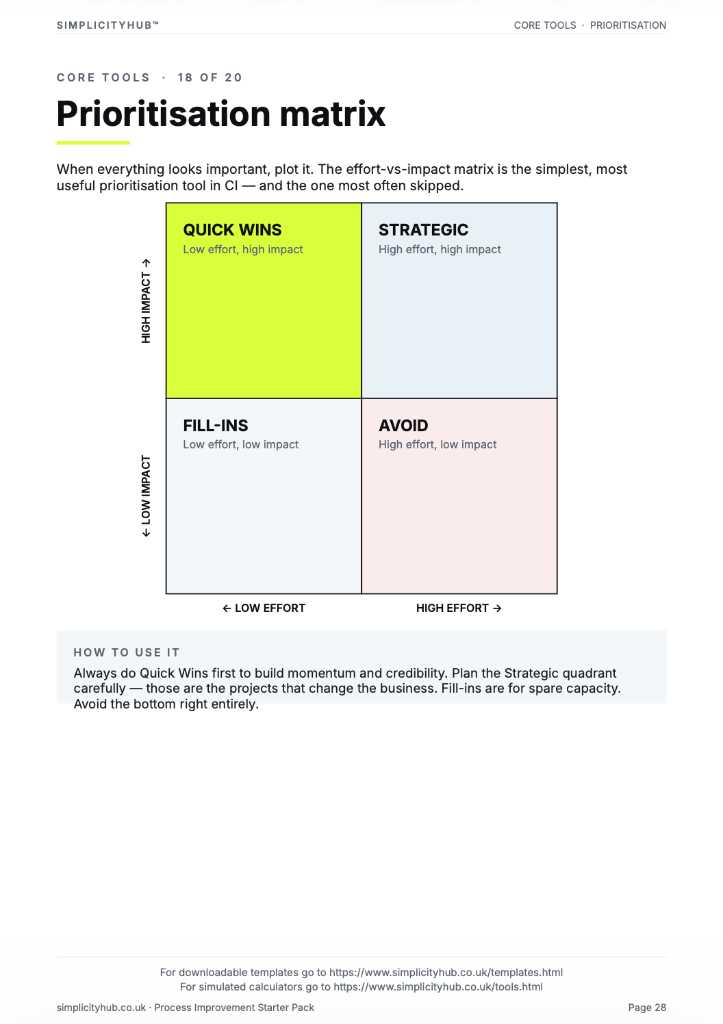
Process Improvement Starter Pack
A starter pack for identifying improvement opportunities, measuring baselines and planning action.
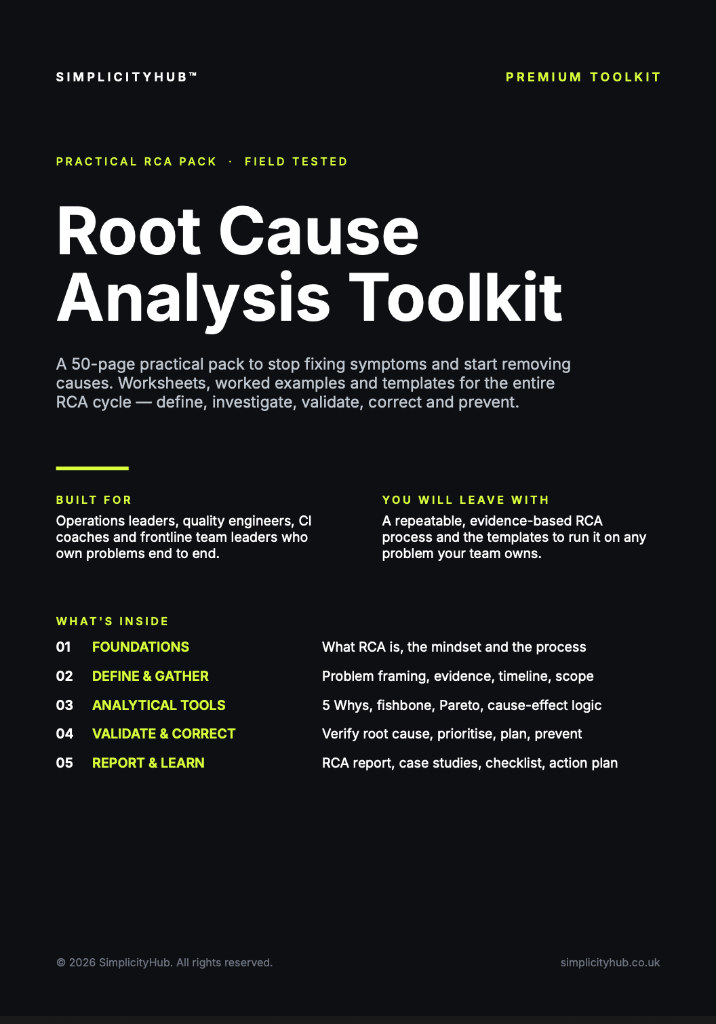
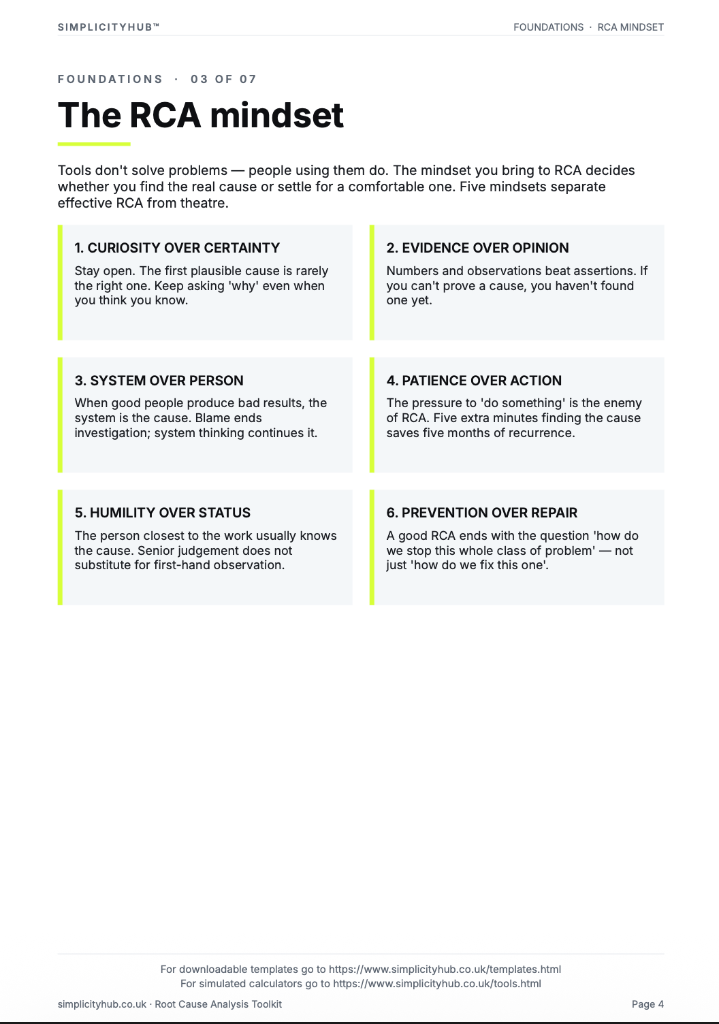
Root Cause Analysis Toolkit
A practical RCA toolkit for defining problems, finding causes, validating evidence and creating action.
A3 Template Pack
A clean A3 problem-solving pack for concise, visual improvement thinking and follow-through.