What is a Results Tracker Template?
A Results Tracker Template provides a structured table for recording the actual performance of a process against targets, over time, across multiple metrics. It is the primary tool for demonstrating that a project or programme is delivering measurable, sustained results.
When to use a Results Tracker Template
Use it from the Measure phase (to establish baseline results) through to project closure and beyond. Continue updating it for at least 12 months post-implementation to demonstrate sustainability to the sponsor and finance team.
Who should use a Results Tracker Template
- Black Belts and Green Belts — tracking and reporting project results throughout and after the DMAIC lifecycle
- Process owners — maintaining the ongoing record of process performance after project handover
- Finance business partners — validating that financial results are genuine and sustainable before formal sign-off
- Programme managers — aggregating results across a portfolio to report CI programme impact to leadership
Vote yes and we’ll prioritise a quick walkthrough showing you exactly how to use it.
How to use a Results Tracker — step by step
- 1Define the metrics to track
List every metric that was defined as a project success measure in the charter. Include financial and non-financial measures.
- 2Record the baseline for each metric
Capture the pre-improvement baseline value with the measurement date and data source. This is the reference point for all improvement claims.
- 3Set the target for each metric
Record the target agreed in the project charter. Where targets have changed, record both the original and revised target with the reason.
- 4Update actuals on a defined schedule
Record actual performance monthly. Use the same data source and measurement method as the baseline.
- 5Calculate improvement vs baseline and target
Show both: actual vs baseline (how much has improved) and actual vs target (how close to goal).
- 6Flag metrics at risk
Any metric that is not on track for target needs a RAG status and a recovery plan.
- 7Obtain finance sign-off for financial results
All hard financial results should be validated by the finance team before being reported externally.
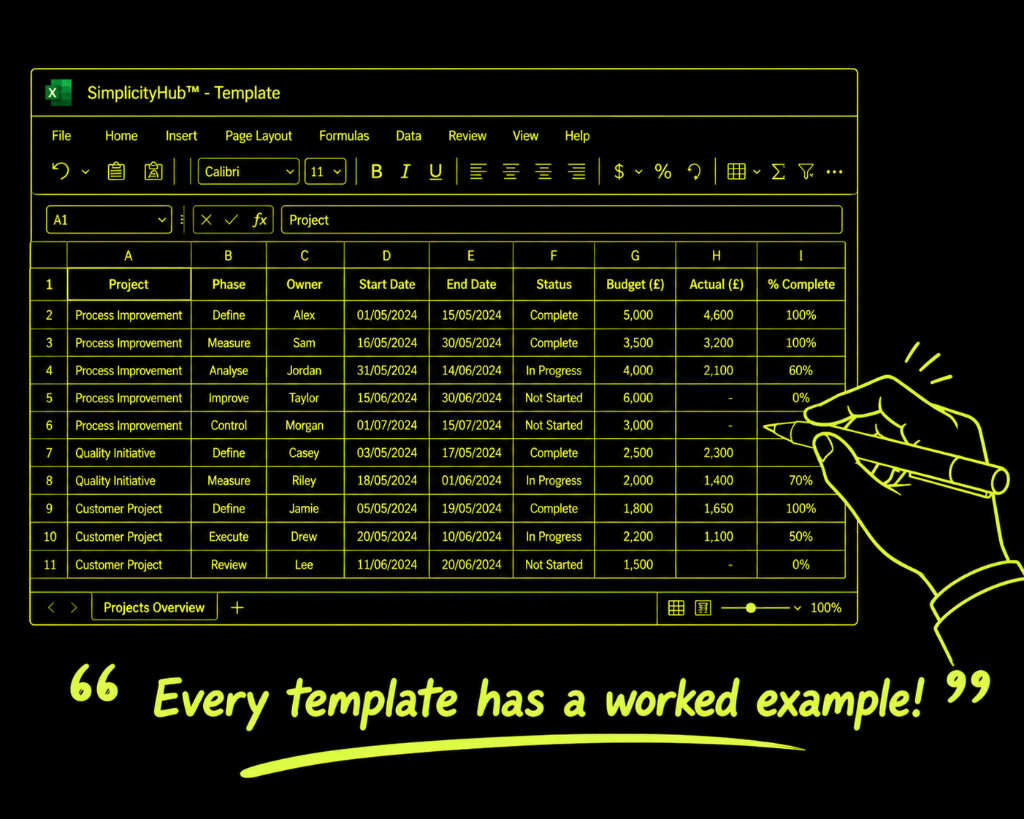
Worked example — Quality Improvement Programme Results
A quality team tracked 6 metrics monthly for 12 months post-implementation — showing sustained improvement in defect rate (4.1% → 0.6%), customer complaints (34 → 4 per month) and rework cost (£47k → £8k per month), all validated by the finance controller.
Common mistakes — and how to avoid them
Stopping measurement at project closure. Sustainability is proved over 6–12 months, not at go-live. Continue tracking until the improvement is proven sustainable.
Using different measurement methods for before and after. If the method changes, the comparison is invalid. Standardise the method from the start.
Tracking outputs instead of outcomes. Activities completed (training delivered, SOPs written) are not results. Results are changes in process performance metrics.
Not tracking non-financial results. Defect reduction, lead time improvement and customer satisfaction are real results even if they don't directly reduce cost. Track and report them.
Tips for getting better results
Show trends graphically. A line chart showing 12 months of actuals vs target tells the story far more powerfully than a table of numbers.
Review at every sponsor update. The results tracker should be the first item on every sponsor review agenda. It keeps the focus on outcomes.
Archive with the project closure report. A complete results tracker is a core component of the project closure documentation and a valuable reference for future projects.
Frequently asked questions
What metrics should I track?
The primary metric from your goal statement, plus secondary metrics using the same measurement method as the baseline.
How long should I track?
Minimum three months post-implementation, ideally six to twelve.
Who reviews it?
The process owner regularly. The sponsor should see a monthly summary for the first three to six months.
What if results start to deteriorate?
Investigate immediately. Check controls are being followed and whether any process changes have been made.
Advanced Toolkit Packs — available now
Structured, ready-to-use template packs designed for real improvement work. Pick the pack that matches your project and get started straight away.
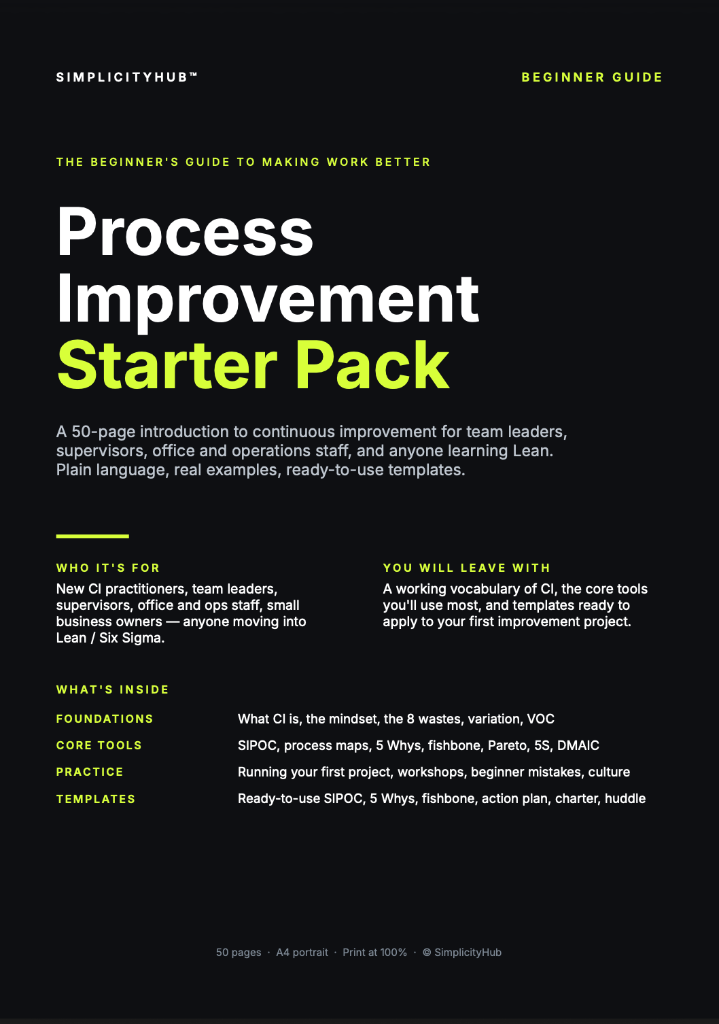
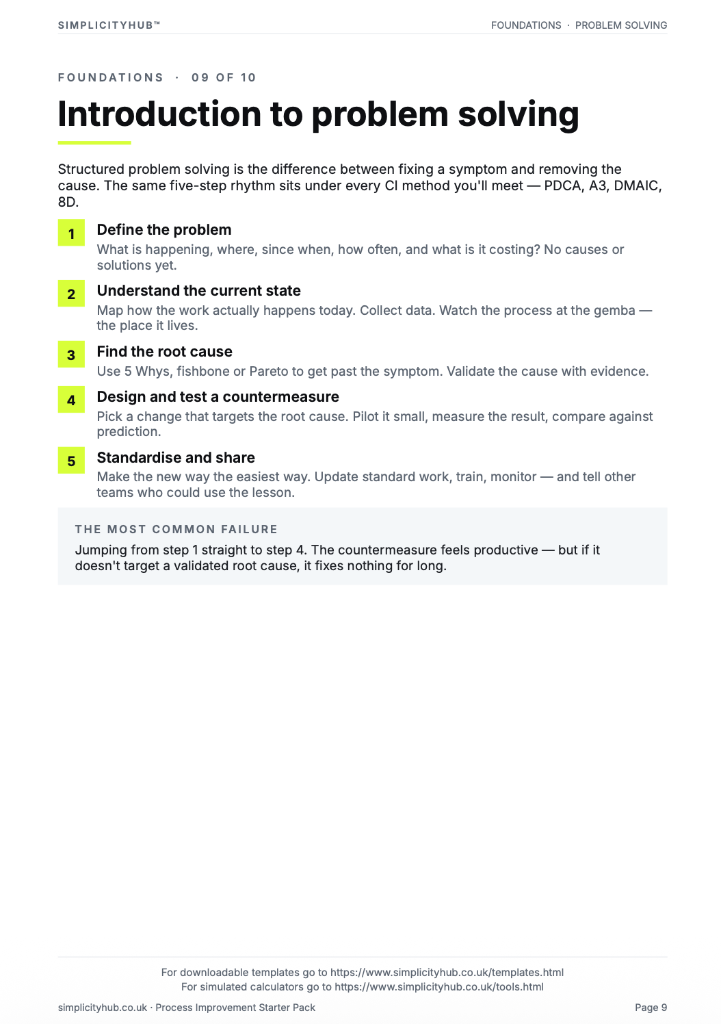
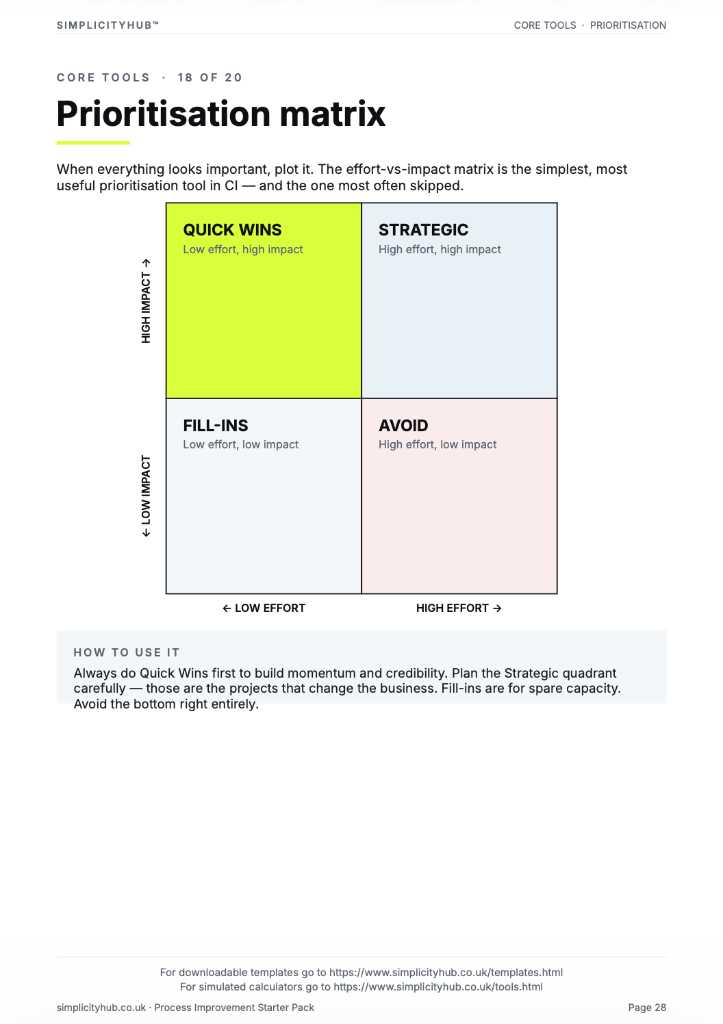
Process Improvement Starter Pack
A starter pack for identifying improvement opportunities, measuring baselines and planning action.
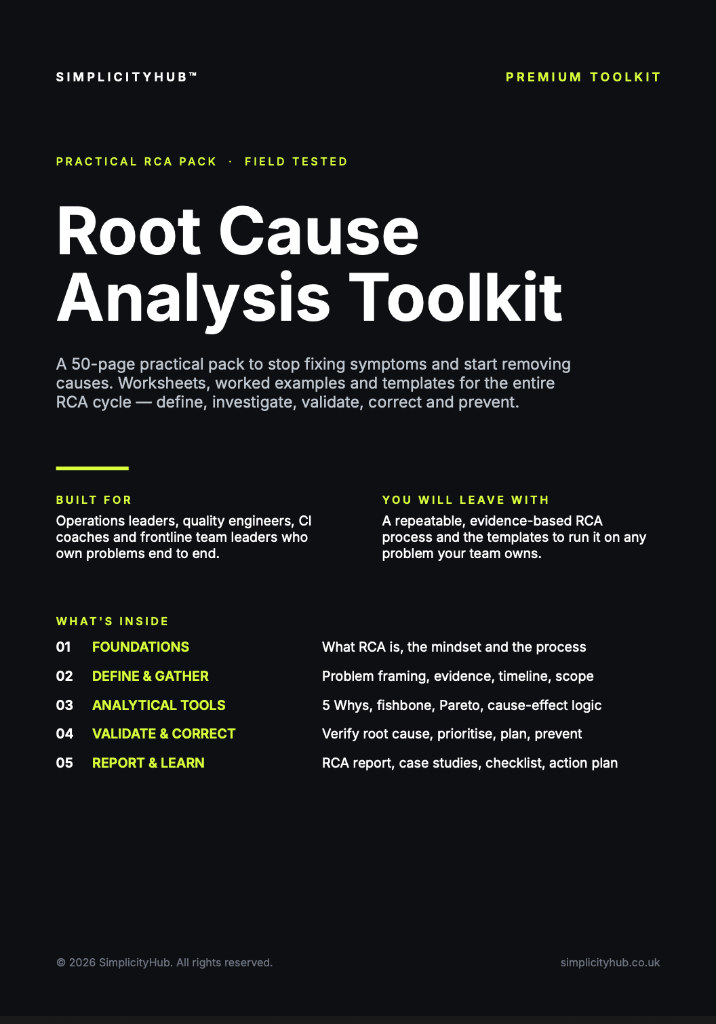
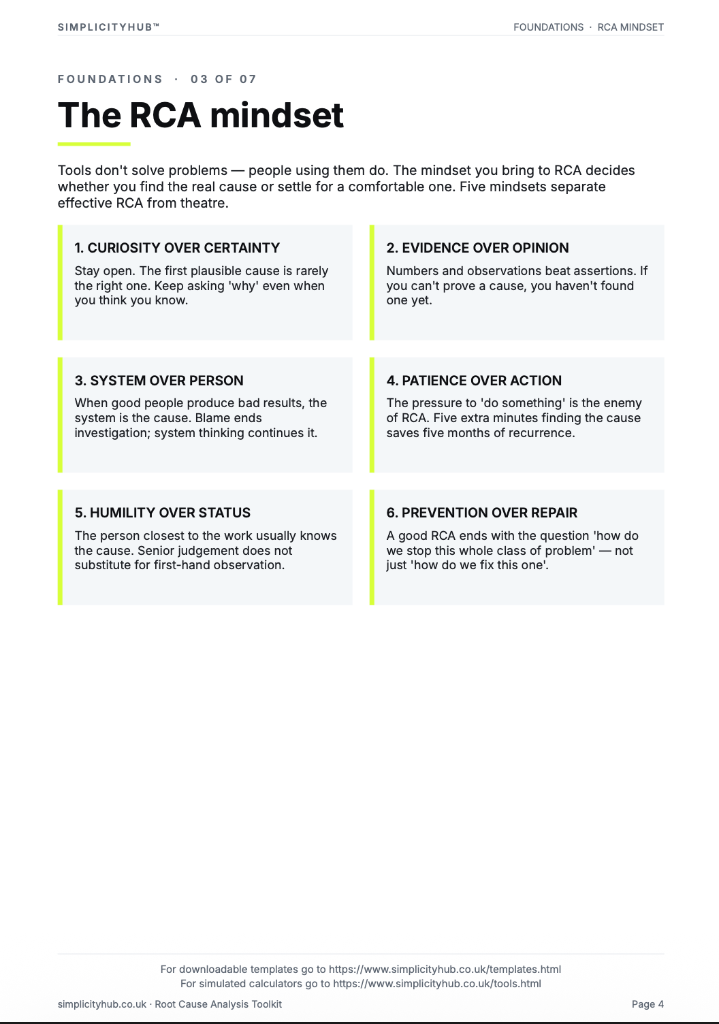
Root Cause Analysis Toolkit
A practical RCA toolkit for defining problems, finding causes, validating evidence and creating action.
A3 Template Pack
A clean A3 problem-solving pack for concise, visual improvement thinking and follow-through.