
What is a Fishbone Starter Template?
The Fishbone Starter is a pre-structured, ready-to-fill Ishikawa diagram template with the six cause category bones already drawn and labelled — eliminating the blank-page paralysis that often slows down root cause workshops.
Rather than spending the first 15 minutes of a session drawing the diagram, the team can start adding causes immediately. The structured format keeps the session focused on the six standard categories (Man, Machine, Method, Material, Measurement, Mother Nature) and prevents the workshop drifting into free-form discussion.
Used in the Analyse phase, it is designed for teams running their first fishbone session or for fast-paced Kaizen events where setup time is minimal.
When to use a Fishbone Starter Template
Use the Fishbone Starter when you need to run a cause analysis workshop quickly and without preparation time. Use it when:
- A team is running their first fishbone session and the blank-page format feels daunting
- A Kaizen event or rapid improvement session needs a structured cause analysis tool that is ready to use immediately
- You want a consistent, repeatable format for cause analysis across multiple teams or sites
- A quality incident or complaint requires a prompt, structured investigation
Who should use a Fishbone Starter Template
- Yellow Belts and White Belts — for team-led root cause analysis sessions without CI facilitation
- CI Facilitators — as a ready-to-use workshop tool for Kaizen events and problem-solving sessions
- Team Leaders and Quality Teams — for rapid cause analysis of operational quality problems
- All belt levels — when speed of setup is important and the team is familiar with the fishbone method
Watch: a quick explainer
New to this? This short video walks you through using cause analysis to fix problems for good — a helpful primer before you download and use the template.

How to use the Fishbone Starter
Print the template on A3 or display it on a shared screen. Give each participant sticky notes and a pen. The bones are already drawn — your only job is to fill them with causes.
How to use the Fishbone Starter — step by step
-
1Write the problem at the head
Fill in the problem statement at the right end of the central spine. Be specific — the more precise the problem, the more focused the causes will be.
-
2Brainstorm causes for Man (People)
Ask: could people cause this problem? Skills gaps, inadequate training, high turnover, unclear responsibilities, fatigue. Write each cause on a sticky note and place it on the Man bone.
-
3Brainstorm causes for Machine and Method
Machine: could equipment, tools, systems or technology contribute? Method: could the process design, procedures, standards or instructions be a cause?
-
4Brainstorm causes for Material and Measurement
Material: could raw materials, data inputs, components or information quality be a factor? Measurement: could the way the problem is detected — or not detected — be contributing?
-
5Brainstorm causes for Mother Nature (Environment)
Could environmental factors contribute — temperature, noise, layout, shift timing, seasonal demand? This category is often overlooked but can be significant.
-
6Add sub-causes as branches
For the most significant causes, ask 'why might this occur?' and add sub-causes as smaller branches off the main bone. This begins the 5 Whys analysis within the fishbone structure.
-
7Vote and shortlist
Ask each team member to mark their top three most likely causes. Count the votes. The causes with the most votes are your priority for data validation and further analysis.
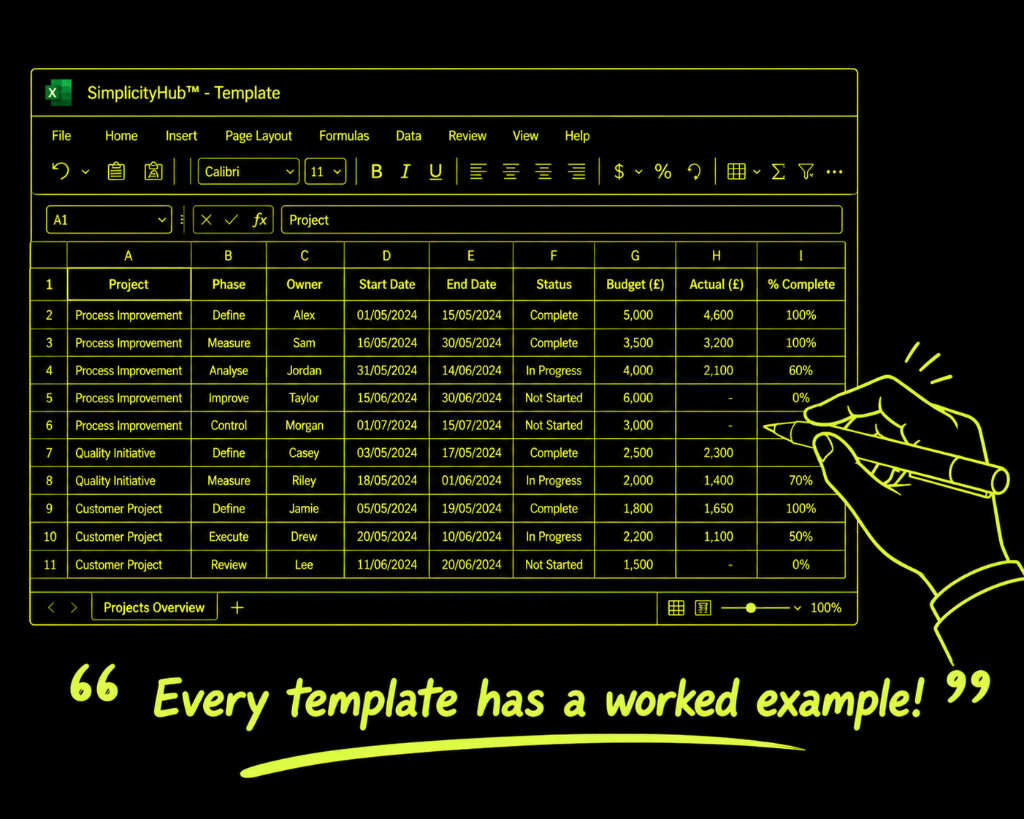
Worked example — High Returns Rate Fishbone
A completed Fishbone Starter for a high product returns problem, with causes populated across all six bones and the top three highest-voted causes circled for priority investigation.
Common mistakes — and how to avoid them
Filling only the Man bone. The most common fishbone failure is spending 80% of the session on people causes and barely touching Machine, Method or Measurement. Enforce equal time on each bone.
Writing effects as causes. 'Customer complaints increase' is an effect of the problem, not a cause of it. Every item on the fishbone should describe something that could cause the problem — not something that results from it.
No sub-causes. A fishbone with only first-level causes is a list of symptom areas, not a root cause analysis. Add at least one level of sub-causes for the top two or three bones.
Not validating the output. The fishbone shows what could cause the problem. Only data and observation can confirm what does. Always follow the fishbone session with targeted validation of the top-voted causes.
Tips for getting better results
Use A3 format for in-person sessions. An A3 fishbone printed at the centre of a table gives everyone equal access and makes the session genuinely collaborative. A laptop screen visible to only one or two people does not.
Rotate through bones rather than going bone by bone. Ask for any cause, any bone, then place it. Rotating keeps energy high and prevents the session getting stuck on one category. Return to underpopulated bones at the end.
Photograph the completed fishbone. Before the session ends, photograph the completed diagram. Causes on sticky notes can fall off overnight. A photo is the insurance policy.
Download the Fishbone Starter Template
A clean, editable Excel template for immediate use — structured, professional and ready to fill in.
Frequently asked questions
Starter vs full fishbone?
Starter for quick discussions and narrow-scope problems. Full fishbone for complex multi-dimensional problems.
How many categories?
Three to four is enough. People, Process, and Environment are a good default.
Can I convert it to a full fishbone?
Yes — use the starter as the first pass, then run a deeper session on the most promising branches.
Do I still need to validate causes?
Yes. The starter changes the speed of generation, not the need to validate.
Advanced Toolkit Packs — available now
Structured, ready-to-use template packs designed for real improvement work. Pick the pack that matches your project and get started straight away.
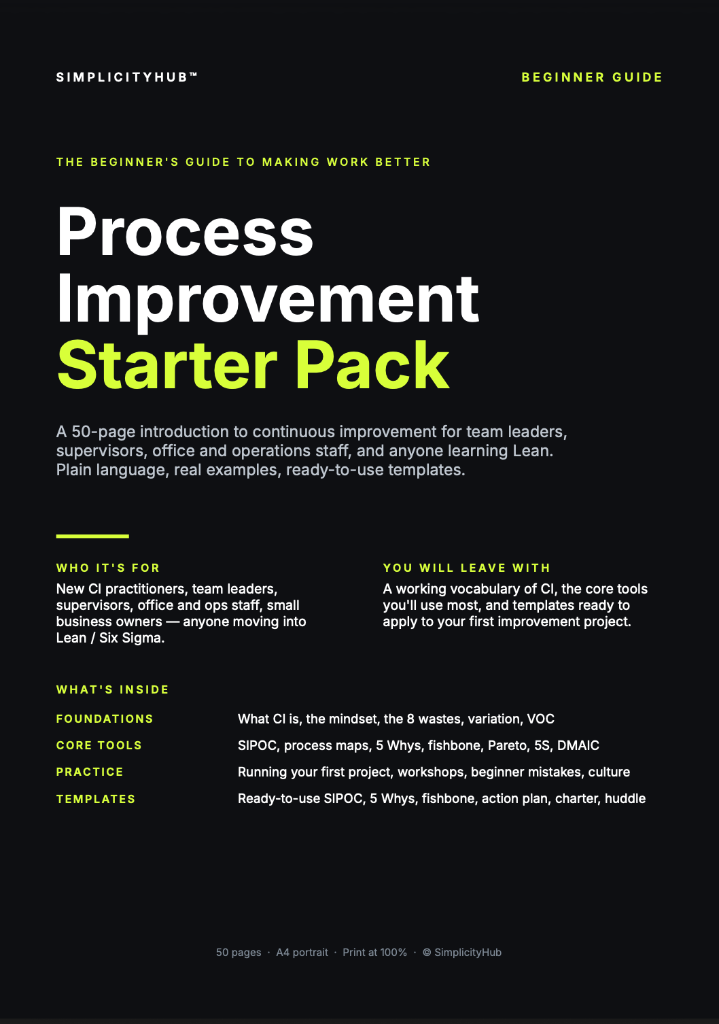
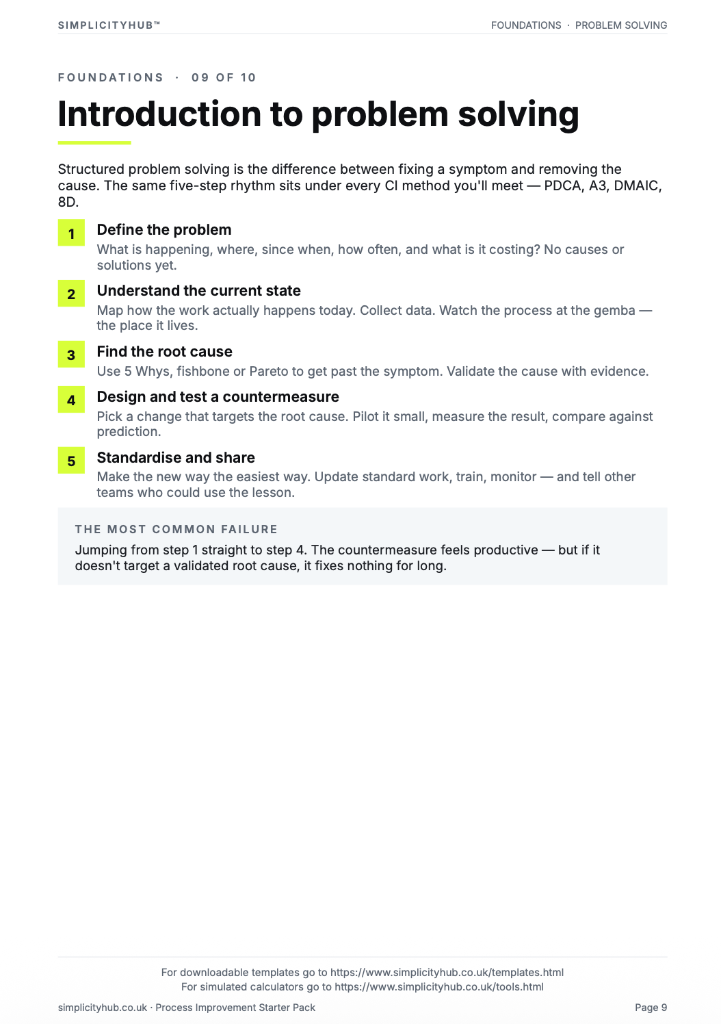
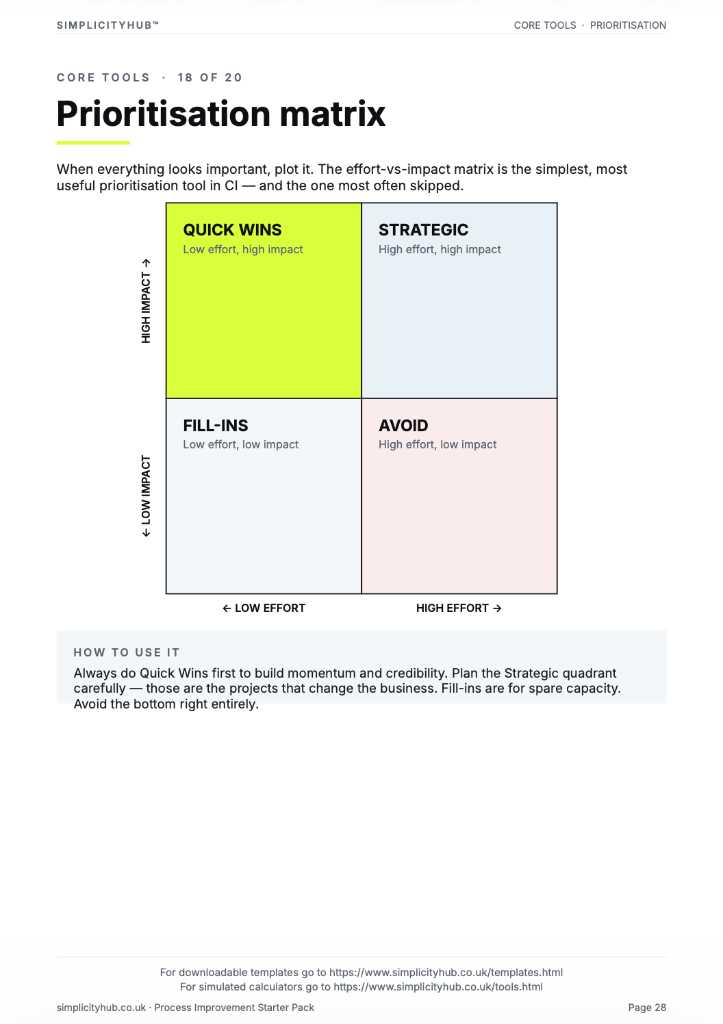
Process Improvement Starter Pack
A starter pack for identifying improvement opportunities, measuring baselines and planning action.
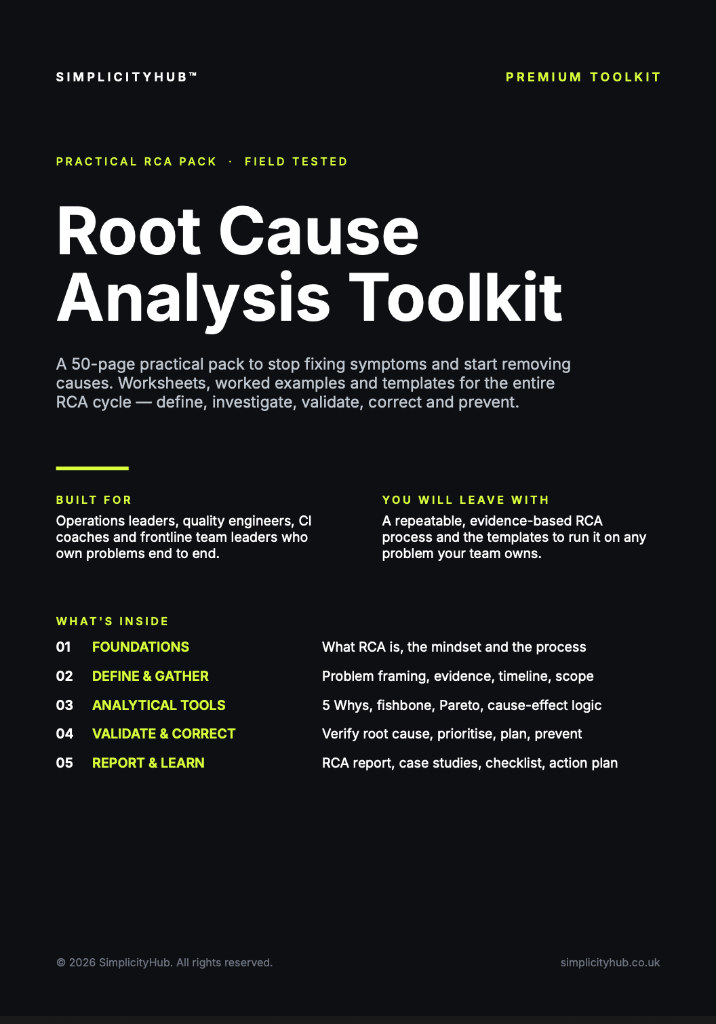
Root Cause Analysis Toolkit
A practical RCA toolkit for defining problems, finding causes, validating evidence and creating action.
A3 Template Pack
A clean A3 problem-solving pack for concise, visual improvement thinking and follow-through.