
What is a Gemba Walk Checklist Template?
A Gemba Walk Checklist Template provides a structured set of observation prompts and recording fields for leaders and improvement practitioners conducting a walk of the actual workplace to observe process, people and problems first-hand.
When to use a Gemba Walk Checklist Template
Use it before starting an improvement project, during the Measure phase or as a regular leadership routine. A Gemba Walk is most effective when conducted with curiosity, not judgment.
Who should use a Gemba Walk Checklist Template
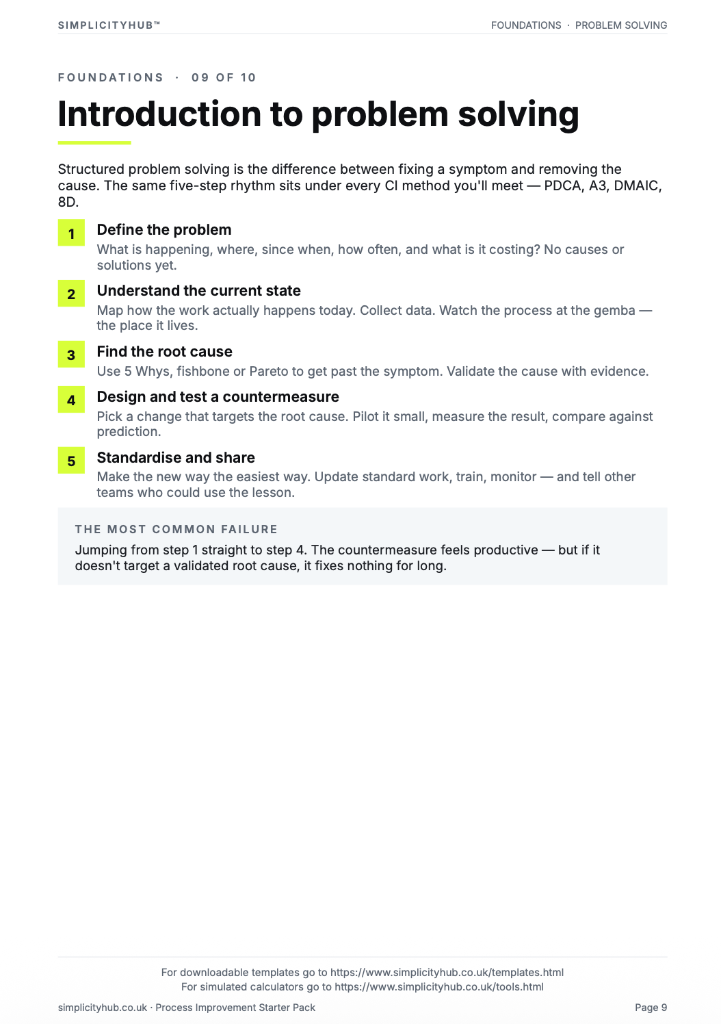
- Operations and site managers — conducting regular Lean leadership walks to observe process reality and engage the team
- Black Belts and Green Belts — gathering first-hand process observations during the Measure and Analyse phases
- Process owners — understanding their process as it actually operates versus how it is documented
- Continuous improvement teams — identifying waste, variation and problem areas before scoping improvement projects
Watch: a quick explainer
New to this? This short video walks you through running an effective gemba walk — a helpful primer before you download and use the template.
How to use a Gemba Walk Checklist — step by step
-
1Write the problem statement at the top
Start with a clear, factual problem statement. 'Machine stopped' or 'Customer received wrong item' — specific, observable, factual. Vague problems produce vague root causes.
-
2Ask 'Why did this happen?' — Why 1
Write down the first-level cause. This is usually a symptom or a direct cause — not yet the root. Examples: 'Machine overheated', 'Wrong item was picked'.
-
3Ask 'Why did that happen?' — Why 2
Challenge the previous answer. Keep the team focused on causes, not blame. If the answer is 'human error', push further — why did the human make the error?
-
4Continue to Why 3, 4 and 5
Keep going until you reach a cause that is systemic — a missing process, a failed control, a gap in training or a design flaw. The number five is a guide, not a rule.
-
5Check the logic by reading upward
Read the chain back to front: 'Because of X, Y happened, which caused Z.' If the logic holds, you have a valid chain. If it breaks, revisit the step where it breaks.
-
6Identify the actionable root cause
The root cause is the deepest level where a corrective action can prevent recurrence. Document it clearly — this feeds your Improve phase solution design.
-
7Validate before acting
Do not jump to solution immediately. Check whether data or observation confirms the root cause is real and significant before committing resource to fixing it.
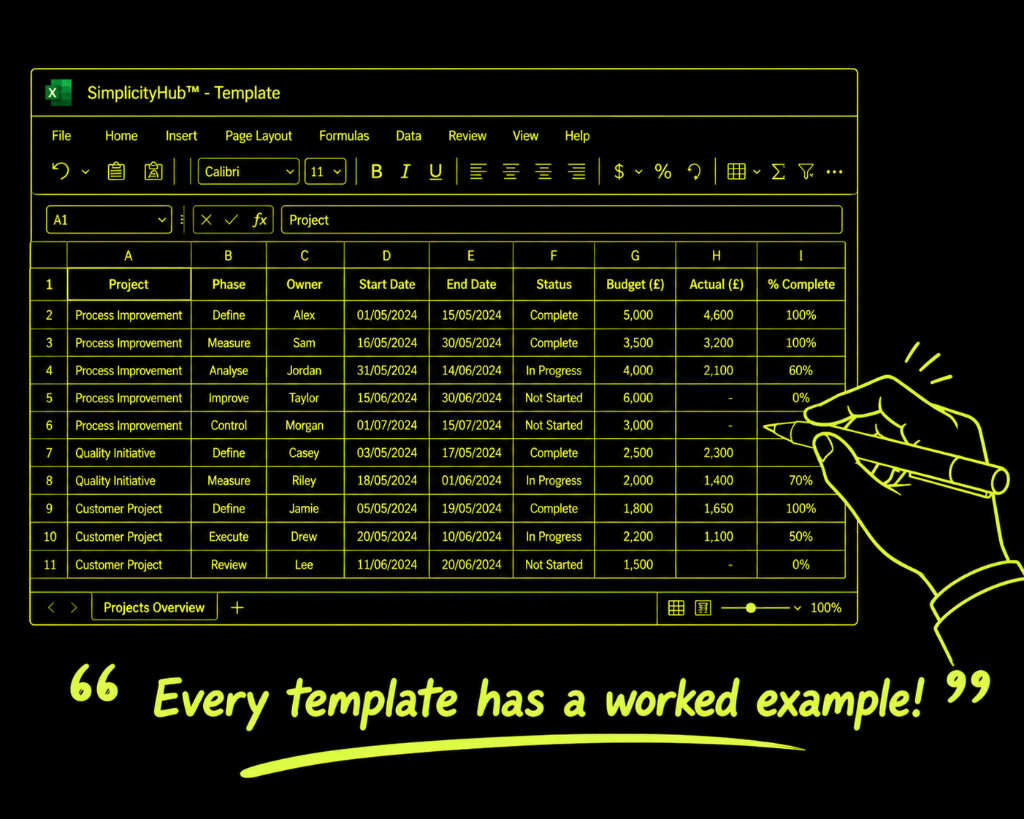
Worked example — Manufacturing Cell Gemba Walk
A plant manager and Black Belt conducted a 45-minute Gemba walk of an assembly cell, identifying 11 waste observations including unnecessary motion, waiting at a shared tool station and an undocumented rework loop.
Common mistakes — and how to avoid them
Going to audit, not to observe. A Gemba walk is about curiosity and learning — not compliance checking. Approach it with questions, not a clipboard of standards.
Talking more than observing. The most valuable Gemba walks involve long periods of quiet observation before any questions are asked. Watch the process run for multiple cycles first.
Not following up on observations. A Gemba walk that produces a list of observations with no follow-up actions loses credibility and discourages future engagement.
Walking the same area every time. Rotate your Gemba walks across different areas, shifts and times of day. The same walk at the same time produces the same observations.
Tips for getting better results
Go to the process, not the manager. Speak directly to the people doing the work. They have knowledge that never makes it into management reports.
Bring a notebook, not a laptop. A notebook signals curiosity. A laptop signals inspection. The tool you bring changes how the team perceives the walk.
Always close the loop with the team. Before leaving, share your key observations with the team and agree what happens next. This demonstrates respect and builds trust.
Frequently asked questions
What is a gemba walk?
A structured visit to where work is done to observe, ask questions, and understand the process firsthand.
Who should attend?
The project lead and ideally the sponsor or process owner. Keep the group to three to five people maximum.
What should I observe?
How work actually flows versus how it is documented, where waiting occurs, and what workarounds people use.
How should I engage with staff?
Ask open questions: Can you show me how you do this step? Avoid leading questions and do not make people feel judged.
Advanced Toolkit Packs — available now
Structured, ready-to-use template packs designed for real improvement work. Pick the pack that matches your project and get started straight away.
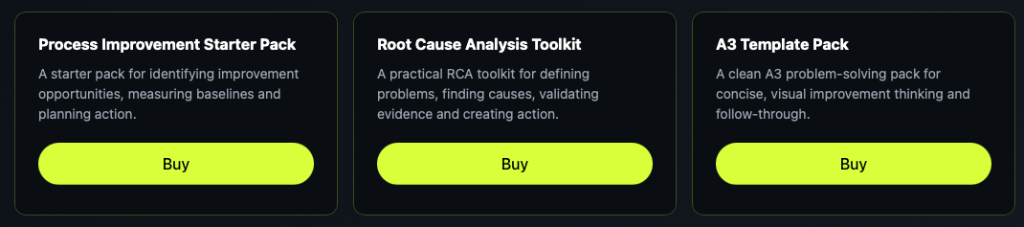
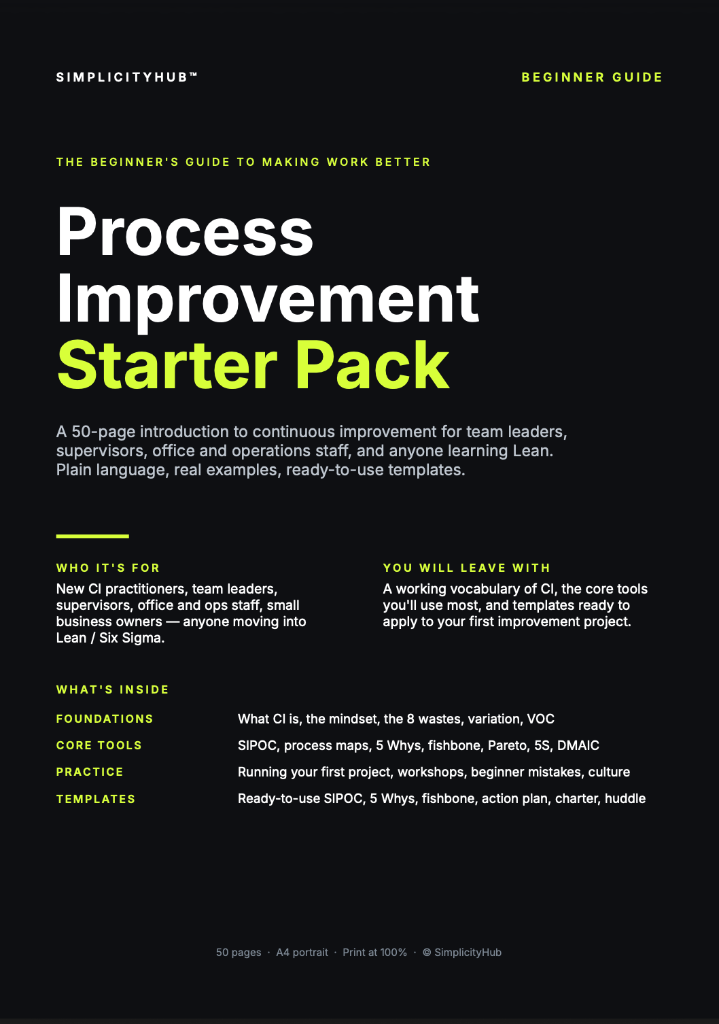
Process Improvement Starter Pack
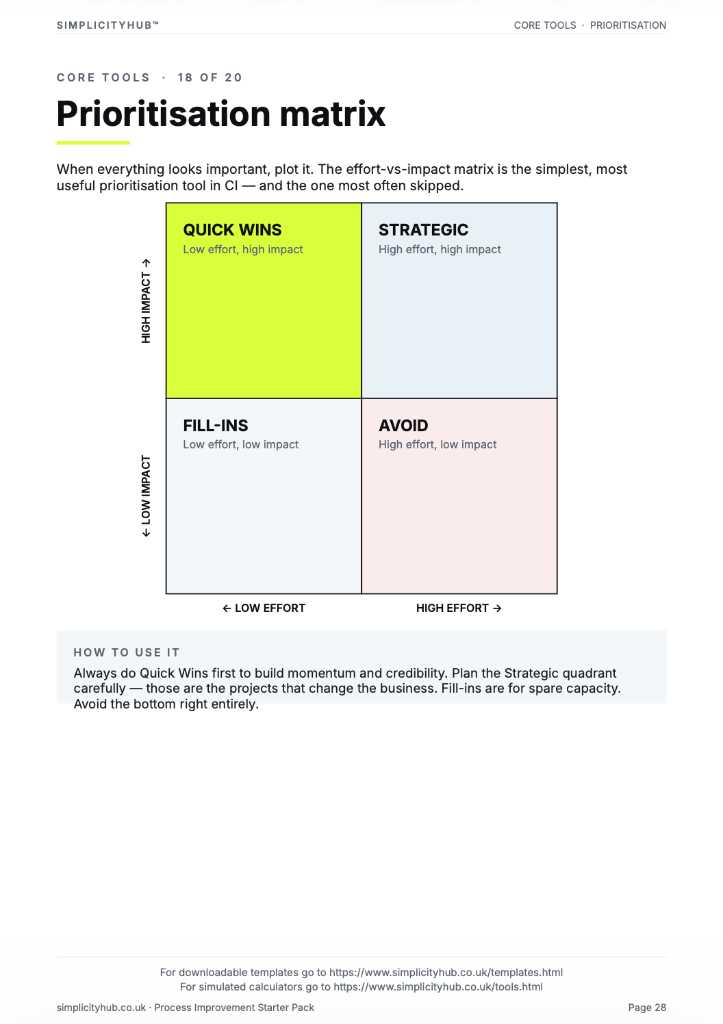
A starter pack for identifying improvement opportunities, measuring baselines and planning action.
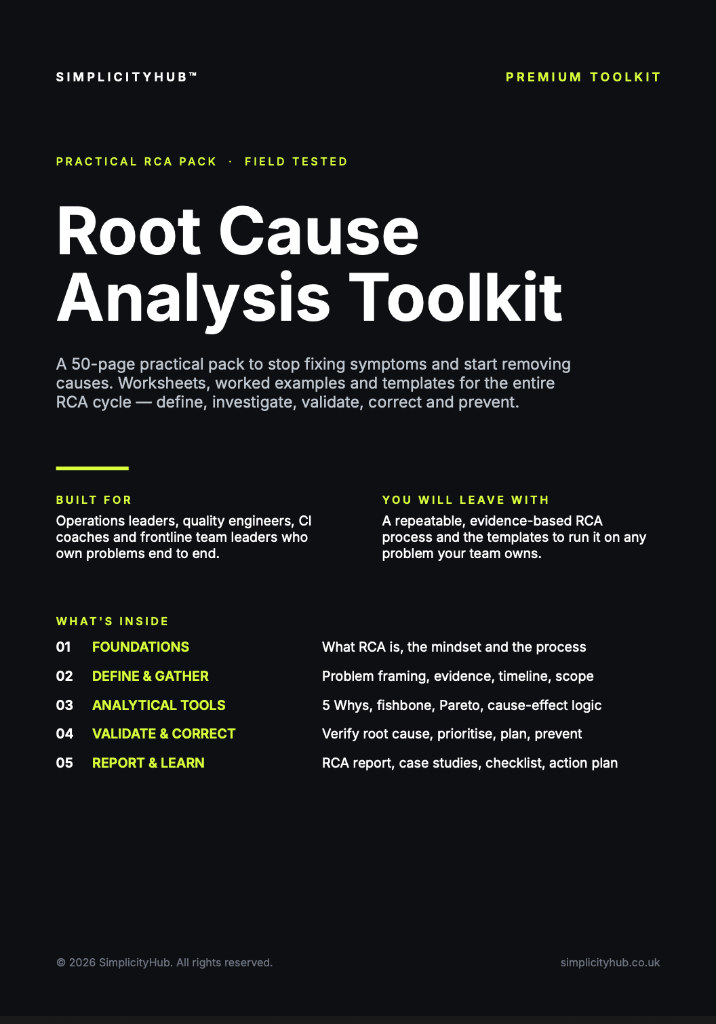
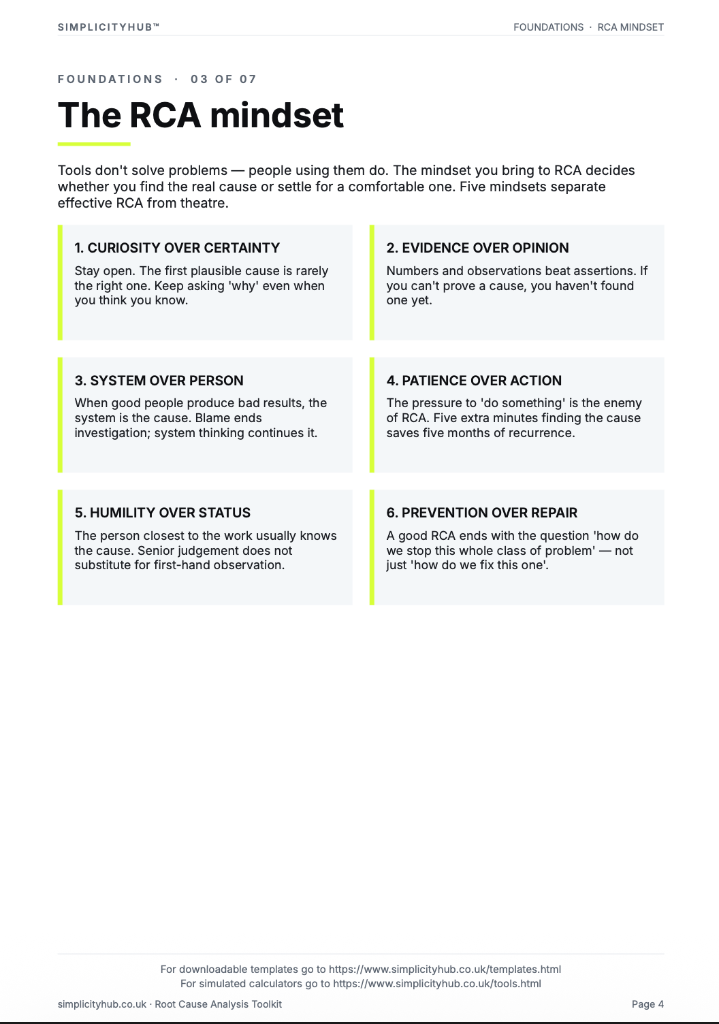
Root Cause Analysis Toolkit
A practical RCA toolkit for defining problems, finding causes, validating evidence and creating action.
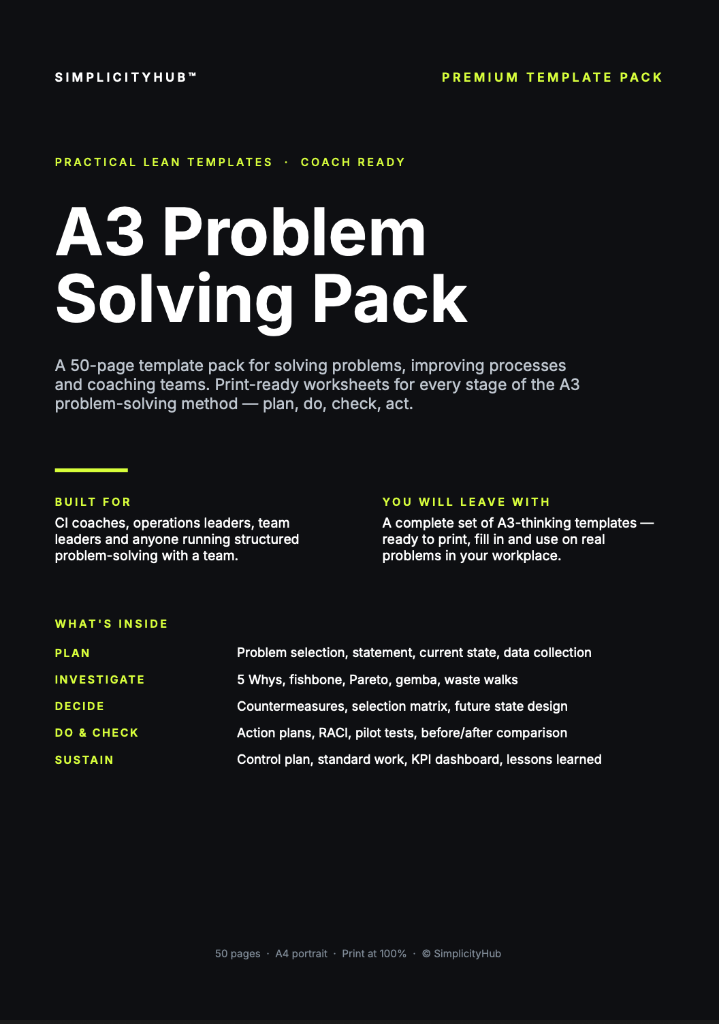
A3 Template Pack
A clean A3 problem-solving pack for concise, visual improvement thinking and follow-through.