
What is a Process Observation Sheet Template?
A Process Observation Sheet Template provides a structured form for recording detailed observations of a process as it runs in real time. It captures cycle times, step sequences, operator actions, wait times and deviations from standard — giving the project team a factual picture of what is actually happening.
When to use a Process Observation Sheet Template
Use it in the Measure phase when you need detailed time and motion data about a process. It is the foundation for standard work analysis, cycle time studies, capacity planning and waste identification.
Who should use a Process Observation Sheet Template
- Green Belts and Black Belts — collecting detailed process data during the Measure phase time studies
- Industrial engineers — conducting standard work analysis and cycle time studies
- Lean practitioners — identifying waste and variation during Gemba walks and process observation sessions
- Operations managers — verifying that the actual process matches the documented standard
Vote yes and we’ll prioritise a quick walkthrough showing you exactly how to use it.
How to use a Process Observation Sheet — step by step
- 1Brief the operator before observing
Explain the purpose — you are observing the process, not evaluating the individual. Psychological safety produces accurate observations.
- 2Select a representative time period
Observe during normal operating conditions — not during an unusual rush or a quiet period.
- 3Record the sequence of steps
List every action the operator takes in order. Include micro-steps that may not appear in the SOP.
- 4Time each step with a stopwatch
Record start and end times for each step. Capture at least 5–10 cycle repeats to understand the range.
- 5Note wait times and interruptions
Any time the operator is waiting, searching or dealing with an interruption is non-value-added time. Record it.
- 6Note deviations from the standard
If the operator does something differently from the SOP, record exactly what they do and why (if they can explain).
- 7Summarise the findings
Calculate average cycle time, total wait time, percentage of value-added vs non-value-added time and the frequency of deviations.
Worked example — Customer Service Call Observation
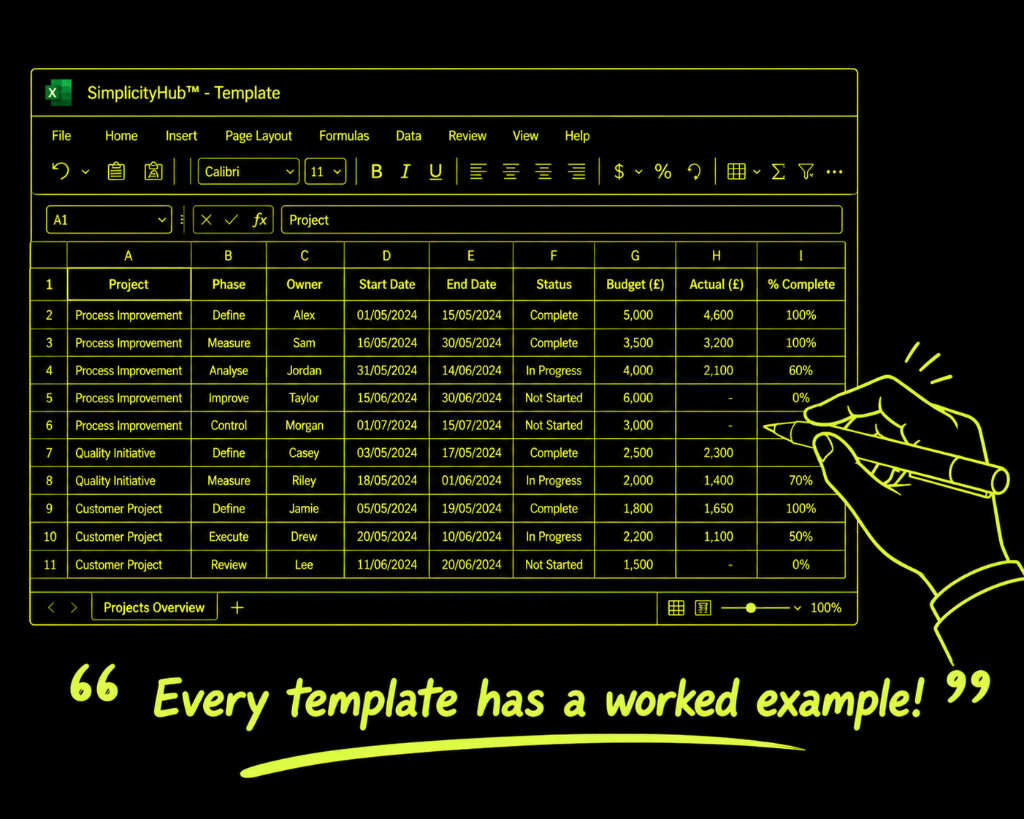
A contact centre team observed 15 complete customer service calls, finding that 34% of total call time was spent navigating between screens — a non-value-added step not captured in any SOP, which became the primary focus of the improvement project.
Common mistakes — and how to avoid them
Observing for only one cycle. A single observation is not representative. Observe at least 5–10 full cycles to understand normal variation.
The operator performing differently because they're being watched. Hawthorne effect is real. Spend time at the workstation before timing begins so the operator normalises. Then time.
Not recording the sequence — only the times. Timing is only useful alongside a sequence map. Without the sequence, you can't identify where the time is being spent.
Missing the informal steps. Operators often perform undocumented steps — checking a reference sheet, calling a colleague, reworking an entry. Capture all of them.
Tips for getting better results
Use a digital timer with lap function. A lap timer allows you to record each step without losing count. Many smartphone apps do this well.
Observe multiple operators. If two operators do the same job differently, the variation itself is a source of defects and waste. Compare observation sheets across operators.
Feed the data directly into a capacity model. Observation data (cycle times, wait times) is the most accurate input for a capacity planning calculation.
Frequently asked questions
What data should I collect?
Cycle time per step, wait time between steps, any rework or workarounds, and quality checks performed.
How many observations do I need?
At least five to ten complete cycles to get a representative picture.
Should I time every step?
Yes where possible. Step-level times tell you where time goes.
What is the right level of detail?
Enough to distinguish value-adding from non-value-adding time.
Advanced Toolkit Packs — available now
Structured, ready-to-use template packs designed for real improvement work. Pick the pack that matches your project and get started straight away.
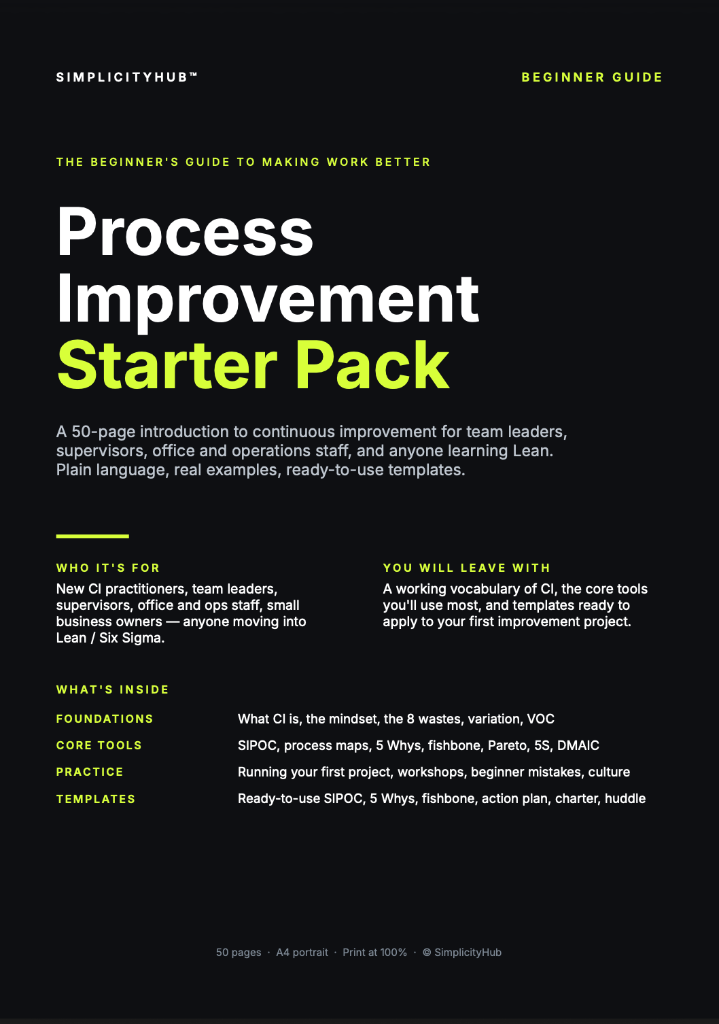
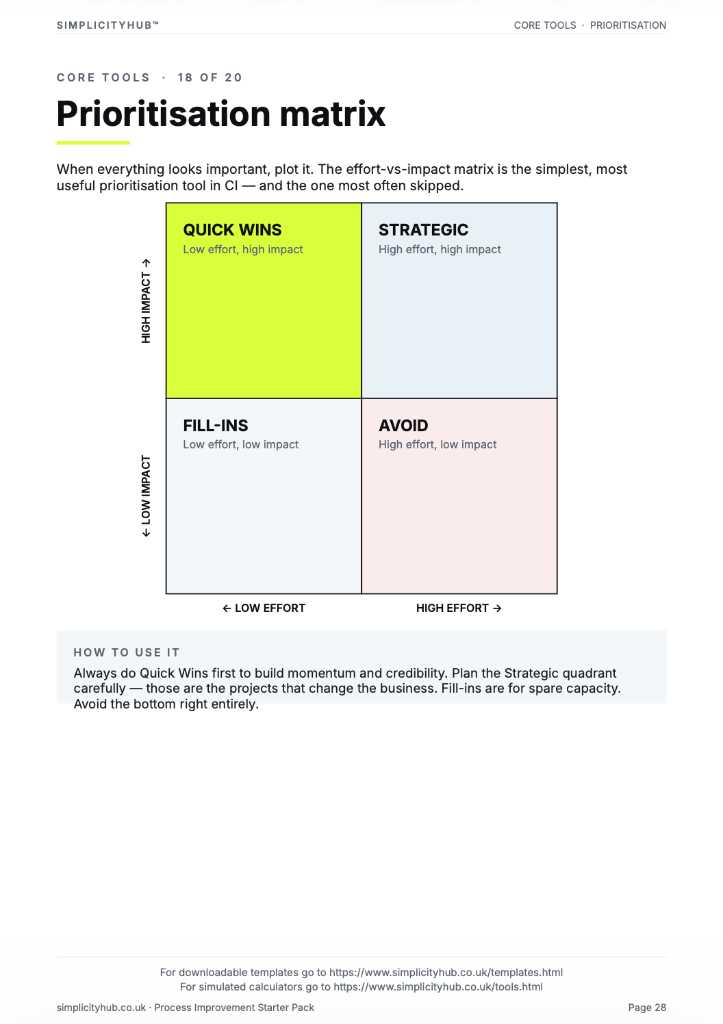
Process Improvement Starter Pack
A starter pack for identifying improvement opportunities, measuring baselines and planning action.
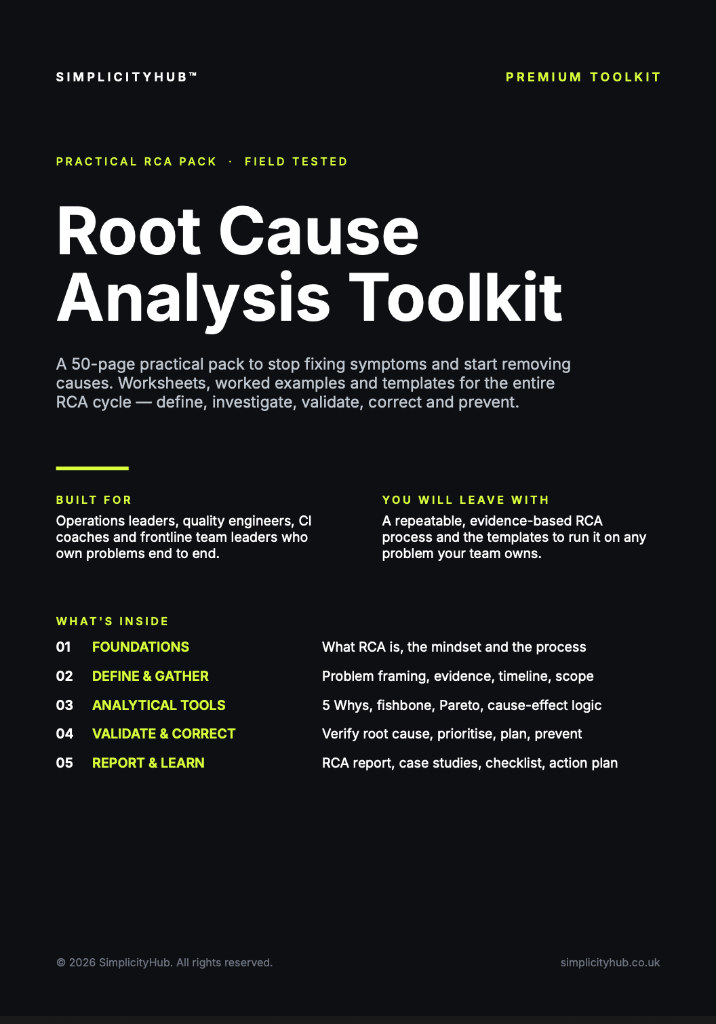
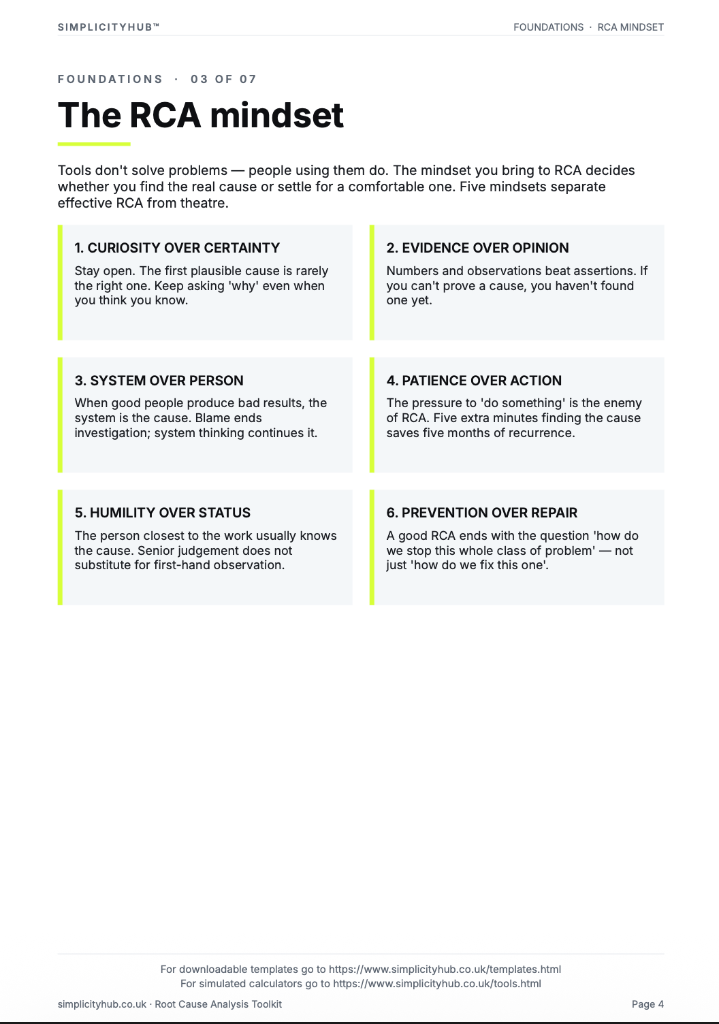
Root Cause Analysis Toolkit
A practical RCA toolkit for defining problems, finding causes, validating evidence and creating action.
A3 Template Pack
A clean A3 problem-solving pack for concise, visual improvement thinking and follow-through.