What is a 5S Audit Sheet Template?
A 5S Audit Sheet is a structured checklist used to score a workplace against each of the five 5S standards: Sort (remove what is not needed), Set in Order (a place for everything), Shine (clean and inspect), Standardise (make standards visual and documented) and Sustain (maintain the standard over time).
5S is a foundational Lean methodology for creating safe, organised, efficient workplaces. The audit sheet provides an objective, consistent way to assess 5S compliance, identify gaps and track improvement over time.
Regular 5S audits are a key element of the Control phase — the mechanism that prevents the workplace from sliding back to its previous state after a 5S implementation.
When to use a 5S Audit Sheet Template
Use the 5S Audit Sheet regularly after a 5S implementation to maintain standards. Also use it when:
- You want to establish a baseline before starting a 5S programme
- A workplace has drifted from its 5S standard and you need an objective picture of the gap
- You are comparing 5S compliance across multiple teams, shifts or sites
- A senior leader wants evidence of 5S progress as part of a Lean transformation programme
Who should use a 5S Audit Sheet Template
- Team Leaders and Supervisors — for regular 5S audits as part of operational management routines
- Lean Practitioners and CI Facilitators — when designing and implementing 5S programmes
- Operations Managers — to track 5S compliance across multiple areas or sites
- All Belt Levels — 5S auditing requires no statistical knowledge and can be conducted at any experience level
Watch: a quick explainer
New to this? This short video walks you through the five steps of 5S workplace organisation — a helpful primer before you download and use the template.

How to conduct a 5S Audit
Walk the area with the audit sheet in hand and score each element based on what you observe — not what you are told. Consistent, honest auditing is what creates the baseline for tracking improvement.
How to conduct a 5S Audit — step by step
-
1Define the audit scope
Specify which area, workstation or zone is being audited. Consistent scope is essential for tracking trends — auditing a different area each time produces incomparable scores.
-
2Score Sort: Remove the unnecessary
Is everything in the area needed for the work being done here? Score items present that have no clear purpose. Check shelves, drawers, floors and wall space for unnecessary items.
-
3Score Set in Order: A place for everything
Does everything have a designated location? Are locations marked and labelled? Can anyone find what they need within 30 seconds without asking? Check for unlabelled locations and items out of place.
-
4Score Shine: Clean and inspect
Is the area clean? Are cleaning schedules in place and followed? Is cleaning used as an opportunity to inspect for abnormalities — leaks, damage, wear? Check for accumulated dust, debris or unaddressed maintenance issues.
-
5Score Standardise: Make standards visible
Are the standards for Sort, Set in Order and Shine documented and displayed in the area? Are visual controls (labels, shadow boards, floor markings) in place and current? Can a new person understand the standard without being told?
-
6Score Sustain: Maintain over time
Is there evidence that 5S is maintained consistently, not just before audits? Are audit results tracked and displayed? Are improvement actions followed up? Is 5S embedded in the team's daily routine?
-
7Agree improvement actions
For each S where the score is below standard, agree one or two specific improvement actions with the team. Name an owner and a due date. Review progress at the next audit.
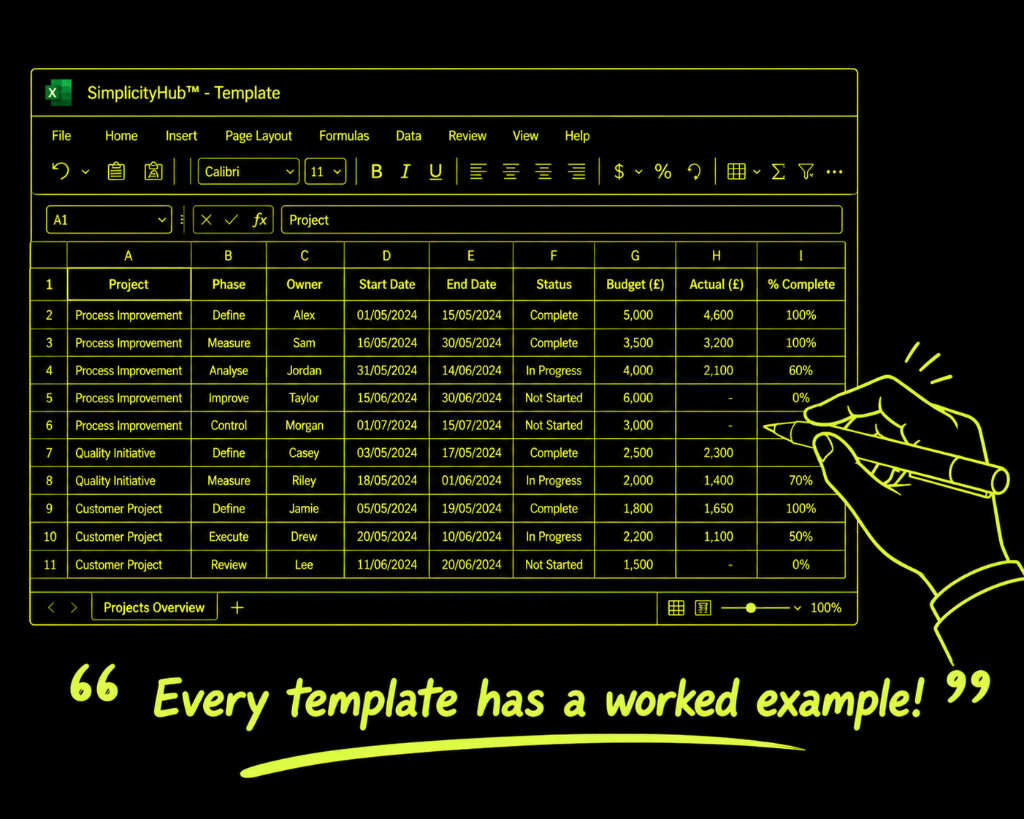
Worked example — Warehouse 5S Audit
A completed 5S audit for a warehouse picking area, showing scores for each of the five S categories, overall score and three priority improvement actions.
Common mistakes — and how to avoid them
Only auditing before major visits. If 5S audits only happen before a leadership visit, the team learns to tidy up temporarily rather than maintain standards permanently. Unannounced audits at varied times give a more accurate picture.
Scoring too generously. An audit where everything scores 9/10 provides no improvement direction. Score honestly — the purpose of the audit is to find gaps, not to confirm everything is fine.
Not following up on actions. Audit findings that produce no actions have no value. Every below-standard score should produce at least one specific, owned, time-bound action.
Separate teams auditing themselves. Self-auditing tends to produce inflated scores. Where possible, have adjacent teams or a CI practitioner audit an area to maintain objectivity.
Tips for getting better results
Use photos before and after. A before-and-after photo of each S is compelling evidence of improvement. It is also motivating for the team to see the visible difference their efforts have made.
Display the audit score on the team board. Posting the audit score on the daily management board creates visibility and accountability. A trend chart of scores over time shows progress and catches early regression.
Start with Sort and Set in Order. The first two S's deliver the most immediate visible improvement. Teams that start with Standardise and Sustain before completing Sort and Set in Order are standardising clutter, not order.
Download the 5S Audit Sheet Template
A clean, editable Excel template for immediate use — structured, professional and ready to fill in.
Frequently asked questions
What are the five Ss?
Sort, Set in order, Shine, Standardise, Sustain. Some organisations add a sixth S for Safety.
How often should 5S audits be conducted?
Weekly for newly implemented areas, monthly for mature 5S programmes.
Who should conduct the audit?
A cross-functional team including someone from outside the area being audited.
What score represents a passing area?
Most organisations set a threshold of 70-80%. Below triggers an improvement plan with a follow-up audit within two weeks.
Advanced Toolkit Packs — available now
Structured, ready-to-use template packs designed for real improvement work. Pick the pack that matches your project and get started straight away.
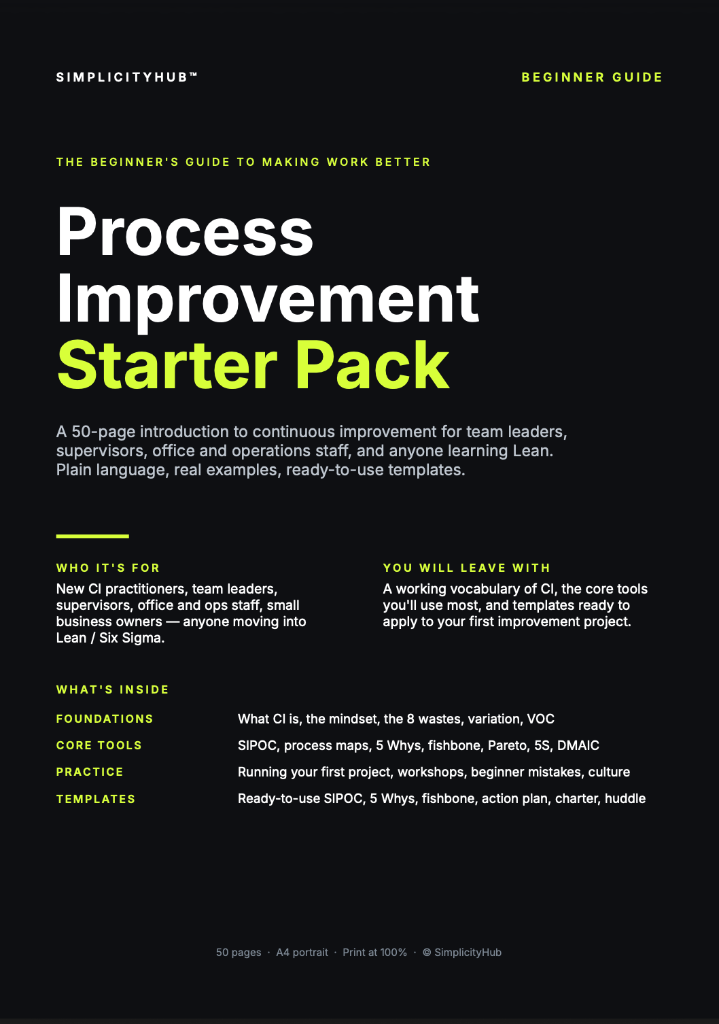
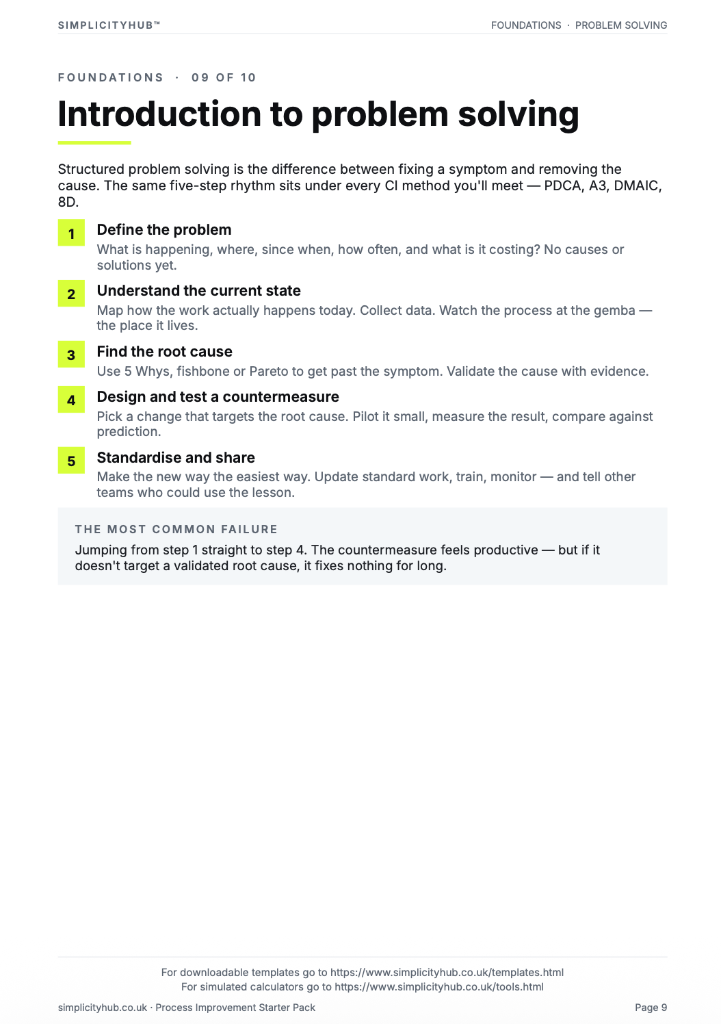
Process Improvement Starter Pack
A starter pack for identifying improvement opportunities, measuring baselines and planning action.
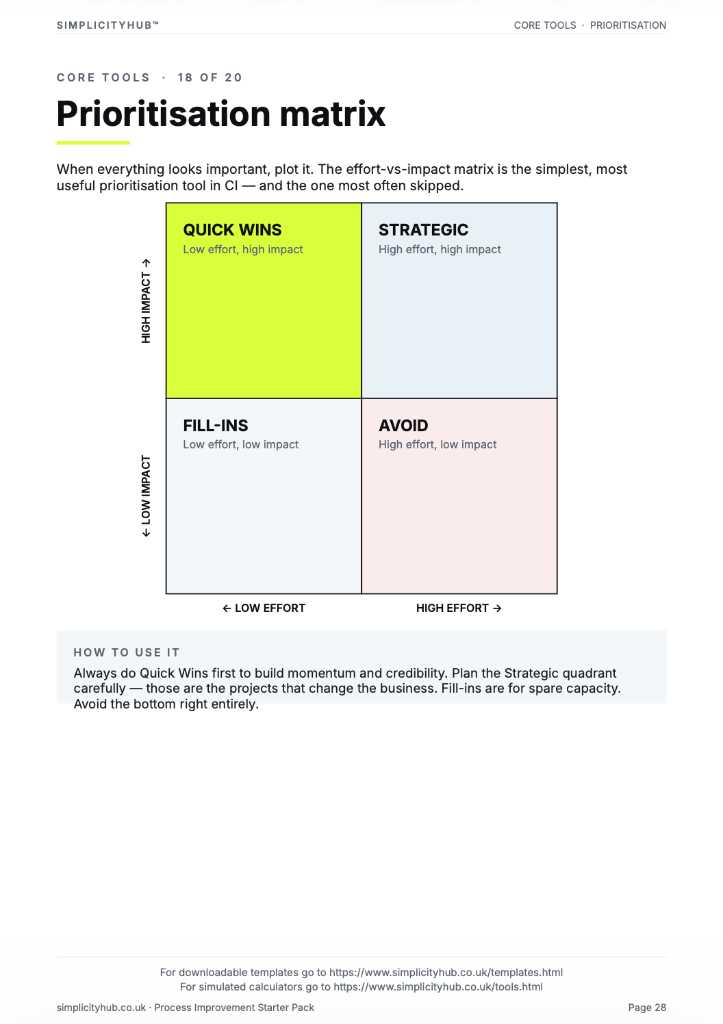
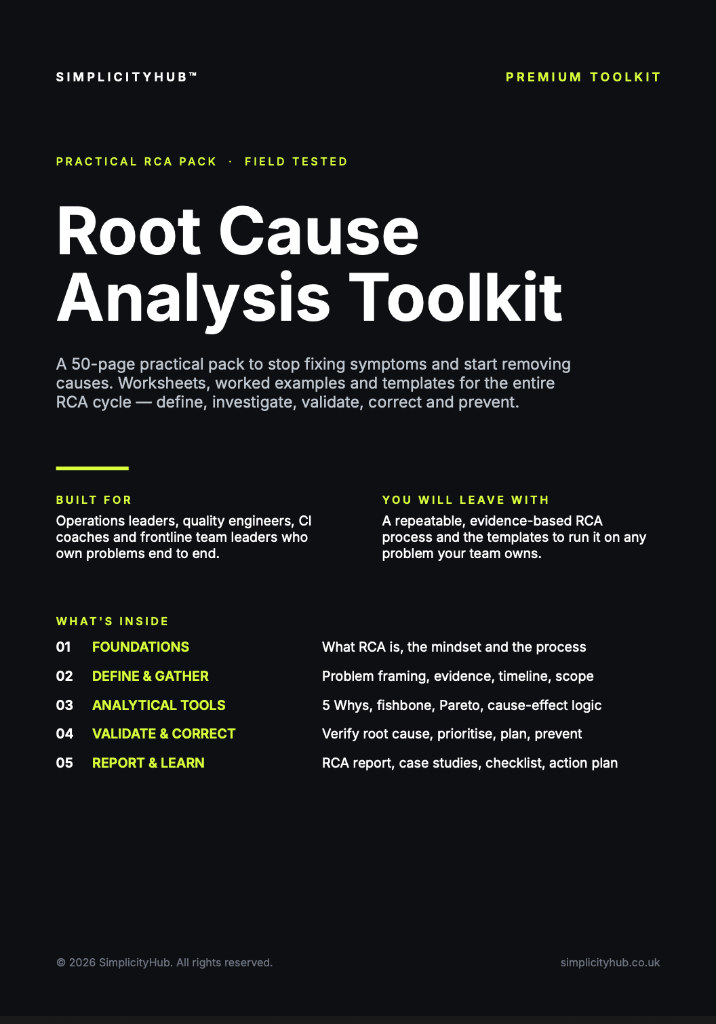
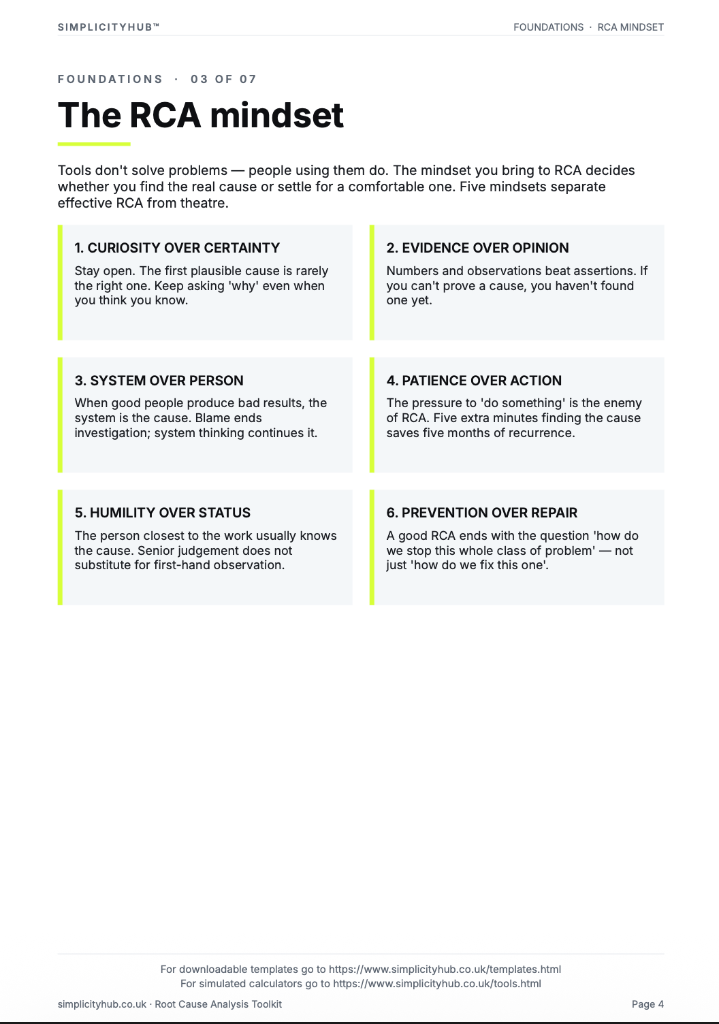
Root Cause Analysis Toolkit
A practical RCA toolkit for defining problems, finding causes, validating evidence and creating action.
A3 Template Pack
A clean A3 problem-solving pack for concise, visual improvement thinking and follow-through.