
What is a Waste Identification Checklist Template?
A Waste Identification Checklist Template provides a structured prompt list for identifying all eight types of Lean waste (TIMWOODS) in a process. It guides observers through each waste category systematically to ensure nothing is missed during a process walk or Gemba visit.
When to use a Waste Identification Checklist Template
Use it in the Measure and Analyse phases during Gemba walks or process observation sessions. It is particularly effective for teams new to Lean thinking — the prompts help them see waste they would otherwise walk past without noticing.
Who should use a Waste Identification Checklist Template
- Green Belts and Yellow Belts — learning to identify and categorise the 8 Lean wastes during process observation
- Operations managers and team leaders — conducting structured Gemba walks with a focus on waste identification
- Continuous improvement teams — systematically assessing a process area for waste before scoping an improvement project
- Lean coaches and facilitators — guiding teams through their first waste walk with a structured observation framework
Watch: a quick explainer
New to this? This short video walks you through the 8 wastes of Lean (TIMWOODS) and how to spot them — a helpful primer before you download and use the template.
How to use a Waste Identification Checklist — step by step
- 1Brief the observation team
Explain the 8 wastes (TIMWOODS) to the team before the walk. Ensure everyone can recognise each type.
- 2Walk the process end to end
Follow the flow of work from start to finish. Observe at least 2–3 complete cycles.
- 3Work through each waste category systematically
Use the checklist to prompt observation of each waste type at each process step. Don't rely on general impression.
- 4Record specific examples
For each waste identified, record a specific, concrete example — location, frequency, estimated time or cost.
- 5Estimate the impact of each waste
Rate each waste: High (significant impact on output, cost or customer), Medium, Low. Focus improvement effort on High-rated wastes.
- 6Photograph examples where possible
A photograph of a waste makes it undeniable in a stakeholder presentation and supports action prioritisation.
- 7Prioritise and scope improvement opportunities
Group related wastes into themes and use them to scope specific improvement projects or Kaizen events.
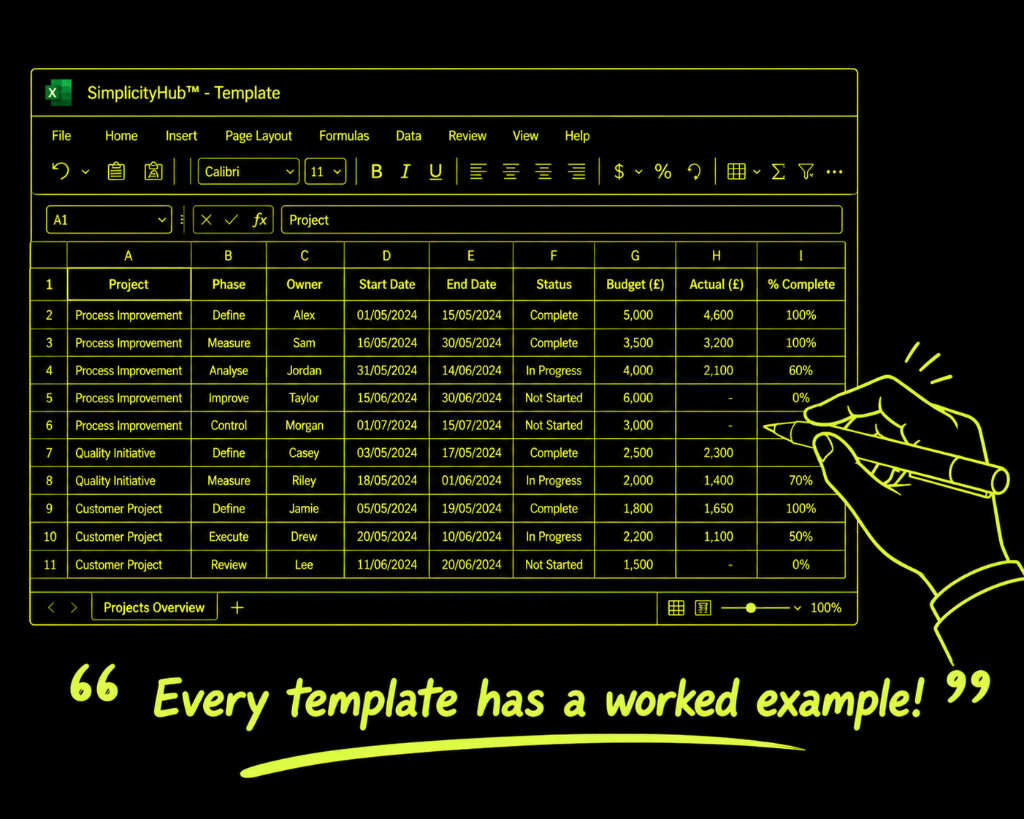
Worked example — Accounts Payable Waste Walk
A finance team conducted a structured waste walk of their accounts payable process — identifying 14 specific waste examples across 6 of the 8 categories. The highest-impact wastes (waiting for approvals, unnecessary motion between desks) directly scoped a 3-day Kaizen event.
Common mistakes — and how to avoid them
Only identifying the obvious wastes. Motion and overproduction are easy to spot. Waiting, over-processing and defects often require more careful observation. Work through every category.
Estimating instead of observing. A waste identification done from memory or assumption misses the nuances that direct observation reveals. Go to the process.
Identifying waste without ownership. A completed checklist with no owner assigned to address each waste is a record of problems, not a path to improvement.
Treating all waste equally. Some wastes have a negligible impact; others are costing thousands per week. Always estimate impact alongside identification.
Tips for getting better results
Involve frontline staff in the walk. The people who work in the process can identify wastes in minutes that an outsider would spend hours finding. Their insight is irreplaceable.
Use the checklist before and after improvement. A before/after waste identification provides a structured way to demonstrate the improvement achieved — not just in headline metrics but in the breadth of waste eliminated.
Group wastes into themes for project scoping. Multiple related wastes often point to a single root cause. Grouping them reveals the most impactful place to focus improvement effort.
Frequently asked questions
What are the eight wastes?
Transport, Inventory, Motion, Waiting, Overproduction, Overprocessing, Defects, and Skills. TIMWOODS.
How do I use the checklist?
Walk the process, mark each waste type observed at each step, and note frequency and impact.
Observation vs interview?
Observation is always better. People adapted to waste often do not notice it.
What do I do after completing it?
Prioritise waste types by impact and link the highest-priority wastes back to root cause analysis.
Advanced Toolkit Packs — available now
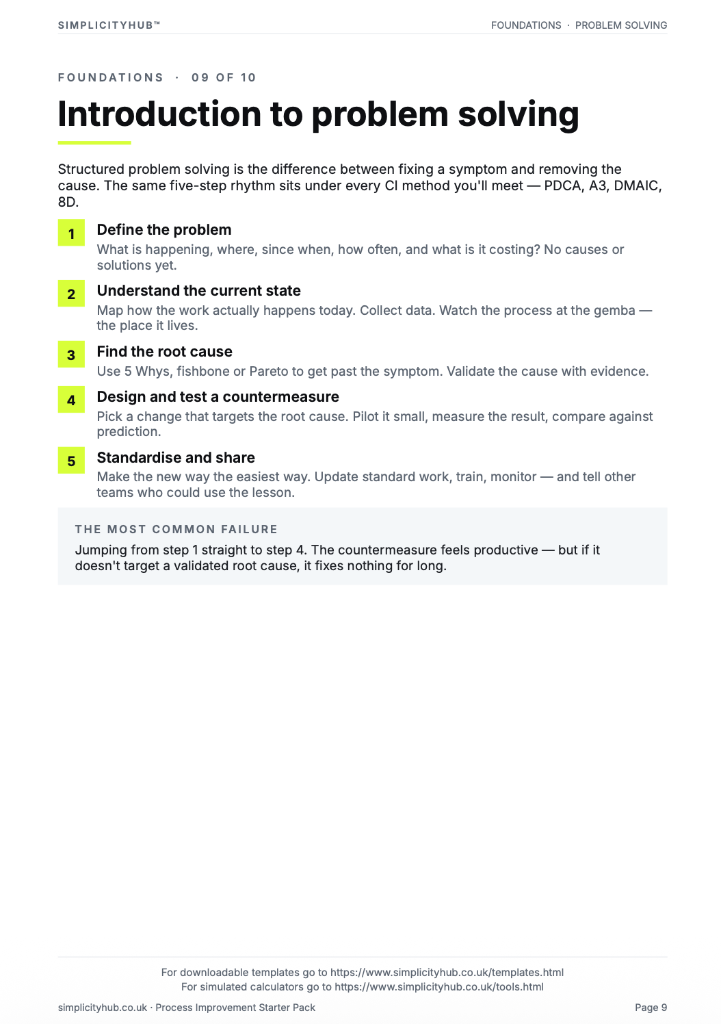
Structured, ready-to-use template packs designed for real improvement work. Pick the pack that matches your project and get started straight away.
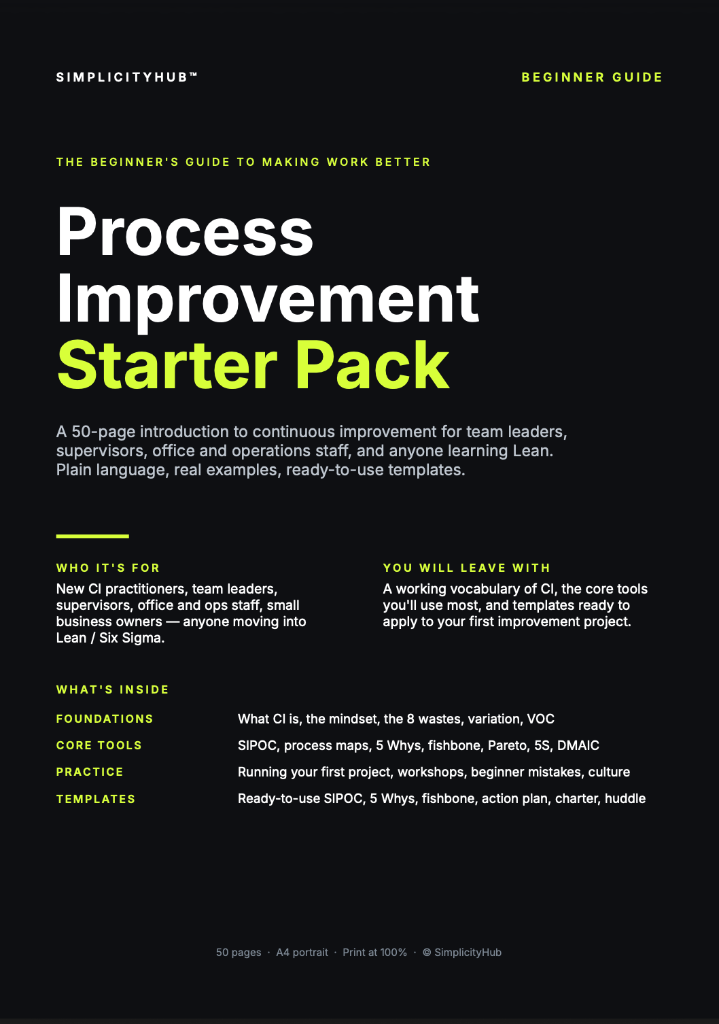
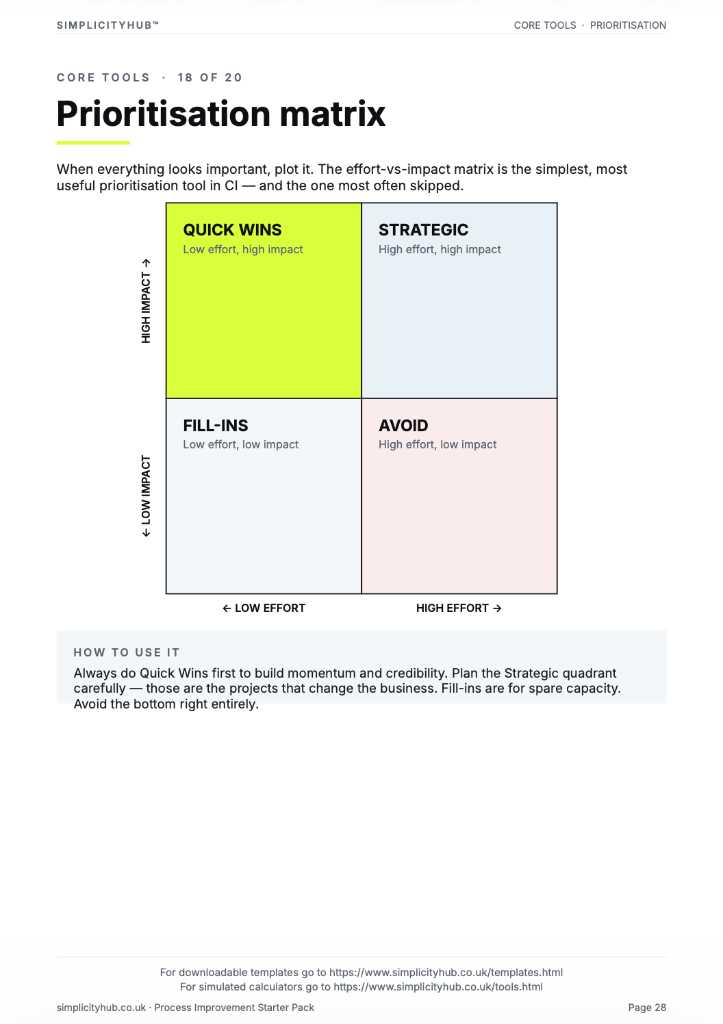
Process Improvement Starter Pack
A starter pack for identifying improvement opportunities, measuring baselines and planning action.
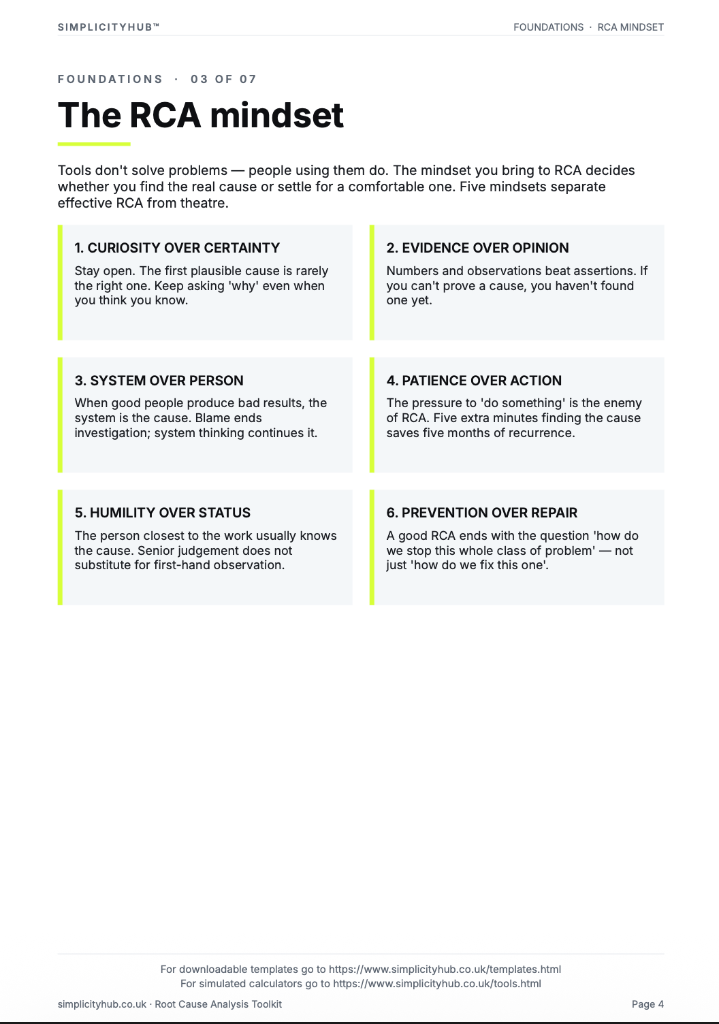
Root Cause Analysis Toolkit
A practical RCA toolkit for defining problems, finding causes, validating evidence and creating action.
A3 Template Pack
A clean A3 problem-solving pack for concise, visual improvement thinking and follow-through.