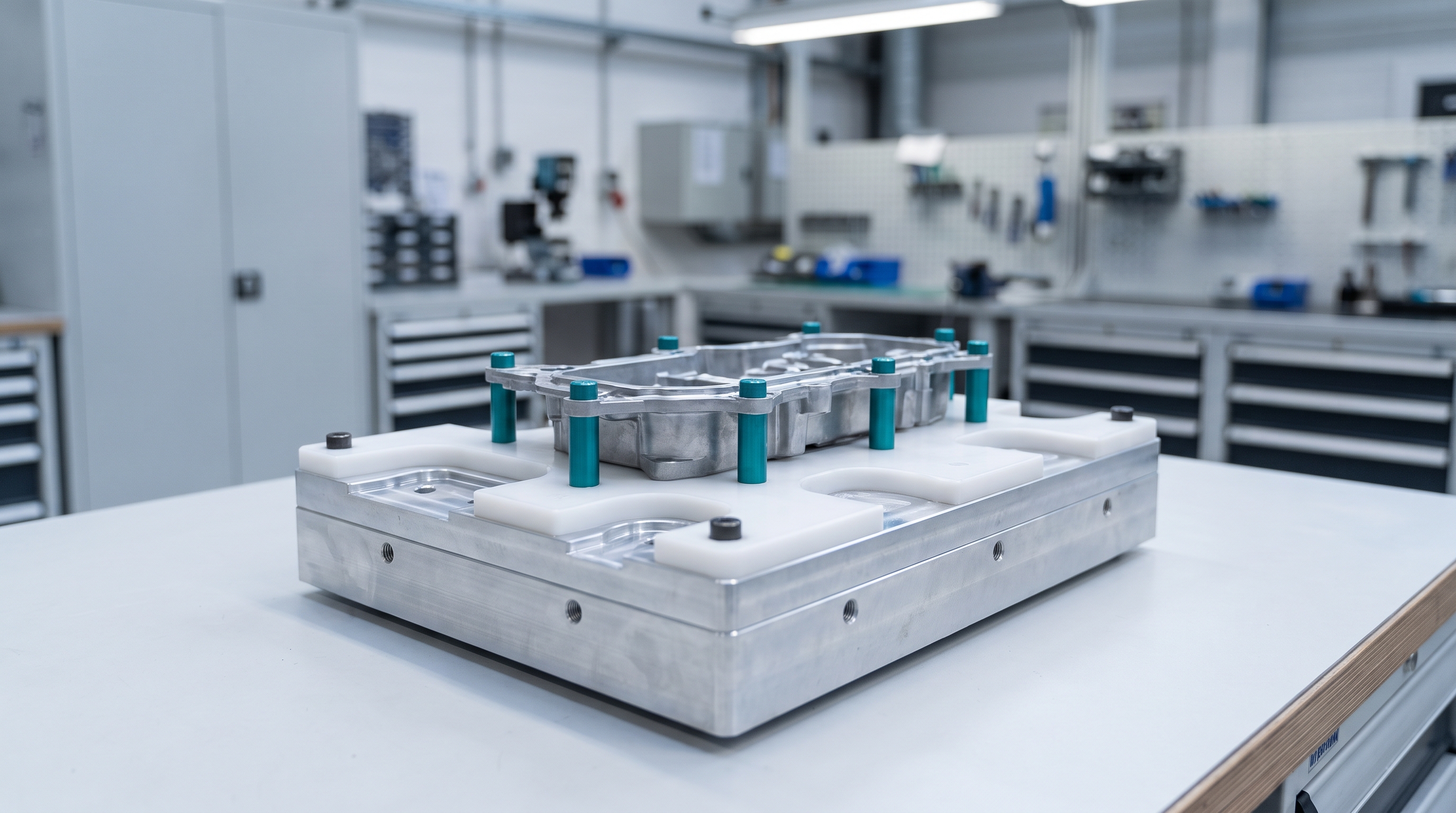
Every process has moments where people can slip up. A part loaded backwards. A step skipped under time pressure. A field left blank on a form. The standard response is training, discipline, reminders. Try harder. Pay more attention.
Poka yoke rejects that response entirely. It says: if a person can make an error, the process is broken, not the person. The job is to redesign the system so the error cannot happen, or so it is caught the instant it does.
Most organisations running end-of-line inspection are operating at Level 1, the weakest of three poka yoke levels. This guide covers what each level looks like, the three method types, and how to move your processes up.
What does poka yoke mean?
The term poka yoke translates from Japanese as "inadvertent error prevention" or "error-proof." It was developed in the 1960s by Shigeo Shingo, one of the key architects of the Toyota Production System.
The original name was actually baka-yoke, which translates literally as "fool-proof." Shingo changed the term to poka yoke as a more respectful choice toward operators. His position was that systems and processes should be designed to prevent errors from occurring, rather than relying solely on employee attention, experience, or concentration. The problem is never the person. The problem is the design.
Where poka yoke came from, and the insight behind it
Poka yoke was part of Toyota's Zero Quality Control initiative, ensuring that defects are prevented, not just detected. The initiative was built on an observation that sounds obvious but runs against most management instinct: human errors are inevitable but can be minimised by designing systems that either prevent errors from happening or detect them as soon as they occur.
This is the philosophical shift that separates poka yoke from conventional quality management. Instead of blaming people for errors, the focus shifts to the system. A defect on the line is not evidence that someone was careless. It is evidence that the process allowed a mistake to reach the next step. Fix the process, and the defect disappears regardless of who is operating it, how tired they are, or how new they are to the role.
Is poka yoke Lean or Six Sigma?
Both. It originated in Lean and the Toyota Production System, but in Lean Six Sigma, poka yoke is often used during the Improve and Control stages of DMAIC.
The reason it fits both methodologies is straightforward. In Lean manufacturing, mistake-proofing is a method for ensuring quality at the source, not after the fact through inspection. Poka yoke supports Lean's goal of building quality into the process, not inspecting it later. Six Sigma uses the same logic in different packaging: once you have identified a root cause through DMAIC's Analyse phase, poka yoke is the mechanism that locks the improvement in place during Improve and prevents regression during Control.
If you are working through a DMAIC project and reaching for a control plan, poka yoke devices are the strongest entries you can put on it.
The three levels of poka yoke
Poka yoke operates at three distinct levels, and the difference between them determines whether you are preventing defects or just catching them late.
Level 3: Cannot Produce (error prevention)
The strongest form. The process and/or parts are designed so that errors are physically impossible to make. It removes human variability from the equation entirely. USB connectors that fit only one way, or jigs and fixtures that prevent incorrect part orientation. There is no decision for the operator to get wrong.
Level 2: Cannot Process (error detection at the fact)
One step down. Systems are put in place to immediately detect errors before they result in defects. While not as powerful as prevention, detection still enables quick response and correction. Alarms or indicator lights that trigger when errors occur. Digital counters that alert when steps are skipped or incomplete. The defect does not travel downstream.
Level 1: Cannot Pass (error detection after the fact)
The weakest form. It doesn't prevent or detect the error at the source but attempts to limit its impact by not progressing the defective item to the next operation or to the customer. Examples include final inspections before shipping and operator training to reduce human error.
End-of-line inspection and training programmes are Level 1. The label poka yoke does not change that.
| Level | Name | How it works | Strength |
|---|---|---|---|
| 3 | Cannot Produce | Errors are physically impossible | Strongest |
| 2 | Cannot Process | Errors detected immediately, before becoming defects | Medium |
| 1 | Cannot Pass | Defects caught at inspection, before reaching the customer | Weakest |
The goal is always to push upward. Every Level 1 device should prompt the question: can we redesign this to Level 2 or Level 3? SimplicityHub's mistake-proofing log template is designed around exactly this progression, giving teams a place to document each device, its current level, and the plan to move it up.
The three method types
Within any level, poka yoke methods can be broadly categorised into three main types: Contact Method, Fixed Value Method, and Motion Step Method. Each employs different strategies to prevent errors or detect them immediately, ensuring that processes run smoothly and efficiently.
Contact Method. Physical sensors are placed in strategic locations to detect the presence or absence of specific components, their correct positioning, or their alignment. These sensors can be mechanical, optical, or electrical. If a part is missing or misaligned, the sensor triggers an alarm or stops the process. The SIM card notch is a contact method: the physical shape of the card prevents incorrect insertion.
Fixed Value Method. Devices such as counters, timers, or checklists are used to monitor the number of operations performed. This method ensures that no steps are missed and that the process adheres to predefined values. A bolt-tightening station that counts torque applications and halts if the count is wrong. A dispensing machine that measures exact quantities.
Motion Step Method. Where the Contact Method checks physical attributes and the Fixed Value Method counts operations, the Motion Step Method addresses the sequence in which those operations are performed.
These methods also split into two control approaches. A shutout type prevents the mistake from being made in the first place (a washing machine that will not start unless the door is closed). An attention type alerts or highlights when an error has occurred, prompting correction (an alarm sounding if a car is in gear with the door open).
Poka yoke examples you already encounter
The SIM card is one of the most widely cited everyday examples. If a SIM card did not have that notch, it could be put into the phone in eight different ways. By simply adding a notch there is only one possible way to put a SIM card in the tray. A simple geometric change has prevented billions of instances of user error. That is Level 3 poka yoke: the error is physically impossible.
USB connectors that fit only one way are another Level 3 device. A washing machine door interlock that prevents the cycle from starting until the door is locked is a shutout type. A car alarm that sounds when the door is open and the vehicle is in gear is an attention type.
Where to use poka yoke beyond the factory floor
Poka yoke started in manufacturing, but the logic applies anywhere a mistake could happen. You can use poka yoke across manufacturing, logistics, healthcare, software, customer service, and more.
Common error types it addresses include:
- Setup errors: wrong tools or settings loaded before a process begins
- Assembly errors: missing or incorrect parts
- Operational errors: wrong steps or wrong sequence
- Measurement errors: wrong input or dimensions
The Kaizen Institute frames this as a quality culture built on five core principles: do not produce defects, do not pass defects to the next step, do not accept quality defects, do not repeat quality defects, and do not accept variability. Each station takes responsibility for the quality it receives and delivers.
How to implement poka yoke: a seven-step process
The Kaizen Institute divides implementation into seven key steps. The first three establish the foundation:
1. Identify the problem. Detect the recurring error or defect in the process. This analysis can be based on data related to defects, rework, or customer complaints. If you are not sure where errors concentrate, a mistake-proofing log or an FMEA will surface them.
2. Analyse the root cause. Identifying the error alone is not enough; it is essential to investigate the origin of the issue to understand what is causing the error to occur. Is it a design problem, a sequencing problem, or a missing constraint?
3. Define the type of poka yoke to apply. Based on the previous analysis, determine whether the solution should be preventive (shutout type) or detective (attention type), and which method (contact, fixed value, or motion step) fits the situation.
The remaining four steps cover designing the solution, testing it in the real process environment, training the team so they understand why the device exists and what to do when it triggers, and monitoring results to confirm that defect rates actually drop. If they do not, the device may be targeting the wrong failure mode or operating at too low a level, and you return to step 2.
The key decision at step 3 is which level to aim for. Default to the highest level you can reach. Level 3 (cannot produce) first. If the process or cost constraints make that impractical, Level 2 (cannot process). Level 1 (cannot pass) is the fallback, not the target.
What poka yoke delivers
The benefits are concrete and measurable. Implementing poka yoke leads to reduced errors and defects, improved quality delivered to the customer, higher customer satisfaction, simplified processes, lower operational costs related to failures, rework, returns, and repairs, improved workplace safety, and greater process stability.
The compounding effect matters most. Each device you install removes a category of defect permanently. Unlike training, which degrades over time as people forget or rotate roles, a physical constraint does not wear off. The gains accumulate.
Where to start
Pick one recurring defect. One process step where errors keep showing up despite training, reminders, or inspections. Ask: what level of poka yoke is currently in place? If the answer is Level 1, or nothing at all, design a Level 2 or Level 3 device and test it. Document the device, its level, and the defect rate before and after in a mistake-proofing log so the improvement is visible and the next team can build on it.