
What is a Workload Balancing Sheet Template?
A Workload Balancing Sheet Template provides a structured tool for comparing the work content of each step or operator in a process against the takt time, to identify where workload is unbalanced. It enables the design of an efficient, balanced flow where every operator's cycle time is at or just below takt.
When to use a Workload Balancing Sheet Template
Use it in the Improve phase when redesigning a process to meet takt time, and whenever workload reallocation between operators or steps is being considered. It is a core tool for line balancing in manufacturing and service flow design.
Who should use a Workload Balancing Sheet Template
- Black Belts and Lean practitioners — designing balanced workflows in the Improve phase to achieve flow at takt time
- Industrial and process engineers — allocating work content between operators to eliminate overburden and waiting
- Operations managers — rebalancing work allocations when demand, staffing or process conditions change
- Value stream mapping teams — supporting future state design with a quantified understanding of work content vs takt
Vote yes and we’ll prioritise a quick walkthrough showing you exactly how to use it.
How to use a Workload Balancing Sheet — step by step
- 1Calculate the takt time
Available time ÷ customer demand = takt time. This is the pace every operator must match.
- 2Record the cycle time for each step or operator
Use observed cycle time data from direct measurement — not standard times or estimates.
- 3Build the balance chart
Plot each operator's cycle time as a bar against the takt time line. Bars above takt are bottlenecks; bars well below takt have spare capacity.
- 4Calculate total work content
Sum all operator cycle times. Total work content ÷ takt time = theoretical minimum headcount.
- 5Identify rebalancing opportunities
Can work elements be moved from above-takt operators to below-takt operators? Can steps be combined or split?
- 6Design the balanced state
Reallocate work elements to bring all operators' cycle times as close to (but not over) takt as possible.
- 7Validate the new balance with the team
Test the new work allocation in a pilot before committing. Operators will identify practical constraints the model doesn't capture.
Worked example — Assembly Cell Rebalancing
A manufacturing team balanced a 5-operator assembly cell — finding that operators 2 and 4 were running at 118% and 112% of takt while operators 1 and 3 were at 67% and 71%. Reallocating three work elements across the cell reduced the overburden and eliminated the downstream queue.
Common mistakes — and how to avoid them
Balancing to average cycle time, not takt. Balancing to average output ignores customer demand. The balance chart must use takt time as the reference line.
Using standard times instead of observed times. Standard times are often inaccurate. Use directly observed cycle times for reliable balance calculations.
Not accounting for variation. A balance that works perfectly for average cycle times may break down when variation is introduced. Include a buffer below takt.
Rebalancing on paper without testing. Work reallocation that looks balanced on a spreadsheet may be physically or ergonomically impossible at the workstation. Always pilot the new balance.
Tips for getting better results
Use a visual balance chart (yamazumi chart). A stacked bar chart with a takt time line makes the imbalance visible to everyone — not just those who understand the numbers.
Focus on the bottleneck operator first. Reducing the cycle time of the above-takt operator(s) has more impact than optimising those already below takt.
Review the balance whenever demand changes. Takt time changes when demand changes. A balance designed for last quarter's demand may be completely wrong for this quarter.
Frequently asked questions
What is workload balancing?
Distributing tasks so each step operates at or below takt time. Balanced processes flow smoothly.
How do I know workloads are unbalanced?
Compare cycle times across steps to takt time. Steps above takt time are bottlenecks; significantly below are underutilised.
What options do I have?
Move tasks to underloaded steps, cross-train staff, redesign the work sequence, or add capacity at bottlenecks.
Can it apply to knowledge work?
Yes. Map tasks, estimate their time, and compare to takt time. The principle applies equally.
Advanced Toolkit Packs — available now
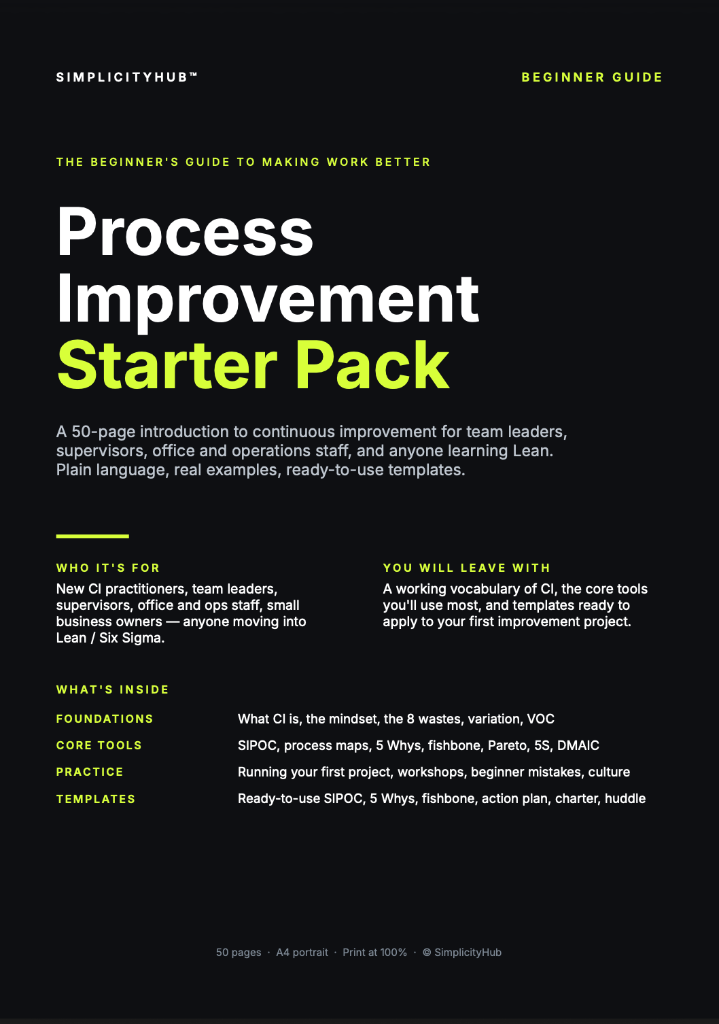
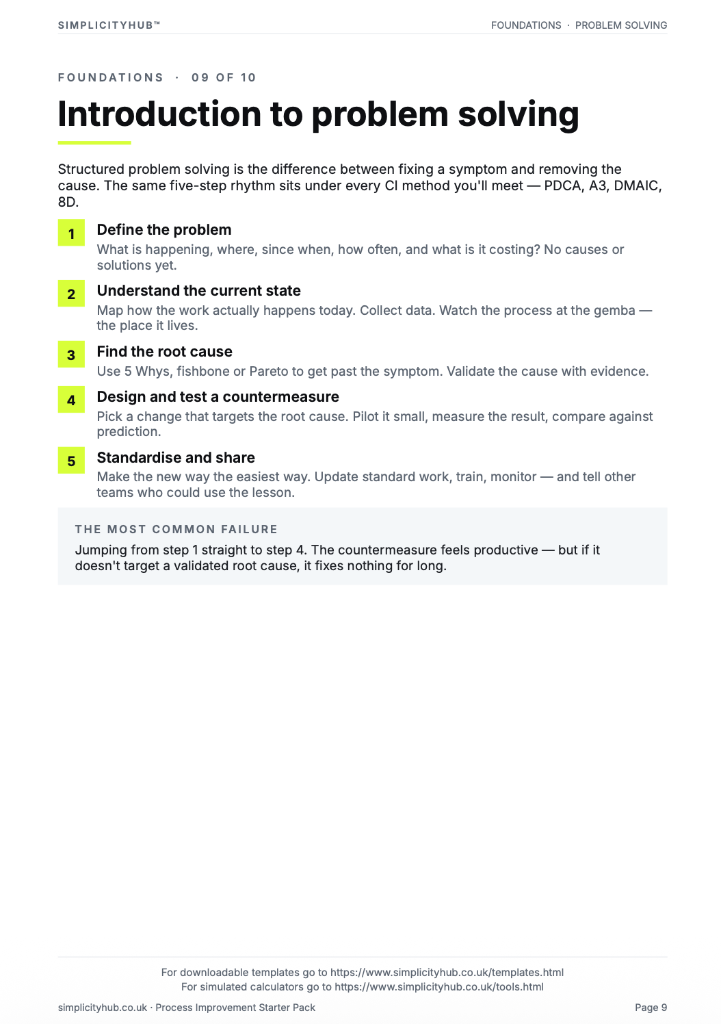
Structured, ready-to-use template packs designed for real improvement work. Pick the pack that matches your project and get started straight away.
Process Improvement Starter Pack
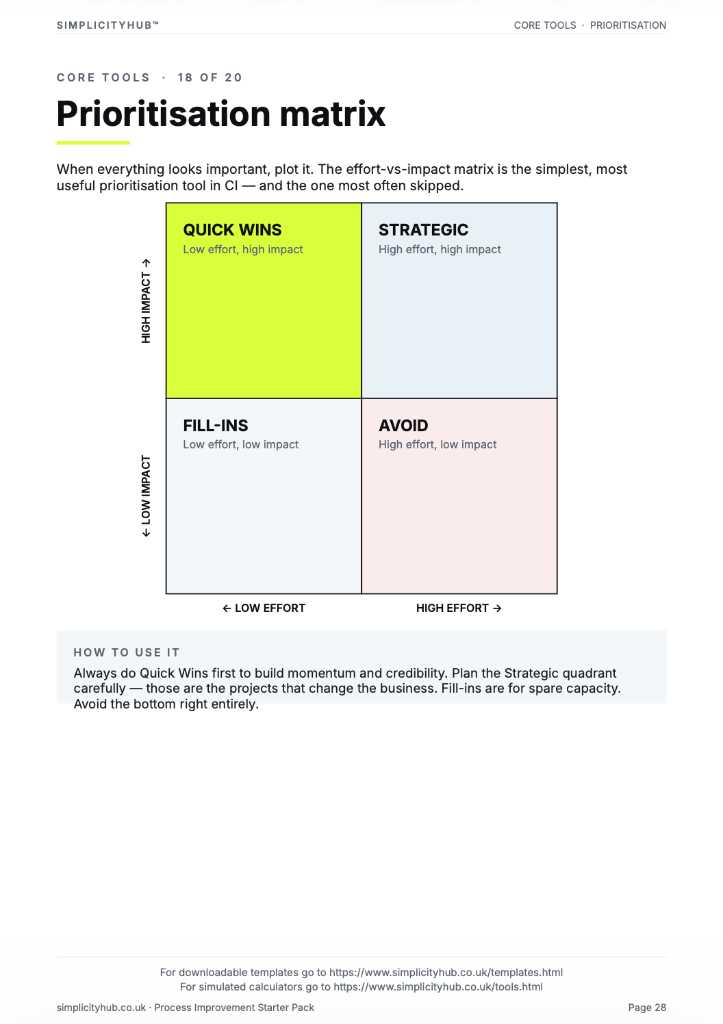
A starter pack for identifying improvement opportunities, measuring baselines and planning action.
Root Cause Analysis Toolkit
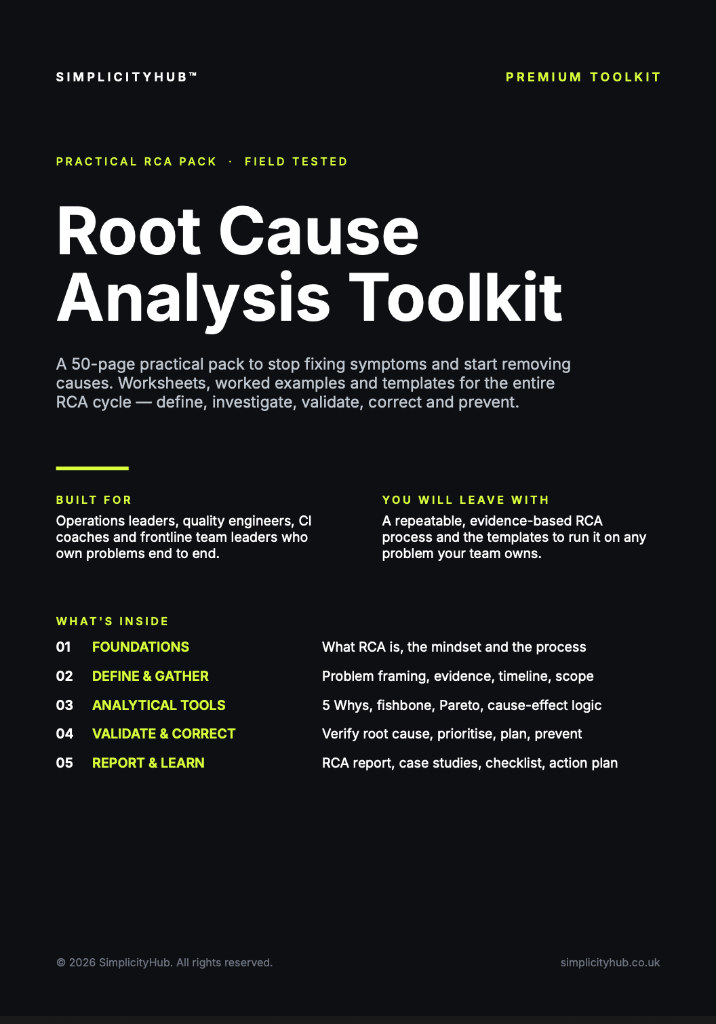
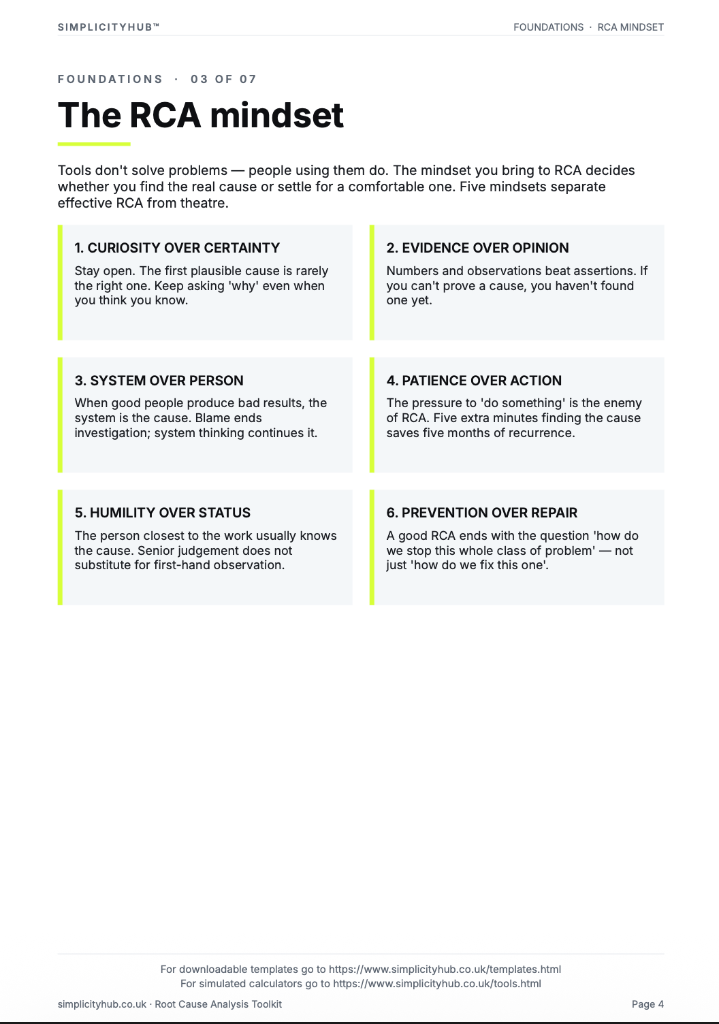
A practical RCA toolkit for defining problems, finding causes, validating evidence and creating action.
A3 Template Pack
A clean A3 problem-solving pack for concise, visual improvement thinking and follow-through.