What is a Action Plan Template?
An action plan is a simple, structured log of every task that needs to be completed, who is responsible for completing it, and when it must be done by. It is the day-to-day tracking tool that keeps a project moving between milestone reviews.
In Lean Six Sigma, action plans are used throughout the project lifecycle — in Define to capture setup tasks, in Measure to track data collection activities, in Improve to manage solution implementation, and in Control to record ongoing improvement actions.
The action plan is not a project plan or a Gantt chart. It is a simple, visible, regularly reviewed list that ensures agreed actions get done and nothing falls through the cracks.
When to use a Action Plan Template
Use an action plan whenever a meeting, workshop or review produces a list of tasks. Specifically:
- After every project meeting where actions are agreed
- During solution implementation to track rollout tasks
- In the Control phase to track ongoing improvement actions from audits
- During Kaizen events to capture the list of actions to complete after the event
Who should use a Action Plan Template
- All belt levels — every project needs an action plan regardless of scale or complexity
- Project leads — to track and chase actions between team meetings
- Team leaders and supervisors — to manage day-to-day CI actions from the daily management board
- Kaizen event facilitators — to capture the post-event action list with owners and due dates
Vote yes and we’ll prioritise a quick walkthrough showing you exactly how to use it.

How to use the Action Plan effectively
An action plan is only useful if it is reviewed regularly and updated honestly. A list of overdue actions with no follow-up is worse than no list at all — it signals that accountability does not exist.
How to use the Action Plan effectively — step by step
-
1Capture every action immediately
Write actions down as they are agreed — in the meeting, not after it. Memory is unreliable. If an action is agreed verbally, it goes on the log before the meeting ends.
-
2Assign one named owner per action
Every action must have one person's name against it — not 'the team', not 'James and Sarah'. One owner. They are responsible for completing or reporting on the action.
-
3Set a realistic due date
Agree the due date with the owner in the meeting. Dates imposed without agreement are rarely met. If the date cannot be met, agree a revised date — do not leave it open.
-
4Categorise by status
Use four statuses: Not Started, In Progress, Complete, Blocked. Review the status of every action at the start of each team meeting.
-
5Review at every meeting
Open every project meeting by reviewing the action log. Go through each open action: is it on track? Complete? Blocked? Do not move on until every action has a status.
-
6Close actions formally
When an action is complete, mark it closed with the completion date. Do not delete it — keeping a record of closed actions shows progress and demonstrates delivery.
-
7Escalate blocked actions
If an action is blocked, escalate it — do not leave it on the log indefinitely. The owner should flag the blocker at the meeting so the team or sponsor can remove it.
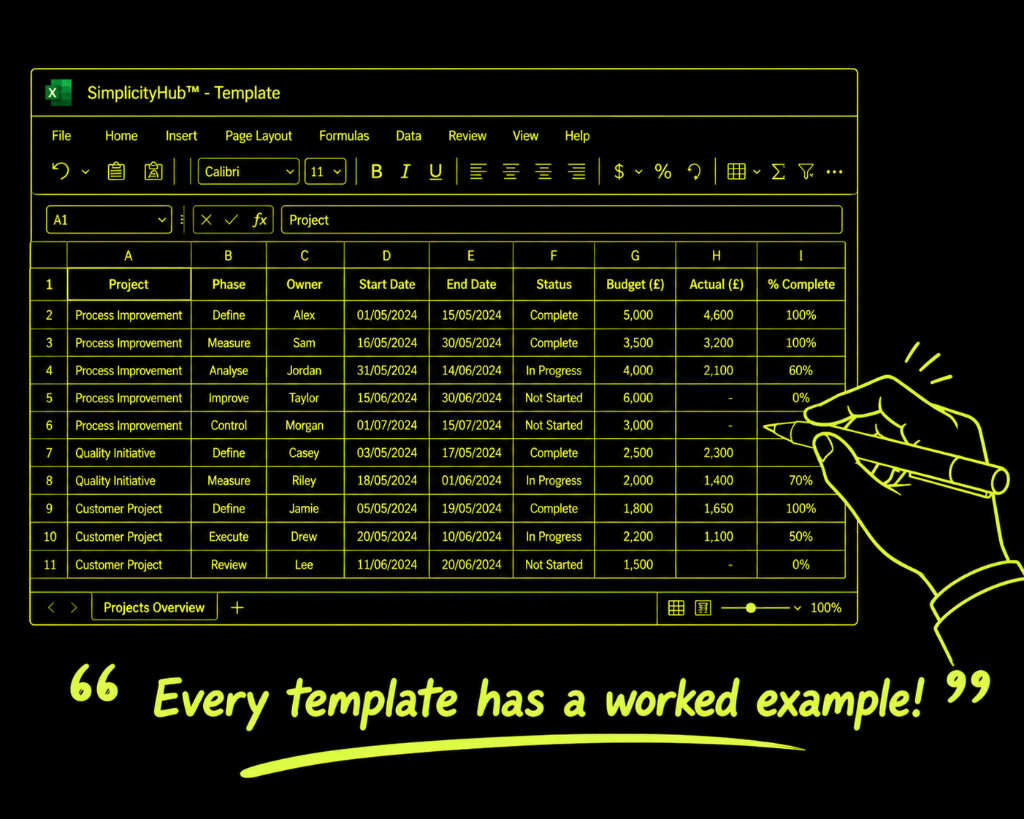
Worked example — Complaint Process Improvement Actions
A completed action plan from the Improve phase of a complaint handling project, showing tasks, owners, due dates and current status.
Common mistakes — and how to avoid them
Assigning actions to a team. 'The operations team will do this' assigns responsibility to no one. Every action needs a single named individual who is accountable for its completion.
Not reviewing the log at meetings. An action plan that is only updated between meetings is a filing exercise. Review it at the start of every meeting — this is what creates accountability.
Carrying overdue actions indefinitely. An action that has been overdue for three weeks without explanation signals a culture problem. Either the action is not important enough to do, or there is a blocker that needs addressing. Find out which.
Deleting completed actions. Keeping closed actions on the log provides a record of what has been delivered. It also motivates the team to see progress. Archive, do not delete.
Tips for getting better results
Keep it visible. Post the action log on a shared screen, team board or project SharePoint page so every team member can see the current status without being asked.
Link actions to milestones. Add a column that links each action to a project milestone or DMAIC phase. This makes it easy to see whether the right work is being done at the right time.
Do a weekly 5-minute review. For active projects, a weekly 5-minute action log review by the project lead — even without the whole team — keeps things from slipping.
Download the Action Plan Template
A clean, editable Excel template for immediate use — structured, professional and ready to fill in.
Frequently asked questions
How detailed should each action be?
One action, one owner, one due date per row. If an action needs more than two sentences to describe, split it into sub-actions. The plan should be usable in a weekly review without extra explanation.
Who owns the action plan?
The project lead maintains it, but every action owner is responsible for their own rows. Review it in every team meeting and update statuses in real time.
What statuses should we use?
Keep it simple: Not started, In progress, Complete, Blocked. Use the Notes column for anything outside those four.
How often should it be reviewed?
Weekly at minimum during active improvement. If actions are slipping, increase frequency. It is a living document — it should change every week.
Advanced Toolkit Packs — available now
Structured, ready-to-use template packs designed for real improvement work. Pick the pack that matches your project and get started straight away.
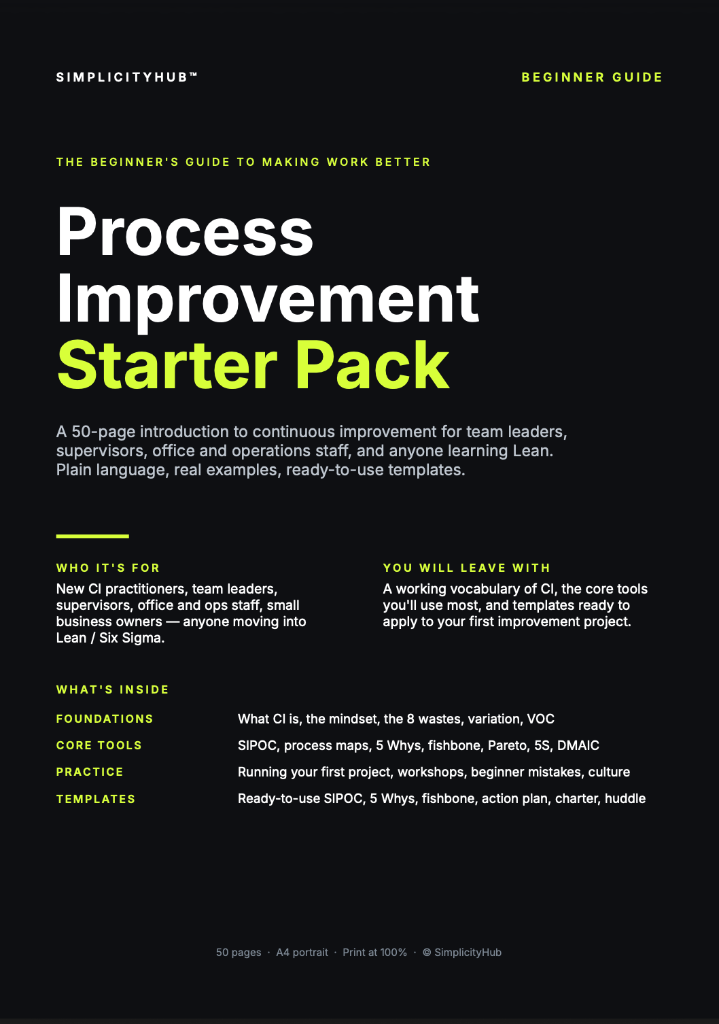
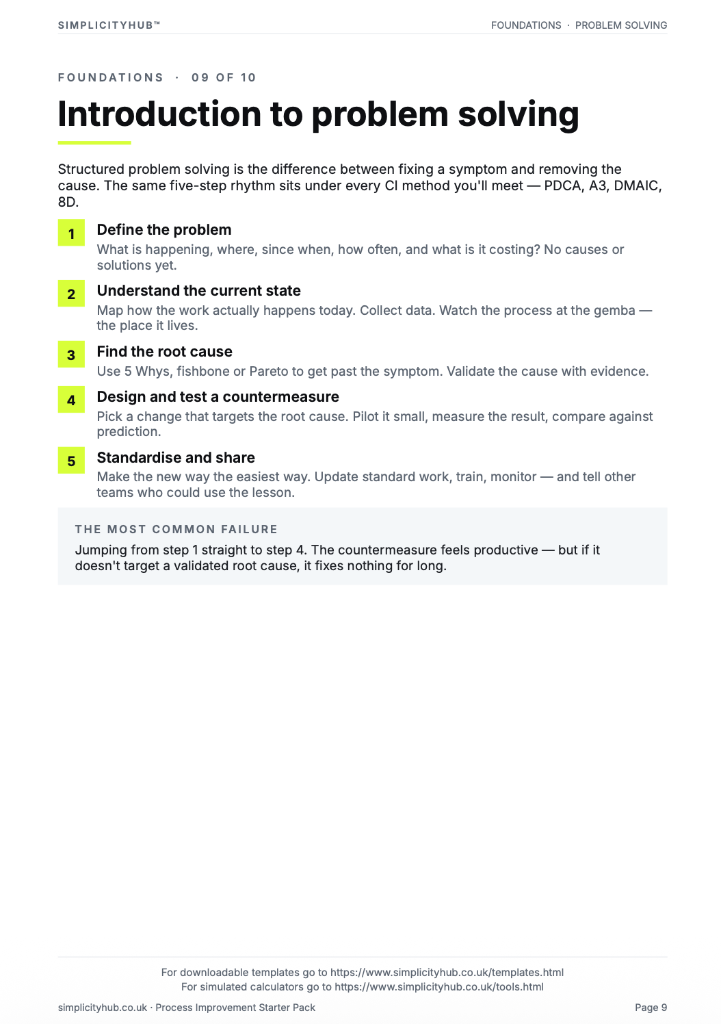
Process Improvement Starter Pack
A starter pack for identifying improvement opportunities, measuring baselines and planning action.
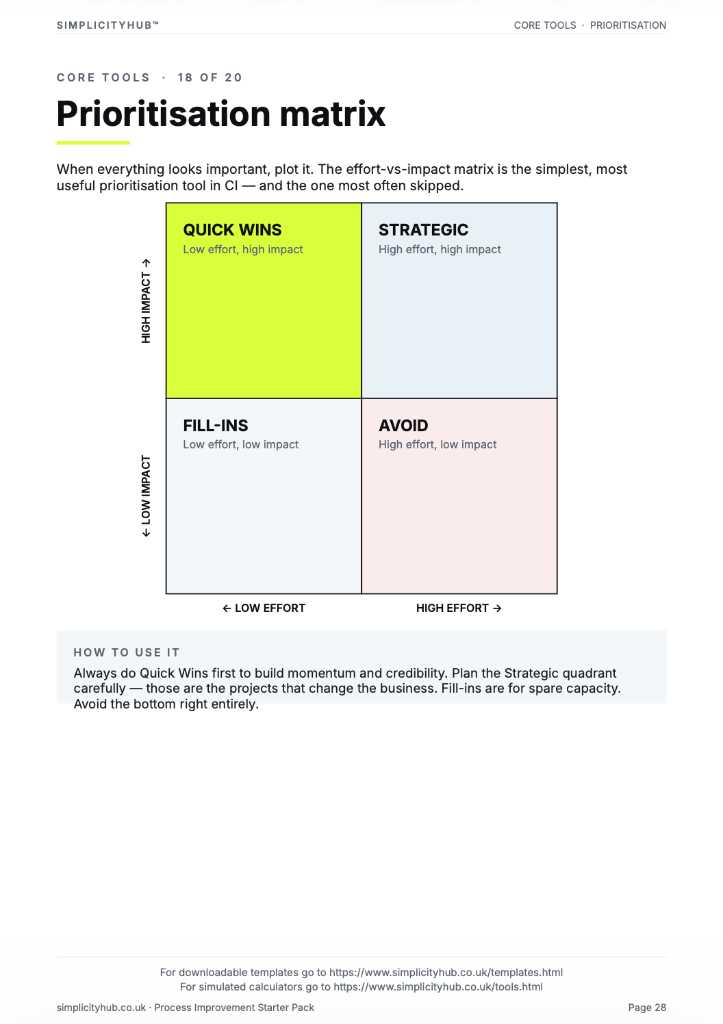
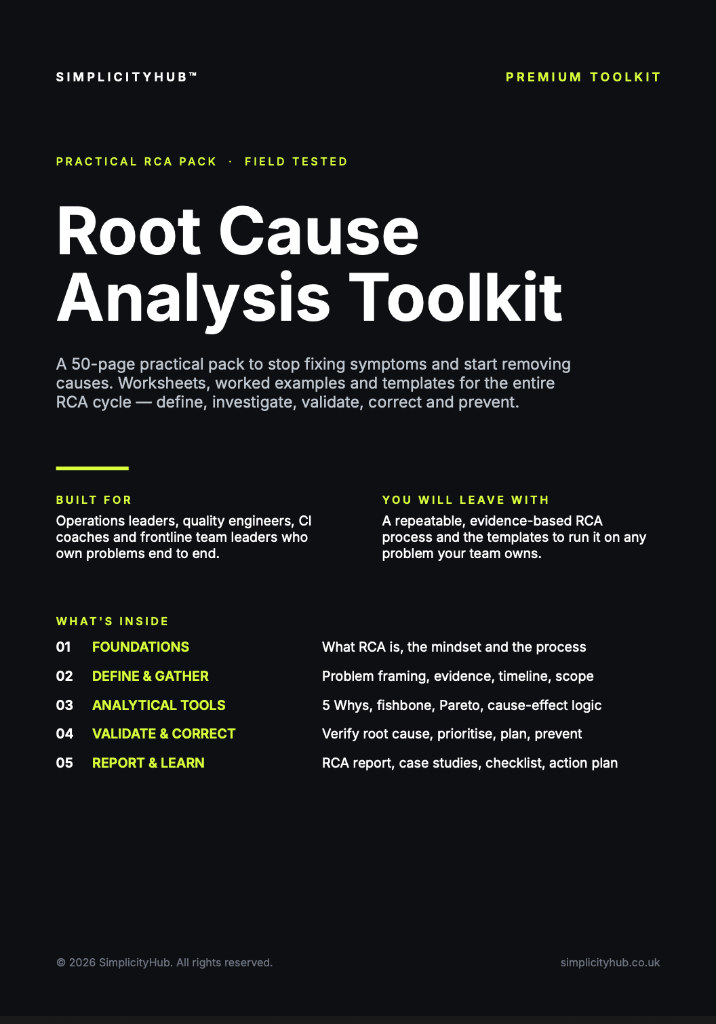
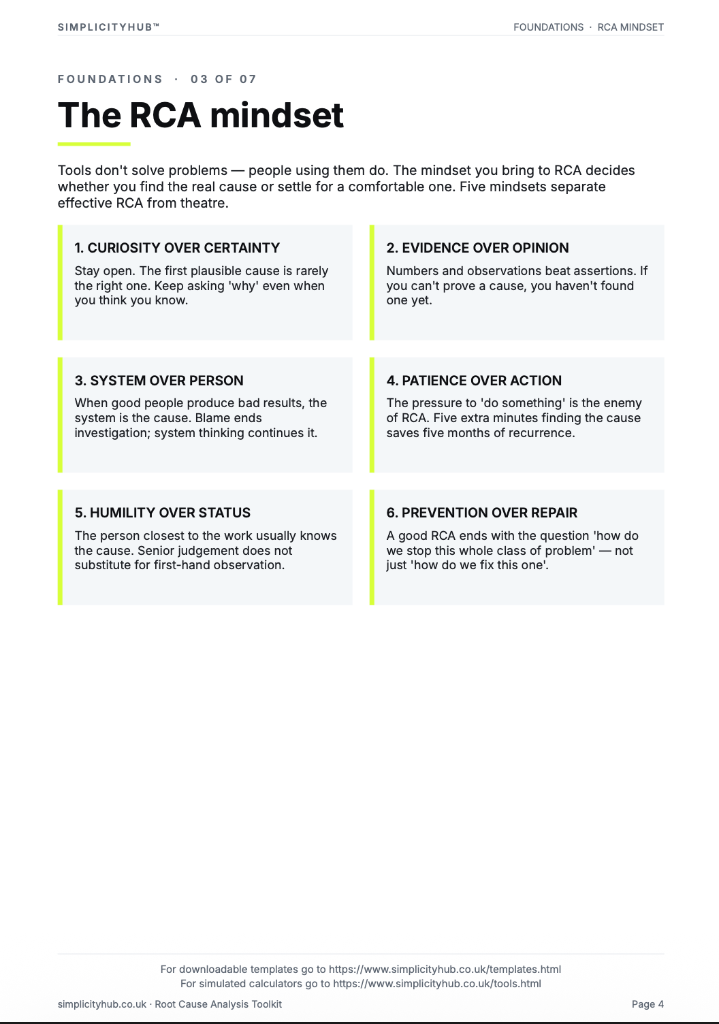
Root Cause Analysis Toolkit
A practical RCA toolkit for defining problems, finding causes, validating evidence and creating action.
A3 Template Pack
A clean A3 problem-solving pack for concise, visual improvement thinking and follow-through.