What is a Pilot Plan Template?
A pilot plan defines the scope, timeline, success criteria, measurement approach and rollback conditions for testing a solution before full-scale implementation. It is the structured approach to proving that a solution works under real conditions before committing to organisation-wide rollout.
Running a pilot reduces implementation risk. If the solution works in a controlled pilot, rollout confidence is high. If it does not work as expected, the pilot reveals what needs to change before the organisation is fully committed.
Pilots are run in the Improve phase after a solution has been selected and a cost benefit analysis completed, but before full implementation begins.
When to use a Pilot Plan Template
Run a pilot whenever a solution will significantly change how a process is performed and carries implementation risk. Use it when:
- The solution is being tested for the first time in a real operational environment
- The solution will affect a large number of people, systems or customers if it fails
- The sponsor wants evidence the solution works before approving full rollout
- There are competing solution options and you want to test the most promising one
Who should use a Pilot Plan Template
- Green Belts and Black Belts — to structure the testing of solutions in the Improve phase
- Operations Managers — when implementing process changes that need to be validated before wide rollout
- Project Sponsors — to define the evidence they need to see before approving full implementation
- Change Managers — to plan a staged rollout with a defined go/no-go decision point
Vote yes and we’ll prioritise a quick walkthrough showing you exactly how to use it.

How to design and run a pilot
Define the success criteria before the pilot starts — not after. If you decide what 'good' looks like while the pilot is running, you will unconsciously adjust the goalposts to match the results.
How to design and run a pilot — step by step
-
1Define the pilot scope
Which part of the process, which team or which site will the pilot run in? Be specific. The pilot scope should be representative of the full rollout but small enough to manage and learn from.
-
2Set the pilot duration
How long will the pilot run? Long enough to collect statistically meaningful data and observe the solution under different conditions. Too short and you will not see real-world variation.
-
3Define success criteria
Write specific, measurable criteria that determine whether the pilot has succeeded. 'Response time below 3 days for 90% of cases over 4 weeks' is a success criterion. 'Response time improves' is not.
-
4Define rollback conditions
What would trigger stopping the pilot and reverting to the old process? 'If CSAT falls below 60% at any weekly review point.' Defining this in advance removes the emotional difficulty of pulling the plug if needed.
-
5Plan data collection
What data will be collected during the pilot, how, and by whom? This should mirror the measures in your goal statement so you can directly compare pilot performance to the project target.
-
6Identify pilot risks
What could go wrong during the pilot? Plan mitigations for the top three risks before the pilot starts. A pilot that fails due to an avoidable risk has wasted everyone's time.
-
7Schedule the go/no-go decision point
Set a specific date for the pilot review meeting where the data will be assessed against the success criteria and a decision made: proceed, modify, or stop. Name who has authority to make that decision.
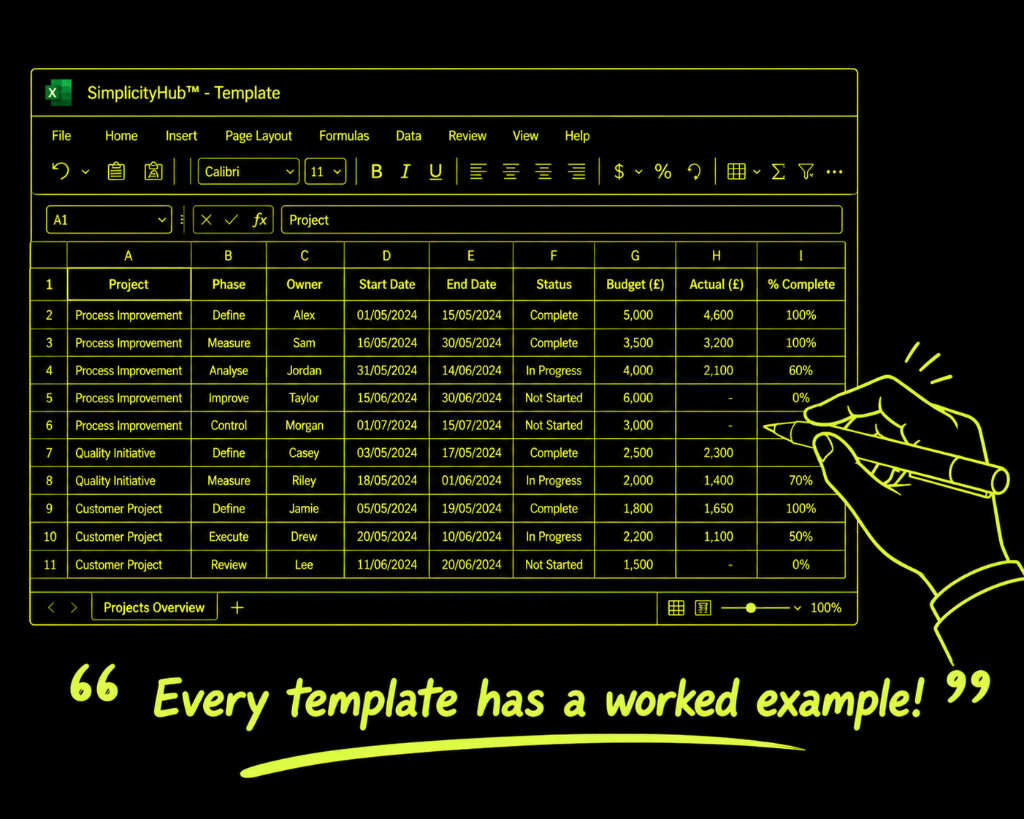
Worked example — New Response Workflow Pilot
A completed pilot plan for testing a new complaint response workflow, including scope, duration, success criteria, rollback conditions and the go/no-go decision framework.
Common mistakes — and how to avoid them
No defined success criteria. If you do not know what success looks like before the pilot starts, you cannot make an objective go/no-go decision. Define criteria in advance and commit to them.
Pilot scope that is too small to be representative. A pilot of two people in one team may not reveal issues that will appear at scale. The pilot scope needs to be large enough to produce meaningful data and expose real operational conditions.
No rollback plan. If you have not defined the conditions under which you will stop the pilot, you will keep running it long past the point where it is clearly not working. Define the exit criteria before you start.
Changing the solution mid-pilot. If you modify the solution while the pilot is running, you cannot attribute the results to the original design. Complete the pilot, assess the results, then make changes before the next iteration.
Tips for getting better results
Involve the pilot team in the design. The people who will run the pilot know the practical constraints. Involve them in designing the pilot scope, duration and data collection. Their buy-in makes the pilot more likely to succeed.
Run a pre-pilot briefing. Before the pilot starts, brief the pilot team on: what is being tested, how long it will run, what they need to record, and who to contact if something goes wrong. A well-briefed team produces better pilot data.
Document everything during the pilot. Keep a daily log of what happened: issues encountered, workarounds used, feedback from participants. This is your qualitative data alongside the quantitative measures — it is often where the most useful learning comes from.
Download the Pilot Plan Template
A clean, editable Excel template for immediate use — structured, professional and ready to fill in.
Frequently asked questions
What is the purpose of a pilot?
To test the solution in a real environment on a small scale before committing to full implementation.
How should I choose pilot scope?
Pick a representative slice — meaningful but manageable. Avoid selecting the easiest area.
How long should a pilot run?
Two to four weeks. Match the period used to capture your baseline data.
Criteria for moving to full rollout?
Define them before the pilot starts: which metrics must hit which targets and what issues must be resolved.
Advanced Toolkit Packs — available now
Structured, ready-to-use template packs designed for real improvement work. Pick the pack that matches your project and get started straight away.
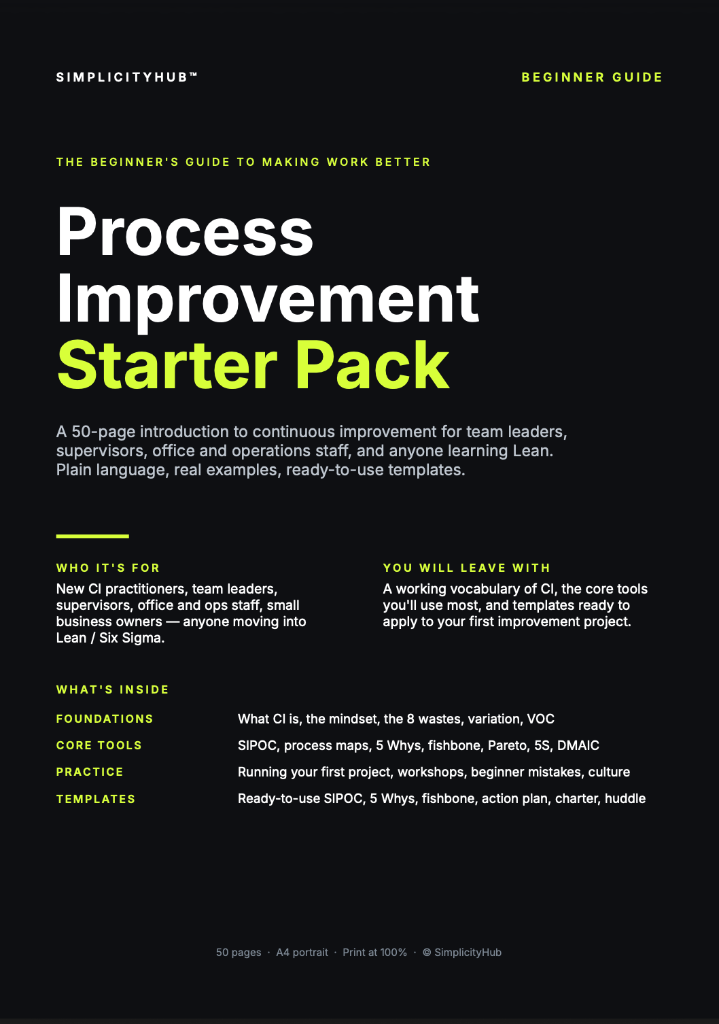
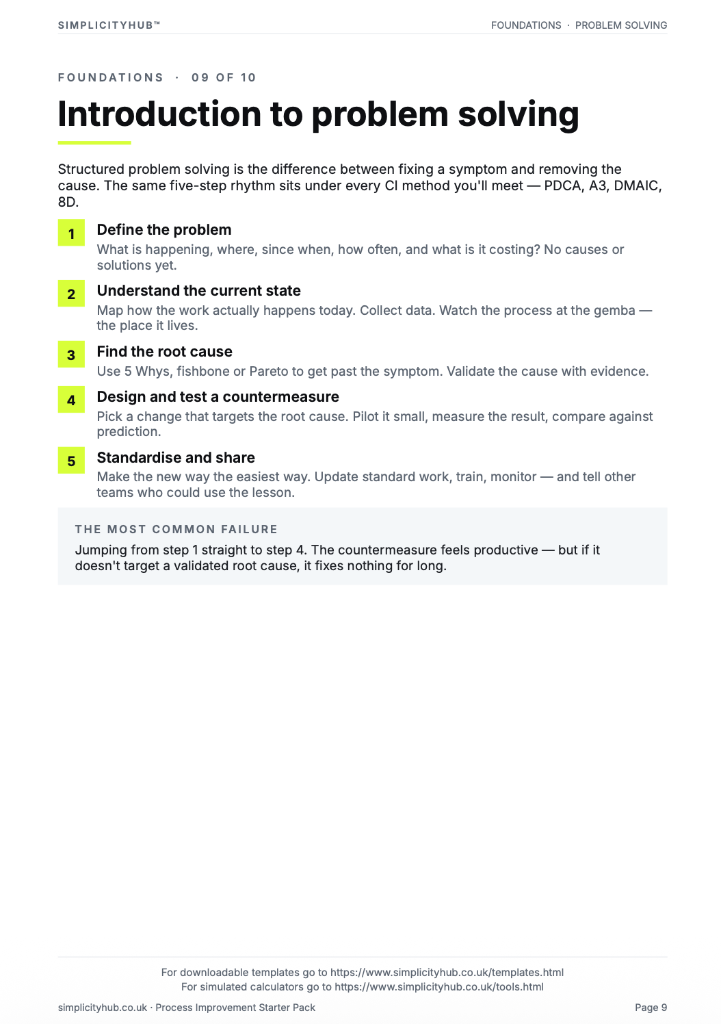
Process Improvement Starter Pack
A starter pack for identifying improvement opportunities, measuring baselines and planning action.
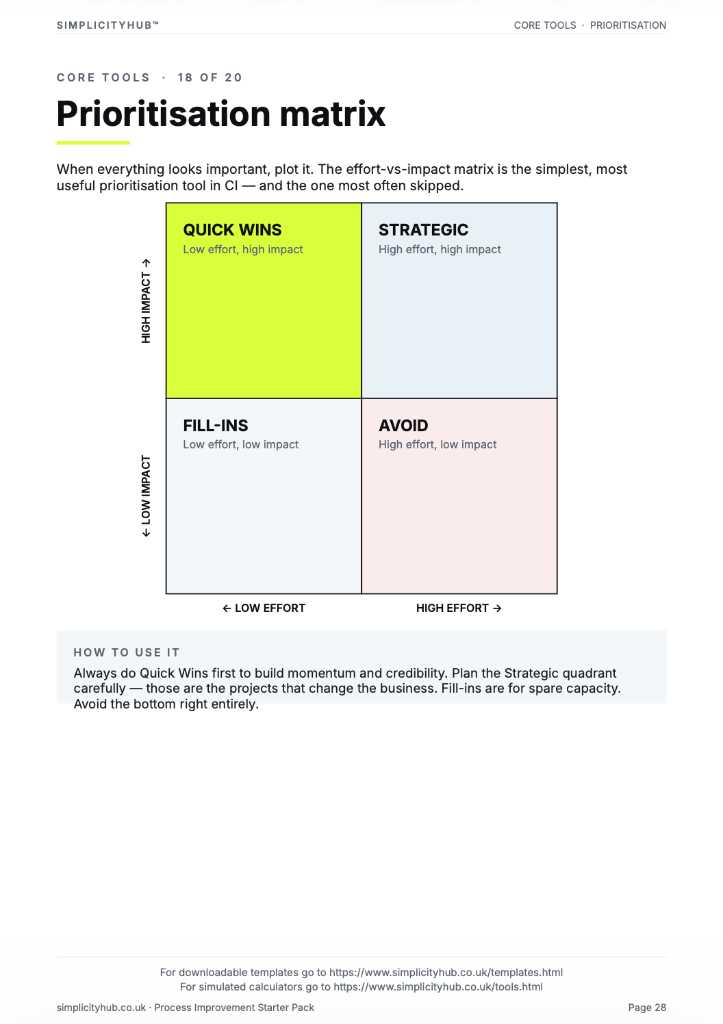
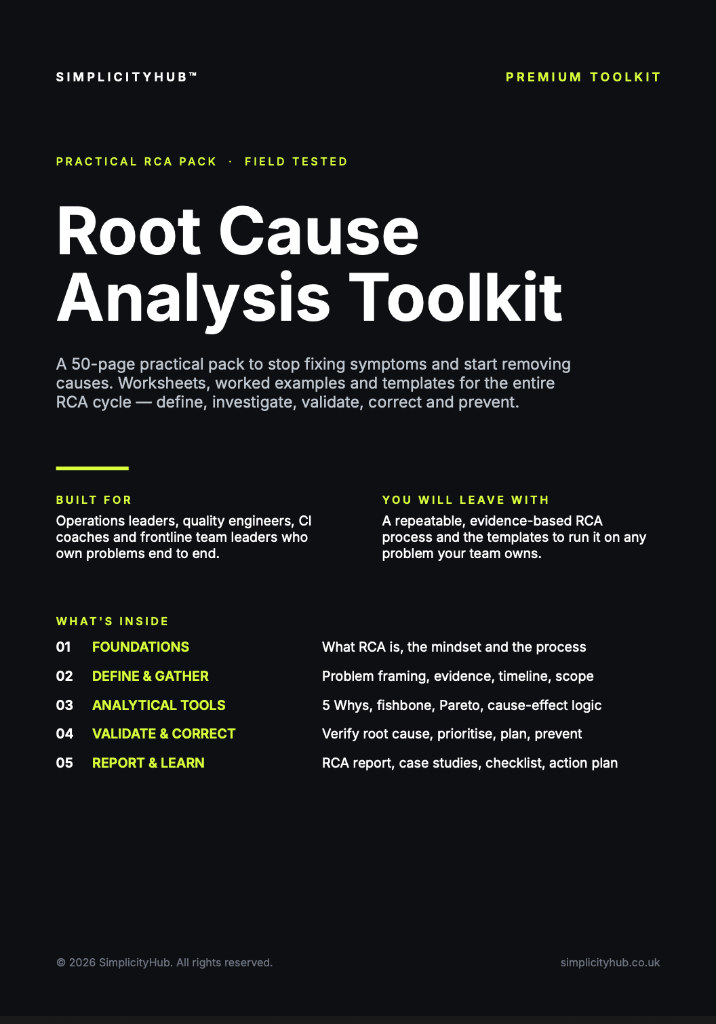
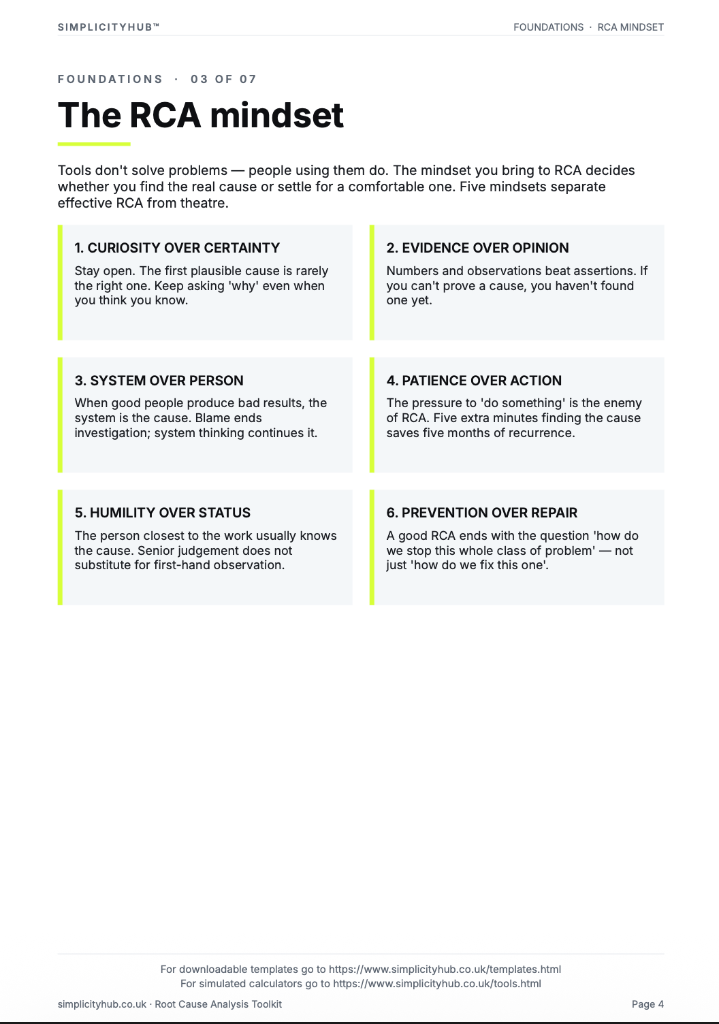
Root Cause Analysis Toolkit
A practical RCA toolkit for defining problems, finding causes, validating evidence and creating action.
A3 Template Pack
A clean A3 problem-solving pack for concise, visual improvement thinking and follow-through.