What is a Kaizen Event Planner Template?
A Kaizen Event Planner is a structured preparation and execution guide for a focused improvement workshop (typically 3–5 days). It covers scope, team roles, logistics, a daily agenda and post-event tracking.
When to use a Kaizen Event Planner Template
Use it 2–4 weeks before a Kaizen event begins. Complete the scope and team sections first, then build the daily agenda and logistics checklist as the event approaches.
Who should use a Kaizen Event Planner Template
- Black Belts and facilitators — planning and running focused 3–5 day improvement sprints
- Process owners — sponsoring and participating in Kaizen events for their process
- Lean practitioners — organising rapid improvement workshops as an alternative to full DMAIC projects
- Operations managers — coordinating team availability, workspace preparation and post-event sustainment
Watch: a quick explainer
New to this? This short video walks you through how kaizen events fit into continuous improvement — a helpful primer before you download and use the template.
How to use a Kaizen Event Planner — step by step
-
1Write the problem statement at the top
Start with a clear, factual problem statement. 'Machine stopped' or 'Customer received wrong item' — specific, observable, factual. Vague problems produce vague root causes.
-
2Ask 'Why did this happen?' — Why 1
Write down the first-level cause. This is usually a symptom or a direct cause — not yet the root. Examples: 'Machine overheated', 'Wrong item was picked'.
-
3Ask 'Why did that happen?' — Why 2
Challenge the previous answer. Keep the team focused on causes, not blame. If the answer is 'human error', push further — why did the human make the error?
-
4Continue to Why 3, 4 and 5
Keep going until you reach a cause that is systemic — a missing process, a failed control, a gap in training or a design flaw. The number five is a guide, not a rule.
-
5Check the logic by reading upward
Read the chain back to front: 'Because of X, Y happened, which caused Z.' If the logic holds, you have a valid chain. If it breaks, revisit the step where it breaks.
-
6Identify the actionable root cause
The root cause is the deepest level where a corrective action can prevent recurrence. Document it clearly — this feeds your Improve phase solution design.
-
7Validate before acting
Do not jump to solution immediately. Check whether data or observation confirms the root cause is real and significant before committing resource to fixing it.
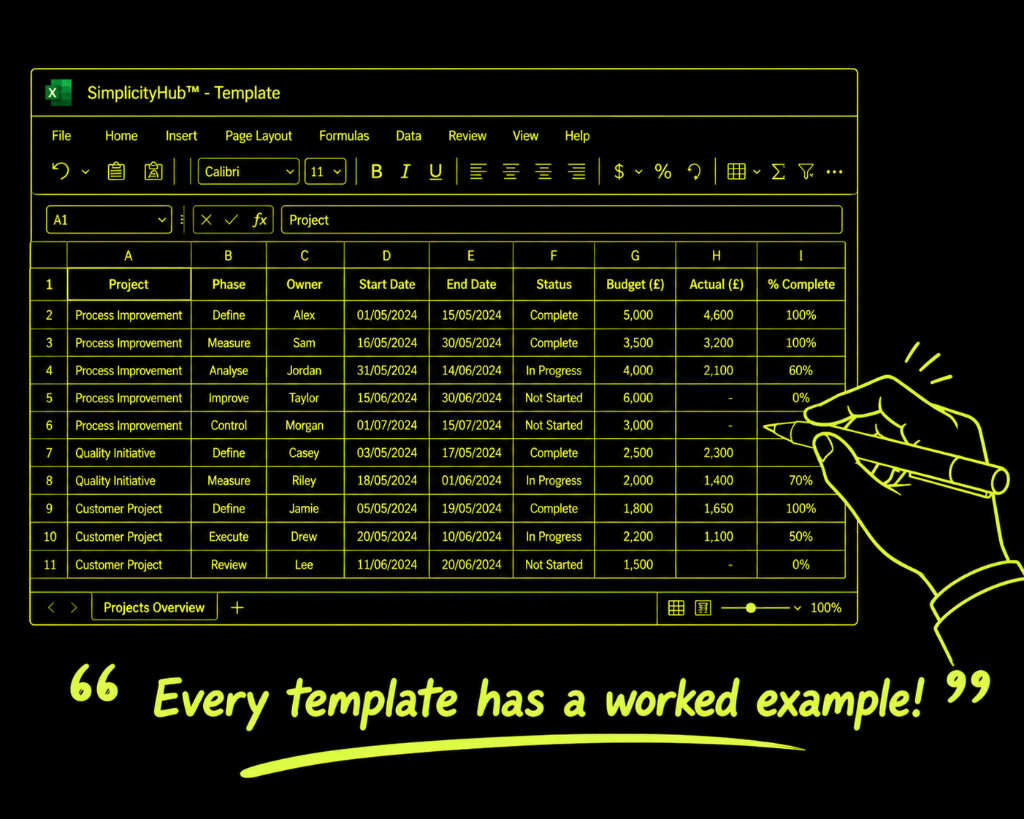
Worked example — Reducing Order Lead Time
A 5-day Kaizen event targeting order processing lead time used this planner to coordinate pre-event mapping, daily agendas, implementation sprints and a 30-day action log — achieving a 42% reduction in lead time.
Common mistakes — and how to avoid them
Starting without baseline data. Walking into a Kaizen event without data means the team spends Day 1 arguing about the size of the problem. Collect it before the event.
Insufficient pre-event preparation. The event itself is for implementing, not planning. SOPs, current state maps and data should all be ready before Day 1.
Not closing with a results presentation. A sponsor presentation on Day 5 creates accountability and celebrates the team's work. Skip it and momentum evaporates.
Leaving the 30-day actions unassigned. Every action not completed during the event needs a named owner, a deadline and a follow-up date — or it will not happen.
Tips for getting better results
Brief the team 1 week before. A pre-event briefing on the problem, data and objectives means the team hits the ground running on Day 1.
Keep the team dedicated. A Kaizen team pulled in and out for other work produces half the results. Protect team time for the full event duration.
Photograph everything. Before, during and after photos make the improvement story compelling and support sustainability reviews.
Frequently asked questions
How long should a kaizen event last?
Typically three to five days. Never longer than a week — momentum drops.
Who should be in the team?
Five to eight people: process owner, frontline workers, a facilitator, and one outsider with a fresh perspective.
What preparation is needed?
Define scope and target, prepare current state data, and book the space and team for the full duration.
What about ideas not implemented during the event?
Log them in the CI log. Not everything generated can be completed in the event itself.
Advanced Toolkit Packs — available now
Structured, ready-to-use template packs designed for real improvement work. Pick the pack that matches your project and get started straight away.
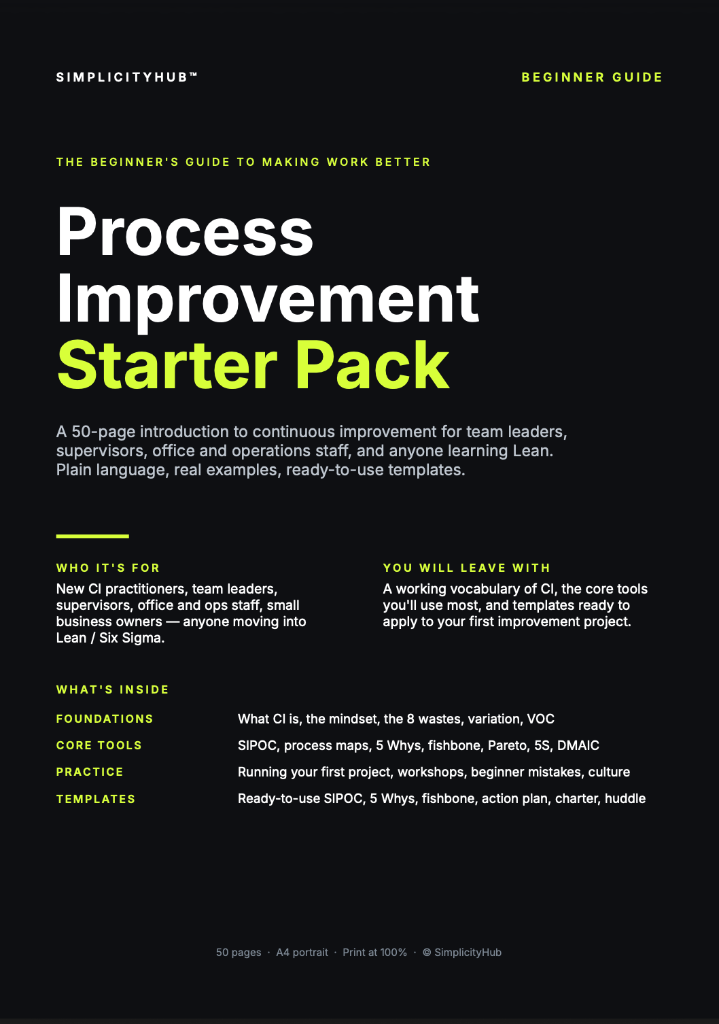
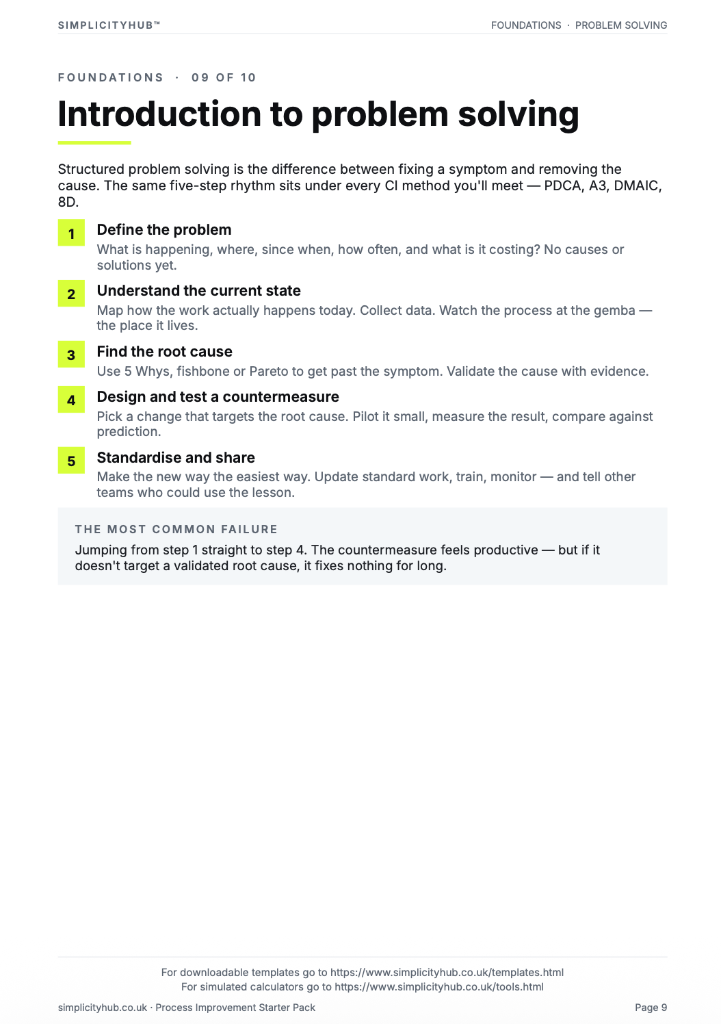
Process Improvement Starter Pack
A starter pack for identifying improvement opportunities, measuring baselines and planning action.
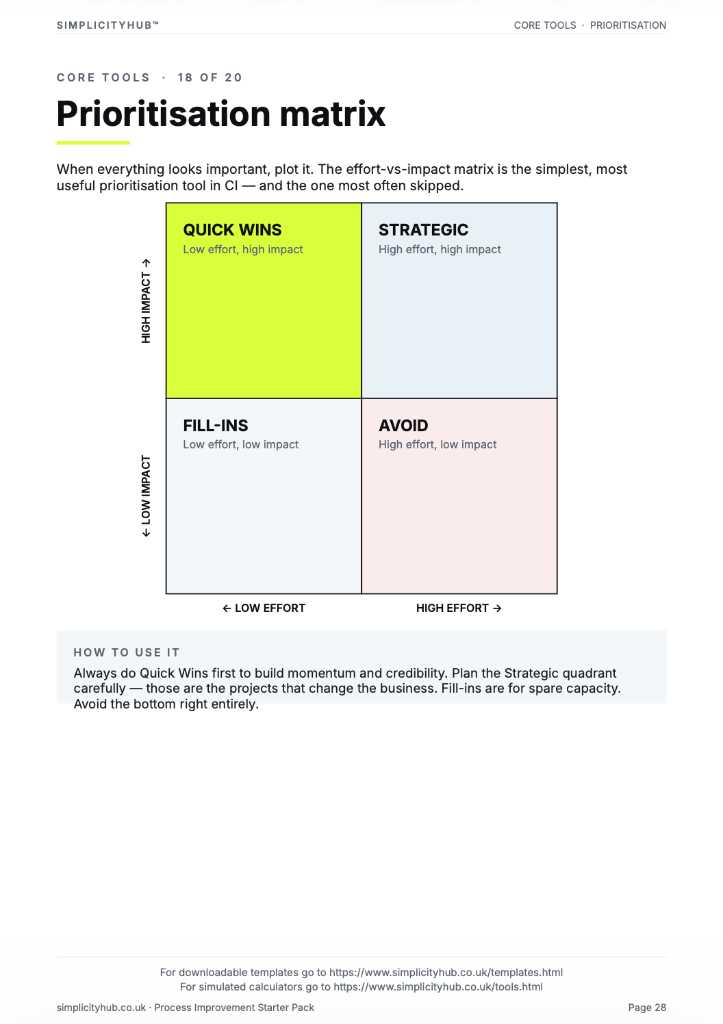
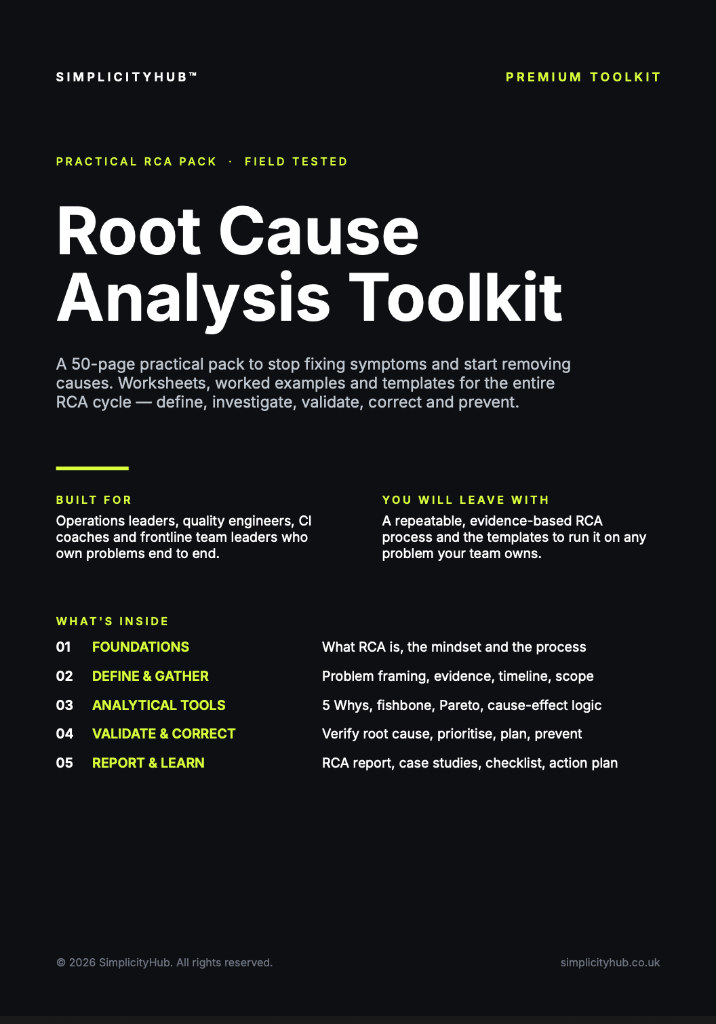
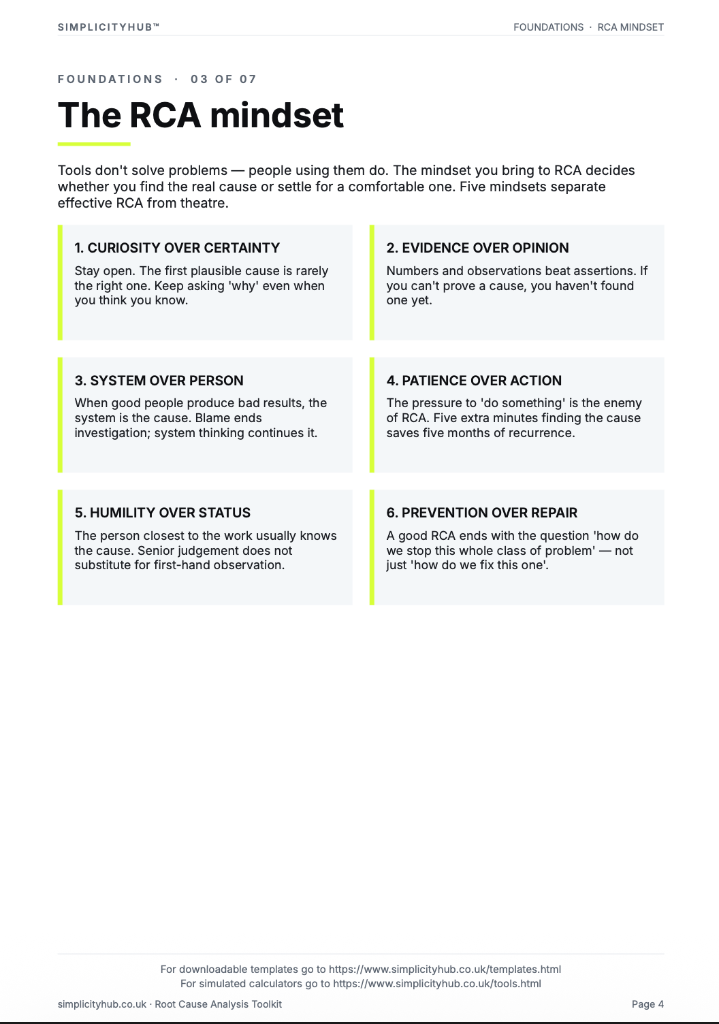
Root Cause Analysis Toolkit
A practical RCA toolkit for defining problems, finding causes, validating evidence and creating action.
A3 Template Pack
A clean A3 problem-solving pack for concise, visual improvement thinking and follow-through.