
What is a Change Checklist Template?
A Change Checklist Template provides a structured list of tasks and sign-offs required before, during and after a process change goes live. It ensures nothing critical is missed — from stakeholder sign-off to staff training, SOP updates and communication.
When to use a Change Checklist Template
Use it in the Improve phase as implementation begins, and continue through the Control phase. Run through it at each go-live milestone to confirm all readiness conditions have been met before the change is released.
Who should use a Change Checklist Template
- Black Belts and project leads — ensuring all implementation readiness conditions are met before go-live
- Change managers — coordinating the people, process and system activities required for a successful change
- Process owners — confirming their team and process are ready to operate the new way
- Sponsors — reviewing and signing off that all pre-launch criteria have been met
Vote yes and we’ll prioritise a quick walkthrough showing you exactly how to use it.
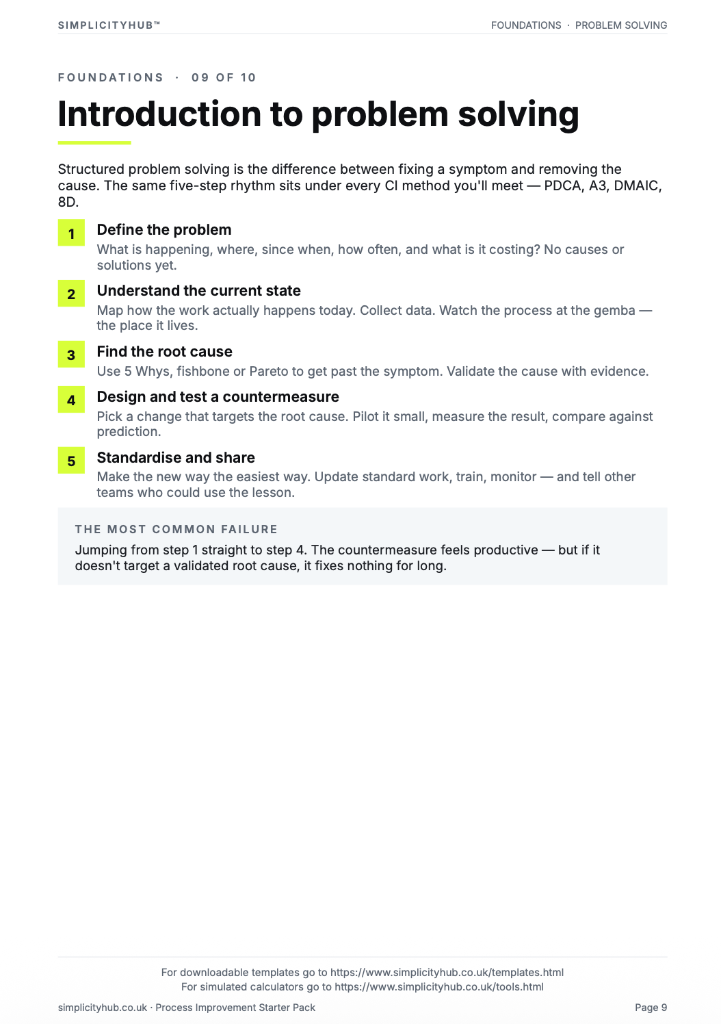
How to use a Change Checklist — step by step
- 1Define the change scope
List every element that is changing — process steps, systems, roles, documentation, physical environment.
- 2Build the pre-launch checklist
Identify every task that must be complete before go-live: SOPs updated, training complete, systems tested, communications sent.
- 3Assign owners and deadlines
Every checklist item needs a named owner and a completion deadline. No owner = no accountability.
- 4Run the readiness review
Hold a formal go/no-go review 48–72 hours before launch. Work through the checklist with all owners present.
- 5Execute the change
Proceed with implementation only if all critical items are confirmed green. Flag any amber items and agree mitigation.
- 6Complete the post-launch checklist
After go-live, confirm: process is running, staff are following new procedures, KPIs are being tracked, issues are being escalated.
- 7Close the checklist formally
Obtain sponsor sign-off that all checklist items are complete and the change is operating as intended.
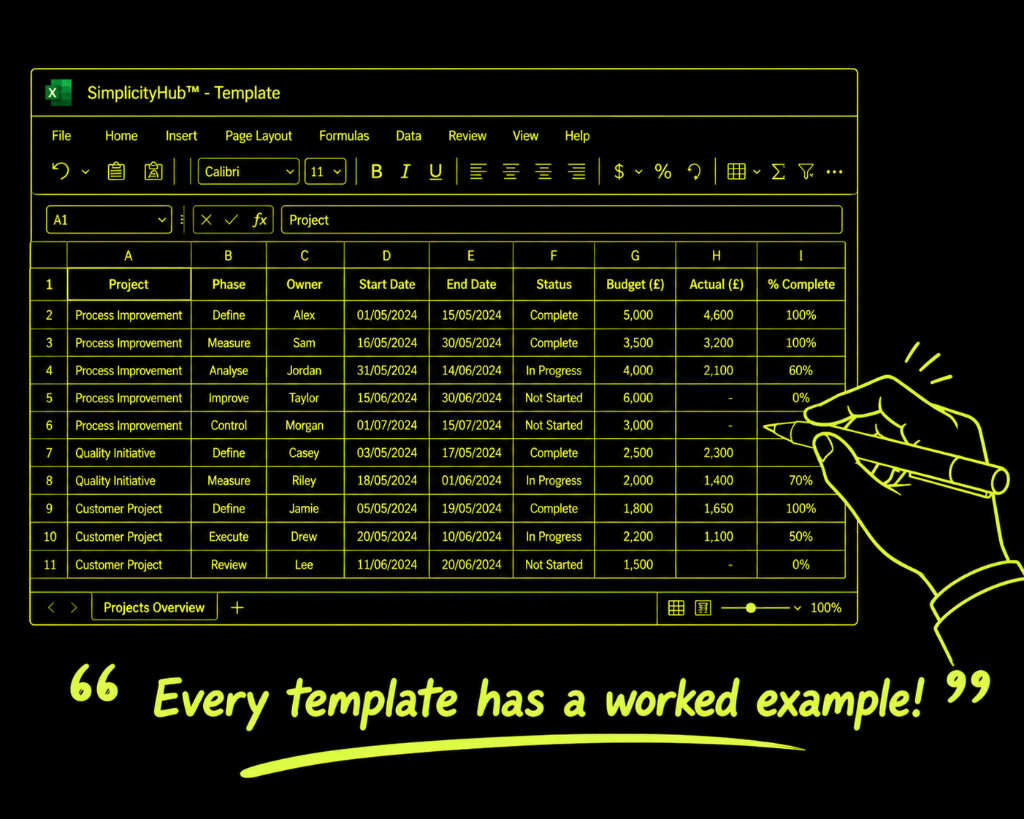
Worked example — New CRM System Go-Live
A project team used a 47-item change checklist to manage a CRM system go-live across 3 sites — catching a missed user access provisioning step 24 hours before launch that would have prevented 60 staff from logging in.
Common mistakes — and how to avoid them
Treating the checklist as a formality. A checklist only adds value if items are genuinely verified, not just ticked. Each item should have evidence of completion.
No go/no-go decision point. Without a formal readiness review, changes go live with known gaps. Build in a deliberate decision gate.
Checklist items too vague. 'Training complete' is not verifiable. '100% of affected staff have completed Module 3 and been signed off by supervisor' is.
Skipping post-launch checks. The first 48–72 hours post-launch are critical. Planned checks in this window catch problems before they escalate.
Tips for getting better results
Colour-code red/amber/green. RAG status on each item makes the overall readiness picture visible at a glance in the go/no-go review.
Keep a permanent record. The completed checklist is evidence for audit and lessons learned. Archive it with the project file.
Involve frontline staff in building it. The people doing the work know which steps are most likely to be missed. Their input makes the checklist far more comprehensive.
Frequently asked questions
Who completes the change checklist?
The project lead with input from all workstream owners. Each item needs a named owner who confirms readiness.
When should it be completed?
Start populating during pilot planning and finalise in the 48 hours before go-live.
What if some items are not ready?
Assess the risk. Critical incomplete items are grounds to delay go-live.
Should the checklist be kept after implementation?
Yes. It becomes part of the project record and is useful evidence during audits.
Advanced Toolkit Packs — available now
Structured, ready-to-use template packs designed for real improvement work. Pick the pack that matches your project and get started straight away.
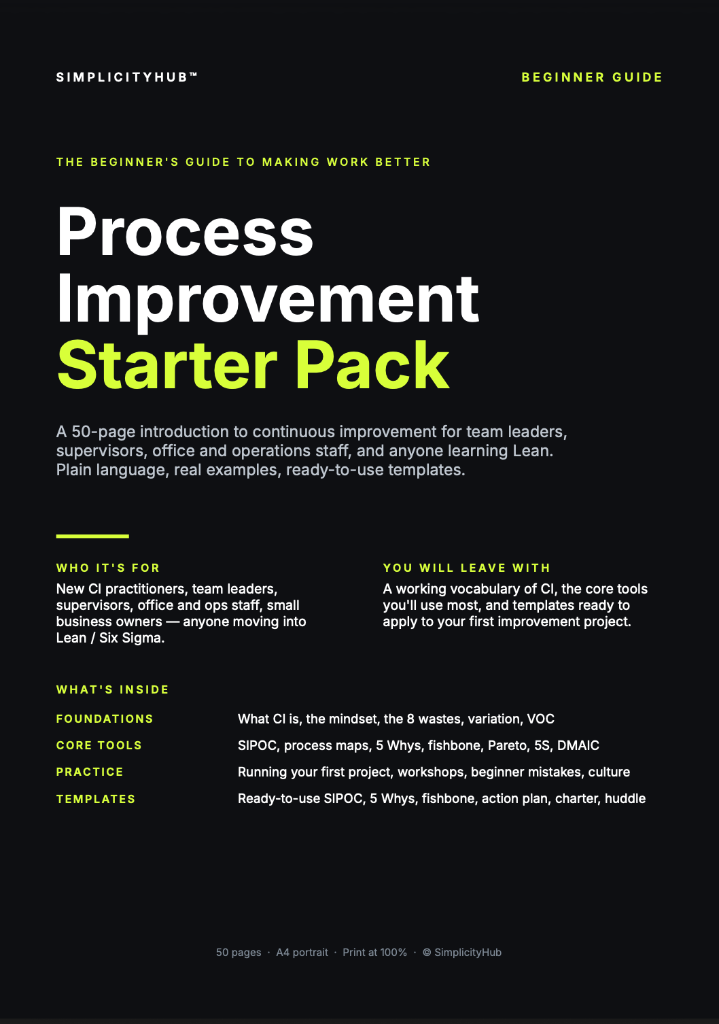
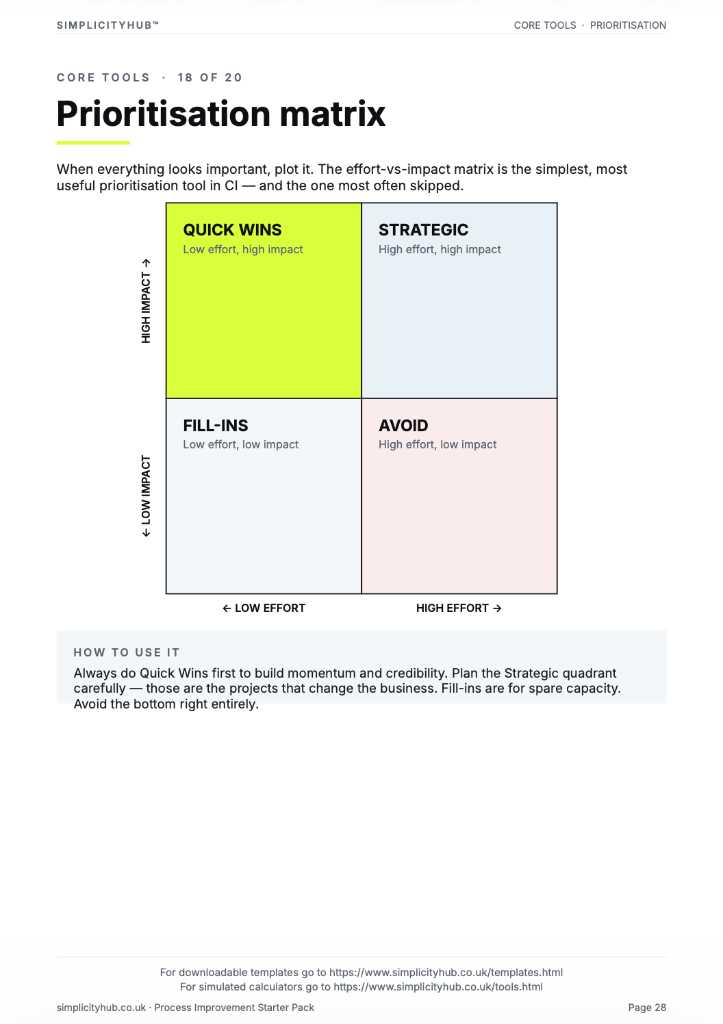
Process Improvement Starter Pack
A starter pack for identifying improvement opportunities, measuring baselines and planning action.
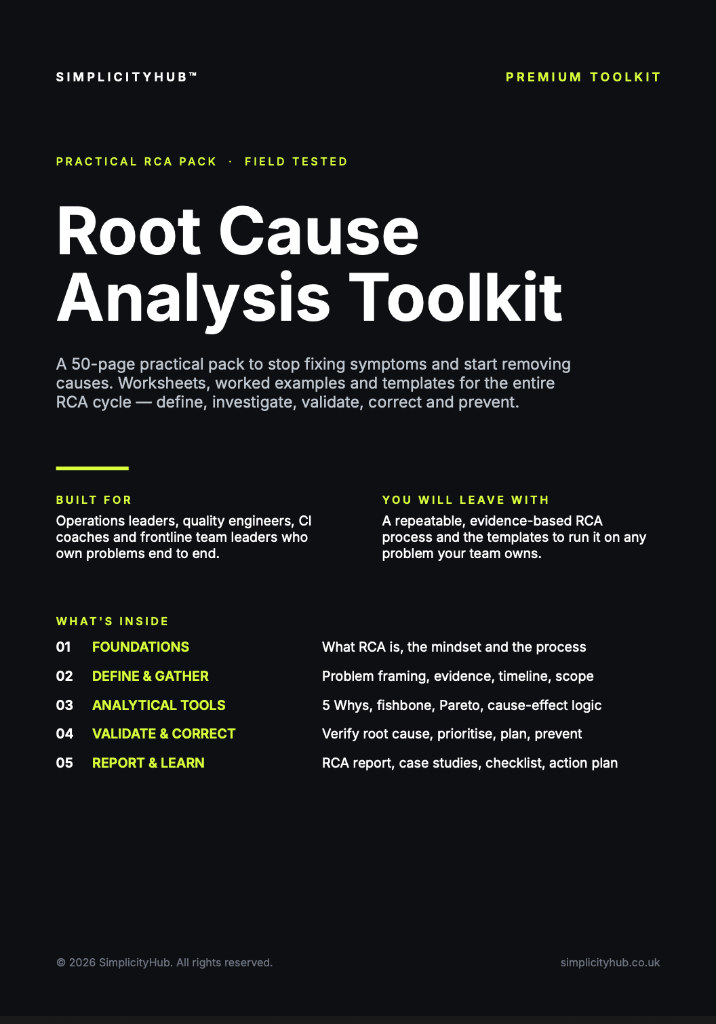
Root Cause Analysis Toolkit
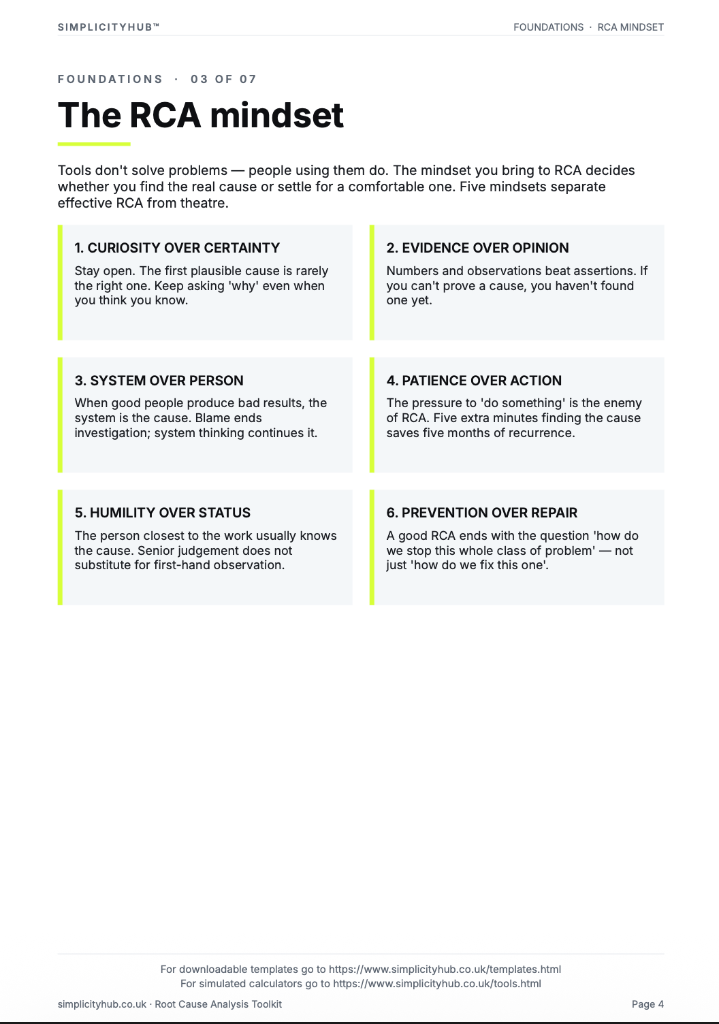
A practical RCA toolkit for defining problems, finding causes, validating evidence and creating action.
A3 Template Pack
A clean A3 problem-solving pack for concise, visual improvement thinking and follow-through.