What is a Continuous Improvement Log Template?
A Continuous Improvement Log Template provides a structured register for capturing, tracking and reporting all improvement ideas and actions in a team or process area. It creates visibility of the improvement pipeline from initial idea through to completed and verified benefit.
When to use a Continuous Improvement Log Template
Use it as an ongoing operational tool in any team running a continuous improvement programme. Start it in the Control phase after project closure and maintain it indefinitely as the team's primary improvement management tool.
Who should use a Continuous Improvement Log Template
- Team leaders and process owners — managing the improvement pipeline in their area and reporting progress to management
- CI managers and coaches — tracking improvement activity across multiple teams and areas
- Black Belts and Green Belts — handing over the improvement culture to the process owner at project closure
- All team members — submitting improvement ideas and tracking the status of their suggestions
Watch: a quick explainer
New to this? This short video walks you through building a continuous improvement habit — a helpful primer before you download and use the template.
How to use a Continuous Improvement Log — step by step
- 1Create the log structure
Set up columns for: idea description, submitter, submission date, category (waste/quality/safety/cost), priority, owner, status and verified benefit.
- 2Establish the idea submission process
Agree how team members submit ideas — physically, digitally or in daily stand-up. Make it as frictionless as possible.
- 3Review and prioritise weekly
The team leader reviews new ideas weekly, assigns ownership and sets a target completion date.
- 4Track progress through stages
Use status stages: Idea → In Progress → Implemented → Verified. Nothing moves to 'Verified' without measured evidence.
- 5Review benefits monthly
Aggregate the verified benefits monthly and share with the team. Celebrating progress drives more ideas.
- 6Escalate significant ideas
Ideas that require capital investment or cross-functional change should be escalated to a project sponsor or steering group.
- 7Archive completed improvements
Keep a full archive — it becomes a reference library for future improvement work and evidence for CI maturity assessments.
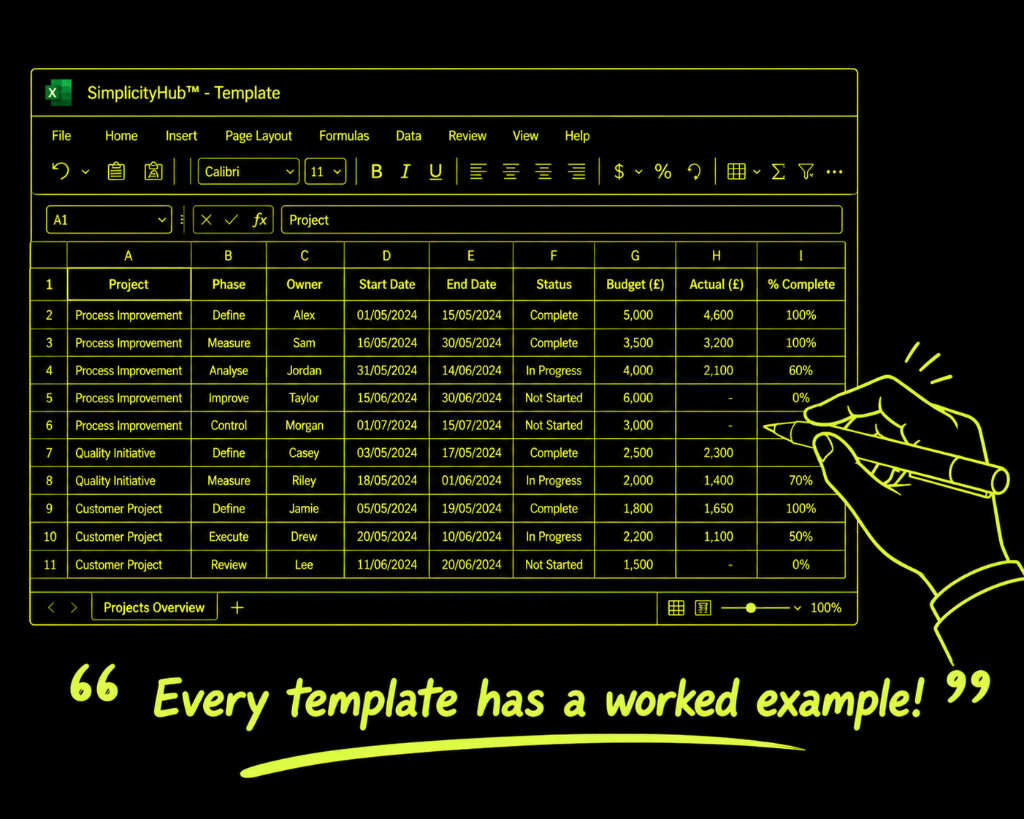
Worked example — Manufacturing Cell CI Log
A production team maintained a CI log for 12 months, completing 34 improvements with a combined verified saving of £67,000 — all tracked from idea submission through to finance-validated benefit in a single shared spreadsheet.
Common mistakes — and how to avoid them
No defined review cadence. A log nobody reviews becomes a graveyard of forgotten ideas. Set a fixed weekly or fortnightly review rhythm and stick to it.
Counting inputs, not outputs. A log with 200 ideas and 5 completions is failing. Track completion rate and verified benefit — not just volume of ideas.
No verification step. An improvement marked 'Done' without measured evidence is an assumption. Every completed item needs data to confirm it worked.
Making submission too complex. A 10-field idea form kills participation. The simplest effective log has four fields: what, who, by when, result.
Tips for getting better results
Display the log visibly. A CI log posted on the team board creates accountability and shows leadership that improvement is taken seriously.
Celebrate completions publicly. Recognition of completed improvements — even small ones — drives more participation. Make it part of the team meeting agenda.
Link high-value ideas to formal projects. Ideas that score highly on impact but require significant resource should be escalated to a formal DMAIC or Kaizen project.
Frequently asked questions
Who can add ideas?
Everyone in the team and ideally everyone who works in the process.
How should ideas be prioritised?
Use a simple impact vs effort assessment. Quick wins go first. High impact, high effort ideas become project candidates.
What happens to ideas not actioned?
Keep them with a status of Parked or Declined and a brief reason.
How is this different from a project action plan?
A CI log captures all improvement ideas across the team over time. An action plan tracks specific tasks for a specific project.
Advanced Toolkit Packs — available now
Structured, ready-to-use template packs designed for real improvement work. Pick the pack that matches your project and get started straight away.
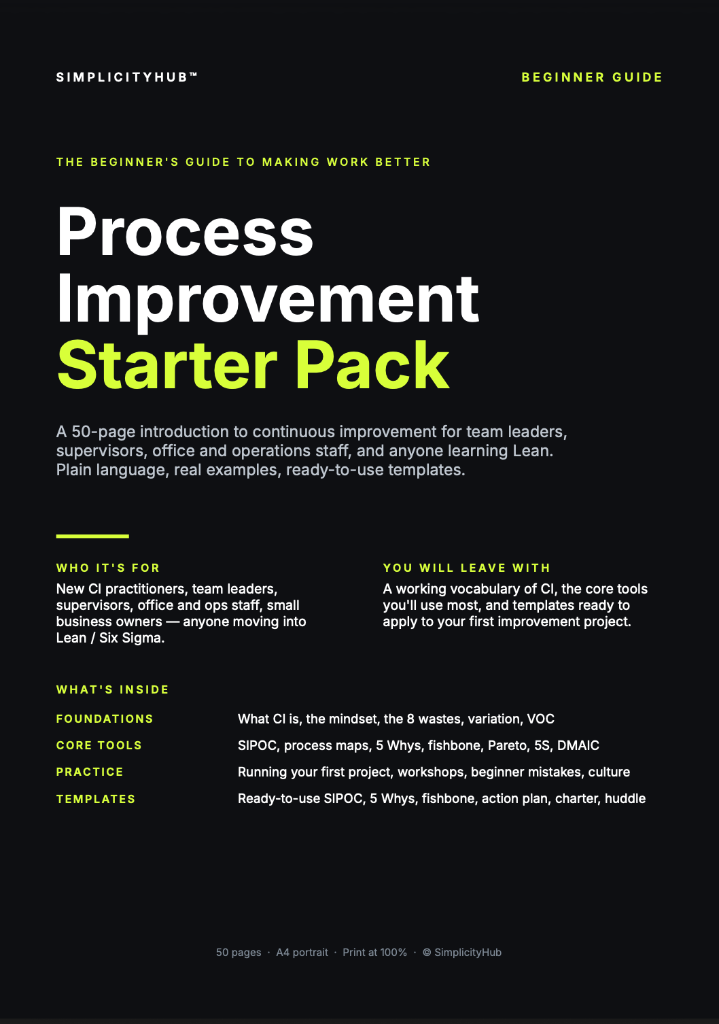
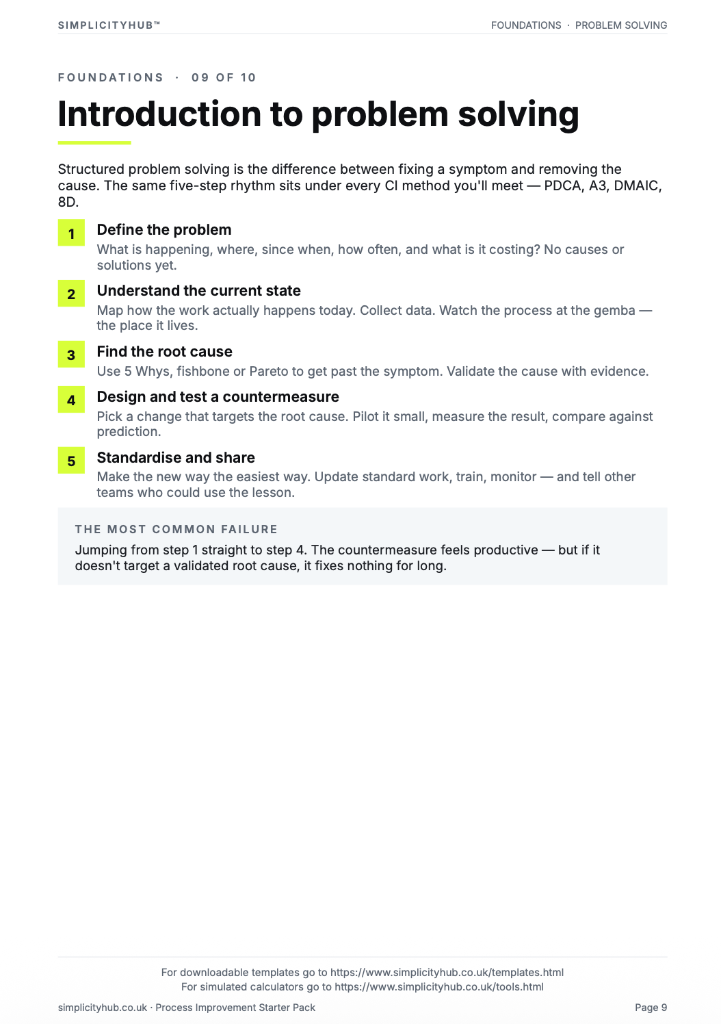
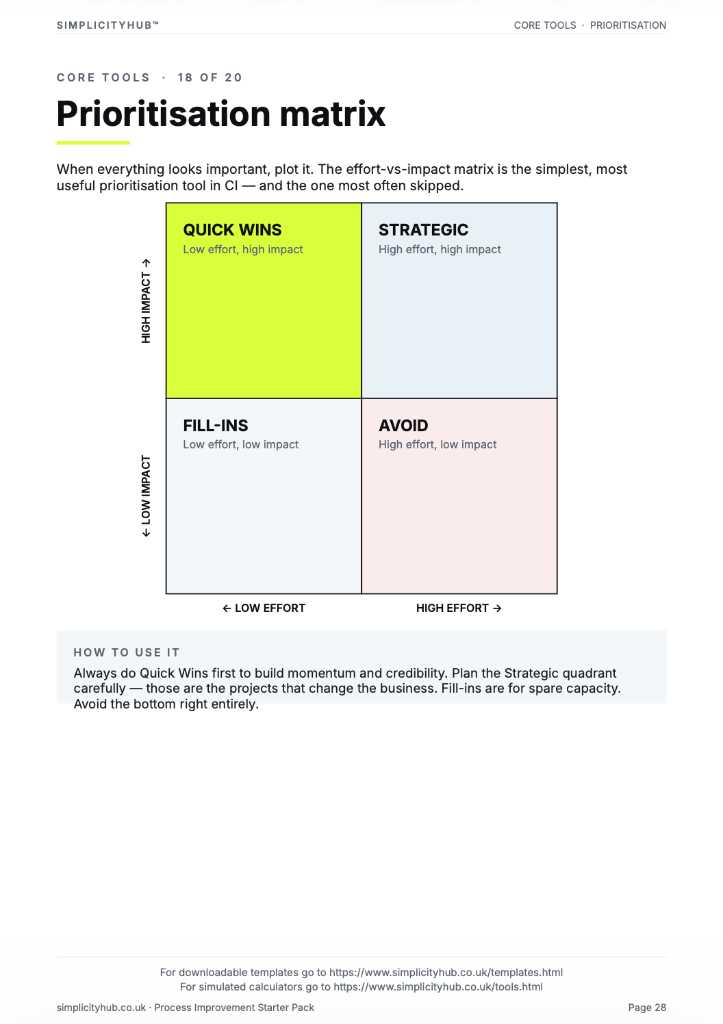
Process Improvement Starter Pack
A starter pack for identifying improvement opportunities, measuring baselines and planning action.
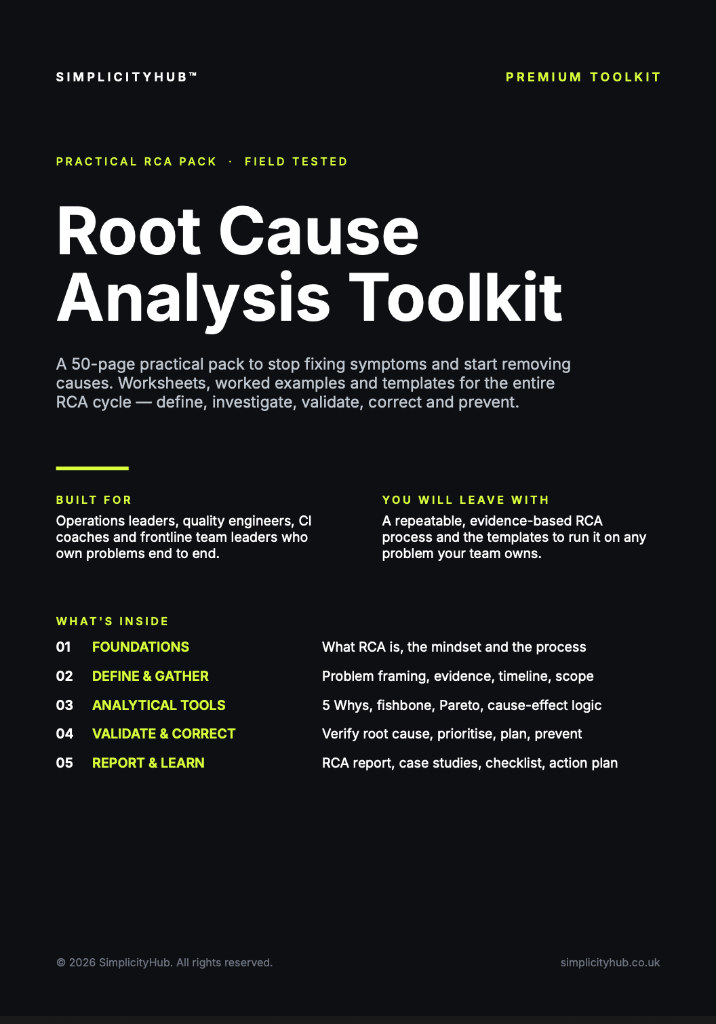
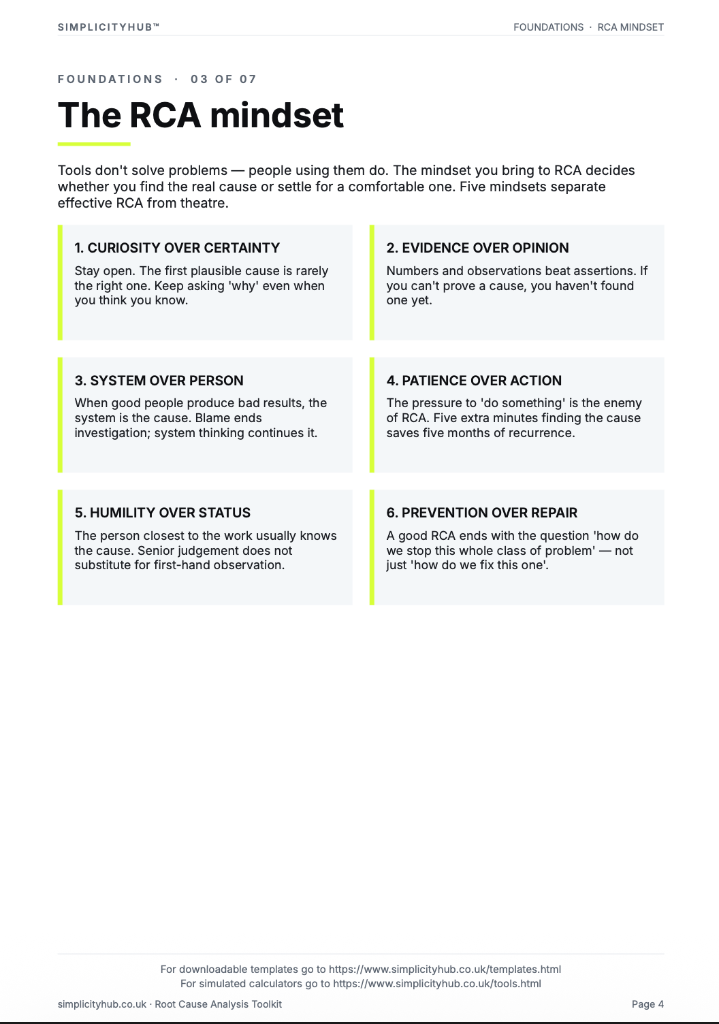
Root Cause Analysis Toolkit
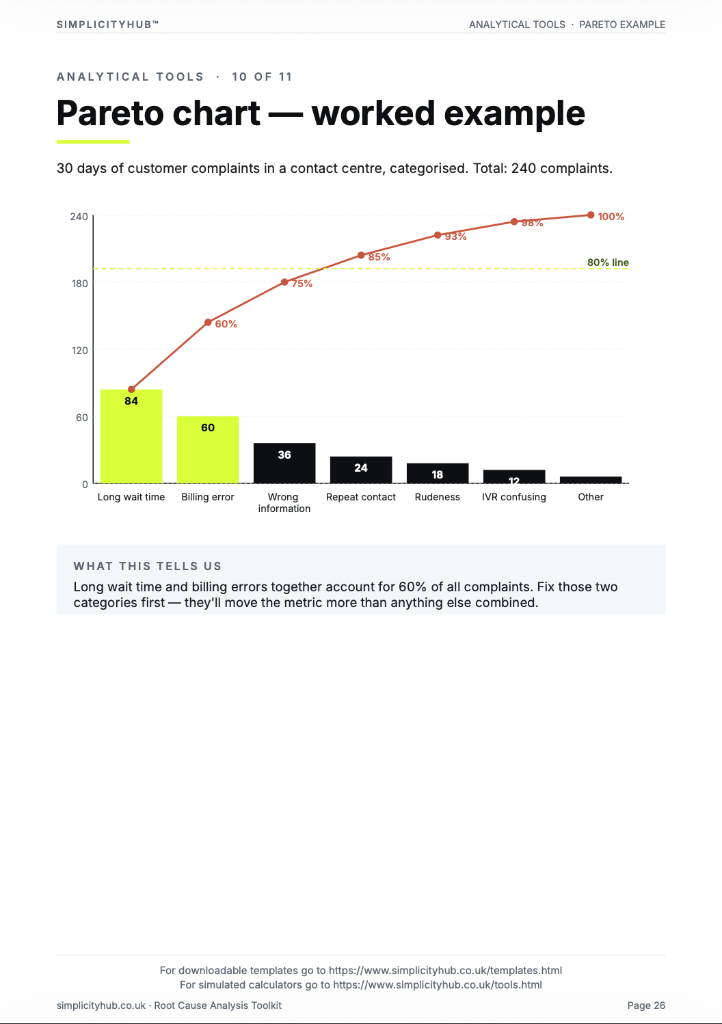
A practical RCA toolkit for defining problems, finding causes, validating evidence and creating action.
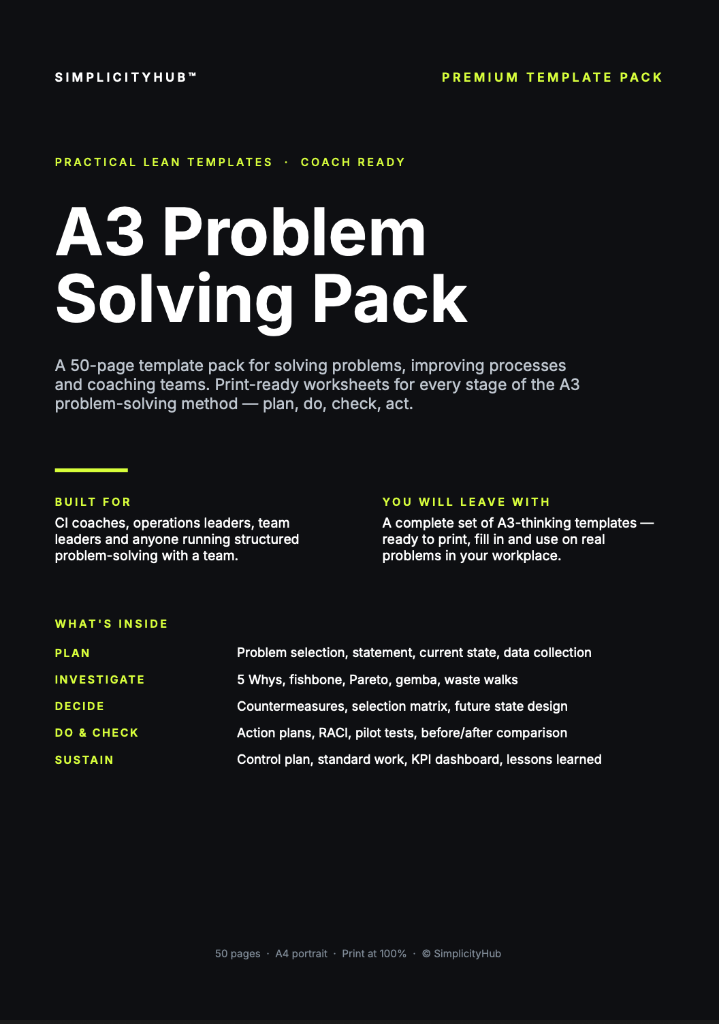
A3 Template Pack
A clean A3 problem-solving pack for concise, visual improvement thinking and follow-through.