What is a Quick Win Tracker Template?
A Quick Win Tracker Template provides a structured log for identifying, implementing and recording the benefit of small, fast improvements that can be completed without a formal project. It keeps momentum visible and builds the culture of continuous improvement.
When to use a Quick Win Tracker Template
Use it at any point in a CI programme — alongside formal DMAIC projects or as a standalone improvement tool for teams not yet running structured projects. It is particularly valuable in the early stages of a CI programme when visible momentum matters.
Who should use a Quick Win Tracker Template
- Team leaders and supervisors — managing a pipeline of quick improvement actions in their area
- All team members — contributing and tracking their own improvement ideas and actions
- CI managers and coaches — monitoring quick win activity across the organisation to demonstrate CI momentum
- Sponsors — reviewing quick win volume and benefit as evidence of CI culture development
Vote yes and we’ll prioritise a quick walkthrough showing you exactly how to use it.
How to use a Quick Win Tracker — step by step
- 1Define what qualifies as a quick win
A quick win is an improvement that can be fully implemented within 1–2 weeks without significant resource or approval. Set this boundary clearly.
- 2Log the opportunity
Capture the problem or waste observed, the proposed solution, who identified it and the date.
- 3Assign an owner and target date
Every quick win needs one named owner and a completion deadline. Without these, ideas sit idle.
- 4Implement the improvement
Act within the defined quick win timeframe. Speed is the point — avoid over-engineering small fixes.
- 5Measure and record the impact
Even a rough estimate of time saved, errors prevented or cost avoided is valuable. Quantify where possible.
- 6Verify and close
Confirm the improvement is working and the problem is resolved before marking it closed.
- 7Report monthly totals
Share total quick wins completed and estimated benefit with the team and management. Visibility drives engagement.
Worked example — Office Services Quick Win Programme
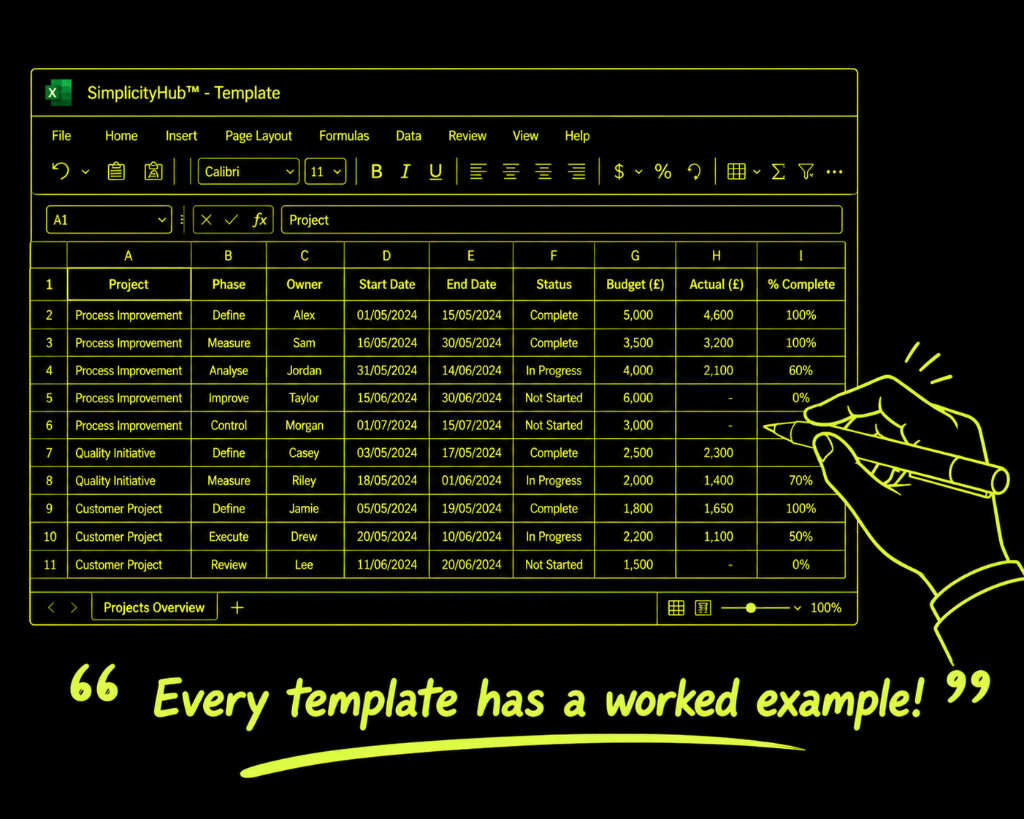
An office services team logged 47 quick wins in a 3-month period — ranging from reorganising a shared storage area (saving 4 minutes per person per day) to fixing a broken printer alert (eliminating 12 wasted trips per week) — with a combined estimated saving of £22,000.
Common mistakes — and how to avoid them
Letting quick wins become small projects. If an idea requires more than 2 weeks or significant resource, it should be escalated to a formal project. Keep the quick win log for genuinely fast fixes.
No measurement of benefit. Quick wins without any attempt at quantification are invisible to senior leaders. Even a rough estimate makes the programme tangible.
No review of the log. A log that isn't reviewed regularly becomes a list of good intentions. Review it weekly in the team meeting.
Claiming quick wins that were already planned. A quick win is an additional improvement driven by the CI programme — not a scheduled maintenance task or planned upgrade.
Tips for getting better results
Celebrate every completion. Recognition of even small wins drives participation. Name the person who did it in the team meeting.
Set a monthly team target. A target of 3–5 quick wins per month per team creates a rhythm of continuous improvement without pressure.
Display the total on the team board. A running total of quick wins and estimated benefit posted on the team board creates pride and competitive energy.
Frequently asked questions
What counts as a quick win?
Implementable within one to two weeks with minimal resource and no significant risk.
Should quick wins be implemented before Improve is complete?
Yes, where clearly safe and not interfering with the broader improvement design.
How do I ensure they stick?
Update the relevant SOP, brief the team, and add a check to the control plan.
How many should I aim for?
No target — implement every genuine quick win you identify.
Advanced Toolkit Packs — available now
Structured, ready-to-use template packs designed for real improvement work. Pick the pack that matches your project and get started straight away.
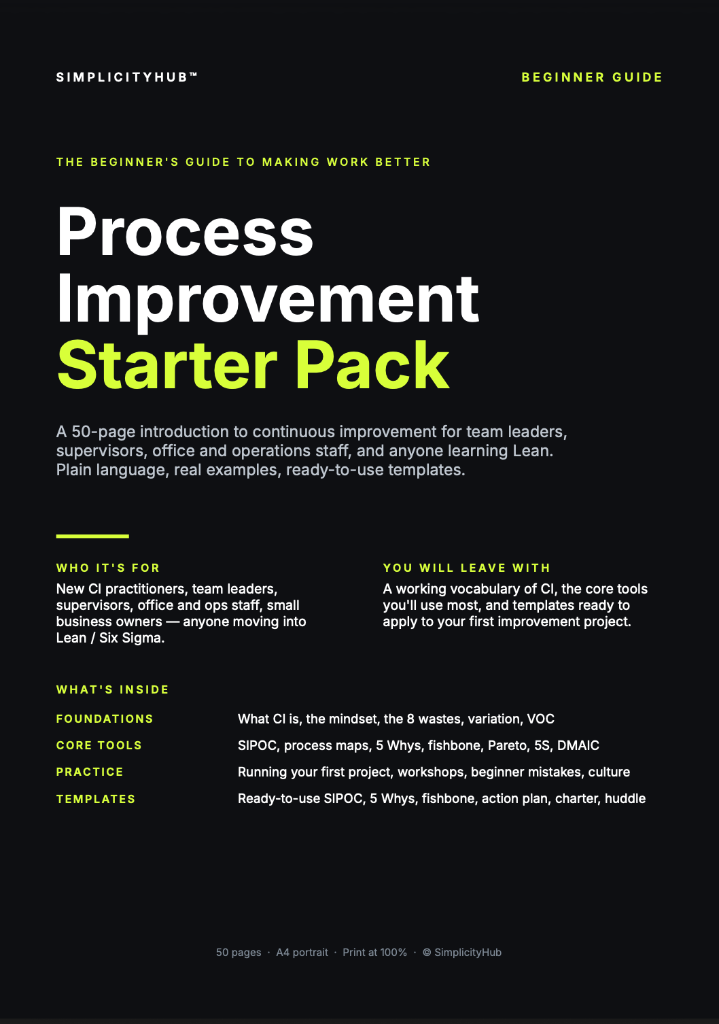
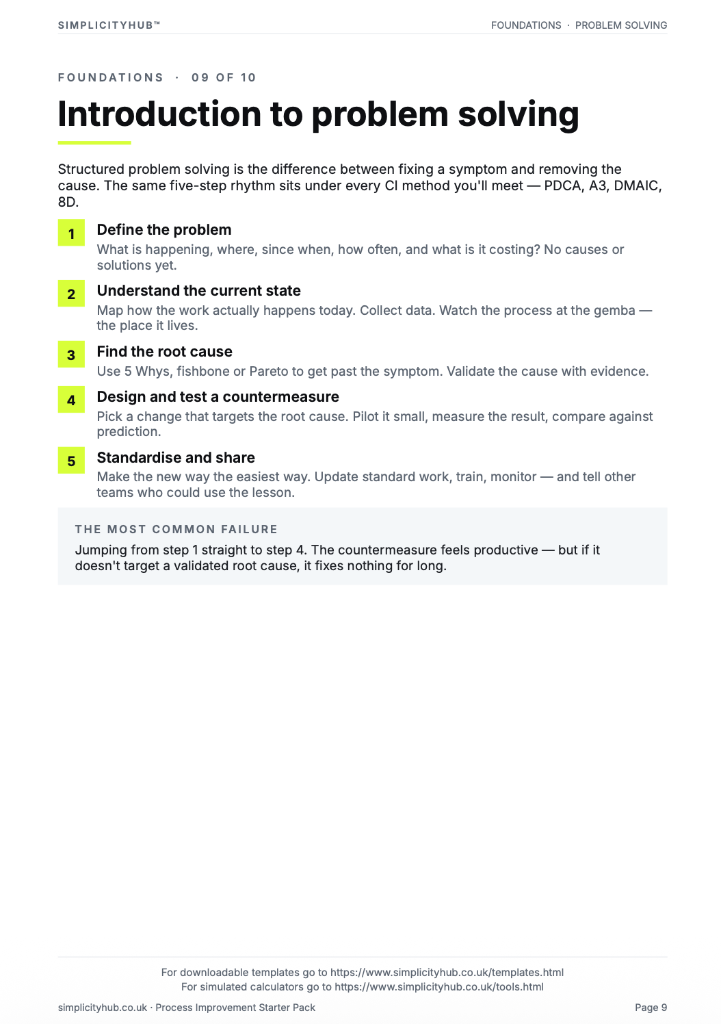
Process Improvement Starter Pack
A starter pack for identifying improvement opportunities, measuring baselines and planning action.
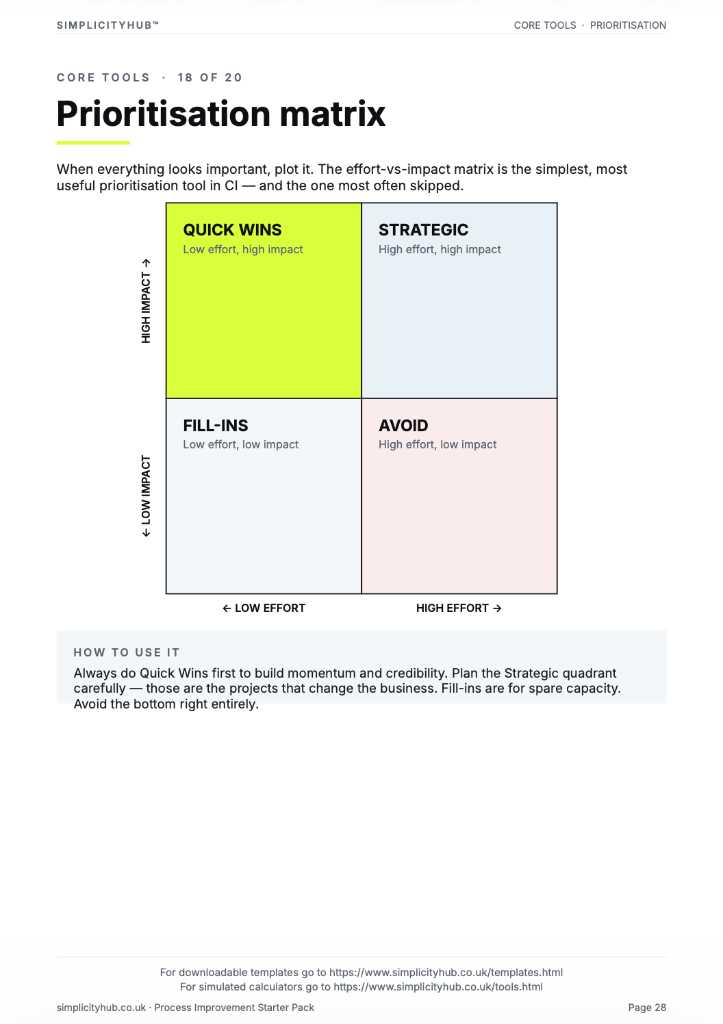
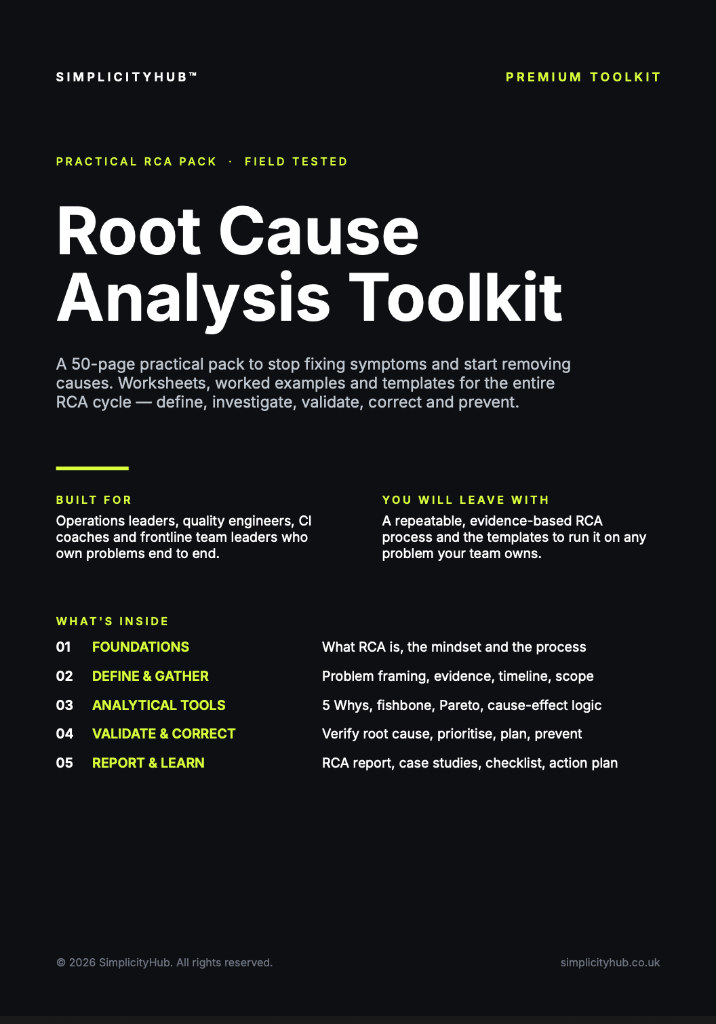
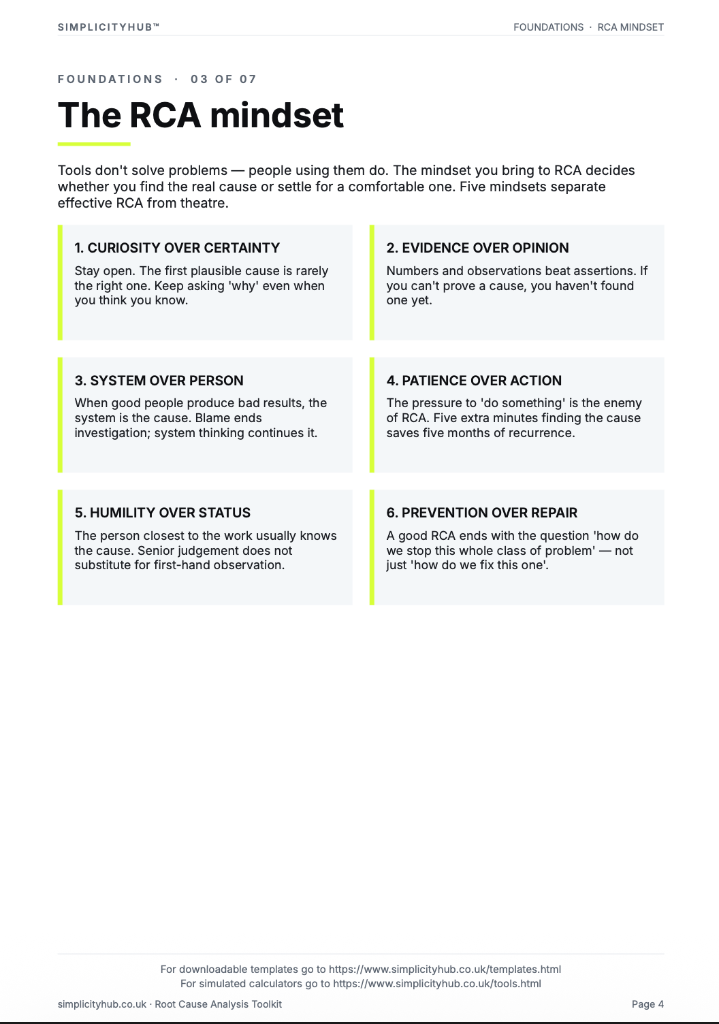
Root Cause Analysis Toolkit
A practical RCA toolkit for defining problems, finding causes, validating evidence and creating action.
A3 Template Pack
A clean A3 problem-solving pack for concise, visual improvement thinking and follow-through.