What is a Daily Management Board Template?
A Daily Management Board (DMB) is a visual tool — physical or digital — that makes team performance visible at a glance, drives a short daily huddle and creates a rhythm of action and accountability at the point of work.
A well-designed DMB shows four things: Safety (incidents and near misses), Quality (defects, errors, customer issues), Delivery (output vs target) and People (attendance, capacity). Each metric has a target, and any day where the target is missed triggers a brief discussion and an action.
The DMB is primarily a Control phase tool but, once embedded, it becomes the operating heartbeat of continuous improvement in a team — not a project tool but a permanent management system.
When to use a Daily Management Board Template
Introduce a Daily Management Board when a team needs to move from reactive problem-solving to proactive performance management. Use it when:
- A project improvement is being handed over and you want to embed daily performance visibility
- A team has no structured daily review of performance against target
- Problems are being identified days or weeks after they occur rather than in real time
- The team has improvement actions that need daily visibility to drive completion
Who should use a Daily Management Board Template
- Team Leaders and Supervisors — to run daily huddles and track team performance in real time
- Operations Managers — to create a consistent performance management rhythm across multiple teams
- Green Belts and Black Belts — to embed a control mechanism as part of the Control phase handover
- CI Managers — to design and roll out the DMB system across an improvement programme
Watch: a quick explainer
New to this? This short video walks you through running an effective daily management board — a helpful primer before you download and use the template.
How to design and run a Daily Management Board
Design the board with the team, not for them. The metrics they see every day should be the ones they care about and can influence. A board designed by someone outside the team is rarely used consistently.
How to design and run a Daily Management Board — step by step
-
1Choose three to five metrics to display
Select the metrics most directly linked to team performance: one safety indicator, one quality indicator, one delivery indicator. Fewer metrics, consistently reviewed, are more effective than a comprehensive dashboard nobody uses.
-
2Set targets for each metric
Every metric on the board needs a target — a number that defines a good day. Without a target, the board shows data without context. 'Response time: 2.8 days' means nothing without a target of '≤3.0 days'.
-
3Design a visual format that shows red/green at a glance
The board should communicate instantly — without needing to read numbers carefully. Use colour (red/green), icons (✓/✗) or spark lines. The team should be able to assess performance in five seconds.
-
4Add an actions section
Every board should have a section for open actions: what needs to be done, who owns it, and by when. This is reviewed at every huddle. Completed actions are marked closed.
-
5Establish the daily huddle routine
Set a fixed time (typically start of shift or first thing in the morning) and a fixed duration (10–15 minutes maximum). The huddle follows a consistent agenda: review yesterday's performance, identify issues, confirm today's plan, review open actions.
-
6Train the team lead to facilitate
The team lead runs the huddle — not the manager, not the CI practitioner. Coach the team lead until they can run it independently. The goal is for the board to function without CI team involvement.
-
7Review and refresh the board quarterly
Metrics that were important at launch may not remain the most relevant. Review the board design quarterly and update metrics to reflect current priorities.
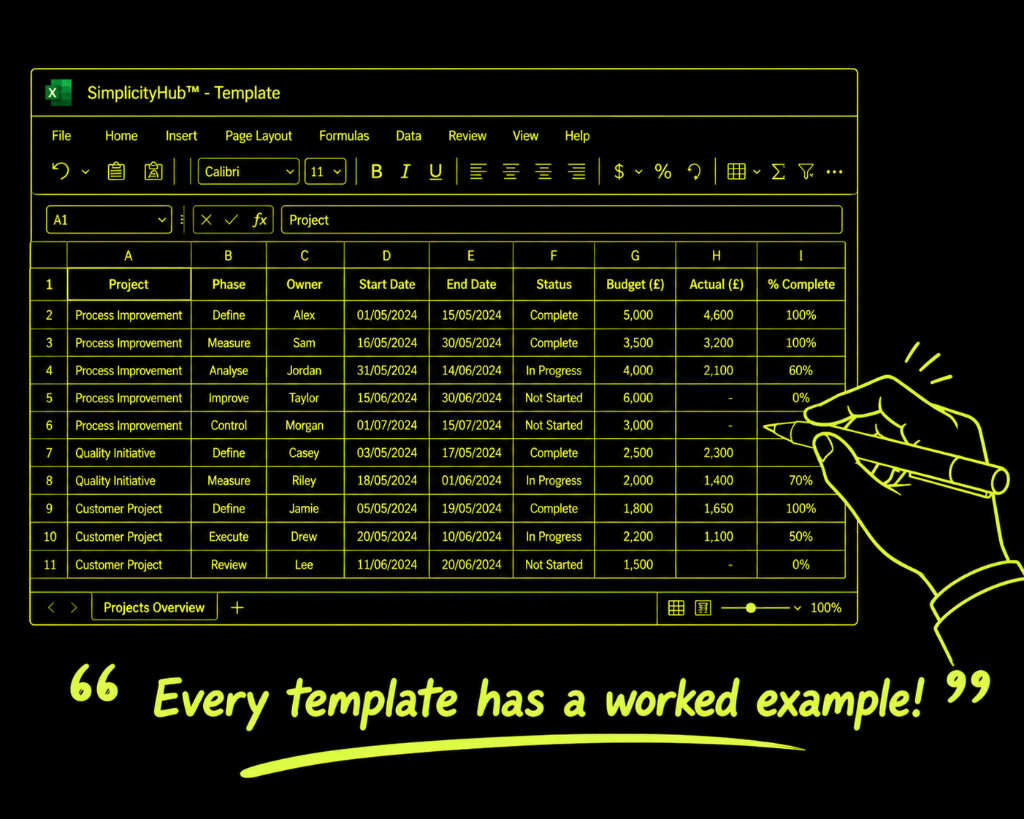
Worked example — Customer Service Team Daily Board
A completed Daily Management Board design for a customer service team, showing SQCDP metrics, daily targets, trend charts and an open action tracker.
Common mistakes — and how to avoid them
Too many metrics. A board with 15 metrics overwhelms the daily huddle. Choose the vital few — the three to five numbers that tell the real story of team performance. Add more only when the team is consistently using what is already there.
No daily huddle routine. A board with no daily review is a wallchart. The board only has value if it drives a daily conversation about performance. The huddle is the board's engine.
Manager runs the huddle instead of the team lead. If the manager runs every huddle, the team lead never develops the skill and the board becomes dependent on management involvement. Coach the team lead to own it.
Board updated weekly, not daily. A board updated weekly does not enable real-time problem detection. Problems identified on Monday should be actioned by Tuesday — not discovered at the following week's review.
Tips for getting better results
Start small and add over time. Launch with three metrics and one actions section. Add complexity only when the team has established a consistent daily routine. A simple board used every day beats a sophisticated board used occasionally.
Make the board physical, not just digital. A physical board at the point of work drives the huddle naturally — people gather around it. A digital board on a screen nobody walks past is easily ignored. Where possible, use both.
Celebrate when actions are closed. Mark closed actions visibly — a tick, a stamp, moving to a 'done' column. This builds a culture of completion and makes the daily routine feel rewarding rather than just administrative.
Download the Daily Management Board Template
A clean, editable Excel template for immediate use — structured, professional and ready to fill in.
Frequently asked questions
What should go on the board?
Safety, quality, delivery, and cost metrics for the period, plus actions with owners and due dates.
How long should the daily stand-up be?
10-15 minutes maximum. If it regularly overruns the board carries too much information.
Who owns the board?
The team leader or process owner. It should never go more than 24 hours without being updated.
Physical vs digital?
Physical is better for co-located teams. Digital suits hybrid or remote teams.
Advanced Toolkit Packs — available now
Structured, ready-to-use template packs designed for real improvement work. Pick the pack that matches your project and get started straight away.
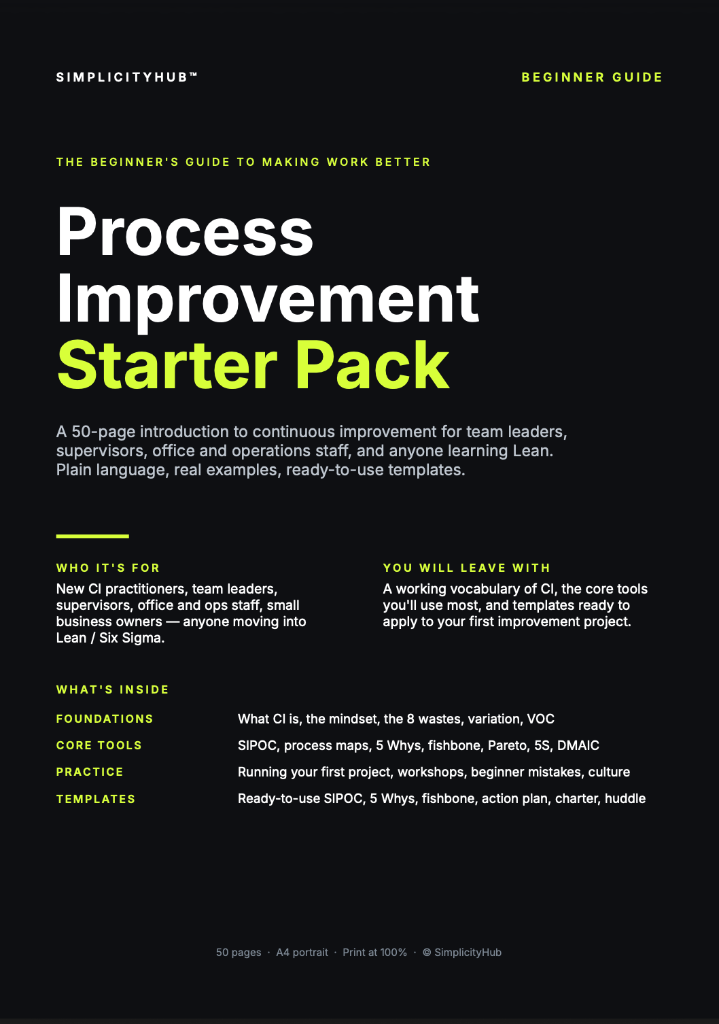
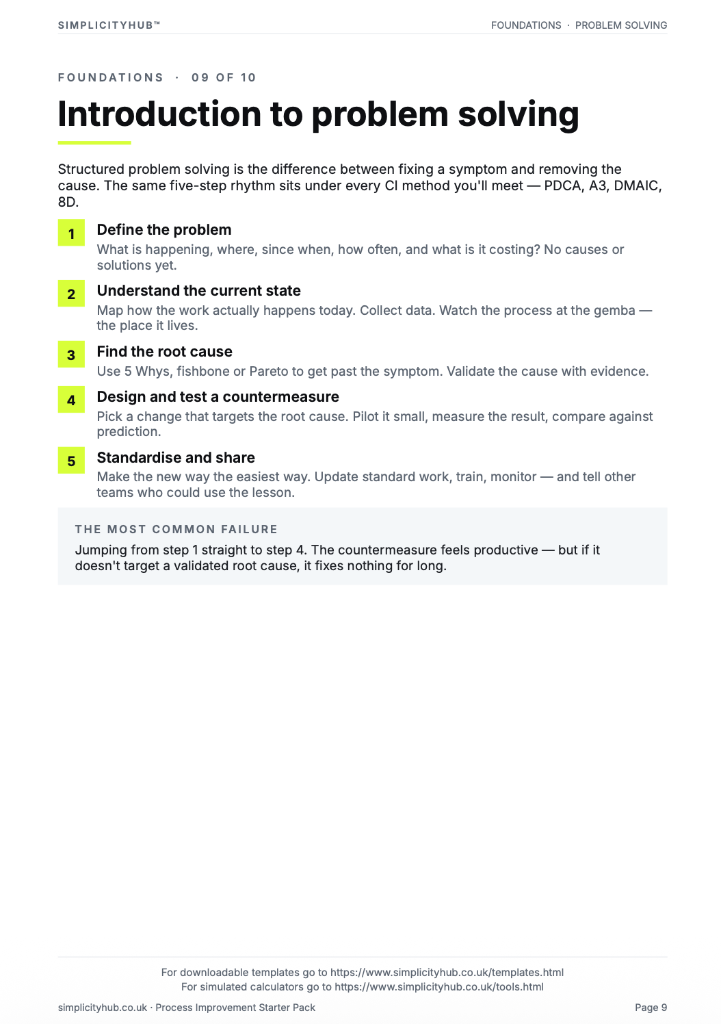
Process Improvement Starter Pack
A starter pack for identifying improvement opportunities, measuring baselines and planning action.
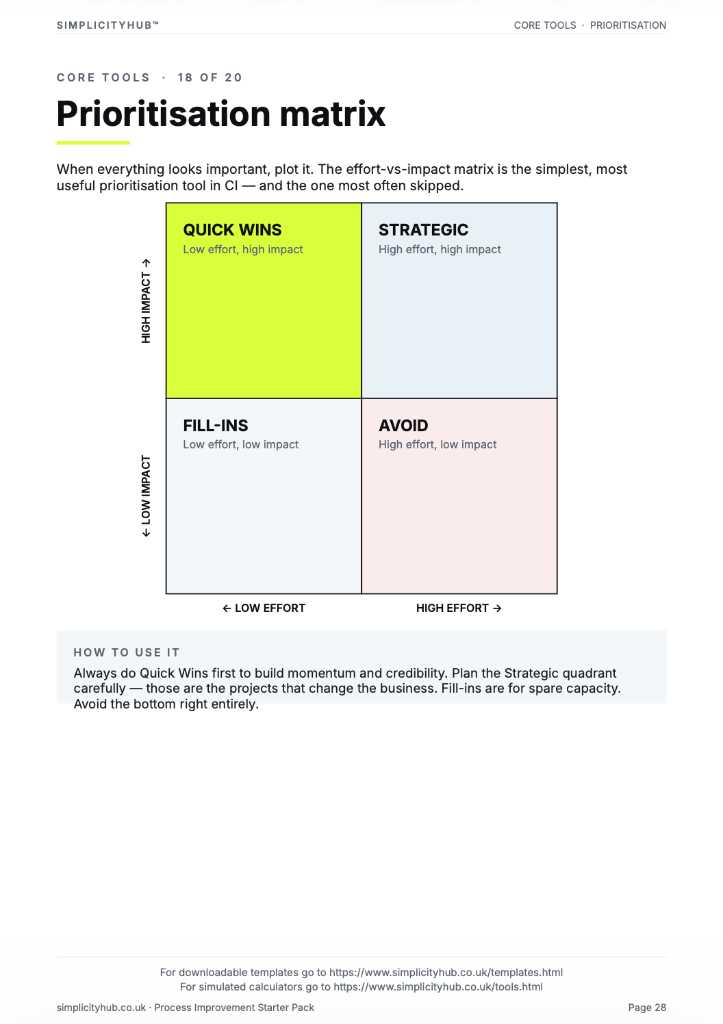
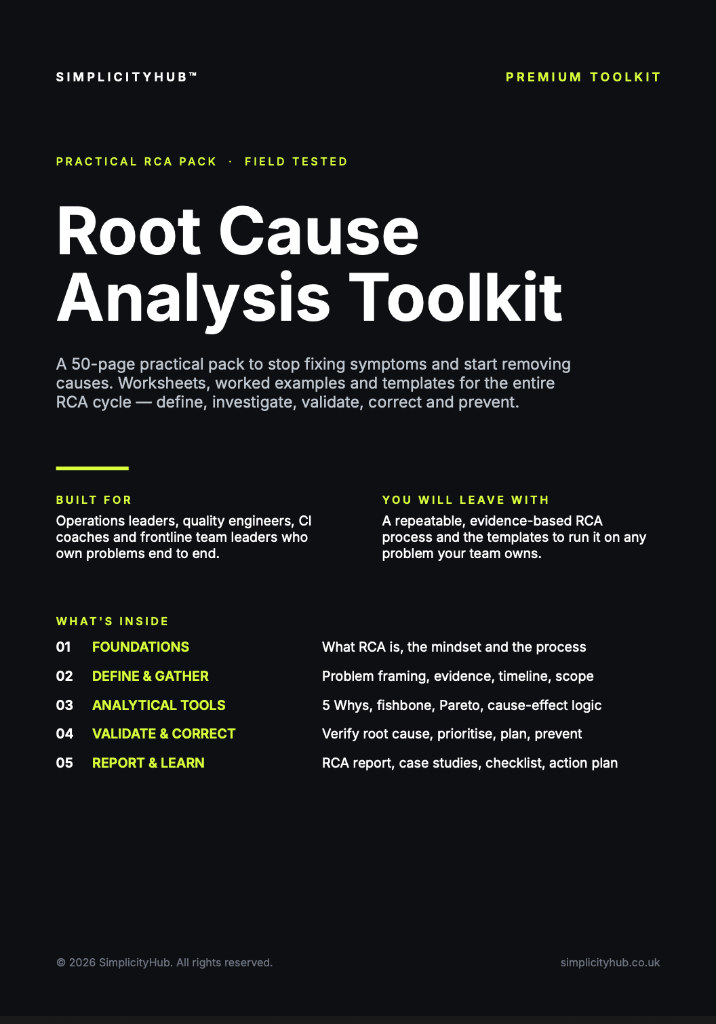
Root Cause Analysis Toolkit
A practical RCA toolkit for defining problems, finding causes, validating evidence and creating action.
A3 Template Pack
A clean A3 problem-solving pack for concise, visual improvement thinking and follow-through.