
What is a Visual Management Board Template?
A Visual Management Board Template provides the layout and content structure for a physical or digital board that displays team performance, daily targets, issues and actions in real time.
When to use a Visual Management Board Template
Use it in the Control phase when handing over to the process owner. Set the board up before go-live so the team is already using it as part of their daily routine from day one.
Who should use a Visual Management Board Template
- Team leaders and supervisors — running daily stand-up meetings and tracking team performance in real time
- Process owners — maintaining visibility of process health across their area
- Black Belts and Green Belts — setting up the ongoing management system as part of Control phase handover
- Operations and site managers — conducting Gemba walks and tier reviews using live performance data
Watch: a quick explainer
New to this? This short video walks you through why visual management boards work — a helpful primer before you download and use the template.
How to use a Visual Management Board — step by step
-
1Write the problem statement at the top
Start with a clear, factual problem statement. 'Machine stopped' or 'Customer received wrong item' — specific, observable, factual. Vague problems produce vague root causes.
-
2Ask 'Why did this happen?' — Why 1
Write down the first-level cause. This is usually a symptom or a direct cause — not yet the root. Examples: 'Machine overheated', 'Wrong item was picked'.
-
3Ask 'Why did that happen?' — Why 2
Challenge the previous answer. Keep the team focused on causes, not blame. If the answer is 'human error', push further — why did the human make the error?
-
4Continue to Why 3, 4 and 5
Keep going until you reach a cause that is systemic — a missing process, a failed control, a gap in training or a design flaw. The number five is a guide, not a rule.
-
5Check the logic by reading upward
Read the chain back to front: 'Because of X, Y happened, which caused Z.' If the logic holds, you have a valid chain. If it breaks, revisit the step where it breaks.
-
6Identify the actionable root cause
The root cause is the deepest level where a corrective action can prevent recurrence. Document it clearly — this feeds your Improve phase solution design.
-
7Validate before acting
Do not jump to solution immediately. Check whether data or observation confirms the root cause is real and significant before committing resource to fixing it.
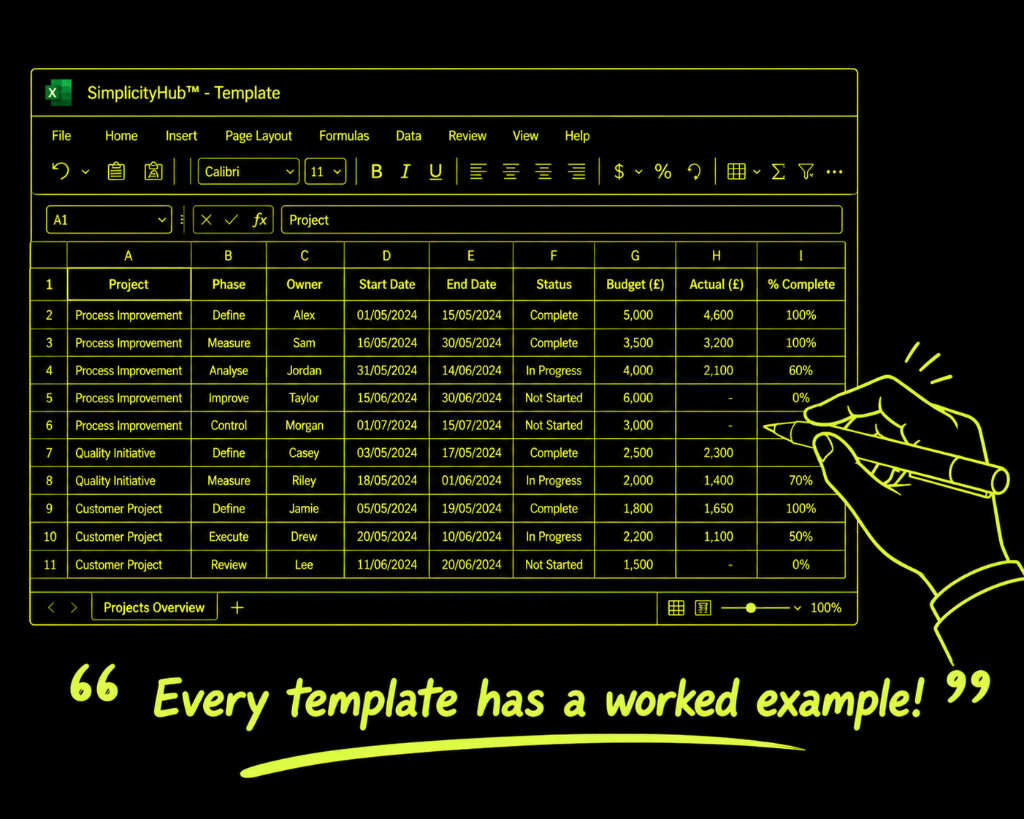
Worked example — Warehouse Operations Board
A logistics team set up a 6-section board covering safety incidents, pick accuracy, dispatch on-time, cost per order, team attendance and open improvement actions — reviewed in a 10-minute daily stand-up at shift start.
Common mistakes — and how to avoid them
Too much information on the board. A cluttered board gets ignored. Limit to the 8–12 metrics and actions that genuinely need daily attention.
Not updating the board consistently. A board that is sometimes updated and sometimes not loses credibility fast. Assign owners and make updating a non-negotiable part of the shift routine.
No improvement actions section. A board that only shows metrics without a space for open improvement actions becomes passive. Include an actions tracker with owners and dates.
Using the board to blame individuals. The board exists to improve the process, not to shame people. A culture of blame kills engagement and drives data falsification.
Tips for getting better results
Start the board before go-live. Don't wait until the project closes. Get the team using the board during the Improve phase pilot so it becomes habit before handover.
Keep the stand-up to 10–15 minutes. Longer stand-ups become meetings. Use a timer and a structured agenda: yesterday's performance, today's plan, open issues, actions.
Evolve the board as the process matures. Remove consistently green metrics and add new ones as your focus shifts. The board should always reflect your current priorities.
Frequently asked questions
What information should go on it?
Safety, quality, delivery, cost, and people metrics. Current performance vs target, trend, and outstanding actions.
What makes a good board?
Information is current, relevant, and actionable. Colour coding makes status immediately visible.
Physical vs digital?
Physical is better for co-located teams. Digital suits distributed teams. Discipline matters more than the medium.
Who is responsible for updating it?
The team leader or process owner. Assign a specific owner for each section.
Advanced Toolkit Packs — available now
Structured, ready-to-use template packs designed for real improvement work. Pick the pack that matches your project and get started straight away.
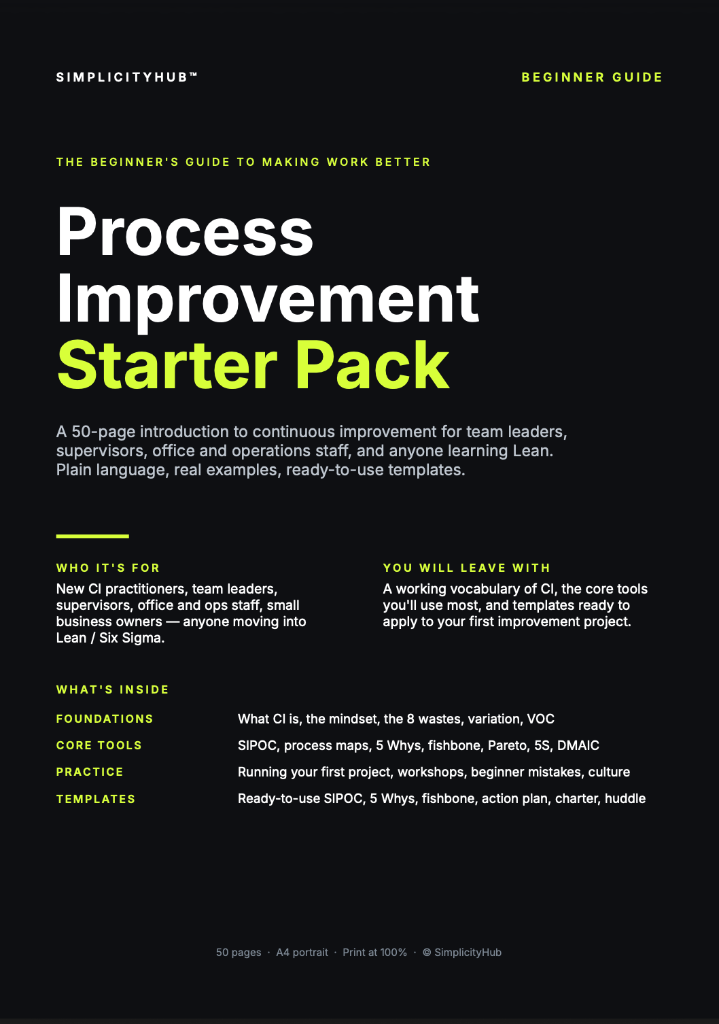
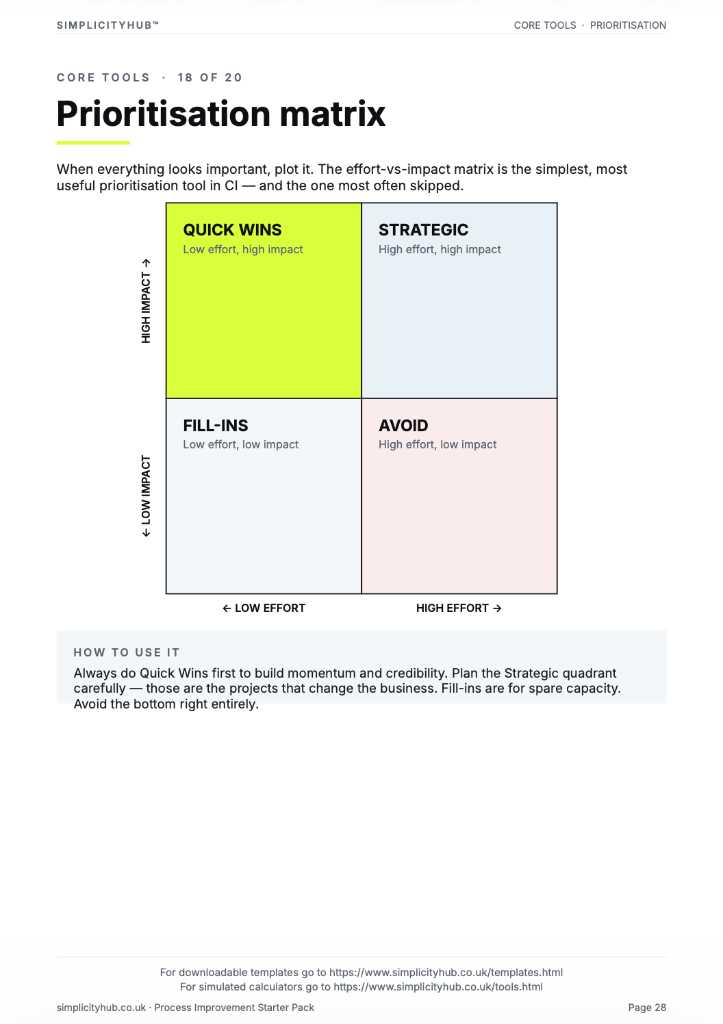
Process Improvement Starter Pack
A starter pack for identifying improvement opportunities, measuring baselines and planning action.
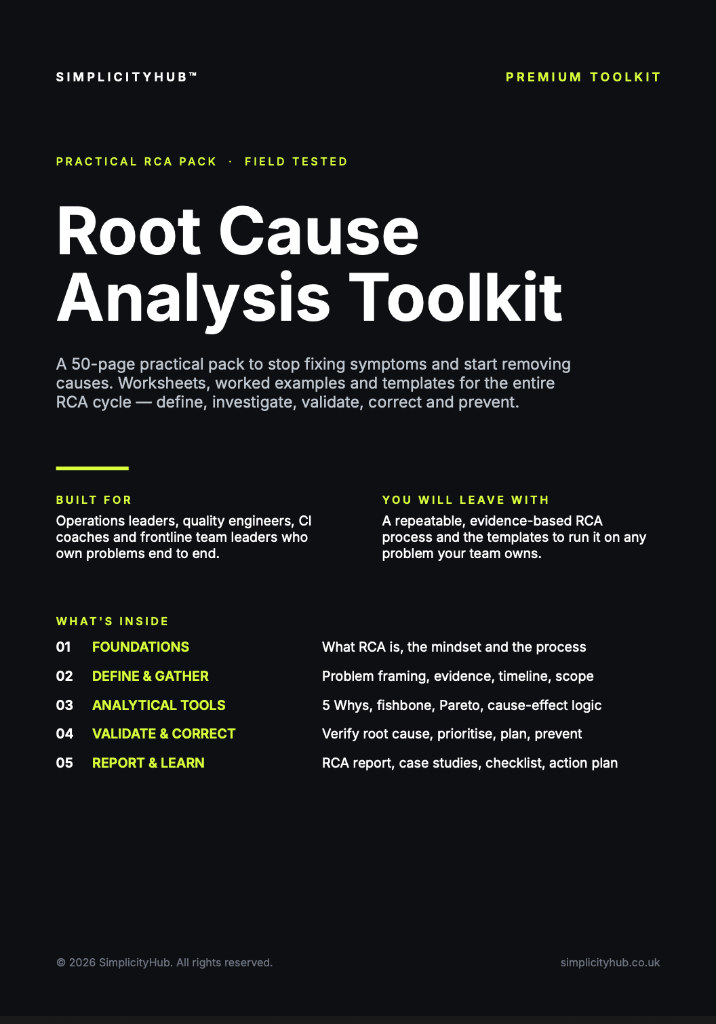
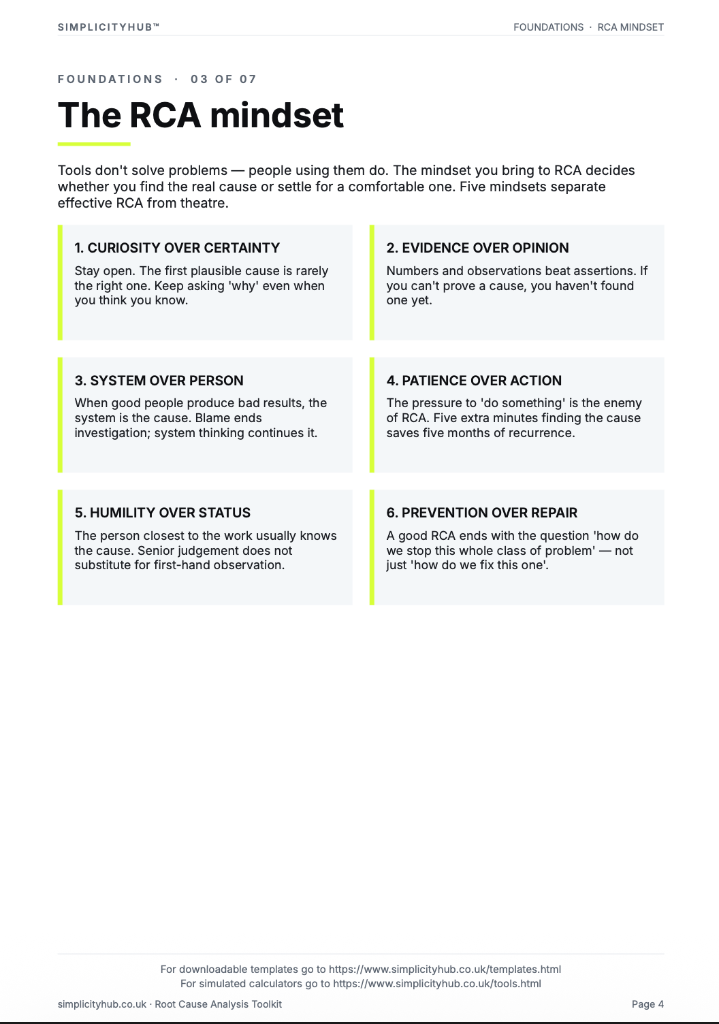
Root Cause Analysis Toolkit
A practical RCA toolkit for defining problems, finding causes, validating evidence and creating action.
A3 Template Pack
A clean A3 problem-solving pack for concise, visual improvement thinking and follow-through.