What is a Impact vs Effort Matrix Template?
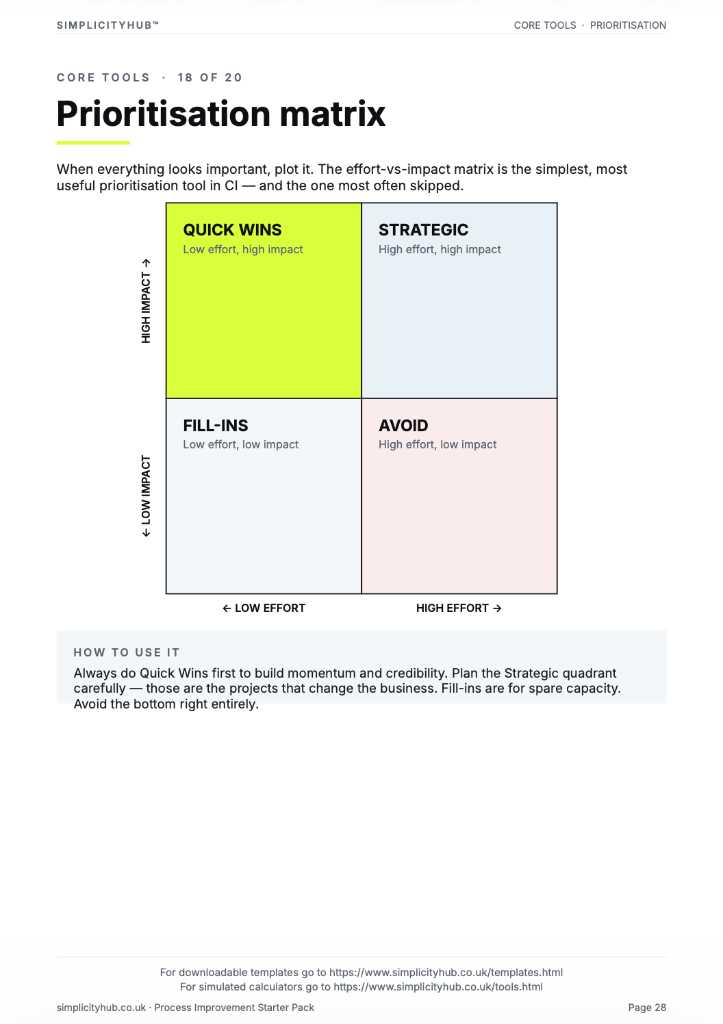
The Impact vs Effort matrix — also called a 2x2 prioritisation matrix or effort/impact grid — is a simple decision tool that plots potential solutions or improvement ideas on a grid based on two dimensions: the impact they would deliver and the effort required to implement them.
The grid produces four quadrants: Quick Wins (high impact, low effort), Major Projects (high impact, high effort), Fill-Ins (low impact, low effort) and Avoid (low impact, high effort). This makes prioritisation immediate and visual.
It is used in the Improve phase to prioritise solutions before committing resource, and in Kaizen events to sort a brainstorm list of ideas into actionable categories.
When to use a Impact vs Effort Matrix Template
Use the Impact vs Effort matrix when you have more ideas or solutions than you have resource to implement them all. Use it when:
- A solution brainstorm has produced a long list and you need to prioritise
- You want to identify quick wins to deliver early results while larger solutions are developed
- The team needs to have a structured conversation about where to focus limited resource
- A sponsor is asking what will deliver the most value in the shortest time
Who should use a Impact vs Effort Matrix Template
- All belt levels — the matrix requires no statistical knowledge and works at any level
- Kaizen Event Facilitators — to sort idea lists from brainstorm sessions
- Green Belts and Black Belts — as part of the Improve phase solution selection process
- Operations and CI Managers — to prioritise a portfolio of improvement ideas from the team
Vote yes and we’ll prioritise a quick walkthrough showing you exactly how to use it.
How to use the Impact vs Effort Matrix
Plot ideas as a team — not alone. The discussion about where to place each idea is often more valuable than the final grid. Disagreements surface assumptions and reveal different stakeholder perspectives.
How to use the Impact vs Effort Matrix — step by step
-
1Define what 'Impact' means for your context
Before plotting, agree what impact means: customer satisfaction improvement, cost saving, time saving, risk reduction? The definition affects where ideas land on the grid. Make it explicit.
-
2Define what 'Effort' means
Effort includes time, cost, complexity and disruption. Agree a rough scale: Low effort = can be done by the team in days or weeks with existing resource. High effort = requires significant investment, external support or major process change.
-
3List all candidate solutions
Write each solution on a sticky note — one idea per note. Use the outputs of your brainstorm, solution list or cause-and-effect analysis.
-
4Plot each idea on the grid as a team
Working together, place each sticky note on the grid. Do not score individually and average — the team discussion is where value is created. Aim for relative positioning, not precise measurement.
-
5Identify the Quick Wins
High impact, low effort items are your priority. These should be implemented first — they build momentum, demonstrate progress and generate early results while larger solutions are developed.
-
6Plan the Major Projects
High impact, high effort items require proper planning — resource allocation, project planning, sponsor approval. Add these to your project plan with realistic timelines.
-
7Challenge the 'Avoid' quadrant
Low impact, high effort items should be explicitly de-prioritised. If any of these are currently underway, stopping them frees up resource for higher-value work.
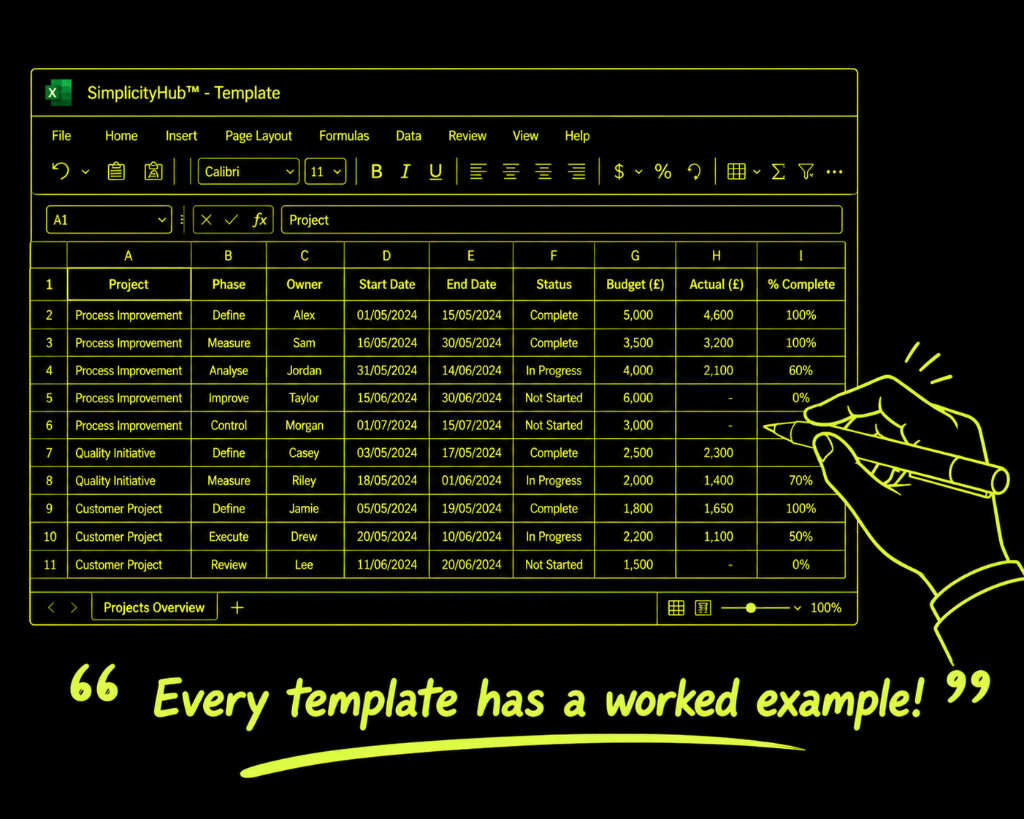
Worked example — Customer Service Improvement Ideas
A completed Impact vs Effort matrix from a customer service improvement project, with 12 ideas plotted across the four quadrants and three quick wins identified for immediate action.
Common mistakes — and how to avoid them
Rating everything as high impact. If every idea is rated High Impact, the matrix provides no prioritisation value. Challenge the team to be discriminating — not every idea can be in the top category.
Doing it alone without the team. One person's view of impact and effort will miss perspectives from operations, finance and IT. The matrix is a facilitated team exercise.
Never revisiting it. Effort and impact estimates change as more is learned. A solution that seemed low effort may reveal complexity during planning. Revisit the matrix before committing to implementation.
Treating the quadrant boundaries as precise. The grid is a relative prioritisation tool, not a precise measurement. Ideas near the boundary between quadrants should be discussed, not mechanically categorised.
Tips for getting better results
Use it to communicate priorities to the sponsor. A completed Impact vs Effort matrix is a clear, visual way to show a sponsor which solutions you are pursuing and why. It demonstrates structured decision-making.
Do a second pass weighting by risk. After the initial plot, do a second pass asking: which high-impact solutions carry the most implementation risk? Risk can shift a solution from Quick Win to Major Project if it is not considered.
Link quick wins to the 30-day action plan. Any solution in the Quick Win quadrant should have an owner and a completion date within 30 days. If it cannot be implemented quickly, it is not really a quick win.
Download the Impact vs Effort Matrix Template
A clean, editable Excel template for immediate use — structured, professional and ready to fill in.
Frequently asked questions
What are the four quadrants?
Quick wins (high impact, low effort), Major projects (high impact, high effort), Fill-ins (low impact, low effort), Time wasters (low impact, high effort).
How do I score objectively?
Use a defined scale with clear criteria. Define the scale before scoring.
Who should score?
The team. Use anonymous voting to avoid anchoring, then discuss large gaps.
What do I do with low-impact ideas?
Park them in the CI log for future consideration.
Advanced Toolkit Packs — available now
Structured, ready-to-use template packs designed for real improvement work. Pick the pack that matches your project and get started straight away.
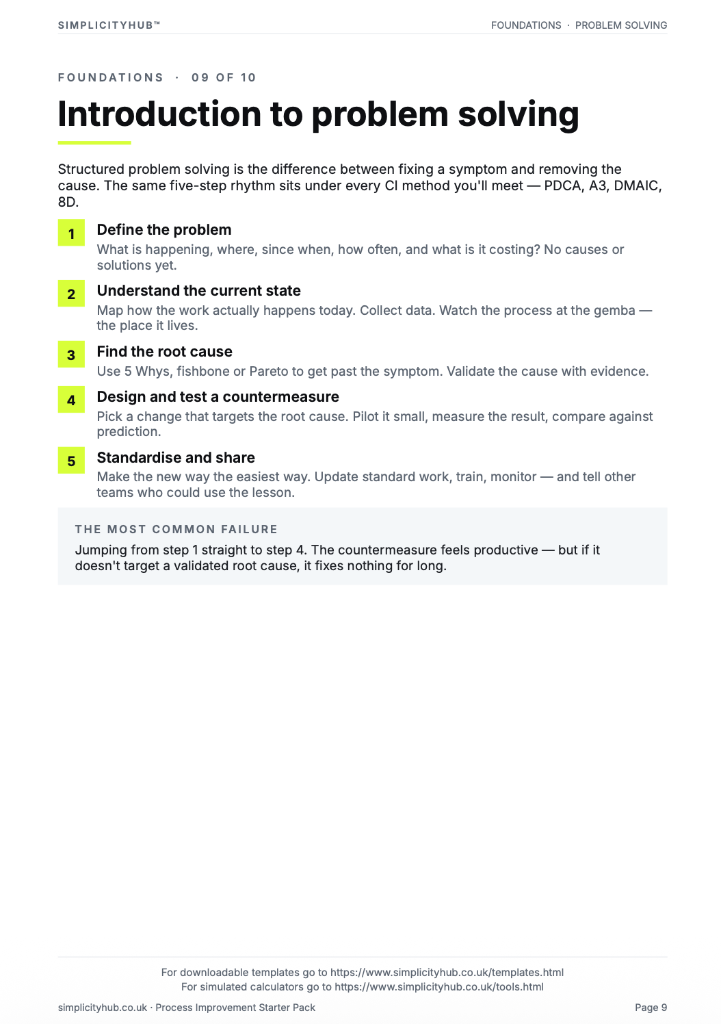
Process Improvement Starter Pack
A starter pack for identifying improvement opportunities, measuring baselines and planning action.
Root Cause Analysis Toolkit
A practical RCA toolkit for defining problems, finding causes, validating evidence and creating action.
A3 Template Pack
A clean A3 problem-solving pack for concise, visual improvement thinking and follow-through.