What is a Solution Prioritisation Matrix Template?
A Solution Prioritisation Matrix Template provides a structured framework for ranking a list of potential improvements by their relative impact and effort, enabling the team to focus on the highest-value, most achievable actions first.
When to use a Solution Prioritisation Matrix Template
Use it in the Improve phase after generating a list of potential solutions — especially when you have more ideas than capacity to implement them all. It helps the team agree on priorities before building the implementation plan.
Who should use a Solution Prioritisation Matrix Template
- Green Belts and Black Belts — prioritising a solution list in the Improve phase before implementation planning
- Process owners and team leaders — making structured decisions about where to focus improvement resource
- Kaizen event teams — rapidly ranking and selecting solutions during a focused improvement sprint
- CI programme managers — prioritising improvement actions across a portfolio of projects and teams
Vote yes and we’ll prioritise a quick walkthrough showing you exactly how to use it.
How to use a Solution Prioritisation Matrix — step by step
- 1List all candidate solutions
Write every potential solution from the idea generation or brainstorm session. Include all viable options before filtering.
- 2Define the impact rating criteria
What does 'high impact' mean for this problem? Define it in terms of customer benefit, cost reduction, quality improvement or risk reduction.
- 3Define the effort rating criteria
What does 'high effort' mean? Include time to implement, resource required, cost, complexity and approvals needed.
- 4Rate each solution on impact and effort
Use a simple 3-point scale: High/Medium/Low for both dimensions. Rate independently before discussing to avoid anchoring bias.
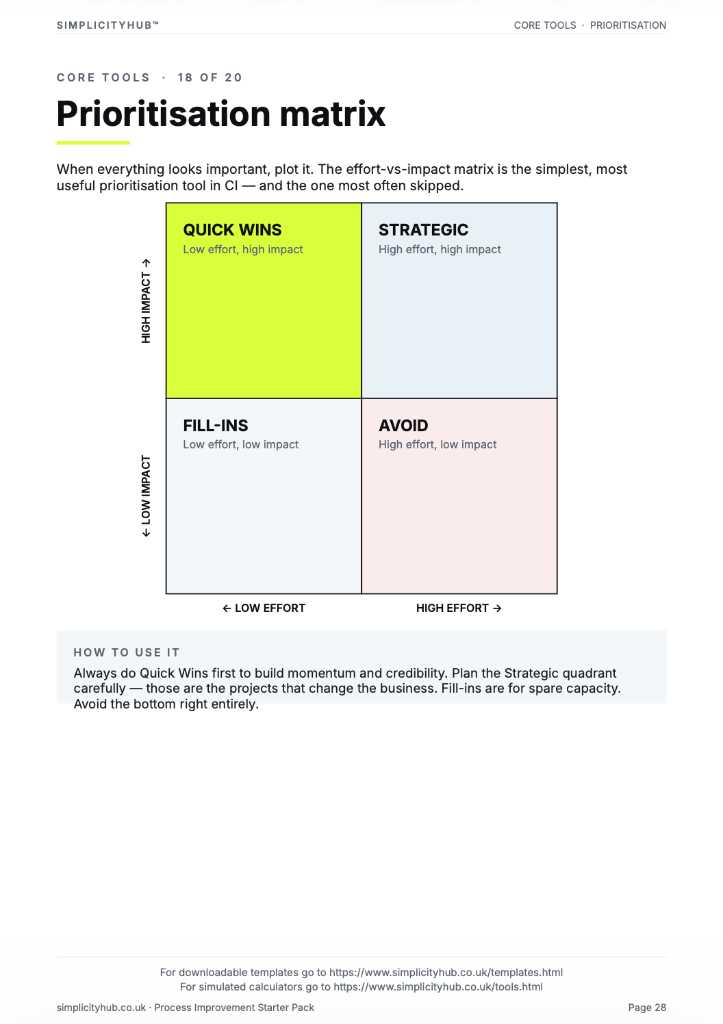
- 5Plot on a 2x2 matrix
Quadrants: Quick Wins (High Impact, Low Effort), Major Projects (High Impact, High Effort), Fill-Ins (Low Impact, Low Effort), Avoid (Low Impact, High Effort).
- 6Prioritise Quick Wins first
Implement High Impact, Low Effort solutions immediately. They deliver value and build momentum.
- 7Plan Major Projects carefully
High Impact, High Effort solutions are worth pursuing but need proper resourcing and planning before committing.
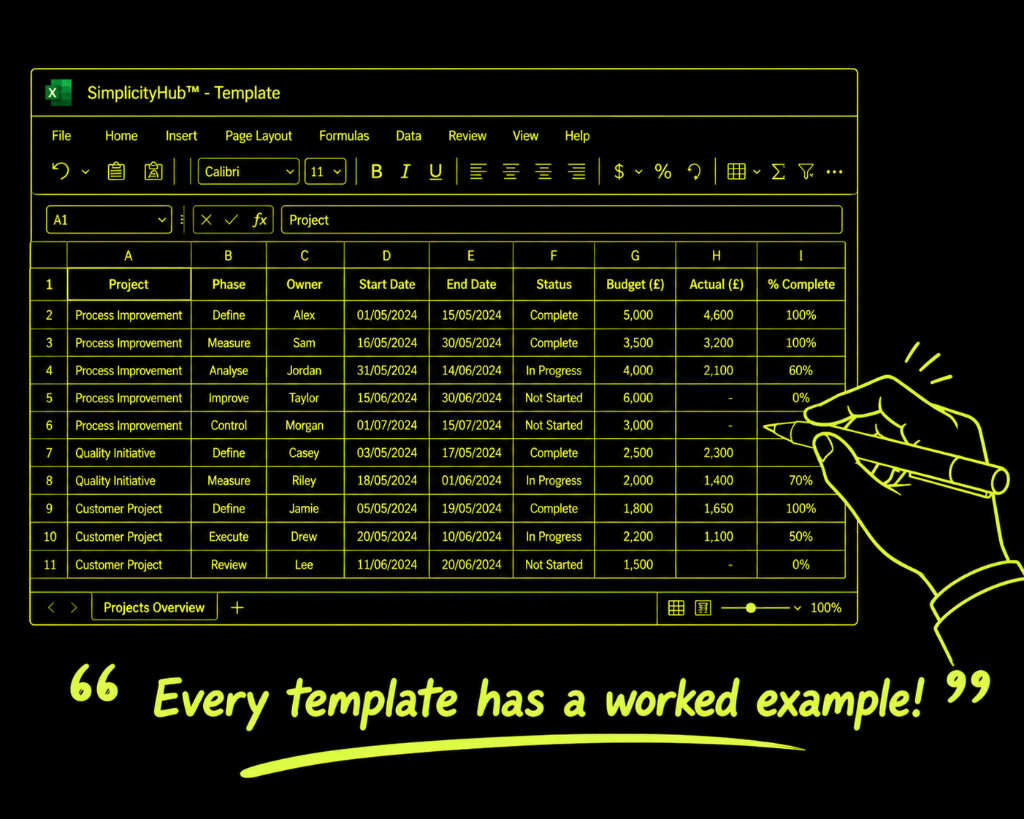
Worked example — Customer Service Improvement Sprint
A customer service team rated 14 solutions from a Kaizen event — identifying 5 Quick Wins implemented in week 1 (reducing call handling time by 18%), 2 Major Projects planned for the next quarter and 7 lower-priority items deferred.
Common mistakes — and how to avoid them
Rating impact and effort in isolation from each other. Impact and effort ratings can be influenced by knowing the other dimension. Rate them separately before combining.
Including solutions that don't address the root cause. A High Impact, Low Effort solution that doesn't address the root cause will not hold. Apply the root cause filter before prioritisation.
Treating the matrix as final. The matrix is a decision aid, not a decision maker. Use it to structure the conversation — not to replace judgment.
Overloading the Quick Win quadrant. If more than 5–6 solutions are rated as Quick Wins, the ratings may be too optimistic. Calibrate the definitions more tightly.
Tips for getting better results
Do the rating independently first. Ask each team member to rate solutions independently before revealing results. The spread in ratings is often as informative as the averages.
Revisit after the first wave of Quick Wins. After implementing Quick Wins, re-rate the remaining solutions — the context often changes after early wins.
Use sticky notes on a 2x2 grid for team sessions. A physical 2x2 grid with moveable sticky notes makes the prioritisation visible and interactive for the whole team.
Frequently asked questions
What criteria should I use?
Impact on the problem, cost, time to implement, risk, sustainability, and customer benefit — weighted by importance.
How do I set weightings?
Distribute 100 points across criteria with sponsor agreement before scoring.
Who should score?
The team. Independent scoring followed by discussion of large gaps.
What if the top scorer is not feasible?
Feasibility should be a criterion. If not included, add it and re-score.
Advanced Toolkit Packs — available now
Structured, ready-to-use template packs designed for real improvement work. Pick the pack that matches your project and get started straight away.
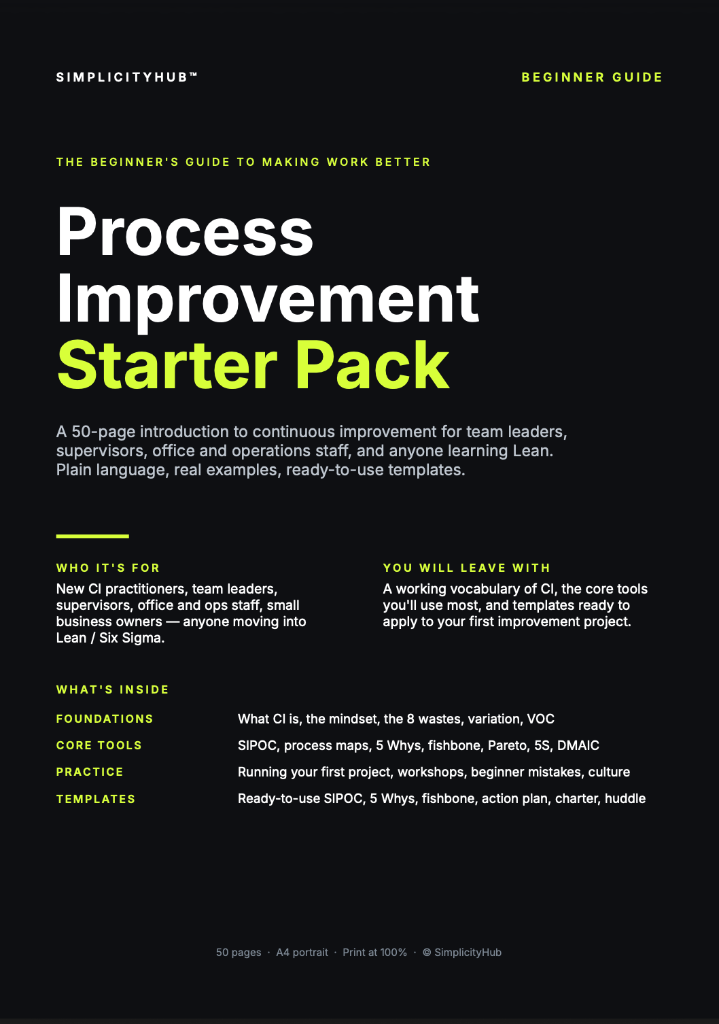
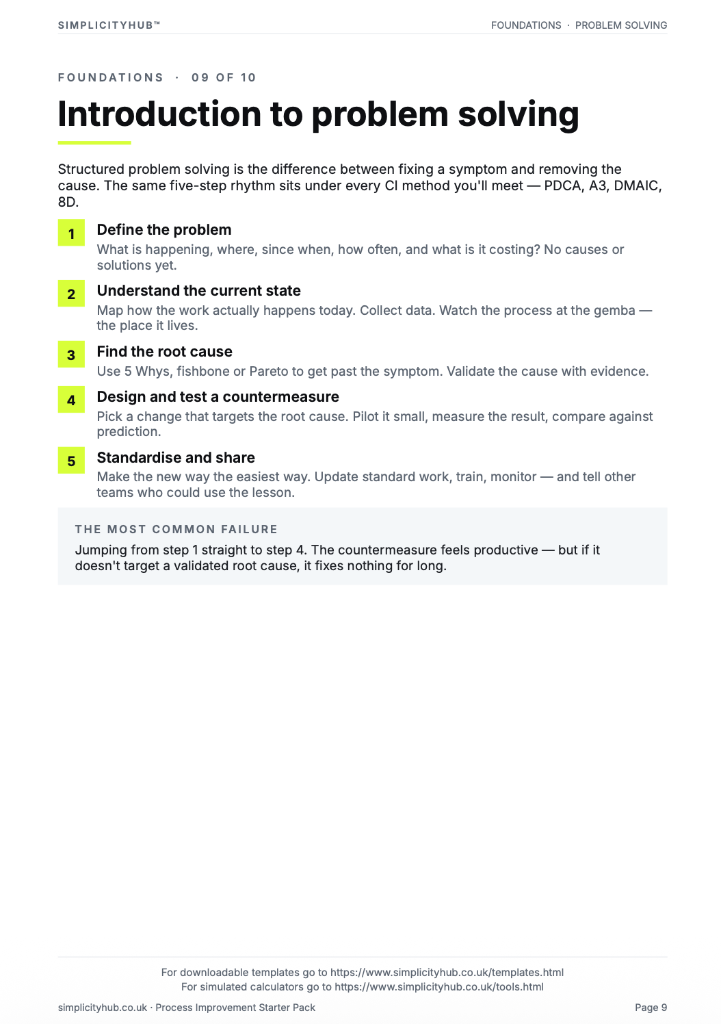
Process Improvement Starter Pack
A starter pack for identifying improvement opportunities, measuring baselines and planning action.
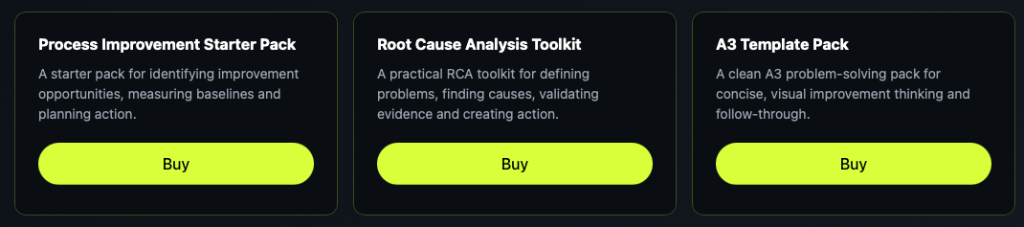
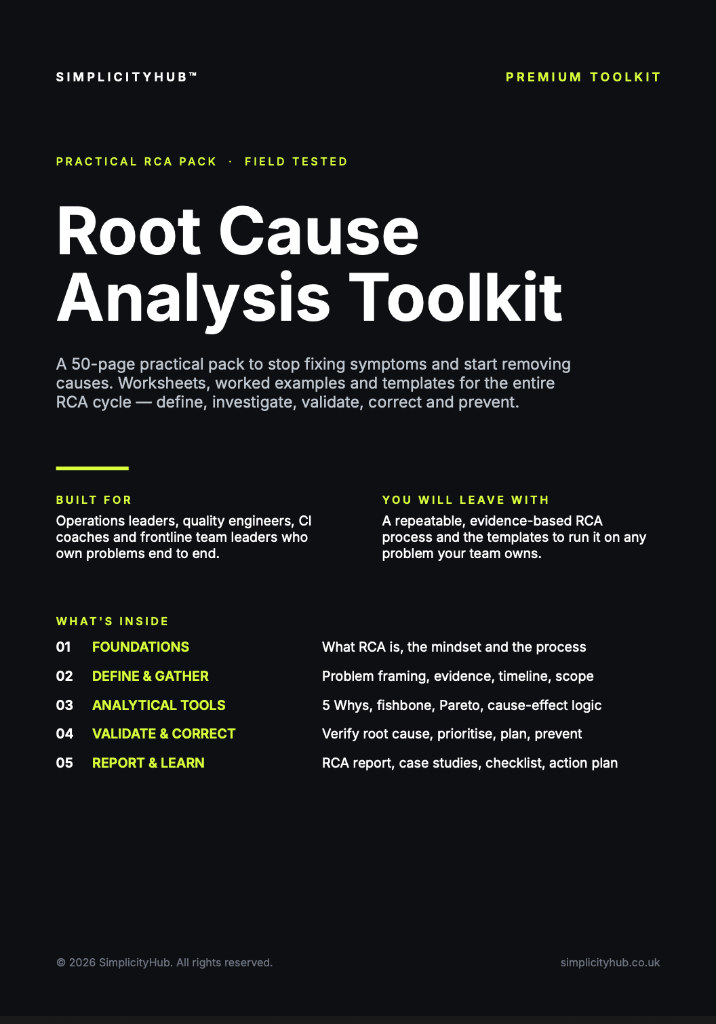
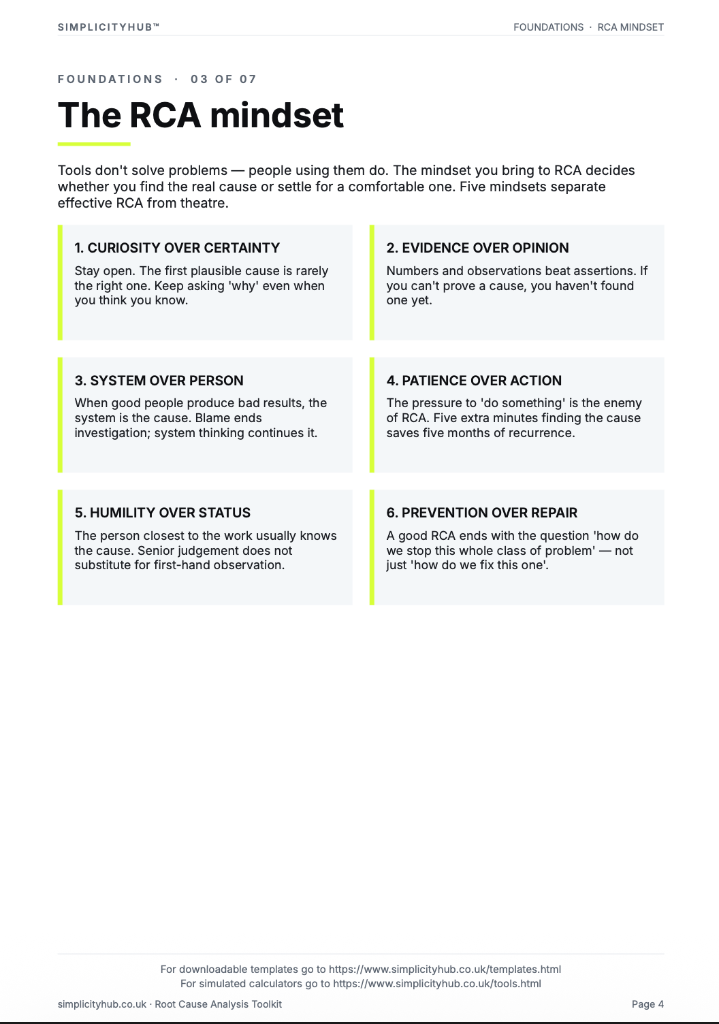
Root Cause Analysis Toolkit
A practical RCA toolkit for defining problems, finding causes, validating evidence and creating action.
A3 Template Pack
A clean A3 problem-solving pack for concise, visual improvement thinking and follow-through.