
What is a Lead Time Calculator Template?
A Lead Time Calculator Template provides a structured method for calculating the total time from customer request to delivery — broken down into value-added time, non-value-added time and wait time at each process step. It makes the true cost of delay visible.
When to use a Lead Time Calculator Template
Use it in the Measure phase to establish baseline lead time and process efficiency, and in the Improve phase to calculate the projected lead time reduction from proposed changes. It is a core input to Value Stream Mapping.
Who should use a Lead Time Calculator Template
- Black Belts and Green Belts — calculating baseline lead time and process efficiency during the Measure phase
- Operations managers — understanding the components of lead time to prioritise improvement effort
- Value stream mapping teams — quantifying wait and delay time at each step to support future state design
- Customer-facing teams — understanding what drives the lead time they are communicating to customers
Vote yes and we’ll prioritise a quick walkthrough showing you exactly how to use it.
How to use a Lead Time Calculator — step by step
- 1Map every step from request to delivery
List all process steps in sequence, including wait states, handoffs and queues — not just the active work steps.
- 2Record the cycle time for each step
The time the step actively takes when work is being done. Observe and measure — don't use estimates.
- 3Record the wait time between steps
The time work sits in a queue or inbox before the next step begins. This is often the largest component of lead time.
- 4Calculate process efficiency
Process efficiency = (total value-added time ÷ total lead time) × 100. Typical transactional processes are 5–25% efficient.
- 5Identify the longest wait times
The waits with the largest total time are the highest-priority improvement targets.
- 6Model the improved lead time
Remove or reduce identified waits in the model and calculate the new total lead time. This quantifies the opportunity.
- 7Validate with actual order tracking
Track 5–10 real orders through the process to validate your calculated lead time against reality.
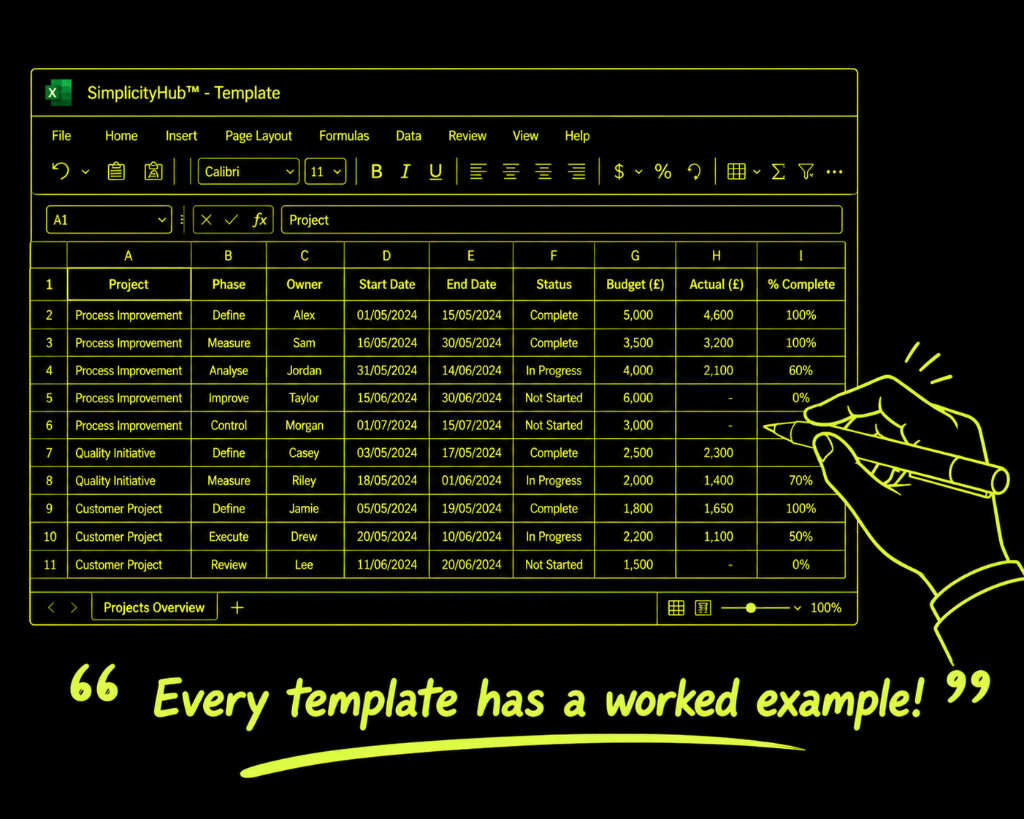
Worked example — Purchase Order Processing
A finance team calculated a total purchase order lead time of 9.4 days — of which only 47 minutes was active work time (0.8% process efficiency). Eliminating three approval wait steps reduced lead time to 2.1 days.
Common mistakes — and how to avoid them
Measuring only active work time. Most lead time is waiting, not working. Including every wait, queue and handoff is essential for an accurate picture.
Using estimated times. Estimated times are almost always optimistic. Measure actual times using direct observation or order tracking data.
Not segmenting by order type. Complex orders often have very different lead times than simple ones. Segment your analysis to avoid misleading averages.
Only measuring average lead time. Customers experience the worst cases, not the average. Measure the range and 90th percentile as well as the mean.
Tips for getting better results
Use a swim lane diagram alongside the calculator. A visual timeline showing active work vs wait time at each step communicates the opportunity far more powerfully than a table of numbers.
Track a sample of real items end-to-end. Timestamping 10–20 real orders as they flow through the process gives you actual lead time data that no spreadsheet calculation can match.
Express efficiency as a percentage. A 4% process efficiency figure is a much more compelling argument for change than '9 days lead time'. Use both.
Frequently asked questions
What is lead time?
Total elapsed time from when a request enters the process to when it is delivered — including all waiting and non-value-adding time.
Lead time vs cycle time?
Cycle time is how long one step takes. Lead time is the total end-to-end time. Lead time is almost always much longer.
What percentage is typically value-adding?
5-20% in most processes. The rest is waiting — enormous improvement potential exists without changing the actual work steps.
How do I measure it accurately?
Time-stamp entry and exit of real items. Avoid estimates from memory.
Advanced Toolkit Packs — available now
Structured, ready-to-use template packs designed for real improvement work. Pick the pack that matches your project and get started straight away.
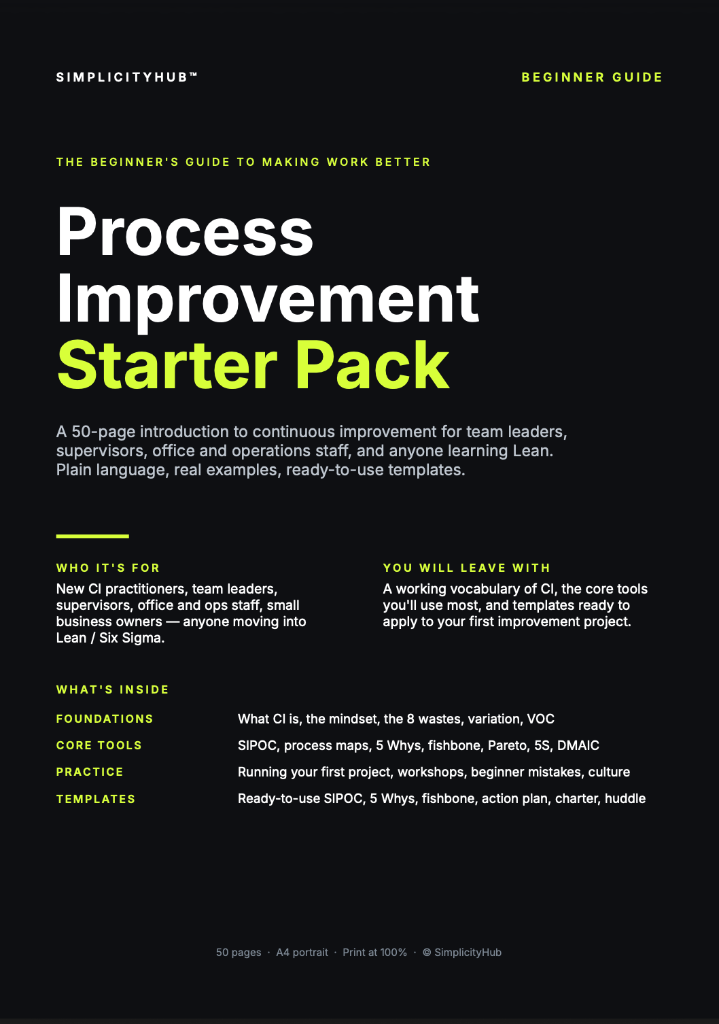
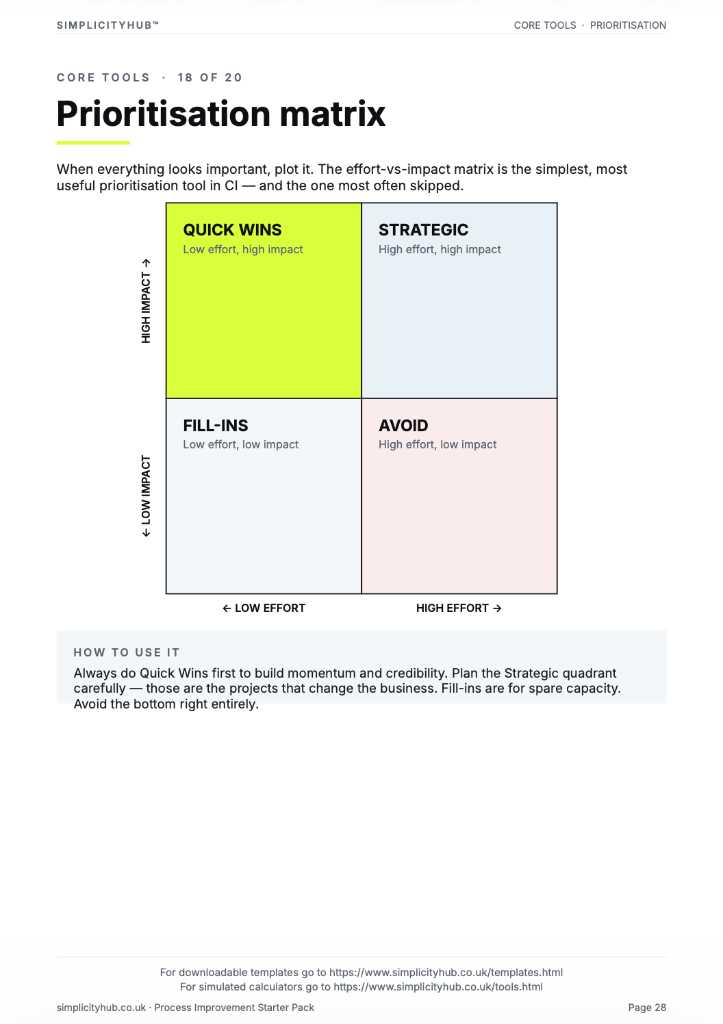
Process Improvement Starter Pack
A starter pack for identifying improvement opportunities, measuring baselines and planning action.
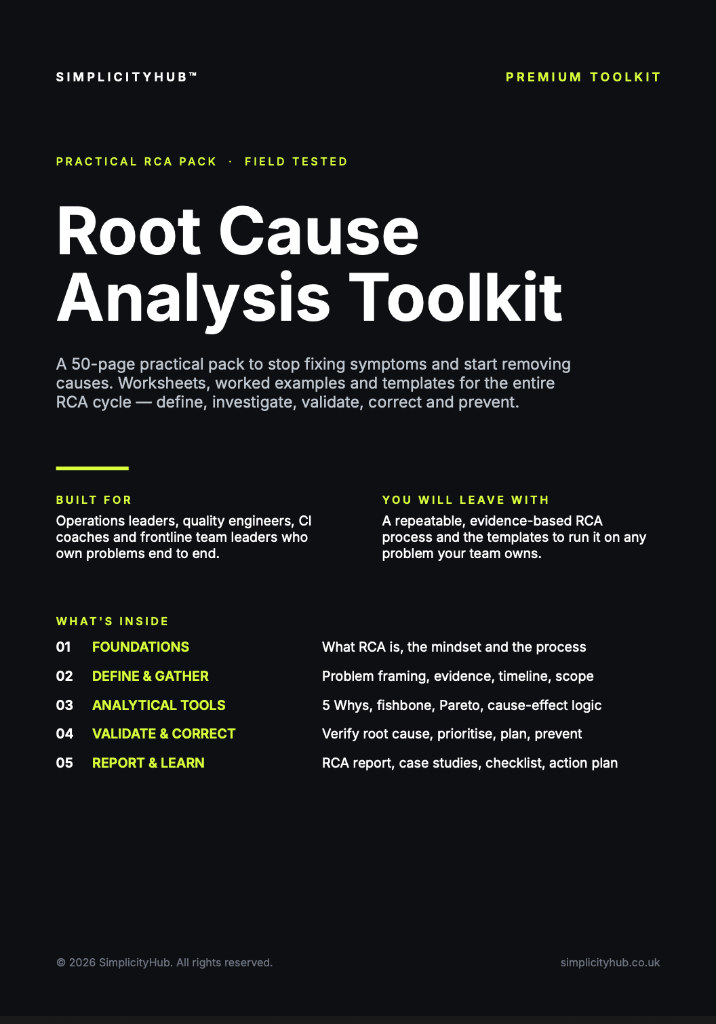
Root Cause Analysis Toolkit
A practical RCA toolkit for defining problems, finding causes, validating evidence and creating action.
A3 Template Pack
A clean A3 problem-solving pack for concise, visual improvement thinking and follow-through.