What is a Throughput Tracker Template?
A Throughput Tracker Template provides a structured daily or weekly log for recording the volume of output a process produces against its target. It makes throughput performance visible, enables trend analysis and identifies when the process is falling behind demand.
When to use a Throughput Tracker Template
Use it in the Control phase as part of the ongoing process monitoring toolkit, and in the Measure phase to establish baseline throughput performance. Review it in daily stand-ups to catch shortfalls before they become backlogs.
Who should use a Throughput Tracker Template
- Team leaders and supervisors — monitoring daily throughput against targets and adjusting resourcing in response
- Operators — self-recording throughput at regular intervals throughout their shift
- Operations managers — reviewing throughput performance across multiple lines or teams
- Black Belts and process owners — using throughput data as a key input to capacity analysis and improvement measurement
Vote yes and we’ll prioritise a quick walkthrough showing you exactly how to use it.
How to use a Throughput Tracker — step by step
- 1Define the output unit
What constitutes one unit of throughput for this process? Define it precisely and consistently.
- 2Set the daily or shift throughput target
The target should be derived from takt time and available capacity — not from historical averages.
- 3Set recording intervals
Record throughput at regular intervals (hourly or per shift) rather than just at end of day. Intra-day data enables real-time response.
- 4Record actual throughput at each interval
Log actual output at each time interval. Note any factors affecting throughput (downtime, staffing, materials issues).
- 5Calculate the running shortfall or surplus
Track cumulative actual vs cumulative target throughout the day. A growing gap is an early warning of a problem.
- 6Investigate shortfalls immediately
Any interval where actual throughput is more than 10% below target should trigger an immediate investigation.
- 7Summarise daily and weekly trends
Calculate daily and weekly totals and plot against target. Use a run chart to identify trends.
Worked example — Print Room Throughput Tracking
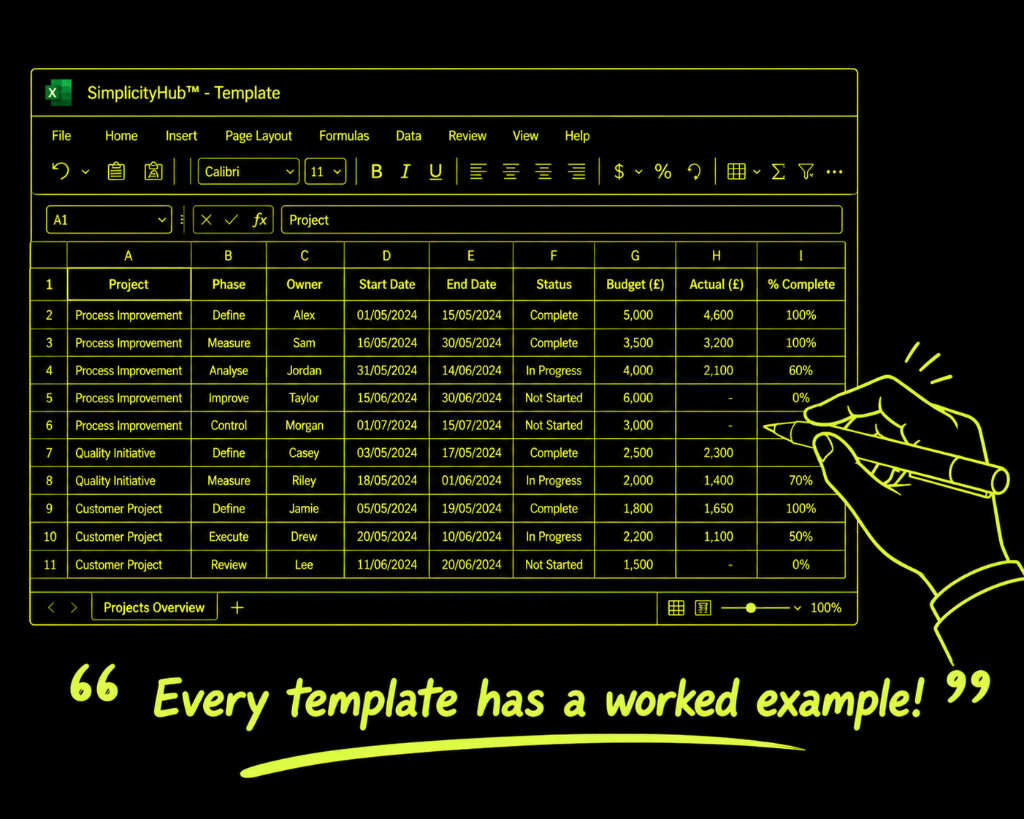
A print room team tracked hourly throughput against a 120-unit-per-hour target — identifying that throughput consistently dropped to 70 units in hours 2 and 6 due to a paper loading delay, which was eliminated by pre-staging stock at the machine.
Common mistakes — and how to avoid them
Only recording end-of-day totals. End-of-day data tells you what happened — it doesn't allow you to respond during the shift. Hourly tracking enables real-time intervention.
Setting targets from history instead of demand. A target set to match last month's average output may be below what is needed to meet demand. Targets must be derived from customer requirements.
Not investigating shortfalls. A tracker that records shortfalls but triggers no investigation is a logbook, not a management tool.
Recording only production — not quality. Throughput of defective output is not throughput. Track first-pass yield alongside volume.
Tips for getting better results
Display the tracker on the team board. Visible throughput data creates team accountability and allows everyone to see whether the shift is on track in real time.
Use colour coding for above/at/below target. Green/amber/red status at each interval makes performance visible without requiring anyone to calculate differences.
Link shortfalls to a response plan. Define in advance what happens when throughput falls below threshold — who acts, what they do, how fast. Don't leave it to improvisation.
Frequently asked questions
What is throughput?
The number of units completed in a given time period — actual output, not capacity.
What causes throughput to drop?
Increased defects requiring rework, bottlenecks becoming more constrained, unplanned downtime, or demand spikes.
How often should it be measured?
Match frequency to how quickly problems need detecting — hourly or daily for high-volume, weekly for slower processes.
Throughput vs efficiency?
Throughput is absolute output. Efficiency is output as a percentage of a reference. Both matter for different reasons.
Advanced Toolkit Packs — available now
Structured, ready-to-use template packs designed for real improvement work. Pick the pack that matches your project and get started straight away.
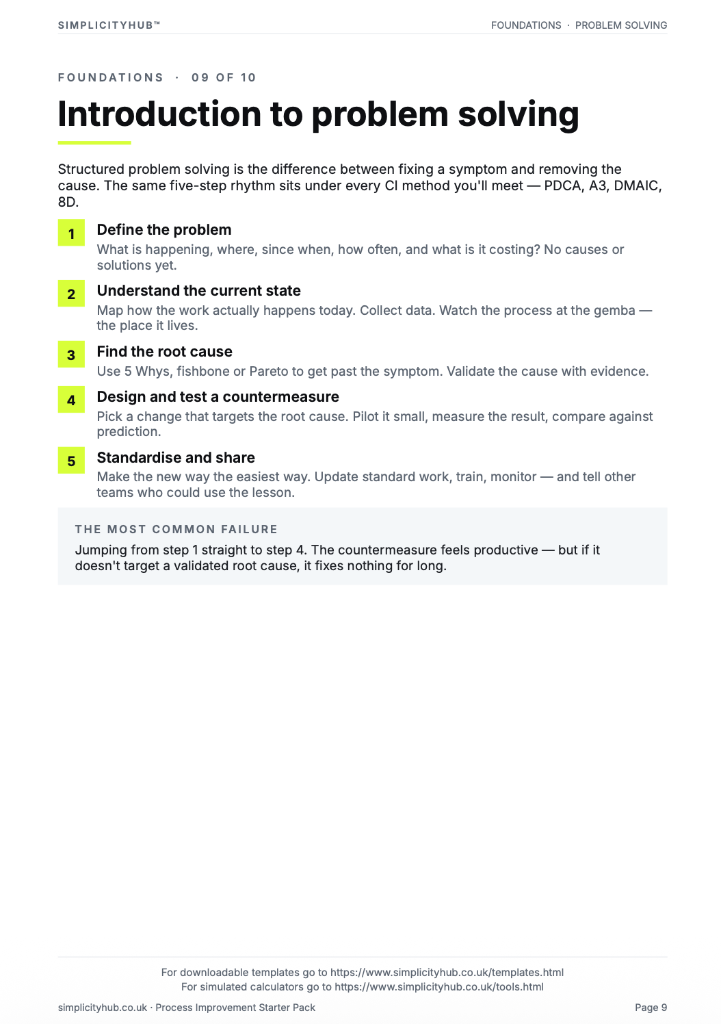
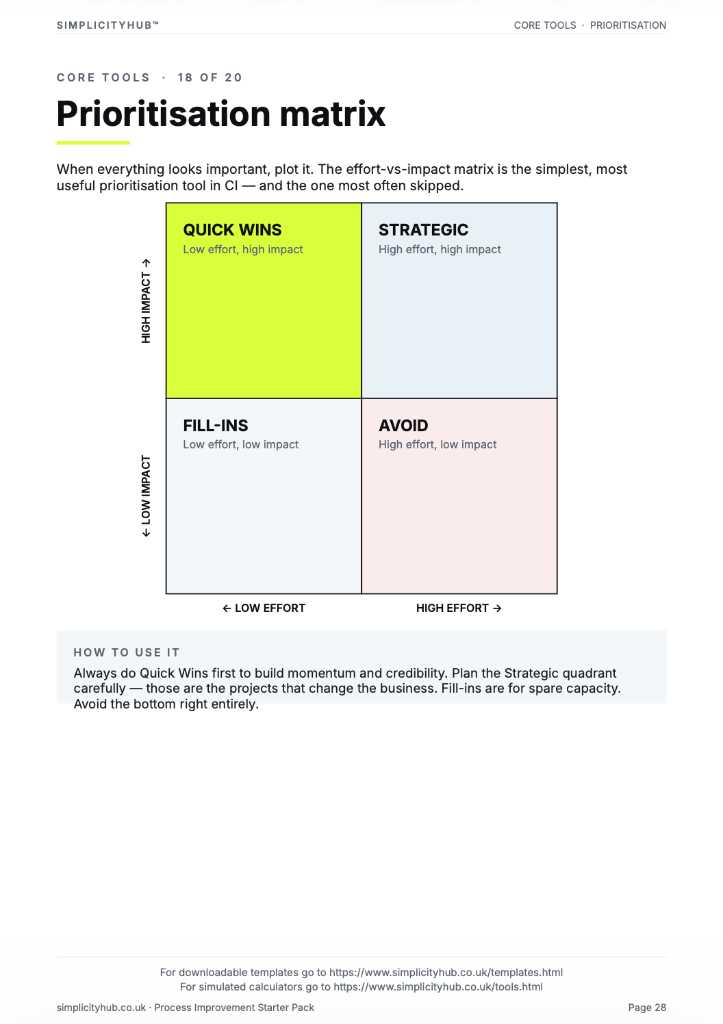
Process Improvement Starter Pack
A starter pack for identifying improvement opportunities, measuring baselines and planning action.
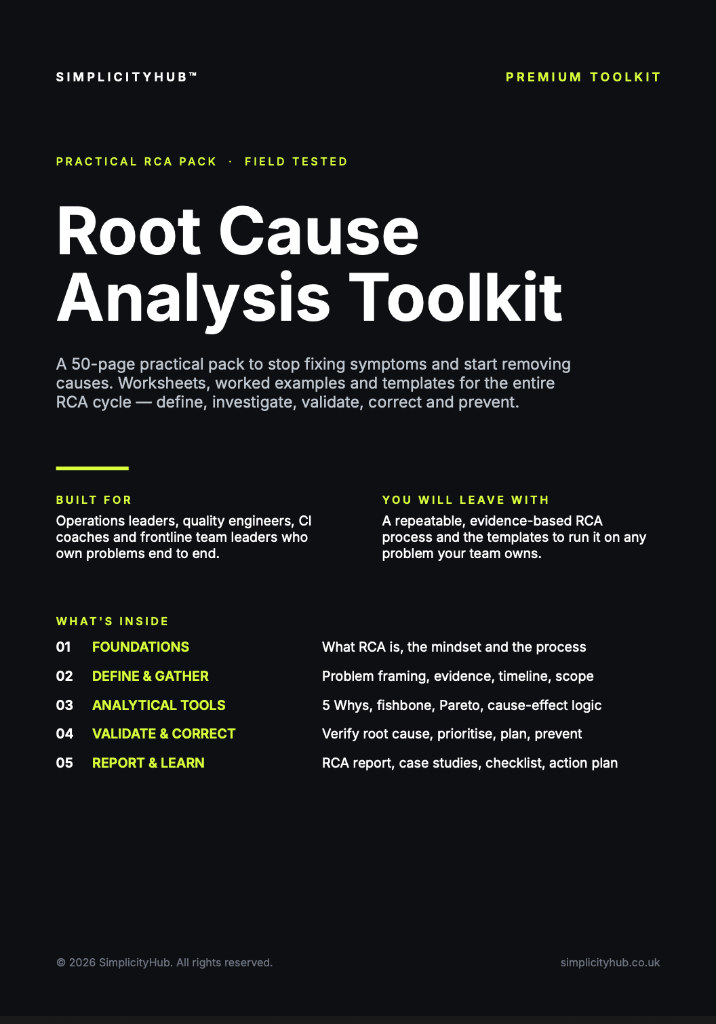
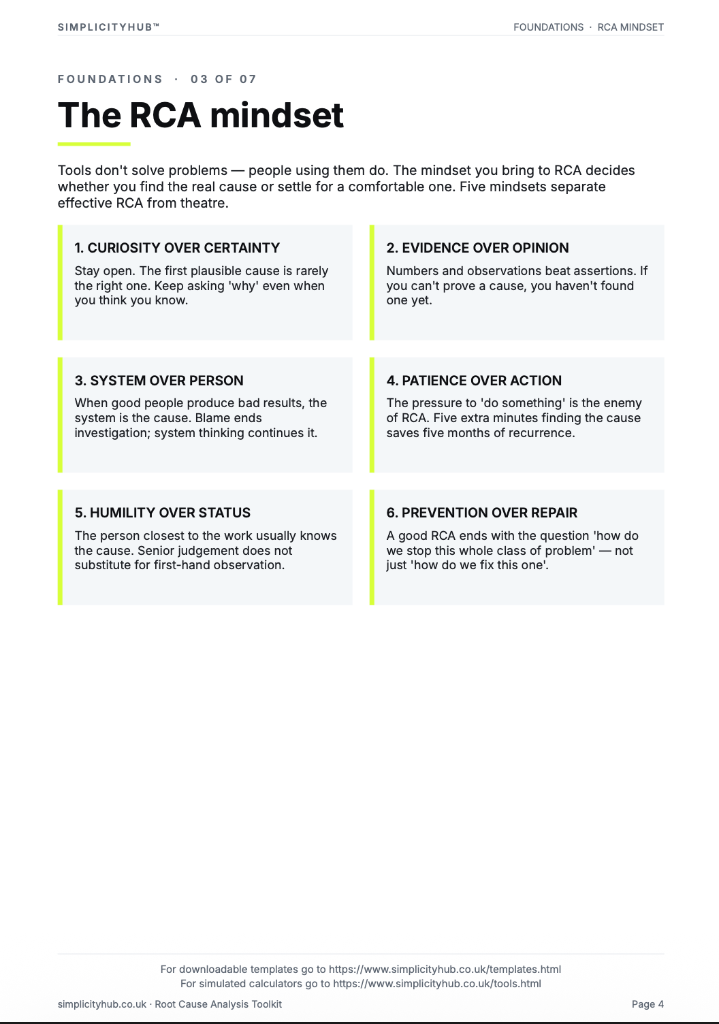
Root Cause Analysis Toolkit
A practical RCA toolkit for defining problems, finding causes, validating evidence and creating action.
A3 Template Pack
A clean A3 problem-solving pack for concise, visual improvement thinking and follow-through.