What is a Measurement Definitions Template?
A measurement definitions document is a shared glossary that precisely defines every term and metric used in a project — ensuring that all team members, stakeholders and data collectors are working with identical definitions throughout the project lifecycle.
It goes beyond operational definitions (which specify how to measure) to also define what each term means conceptually — preventing the common situation where team members use the same word to mean different things.
Used in the Measure phase, a clear measurement glossary eliminates the confusion that arises when 'defect' means one thing to the quality team, something slightly different to the operations team and something else entirely to the finance team.
When to use a Measurement Definitions Template
Build a measurement definitions document at the start of the Measure phase. Use it when:
- A project involves multiple teams or functions who may define terms differently
- The project deals with quality metrics (defects, defectives, opportunities) that have precise statistical meanings
- Savings claims will be validated by finance and definitions need to be locked down
- A project is being handed over and a new team needs to continue the work
Who should use a Measurement Definitions Template
- Green Belts and Black Belts — to align the project team on precise metric definitions at the start of Measure
- Data Analysts and Quality Engineers — when setting up measurement systems and reporting
- CI Coaches — to ensure teams understand the distinction between defects, defectives and opportunities
- Finance Teams — when validating improvement claims against defined metrics
Vote yes and we’ll prioritise a quick walkthrough showing you exactly how to use it.

How to build Measurement Definitions
Build the definitions document in a team workshop — ask each team member to write their own definition of each key term before sharing. The differences between individual definitions reveal exactly where ambiguity exists.
How to build Measurement Definitions — step by step
-
1List all key metrics and terms
Start with the metrics in the goal statement and data collection plan. Add any technical terms that could be interpreted differently by different team members or functions.
-
2Write a plain-language definition for each
Define each term clearly enough that someone new to the project — or new to the organisation — could understand and apply it correctly without additional guidance.
-
3Define defect, defective and opportunity
For quality-focused projects, define these precisely: a defect is a single instance of non-conformance; a defective is a unit containing one or more defects; an opportunity is each inspected characteristic. Confusing these corrupts DPMO calculations.
-
4Add worked examples for each definition
For each definition, write a concrete example: 'A defect is a missing field on the order form. An order with three missing fields is one defective unit containing three defects.'
-
5Resolve disagreements explicitly
When team members define the same term differently, surface the disagreement and agree a single definition. Document the decision and the rationale — especially for definitions where the choice affects the numbers.
-
6Circulate and sign off
Share the definitions document with all team members, the sponsor and the process owner. Get written acknowledgement that the definitions are agreed before data collection begins.
-
7Version control the document
If a definition changes during the project, increment the version number, document the change, and assess whether previously collected data needs to be re-evaluated under the new definition.
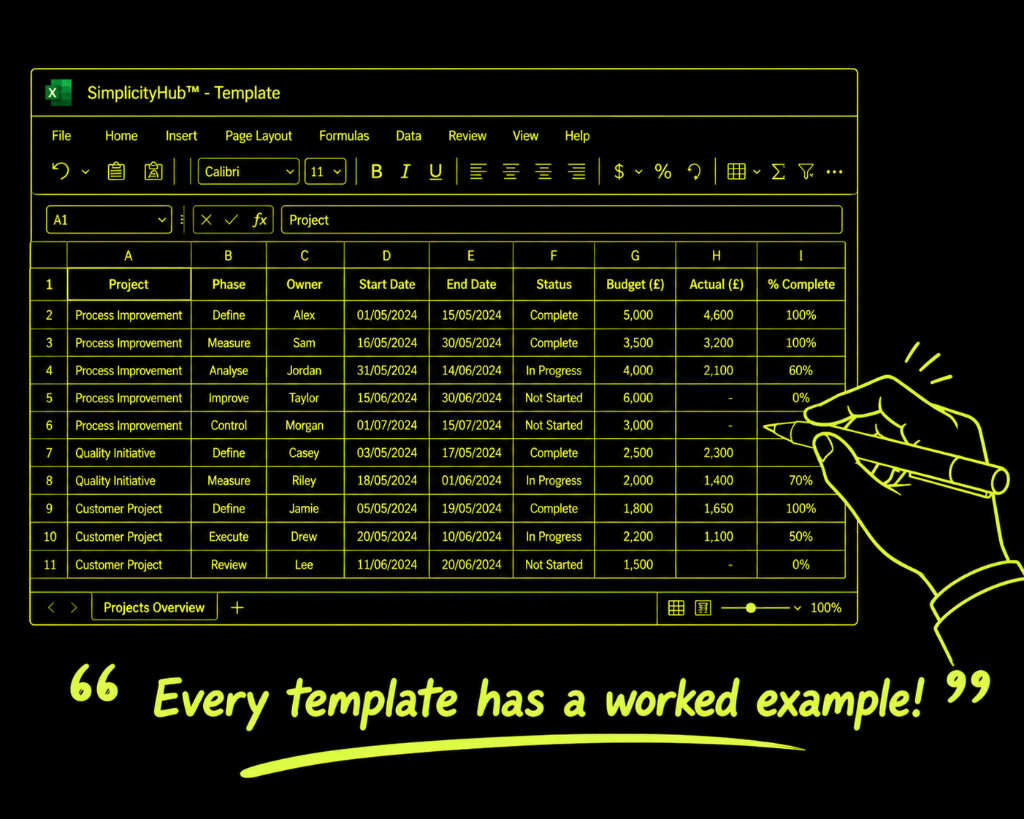
Worked example — Quality Project Measurement Glossary
A completed measurement definitions document for a quality improvement project, defining defect, defective, opportunity, yield, DPMO and first pass yield with worked examples.
Common mistakes — and how to avoid them
Assuming shared understanding. The most common measurement problem is not measurement error — it is different people measuring the same thing differently because they have different mental models of what the metric means. Never assume alignment without checking.
Definitions that are circular. 'A defect is a defective item' is not a definition. Write definitions in terms that do not include the word being defined.
Not updating definitions when the process scope changes. If the process scope expands or contracts during the project, check whether any definitions need to change. A definition that was correct for the original scope may not apply to the revised scope.
Only defining the primary metric. Teams often carefully define the project Y but leave supporting metrics undefined. Every metric in the data collection plan needs an operational definition.
Tips for getting better results
Align with finance on financial metric definitions. If the project claims cost savings, make sure the definitions used to calculate those savings match the definitions finance uses in their reporting. A £50,000 saving calculated on different assumptions to the finance baseline will be disputed at closure.
Include the definitions in team induction. When a new team member joins the project mid-stream, the measurement definitions document is the fastest way to get them to the same reference point as the rest of the team.
Post the key definitions where data is collected. If data is collected manually at a workstation or on a shared screen, display the definitions at the point of collection. This prevents definition drift over time.
Download the Measurement Definitions Template
A clean, editable Excel template for immediate use — structured, professional and ready to fill in.
Frequently asked questions
What is an operational definition?
Specifies exactly what you are measuring, how you measure it, and under what conditions.
Why do measurement definitions matter?
Without them data is unreliable. Different people defining defects differently makes their counts incomparable.
Should definitions be agreed before data collection?
Yes. Changing the definition partway through invalidates earlier data.
Who should approve them?
The project lead and process owner at minimum.
Advanced Toolkit Packs — available now
Structured, ready-to-use template packs designed for real improvement work. Pick the pack that matches your project and get started straight away.
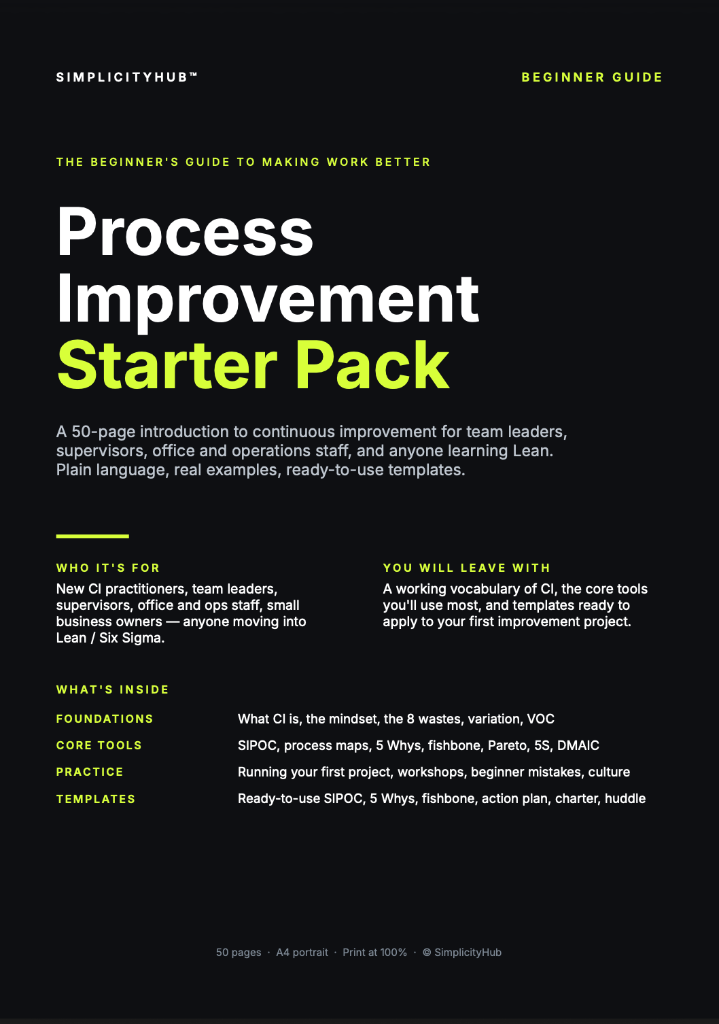
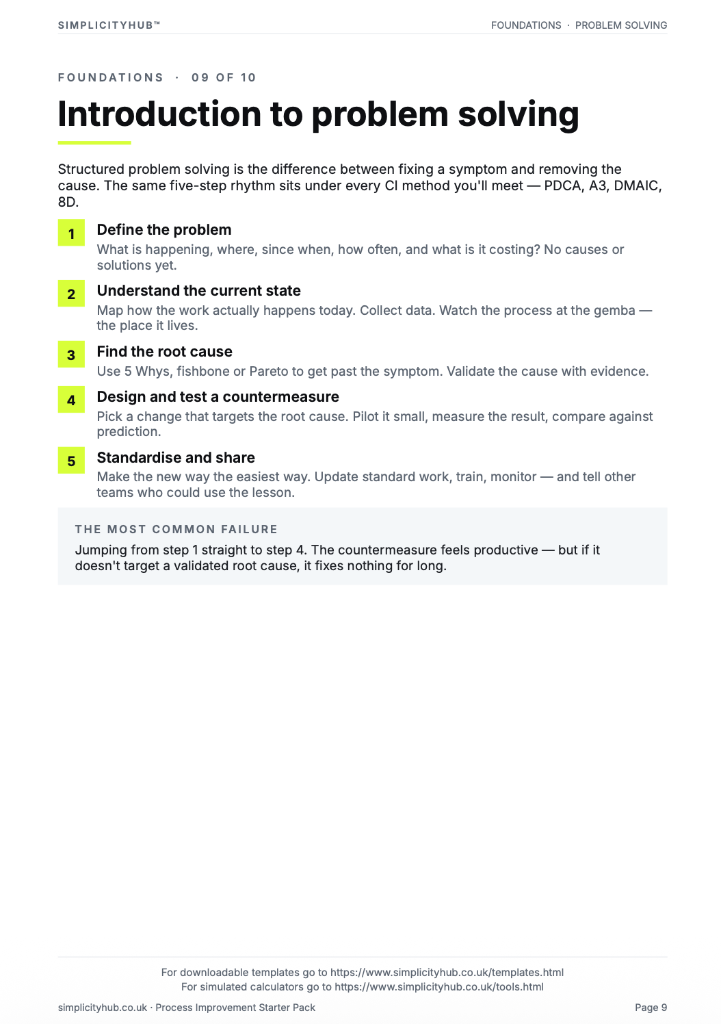
Process Improvement Starter Pack
A starter pack for identifying improvement opportunities, measuring baselines and planning action.
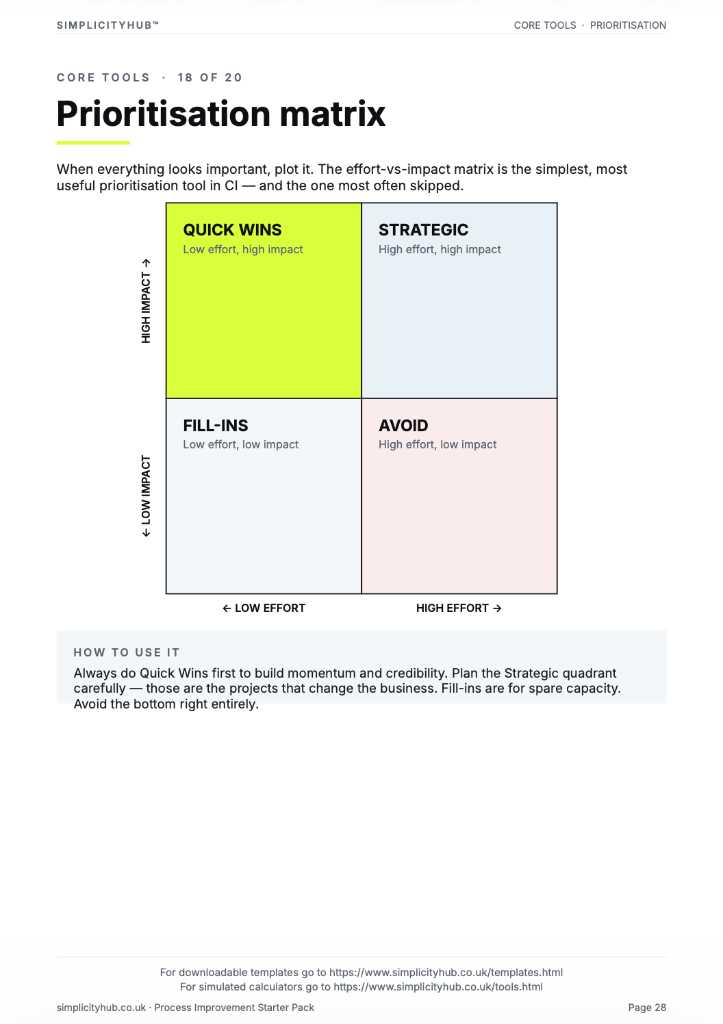
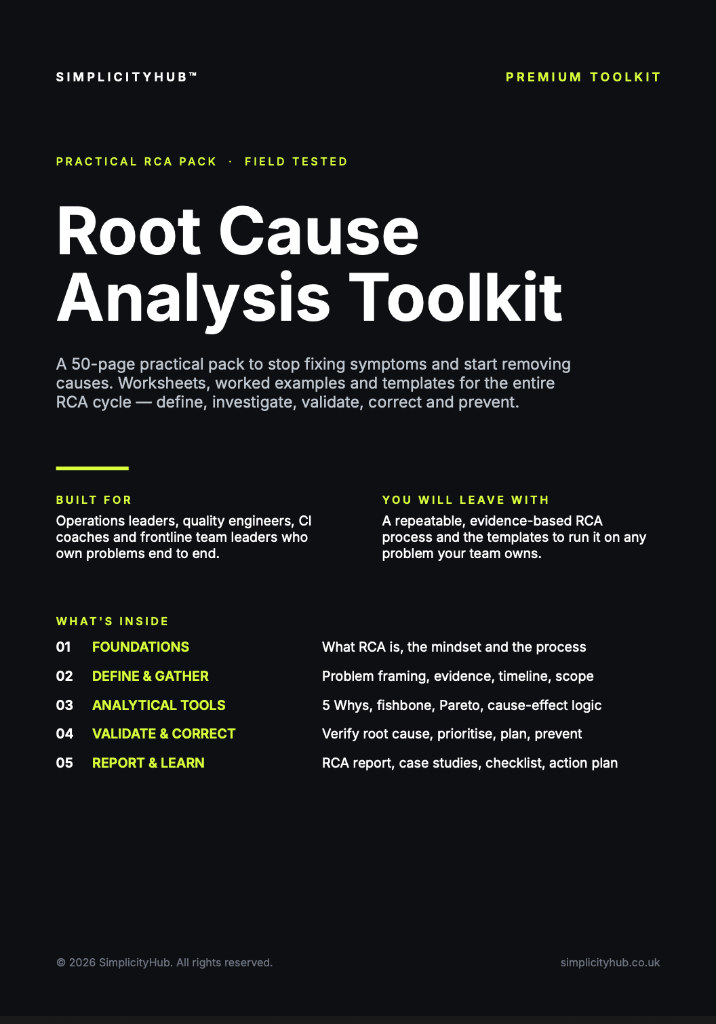
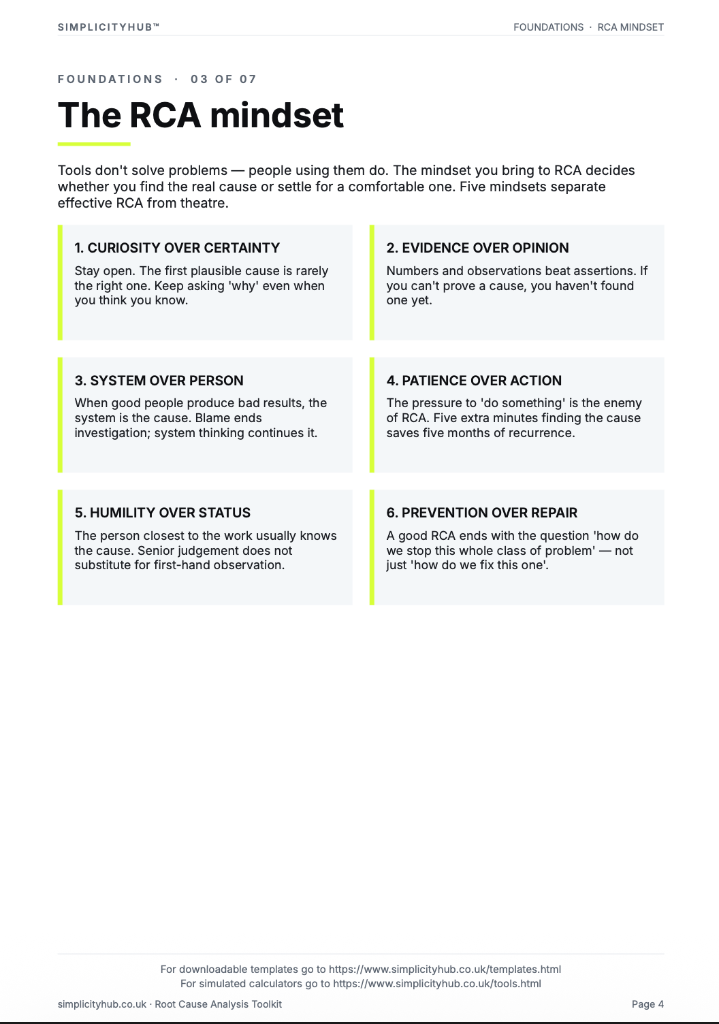
Root Cause Analysis Toolkit
A practical RCA toolkit for defining problems, finding causes, validating evidence and creating action.
A3 Template Pack
A clean A3 problem-solving pack for concise, visual improvement thinking and follow-through.