What is a Baseline Metrics Template?
A baseline metrics document records the current performance of the process before any improvement is made — the starting point against which all future results will be compared. It captures the metric, the measurement method, the data period, the result and the source, in a format that can be directly compared with post-improvement measurements.
Without a documented baseline, it is impossible to prove how much improvement was achieved. 'It used to take 5 days and now it takes 2 days' is only credible if the baseline of 5 days was measured and recorded before the project started.
Baseline measurement is the core deliverable of the Measure phase of DMAIC.
When to use a Baseline Metrics Template
Complete baseline measurement before any improvement activity begins. You need it when:
- You need to establish the starting point for comparison with post-improvement results
- The sponsor will want to see before-and-after evidence of the improvement
- Financial savings claims will need to be validated against a documented baseline
- The goal statement specifies a target improvement from a baseline figure
Who should use a Baseline Metrics Template
- Green Belts and Black Belts — as the primary Measure phase deliverable that underpins all project claims
- Finance Teams — to validate that improvement savings are calculated from a reliable baseline
- Operations Managers — to understand current process performance before commissioning improvement work
- CI Managers — to verify that projects have credible baselines before savings are recorded
Vote yes and we’ll prioritise a quick walkthrough showing you exactly how to use it.

How to establish reliable baseline metrics
A baseline is only as good as the measurement behind it. Collect enough data to represent normal process performance — including typical variation from day to day, week to week, and across different conditions.
How to establish reliable baseline metrics — step by step
-
1Identify the metrics to baseline
Start with the Y from your goal statement. Add any input variables (X's) that the project will seek to influence. Each metric gets its own baseline measurement.
-
2Define operational definitions first
Before collecting a single data point, write operational definitions for every metric. Data collected without definitions cannot be reliably compared with later measurements.
-
3Choose the data period
The baseline period should be long enough to represent normal process variation — typically 4–12 weeks of recent data. Avoid periods that include known anomalies unless they represent normal operating conditions.
-
4Collect and record the data
Use the method defined in the data collection plan. Record the raw data, not just the summary. You may need the raw data for later statistical analysis.
-
5Calculate summary statistics
Calculate mean, median, standard deviation and range for each metric. For count data, calculate rates and proportions. Present the data visually — run chart, histogram or control chart.
-
6Assess process stability
Before using the baseline for capability analysis, check whether the process is stable. A process with special causes in the baseline period is not in a stable state and capability analysis will be misleading.
-
7Document and sign off
Record the baseline in the project documentation. Have the sponsor or process owner acknowledge the baseline figure. This prevents disputes later about what the starting point was.
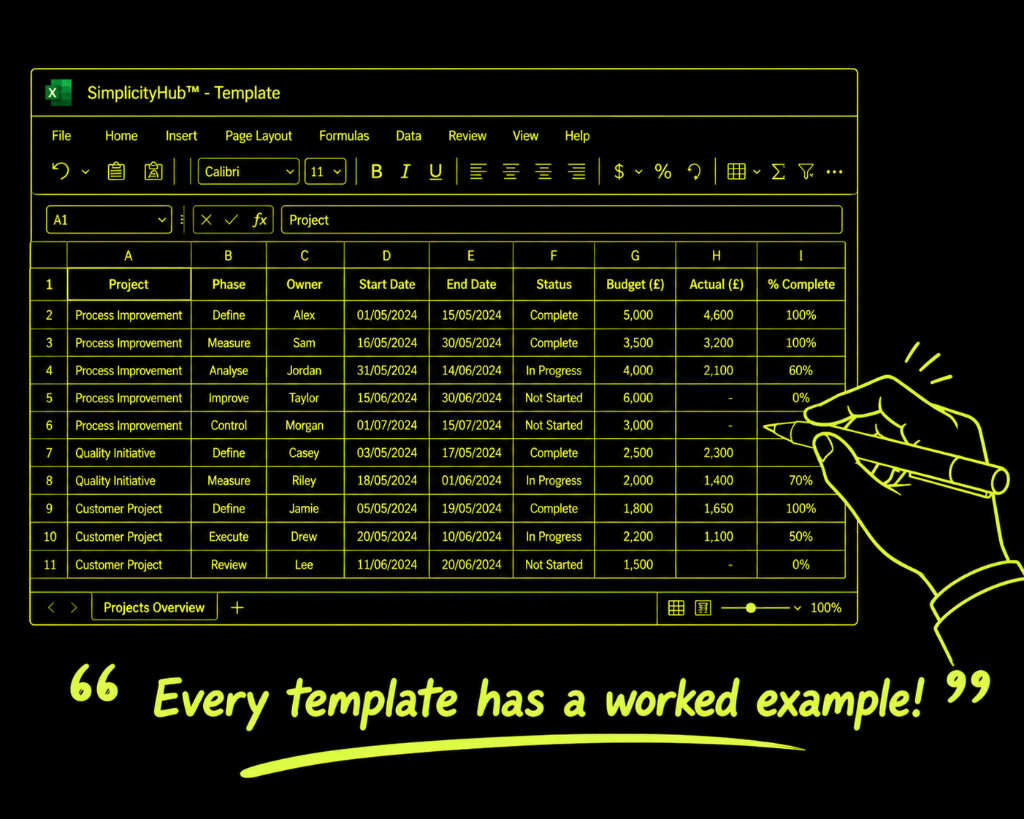
Worked example — Complaint Response Time Baseline
Completed baseline metrics for a complaint response improvement project, showing mean, median, standard deviation and a run chart of the 8-week baseline period.
Common mistakes — and how to avoid them
Using estimated or assumed baselines. A baseline of 'about 5 days' based on team memory is not a baseline. Measure it. Use data from the period before the project started.
Using too short a baseline period. Two weeks of data may not represent normal variation. A busy period, a quiet period or a system issue could make the baseline unrepresentative. Use at least 4–6 weeks.
Not keeping the raw data. Summary statistics are useful, but the raw data may be needed for statistical analysis in the Analyse phase. Keep a record of every data point, not just the average.
Changing the metric between baseline and results. If you measure 'average response time' in the baseline but 'percentage within target' in the results, you cannot make a direct comparison. Use the same metric, same definition, same period throughout.
Tips for getting better results
Plot the baseline data before calculating statistics. A run chart of the baseline period will often reveal patterns — seasonal effects, weekly cycles, outliers — that a single average number hides. Always visualise first.
Use the baseline to validate the business case. The baseline data often confirms or refines the business case estimate from Define. If the measured baseline differs significantly from the assumed baseline, update the business case before proceeding.
Keep a copy of the raw baseline data. The baseline data will be compared with post-improvement data weeks or months later. Store it in a clearly labelled file that will survive project team changes.
Download the Baseline Metrics Template
A clean, editable Excel template for immediate use — structured, professional and ready to fill in.
Frequently asked questions
How much data do I need for a baseline?
At least 20-25 data points over a representative time period. Avoid atypical periods like holiday shutdowns.
What metrics should I baseline?
Start with the metric directly linked to your problem statement — defect rate, cycle time, cost, or customer satisfaction.
Can I use historical data?
Yes, if collected consistently and the process has not changed significantly. Document the source and any known gaps.
When should I recapture the baseline?
After completing Improve, using the same measurement method and period length for a direct comparison.
Advanced Toolkit Packs — available now
Structured, ready-to-use template packs designed for real improvement work. Pick the pack that matches your project and get started straight away.
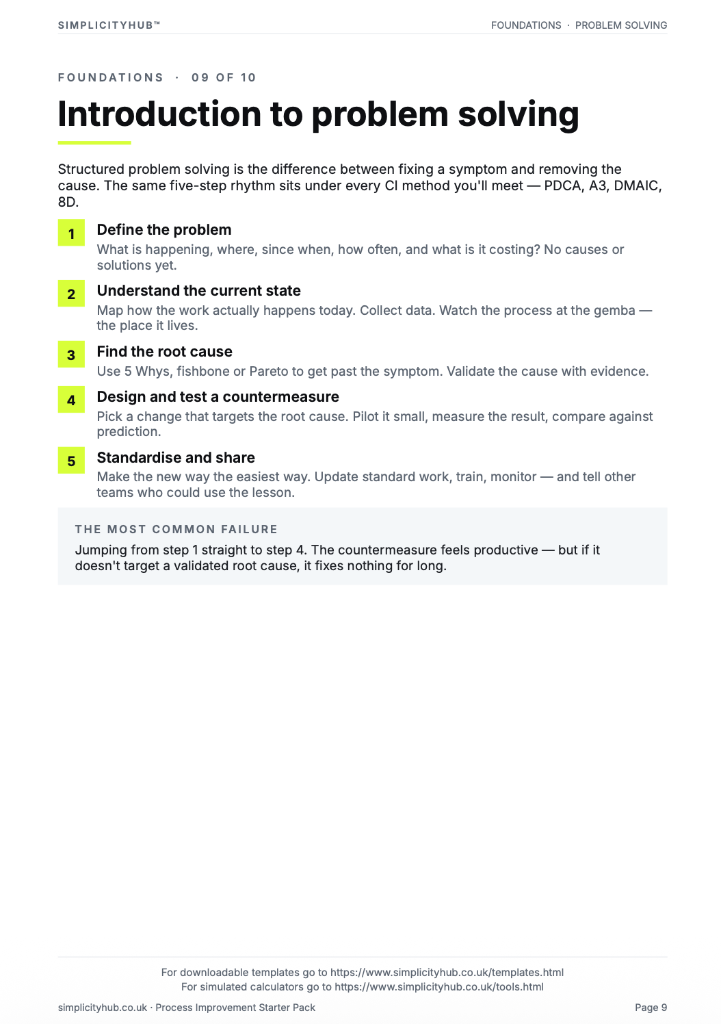
Process Improvement Starter Pack
A starter pack for identifying improvement opportunities, measuring baselines and planning action.
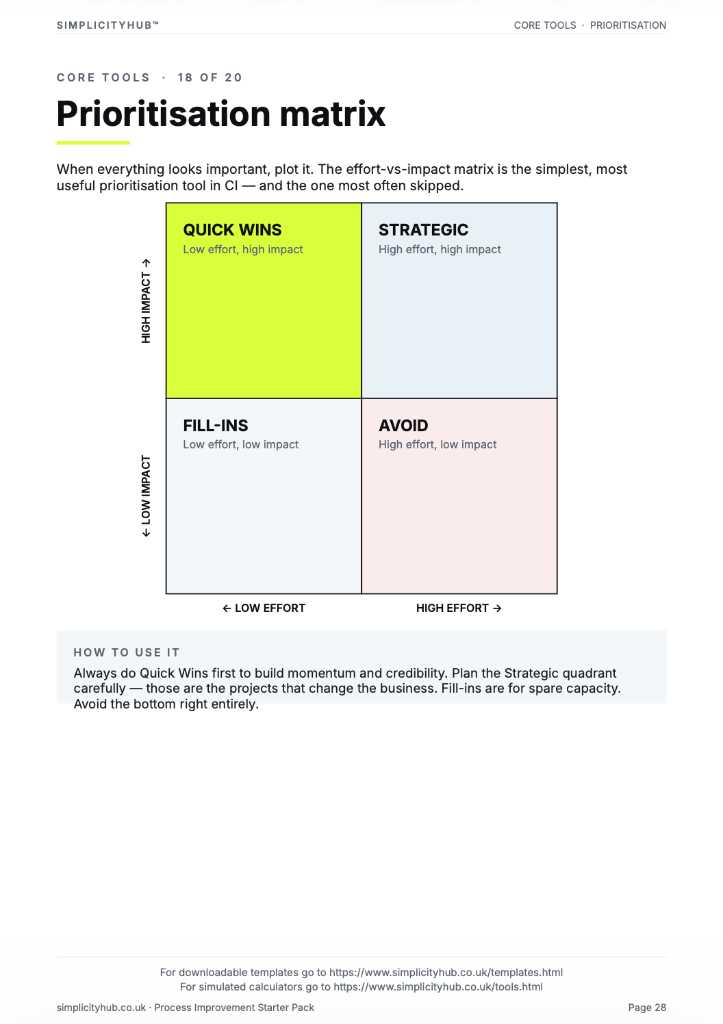
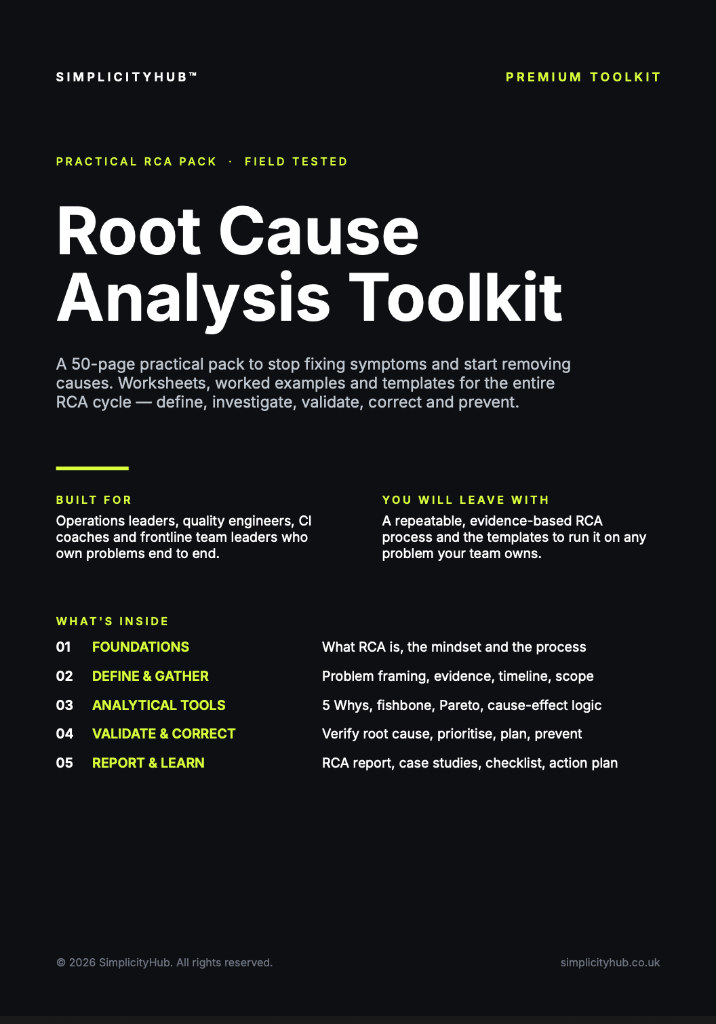
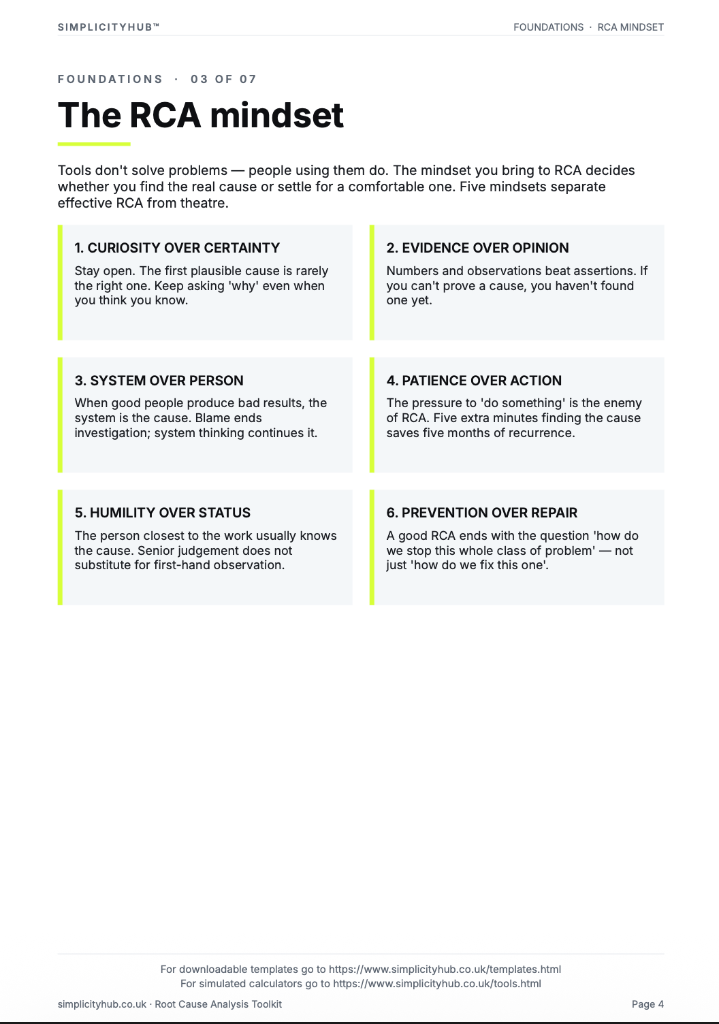
Root Cause Analysis Toolkit
A practical RCA toolkit for defining problems, finding causes, validating evidence and creating action.
A3 Template Pack
A clean A3 problem-solving pack for concise, visual improvement thinking and follow-through.