What is a Operational Definitions Template?
Operational definitions are precise, written specifications of exactly how each measurement in a project will be made — what counts, what does not count, the unit of measurement, the precision required and the method used. They eliminate ambiguity so that two different people measuring the same thing at different times will get the same result.
Without operational definitions, data collected by different people or at different times is incomparable. A metric called 'response time' means different things depending on whether you measure from call receipt, email receipt, or first agent contact — and that difference can change your baseline by hours or days.
Operational definitions are written at the start of the Measure phase, before any data is collected.
When to use a Operational Definitions Template
Write operational definitions before any data collection begins. You need them when:
- Multiple people will collect the same data and consistency is critical
- A metric could be measured in more than one way and the method affects the result
- Data will be used to claim financial savings and needs to be validated by finance
- You want to ensure pre- and post-improvement measurements are directly comparable
Who should use a Operational Definitions Template
- Green Belts and Black Belts — as a mandatory Measure phase deliverable before data collection begins
- Data Analysts and Quality Engineers — when setting up measurement systems for process or product quality
- CI Coaches — to ensure project teams understand the importance of measurement consistency
- Finance Teams — to validate that savings calculations use consistent, well-defined metrics
Vote yes and we’ll prioritise a quick walkthrough showing you exactly how to use it.

How to write Operational Definitions
Test every operational definition with a simple question: could two different people, using only this definition, measure the same thing and get the same answer? If not, the definition needs more precision.
How to write Operational Definitions — step by step
-
1List every metric to be measured
Start with the Y from your goal statement. Then list every input variable you plan to measure. Each metric needs its own operational definition.
-
2Define what counts as one unit
What is the unit of measurement? One complaint, one order, one transaction, one shift? Be precise — 'one complaint' might mean one call, one ticket or one customer depending on the system.
-
3Define the start and end point
For time-based metrics, state exactly when the clock starts and when it stops. 'From the moment the complaint email is received in the shared inbox to the moment the resolution email is sent by the agent.'
-
4Define what is included and excluded
Are weekends included? Are cancelled orders excluded? Are re-opened complaints counted as new? Every inclusion and exclusion needs to be explicit.
-
5Specify the data source and extraction method
Name the specific system, report or log from which data will be extracted. Include the field names and any filters applied.
-
6Test the definition with a real example
Take five to ten real records and apply the definition. Does it produce the right result? Are there edge cases the definition does not cover? Fix before full collection.
-
7Document and share
Write the final definitions in the data collection plan and share them with everyone who will collect or analyse the data. Post them at the point of data collection if it is a manual process.
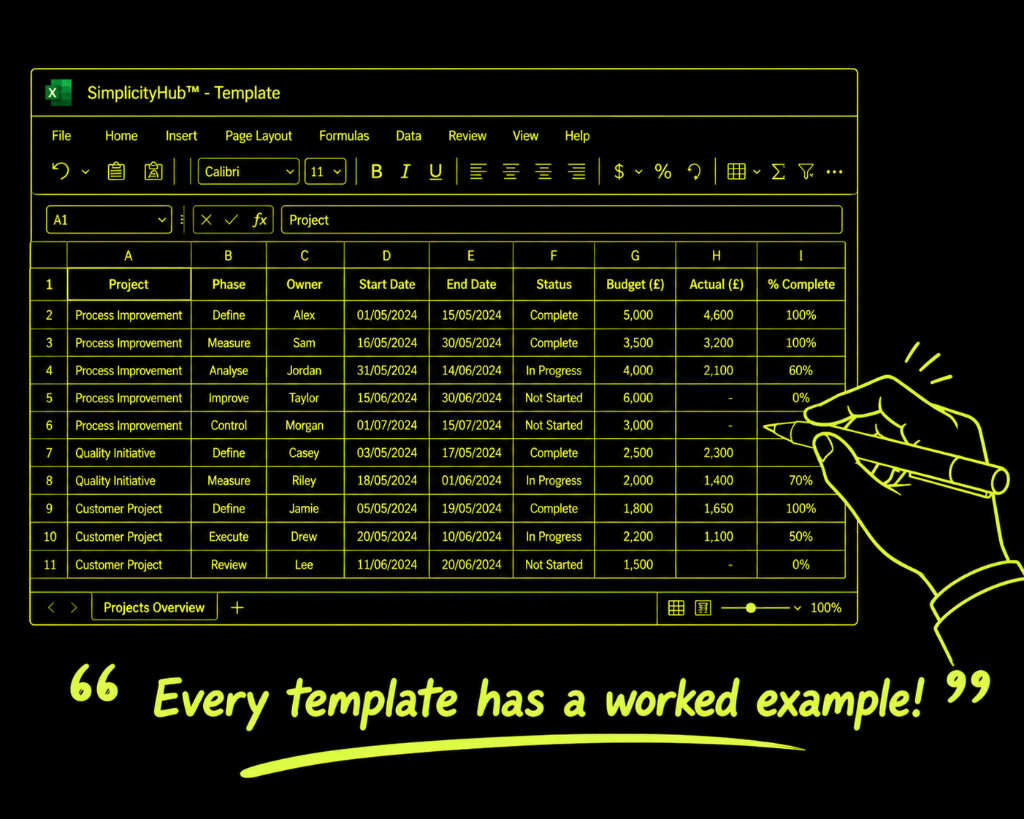
Worked example — Response Time Operational Definition
A completed set of operational definitions for a complaint handling project, specifying exactly how response time, escalation rate and resolution rate are defined and measured.
Common mistakes — and how to avoid them
Assuming everyone interprets the metric the same way. The team leader, the analyst and the operations manager all have slightly different mental models of what 'response time' means. Do not assume shared understanding — write it down.
Writing definitions after data collection has started. If definitions are written after some data has already been collected, early data may be inconsistent with later data. Write them before collection starts, full stop.
Definitions that are still ambiguous. A definition that says 'exclude unusual cases' is not an operational definition — it is an instruction that requires judgement. Every edge case needs an explicit rule.
Not testing the definition. A definition that looks clear in theory may have edge cases in practice. Test on real records before committing to it for the full data collection.
Tips for getting better results
Run a mini measurement system analysis. Have two different people measure the same 20 records using the definition. If they get the same result, the definition is operational. If they get different results, the definition needs refinement.
Include a worked example. Add a fully worked example to each operational definition: 'Complaint received 09:14 Monday. Resolution email sent 11:32 Wednesday. Response time = 50.3 hours.'
Keep a version history. If a definition is changed during the project, document the change, the date and the reason. Data collected under different definitions cannot be directly compared without adjustment.
Download the Operational Definitions Template
A clean, editable Excel template for immediate use — structured, professional and ready to fill in.
Frequently asked questions
Why do I need them if everyone knows what a defect is?
They do not all agree exactly. Operational definitions eliminate that ambiguity.
How specific should they be?
Specific enough that any trained person following it would classify the same item the same way.
Can they change during the project?
No — changing mid-collection invalidates existing data.
Where should they be stored?
In the project documentation and control plan so the process owner has them after project close.
Advanced Toolkit Packs — available now
Structured, ready-to-use template packs designed for real improvement work. Pick the pack that matches your project and get started straight away.
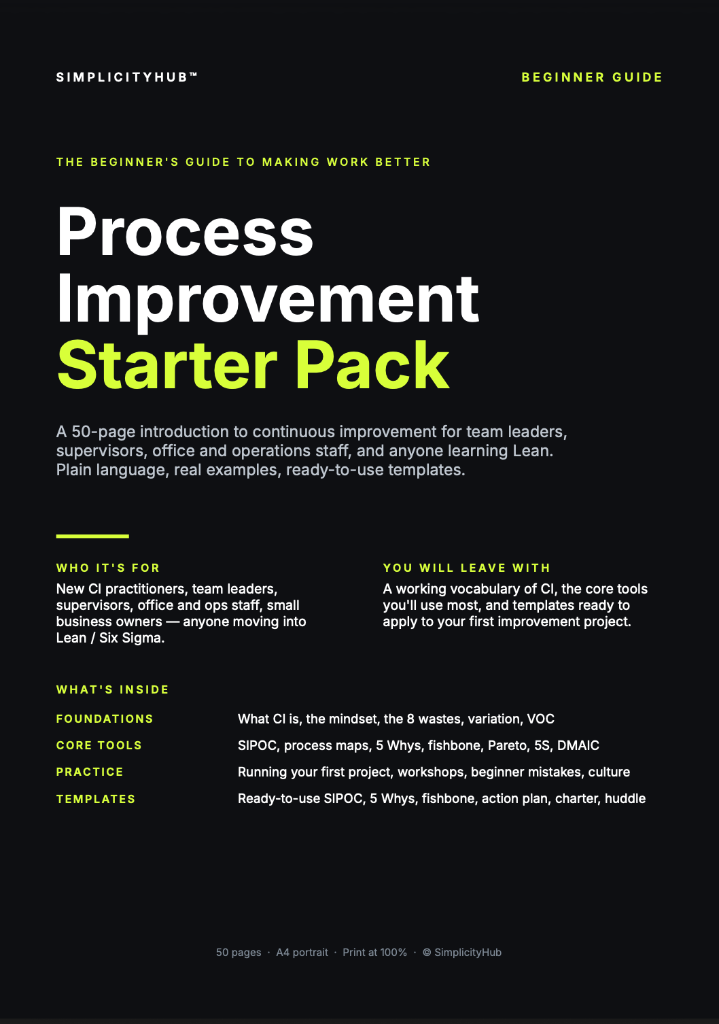
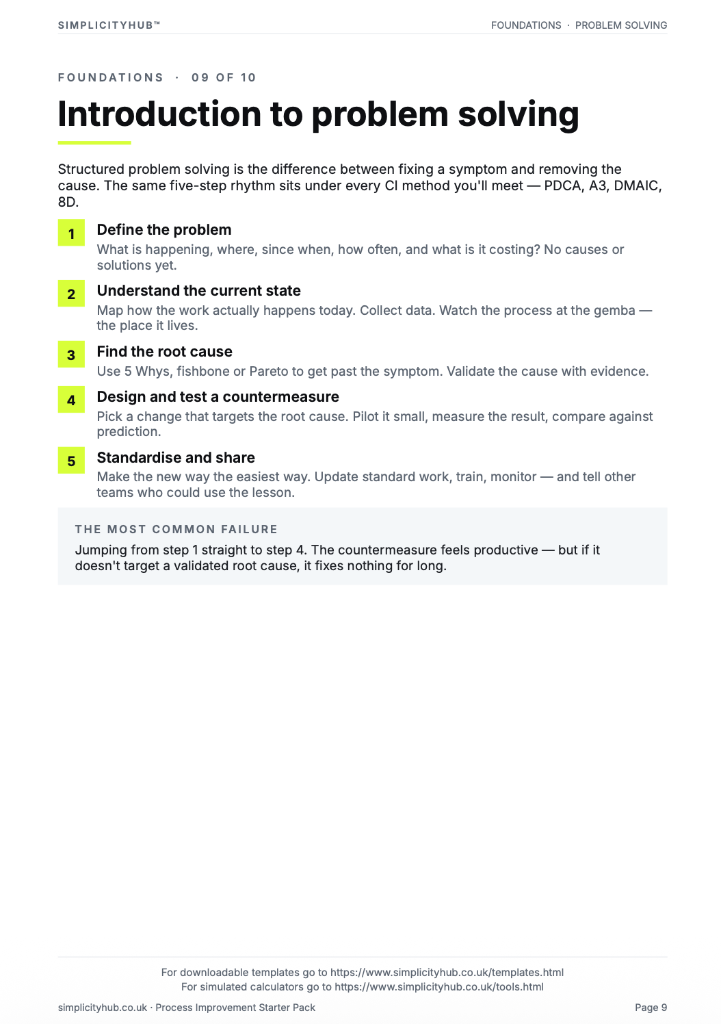
Process Improvement Starter Pack
A starter pack for identifying improvement opportunities, measuring baselines and planning action.
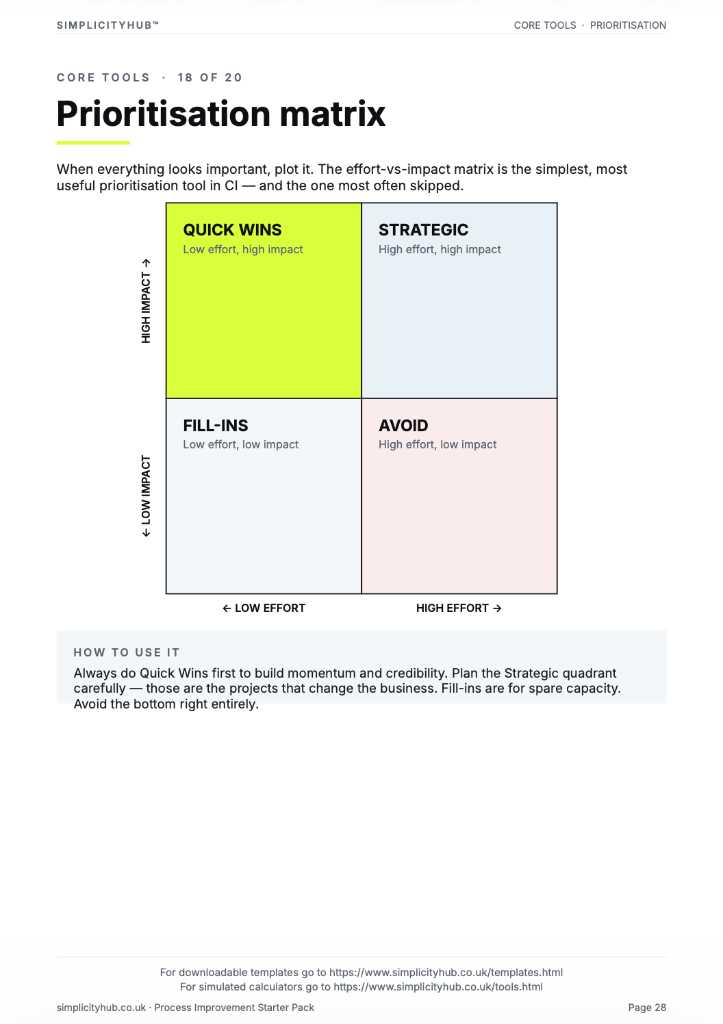
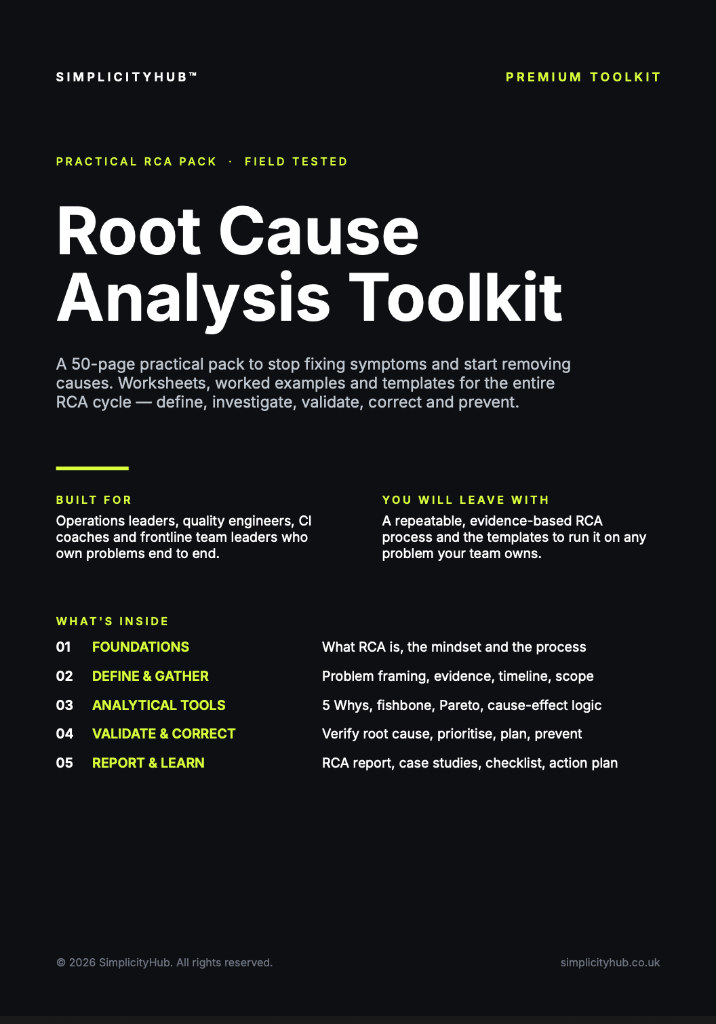
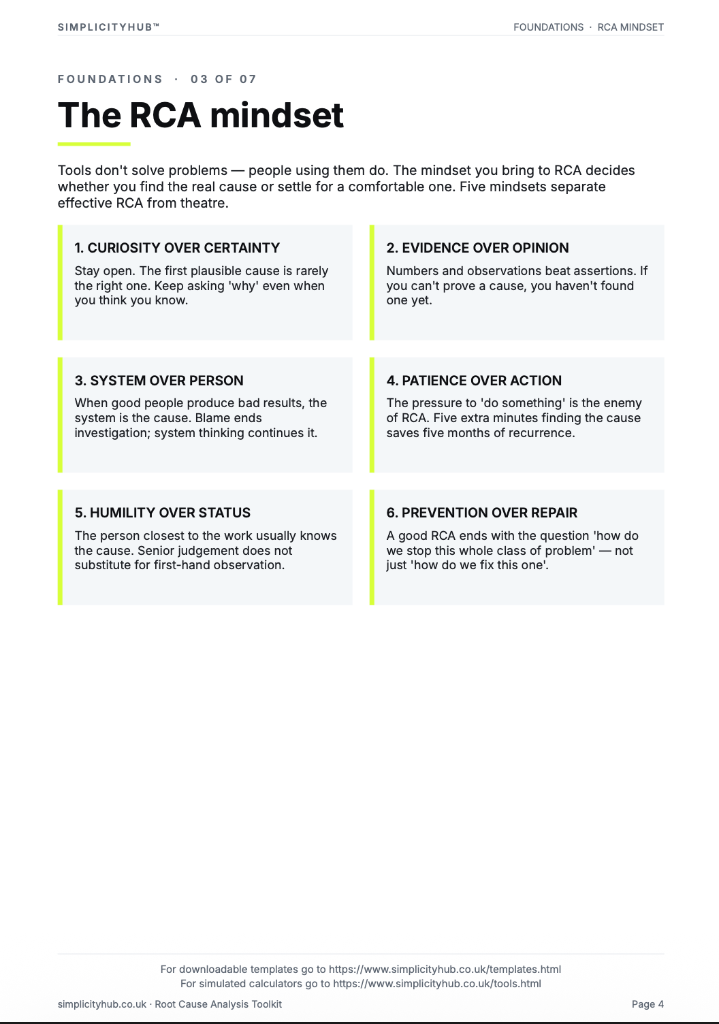
Root Cause Analysis Toolkit
A practical RCA toolkit for defining problems, finding causes, validating evidence and creating action.
A3 Template Pack
A clean A3 problem-solving pack for concise, visual improvement thinking and follow-through.