What is a Process Flow Checklist Template?
A Process Flow Checklist Template provides a step-by-step verification list aligned to the sequence of a defined process. It ensures each step is completed correctly and in the right order — reducing variation, preventing skipped steps and supporting consistent process execution.
When to use a Process Flow Checklist Template
Use it in the Control phase to support consistent execution of a newly improved process. It is particularly valuable during the transition period immediately after go-live, when staff are learning the new standard.
Who should use a Process Flow Checklist Template
- Frontline operators — verifying that each process step has been completed correctly before proceeding to the next
- Team leaders — auditing process compliance during and after the transition to a new standard
- Quality teams — using the checklist as a lightweight audit tool for high-risk process steps
- Training developers — building the checklist into on-the-job training programmes for new starters
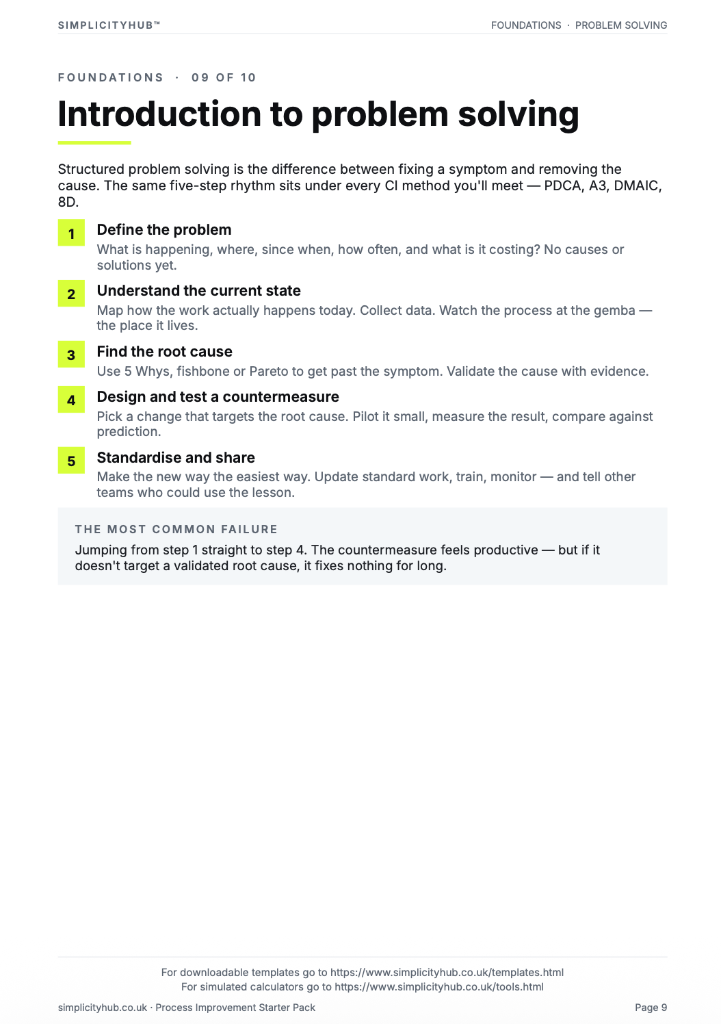
Vote yes and we’ll prioritise a quick walkthrough showing you exactly how to use it.
How to use a Process Flow Checklist — step by step
- 1Map the process steps
List every step in the process in the correct sequence. Use the To-Be process map as the source.
- 2Define the completion criteria for each step
What does 'done correctly' look like for each step? Specific, observable, binary — done or not done.
- 3Group steps into logical phases
For longer processes, group steps into sections (e.g. Preparation, Execution, Close-out) to make the checklist easier to navigate.
- 4Add verification checkboxes
Each step gets a checkbox. Simple, fast, unambiguous.
- 5Pilot with the team
Test the checklist with the people who will use it. Identify any steps that are unclear, missing or in the wrong order.
- 6Laminate and place at the point of work
The checklist should be immediately accessible where the work happens — not in a manual or shared drive.
- 7Review after the first month
Observe the checklist in use and collect feedback. Update it based on what you find.
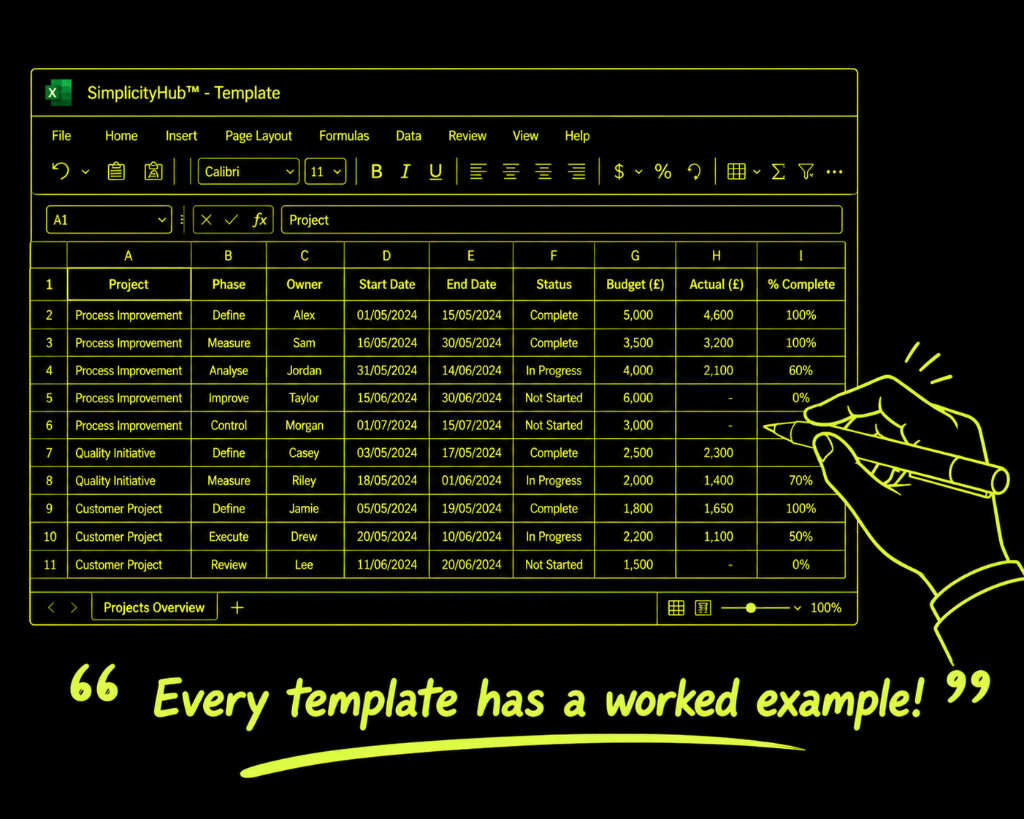
Worked example — Medical Device Cleaning Procedure
A medical device reprocessing unit implemented a 22-step process flow checklist for cleaning and sterilisation — reducing missed steps from an average of 1.8 per cycle to 0.1 per cycle within the first month.
Common mistakes — and how to avoid them
Too many steps on one checklist. More than 20–25 items on a single checklist becomes unwieldy. Split long processes into separate phase checklists.
Vague completion criteria. 'Check the system' is not a verifiable criterion. 'Confirm system status shows Green on the main screen' is.
Not updating when the process changes. A checklist for the old process is worse than no checklist — it directs people to do the wrong things. Update it immediately when the process changes.
Completing from memory rather than following it. The value of a checklist comes from physically following it step by step — not mentally reviewing it. Design the physical use into the workflow.
Tips for getting better results
Use a laminated wipe-clean version for operational use. Reusable laminated checklists reduce paper waste and are more likely to be kept at the point of work.
Include a 'date and sign' field. A date and signature creates accountability and an audit trail. One line, not a form.
Test it with a new starter. If a new starter can execute the process correctly by following the checklist alone, it is well designed.
Frequently asked questions
How is it different from a process map?
A process map documents how the process should work. This checklist verifies how it actually works in real time.
How many times should I walk through?
At least three times with different people at different times if possible.
Should operators know they are being observed?
Yes. Brief the team — you are there to understand the process, not to evaluate individuals.
What if I see a problem?
Note it without stopping the work. Do not intervene unless there is a safety issue.
Advanced Toolkit Packs — available now
Structured, ready-to-use template packs designed for real improvement work. Pick the pack that matches your project and get started straight away.
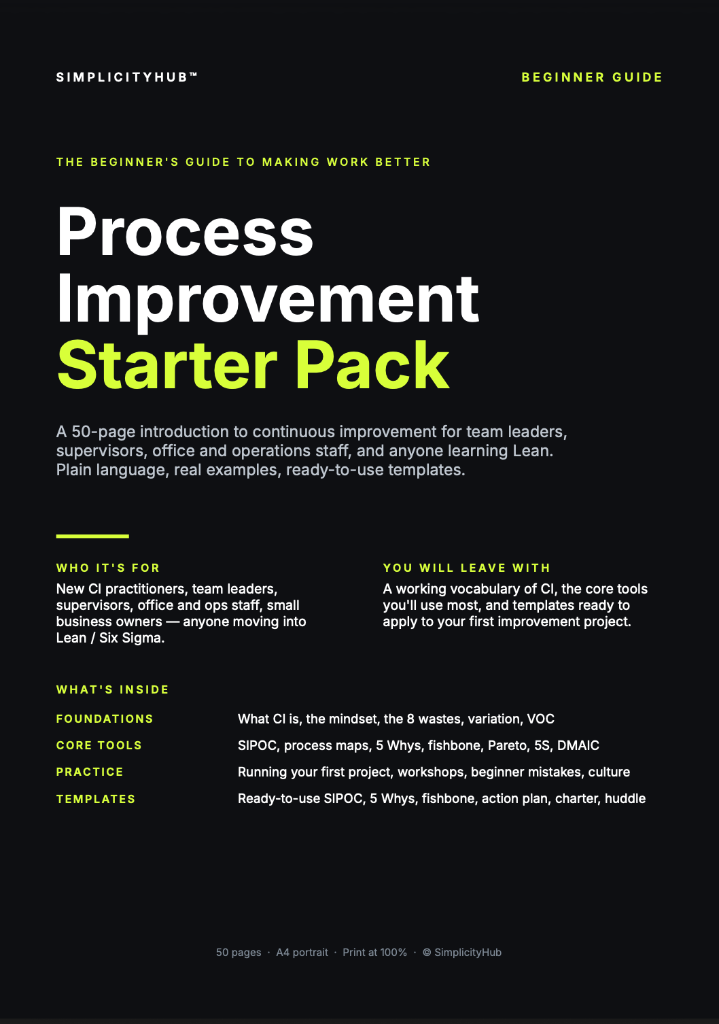
Process Improvement Starter Pack
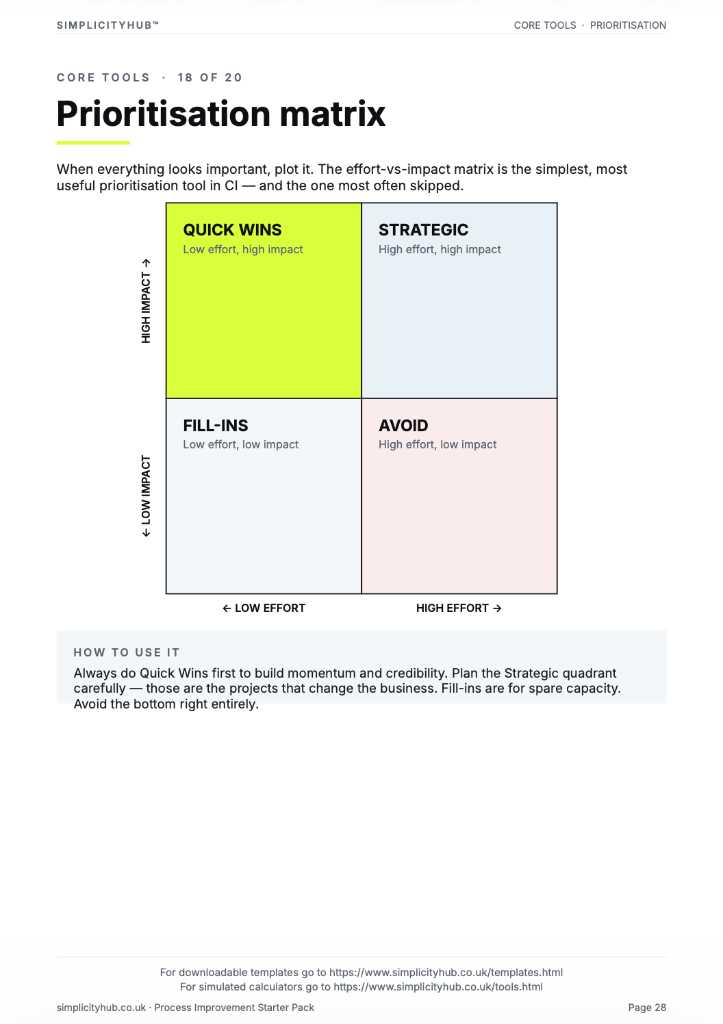
A starter pack for identifying improvement opportunities, measuring baselines and planning action.
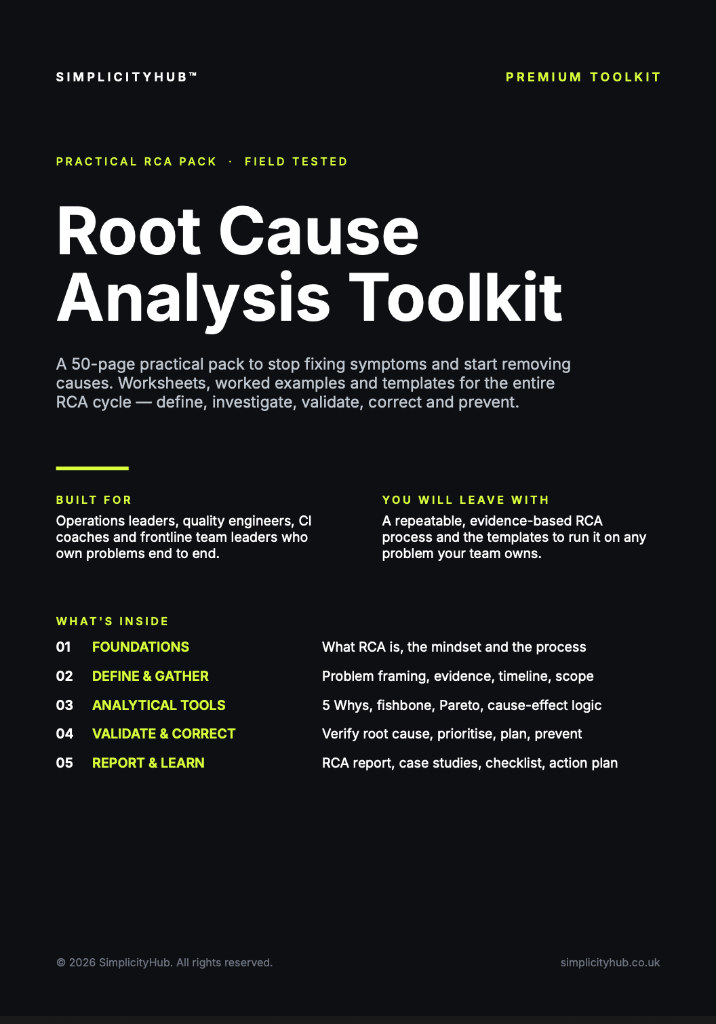
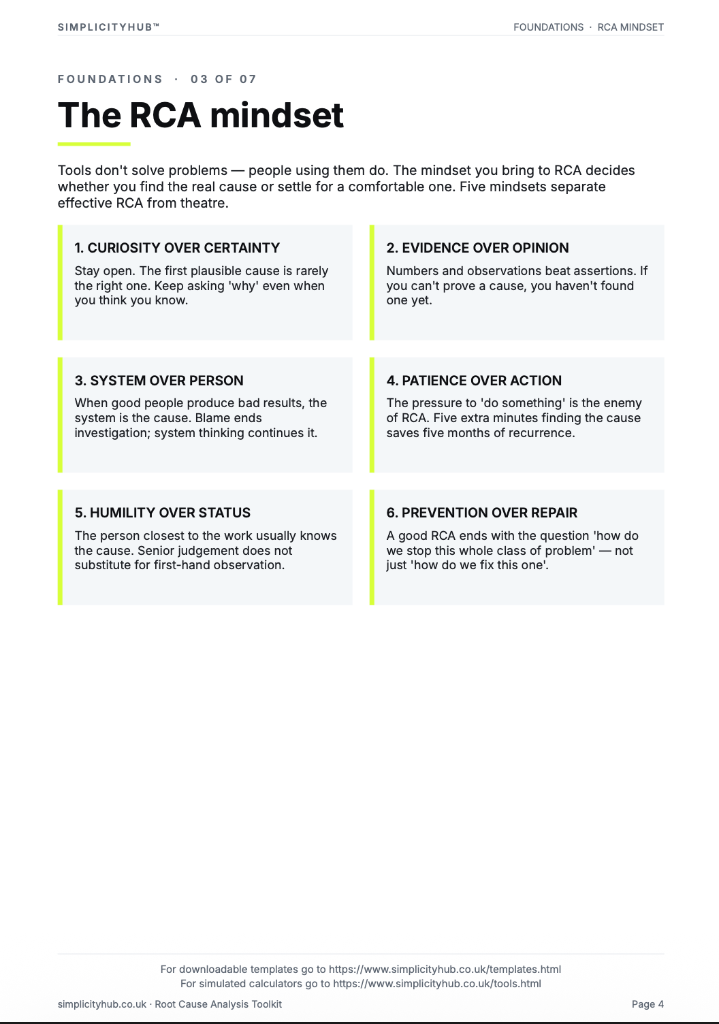
Root Cause Analysis Toolkit
A practical RCA toolkit for defining problems, finding causes, validating evidence and creating action.
A3 Template Pack
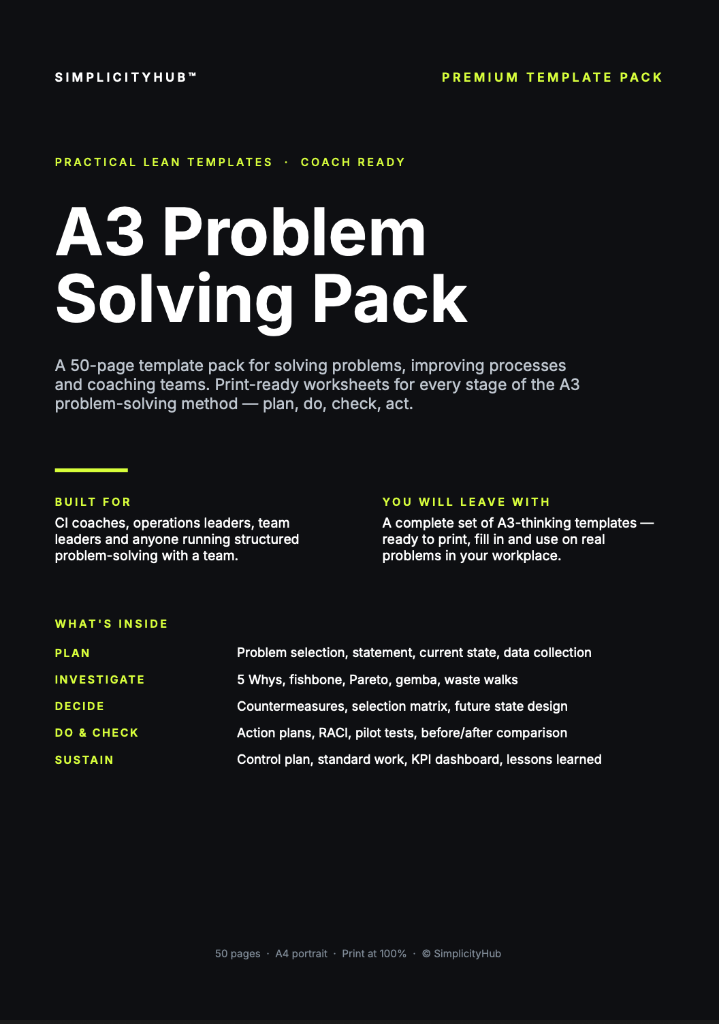
A clean A3 problem-solving pack for concise, visual improvement thinking and follow-through.