What is a Audit Checklist Template?
An audit checklist is a structured list of questions or checks used to verify that a process is being performed correctly and to the agreed standard. It provides an objective, consistent way to assess whether an improved process is being followed — and to identify where compliance is slipping before it becomes a problem.
In Lean Six Sigma, audit checklists are built in the Control phase to verify that the improved process is sustained after the project team hands back to operations. They are the practical mechanism that makes the control plan visible at the point of work.
A well-designed audit checklist takes less than 15 minutes to complete and immediately shows where action is needed.
When to use a Audit Checklist Template
Use an audit checklist once an improved process has been handed over to operations and you need to verify it is being followed. Use it when:
- A new or improved process has been implemented and compliance needs to be verified
- KPIs are drifting and you want to understand whether it is a process compliance issue
- You are conducting a scheduled process audit as part of the control plan
- A new operator has been trained and you want to verify they can perform the process correctly
Who should use a Audit Checklist Template
- Team Leaders and Supervisors — for regular process compliance checks in the Control phase
- Quality Teams — as part of internal audit programmes
- Green Belts and Black Belts — to design audit checklists as part of the Control phase deliverables
- Process Owners — to perform self-assessment audits of their own process
Vote yes and we’ll prioritise a quick walkthrough showing you exactly how to use it.

How to design and use the Audit Checklist
Design the checklist against the SOP and control plan — not from memory. Every item on the checklist should correspond to a specific standard that can be observed, measured or verified objectively.
How to design and use the Audit Checklist — step by step
-
1Identify the critical steps and standards to audit
From the SOP and control plan, select the steps most critical to the process outcome — especially those where errors or non-compliance are most likely or most damaging.
-
2Write each check as an observable, binary question
Each item should be answerable with Yes/No/Not Applicable — not a rating scale. 'Is the complaint logged within 1 hour of receipt?' is auditable. 'Is the logging process good?' is not.
-
3Group checks by process stage
Organise checks in the sequence of the process. This makes it easier to conduct the audit by following the process flow rather than jumping between stages.
-
4Add the standard for each check
Next to each check, state the standard: what does 'Yes' look like? '100% of complaints logged within 1 hour as per SOP step 1.' This prevents subjective interpretation.
-
5Define the scoring method
Decide how to score the audit: percentage compliance (checks passed / total checks), red/amber/green rating per section, or simple pass/fail overall. Be consistent across audits.
-
6Conduct the audit by observation
Observe the process being performed in real time — do not just ask people whether they follow the steps. What people say they do and what they actually do are often different.
-
7Agree actions for non-compliance
For every check that scores 'No', agree a corrective action: who will fix it, by when, and what follow-up verification is needed. Log these in the action plan.
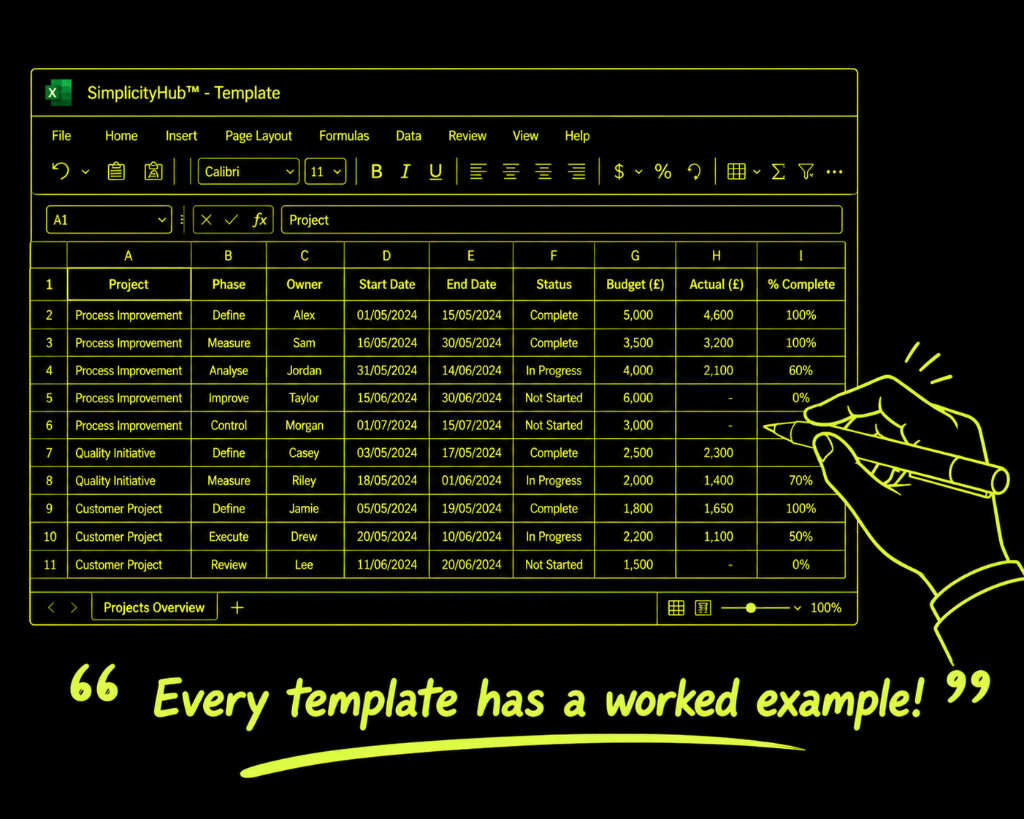
Worked example — Monthly Complaint Handling Audit
A completed audit checklist for the complaint handling process, showing compliance scores per section and corrective actions for three failed checks.
Common mistakes — and how to avoid them
Auditing from the desk, not the floor. An audit conducted by asking people 'do you follow the process?' will almost always produce a 100% compliance score. Observe the process being performed to get an honest picture.
Too many items on the checklist. A 50-item audit checklist takes an hour to complete and will not be done consistently. Focus on the 10–15 most critical steps. Shorter checklists get completed; longer ones get skipped.
No actions for failed checks. An audit that identifies non-compliance but produces no corrective actions is a documentation exercise. Every failed check needs a named owner and a due date for resolution.
Conducting audits at predictable times. If audits always happen on a Tuesday morning, the process will be 'performed correctly' on Tuesday morning. Vary the timing to get a representative picture of normal performance.
Tips for getting better results
Involve the team in designing the checklist. If the people being audited helped design the checklist, they understand what is being measured and why. This increases buy-in and the quality of the audit conversation.
Track trends over time. Plot audit scores on a run chart month by month. An improving trend confirms the improvement is being sustained. A declining trend is an early warning to investigate before KPIs slip.
Use audits as a coaching tool, not a policing tool. Frame audits as 'how can we help you follow the standard?' rather than 'are you doing it right?' The former builds capability; the latter builds resentment.
Download the Audit Checklist Template
A clean, editable Excel template for immediate use — structured, professional and ready to fill in.
Frequently asked questions
How often should audits be carried out?
Frequency depends on the risk level. For newly improved processes, audit weekly for the first month, then monthly. For stable, low-risk processes, quarterly is usually sufficient.
Who should conduct the audit?
Ideally someone independent of the process — a team leader, quality function, or peer from another area.
What happens when a checklist item fails?
Log the failure, identify the root cause, and raise a corrective action. Fix the underlying issue before re-auditing.
Should audit results be trended over time?
Yes. Track pass rates per section over time. A declining trend is an early warning that a control is slipping.
Advanced Toolkit Packs — available now
Structured, ready-to-use template packs designed for real improvement work. Pick the pack that matches your project and get started straight away.
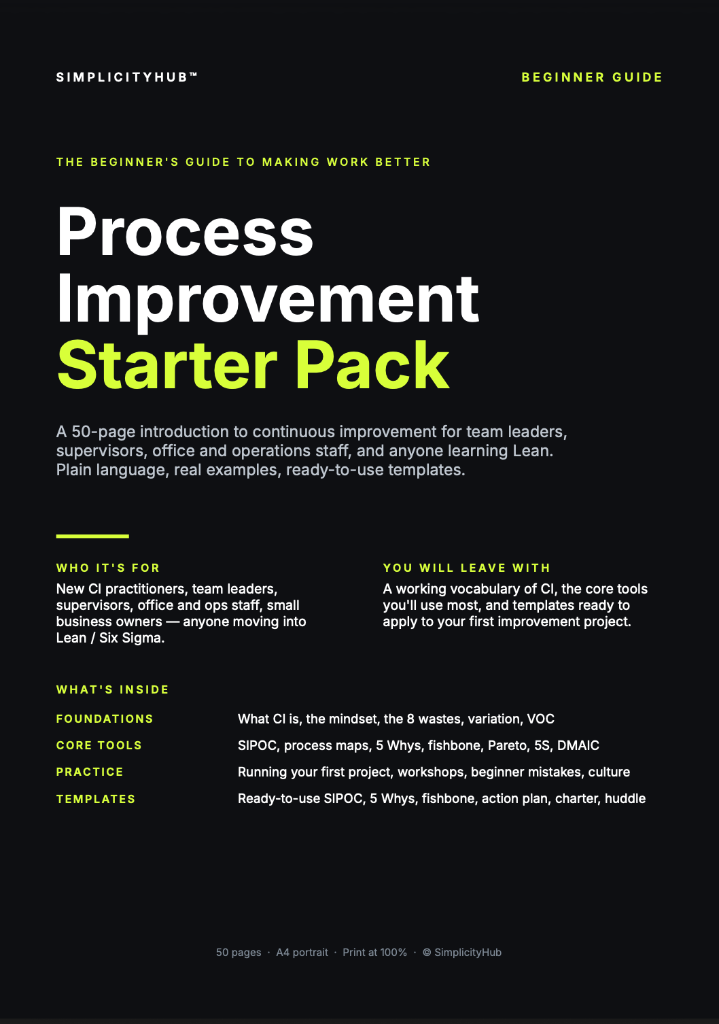
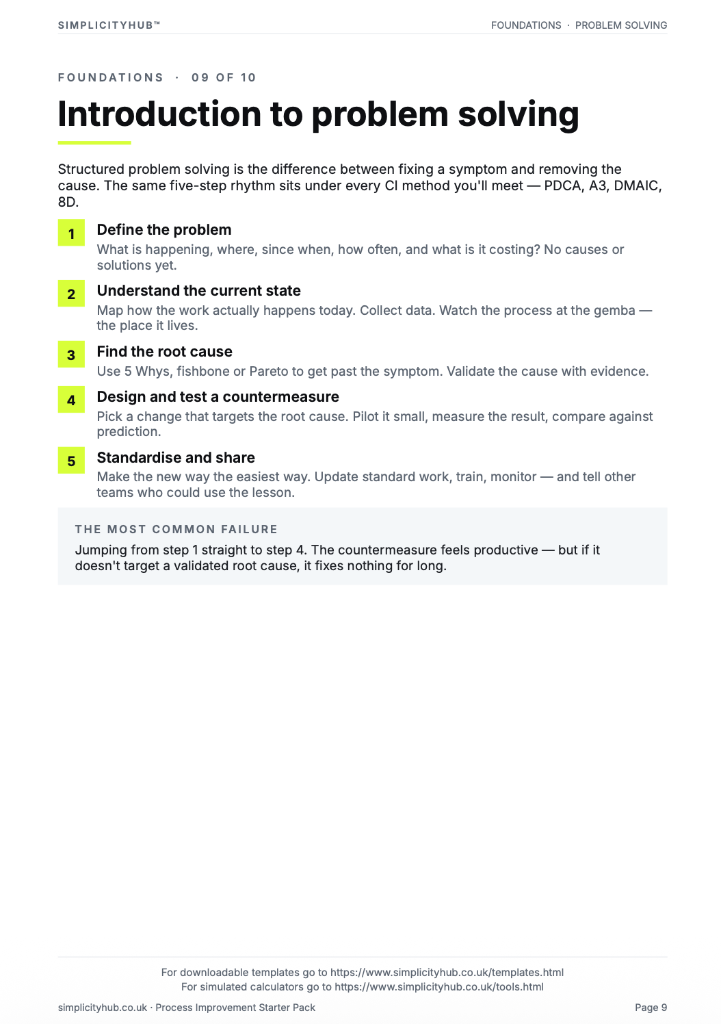
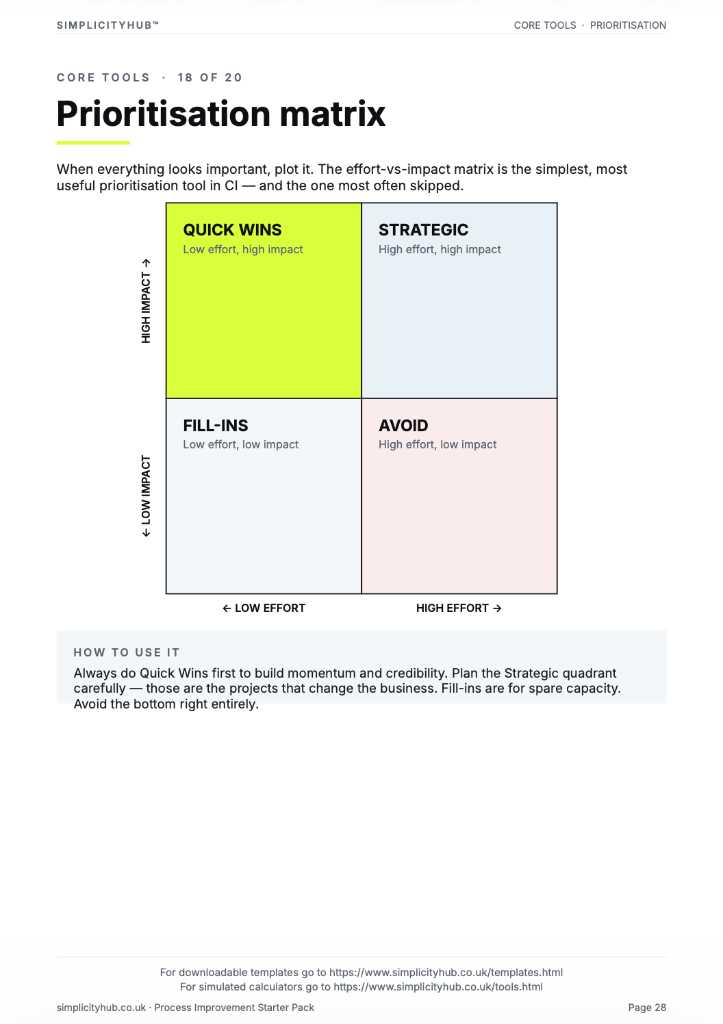
Process Improvement Starter Pack
A starter pack for identifying improvement opportunities, measuring baselines and planning action.
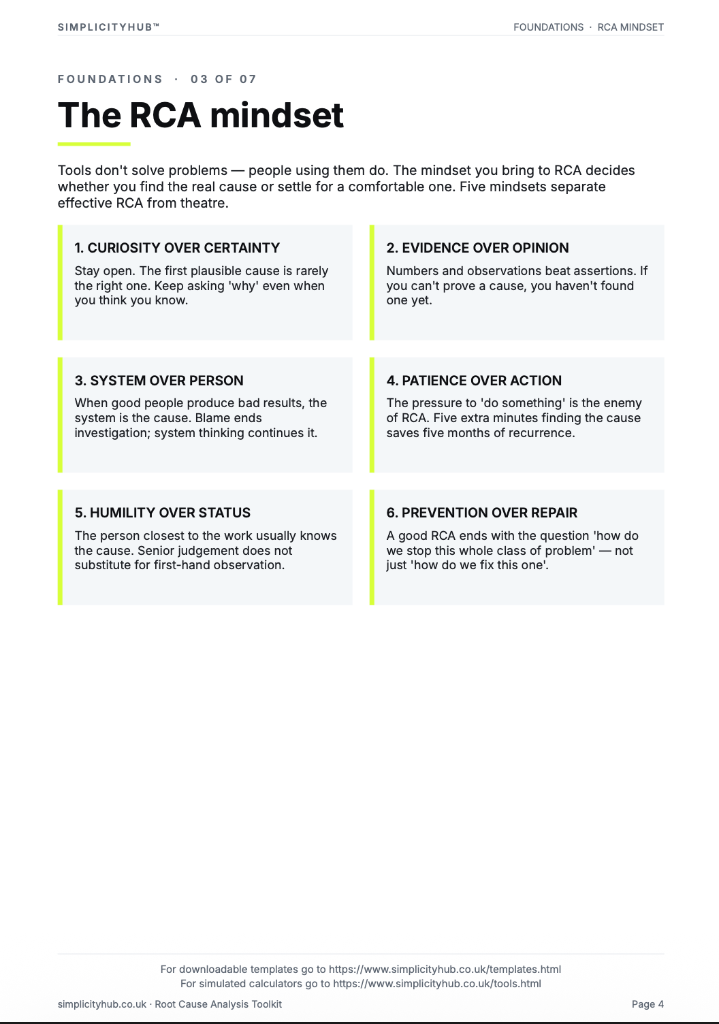
Root Cause Analysis Toolkit
A practical RCA toolkit for defining problems, finding causes, validating evidence and creating action.
A3 Template Pack
A clean A3 problem-solving pack for concise, visual improvement thinking and follow-through.