What is a Project Closure Report Template?
A project closure report formally documents the results of a completed DMAIC project — what was achieved, what was saved, what was handed over and what was learned. It is the definitive record of the project's outcomes and the basis for claiming and validating savings.
The closure report is signed off by the sponsor and, where relevant, validated by finance. It marks the formal transition of the improved process from the project team to the process owner.
Completed in the Control phase, the closure report serves multiple audiences: the sponsor who approved the project, the CI function tracking programme savings, and future project teams who can learn from this project's experience.
When to use a Project Closure Report Template
Complete a project closure report before formally closing any DMAIC project. Use it when:
- A project has reached the end of the Control phase and is ready for formal handover
- The sponsor needs to sign off that the project has achieved its stated goals
- Savings need to be formally validated and recorded in the CI savings tracker
- The project team is about to move on to new work and needs to formally disengage
Who should use a Project Closure Report Template
- Green Belts and Black Belts — as the final mandatory deliverable of every DMAIC project
- CI Managers — to validate and record savings in the programme tracker
- Finance Teams — to validate the financial claims before recording them
- Project Sponsors — to formally sign off on the project results and handover
Watch: a quick explainer
New to this? This short video walks you through writing up and closing out a Lean project (A3 style) — a helpful primer before you download and use the template.

How to complete the Project Closure Report
Write the closure report when the data confirms the improvement is real and sustained — not before. A closure report written before the Control phase data is available is premature and risks claiming savings that have not materialised.
How to complete the Project Closure Report — step by step
-
1Summarise the project in one paragraph
Describe the problem, the solution and the result in plain language. This section is read by senior leaders who may not know the project — write it for someone who is encountering it for the first time.
-
2Compare baseline to results
Present the before-and-after data for every metric in the goal statement. Use the same metrics, same units and same time periods as the baseline for direct comparison.
-
3Calculate and validate financial savings
Document the annual saving using the same calculation method as the business case. Have finance validate the figure. Record whether the saving is 'hard' (cash releasing) or 'soft' (cost avoidance or efficiency).
-
4Confirm handover status
List every handover item: SOP updated and signed off, control plan in place, process owner trained, monitoring dashboard active, sustainability plan agreed. Include the date each was completed.
-
5Document key risks and open actions
List any residual risks or open actions that the process owner needs to manage. Nothing should be left unresolved at closure — but if something is pending, it must be explicitly documented with an owner.
-
6Include lessons learned summary
Reference the lessons learned log and include the top three to five learning points in the closure report. This ensures they reach the audience most likely to act on them.
-
7Get sponsor sign-off
Present the closure report to the sponsor in a formal closure review meeting. Walk through the results, confirm the handover is complete and get written sign-off before the project is closed in the CI tracking system.
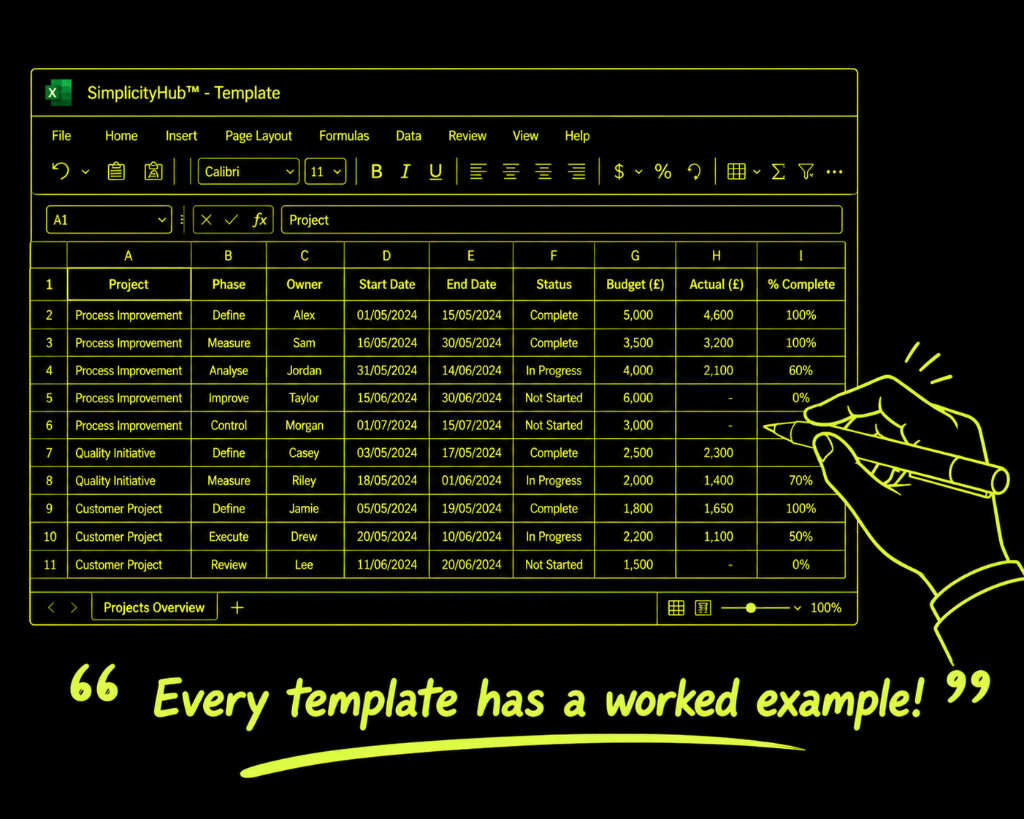
Worked example — Complaint Response Project Closure
A completed project closure report for a 12-week DMAIC project, showing baseline vs results, validated savings, handover checklist and sponsor sign-off.
Common mistakes — and how to avoid them
Closing before the improvement is proven. A closure report written before 4–6 weeks of post-improvement data is available cannot confirm the improvement is sustained. Wait for the data before closing.
Claiming savings without finance validation. Unvalidated savings claims are a credibility risk. Even a brief email confirmation from finance is better than self-declared savings. Build the validation step into the closure process.
No formal sponsor sign-off. A project that closes without sponsor sign-off has no confirmed stakeholder acceptance of the results. The sponsor's signature is the formal acknowledgement that the project has delivered what was agreed.
Closing without completing the handover. If the SOP is not updated, the control plan is not in place or the process owner is not trained, the project is not ready to close. Complete the handover before writing the closure report.
Tips for getting better results
Use a before-and-after visual. A chart showing the run chart before and after the improvement is the most compelling single element in a closure report. It tells the story immediately without needing to read the numbers.
Send the closure report to the CI community. With the sponsor's agreement, share the closure report (or a summary) across the CI community. It builds the knowledge base and gives the project team recognition for their work.
Schedule a 90-day follow-up. Before closing, schedule a 90-day follow-up review to confirm the improvement is still in place. Add it to the diary before the project closes — it is far less likely to happen if left to chance.
Download the Project Closure Report Template
A clean, editable Excel template for immediate use — structured, professional and ready to fill in.
Frequently asked questions
What should it include?
Project summary, original problem and goal, findings from each DMAIC phase, results versus target, benefits, and lessons learned.
Who approves it?
The sponsor. Their signature confirms the project is officially closed and handover is complete.
What if results fell short?
Document it honestly. Quantify what was achieved and explain the gap with data.
When should it be written?
Four to eight weeks after implementation when post-improvement data confirms gains are sustained.
Advanced Toolkit Packs — available now
Structured, ready-to-use template packs designed for real improvement work. Pick the pack that matches your project and get started straight away.
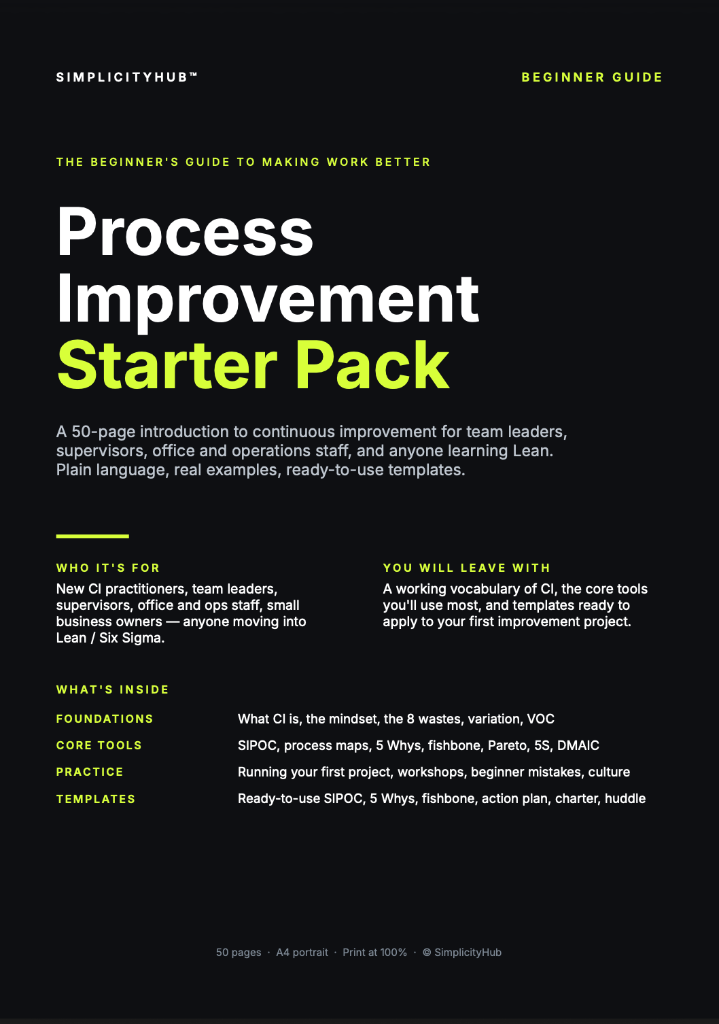
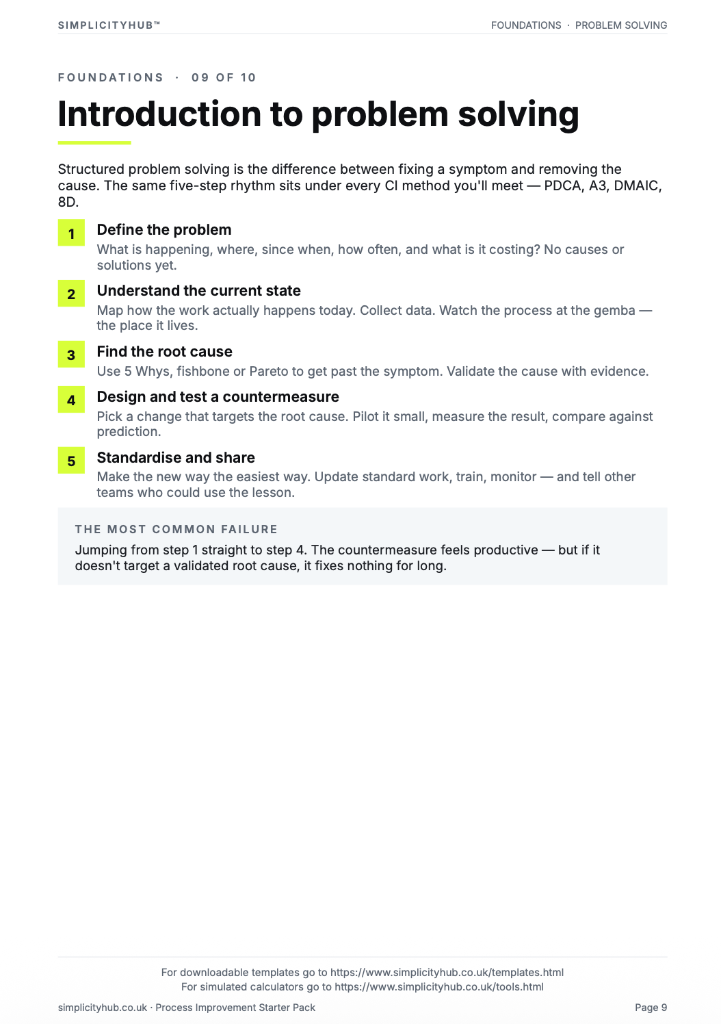
Process Improvement Starter Pack
A starter pack for identifying improvement opportunities, measuring baselines and planning action.
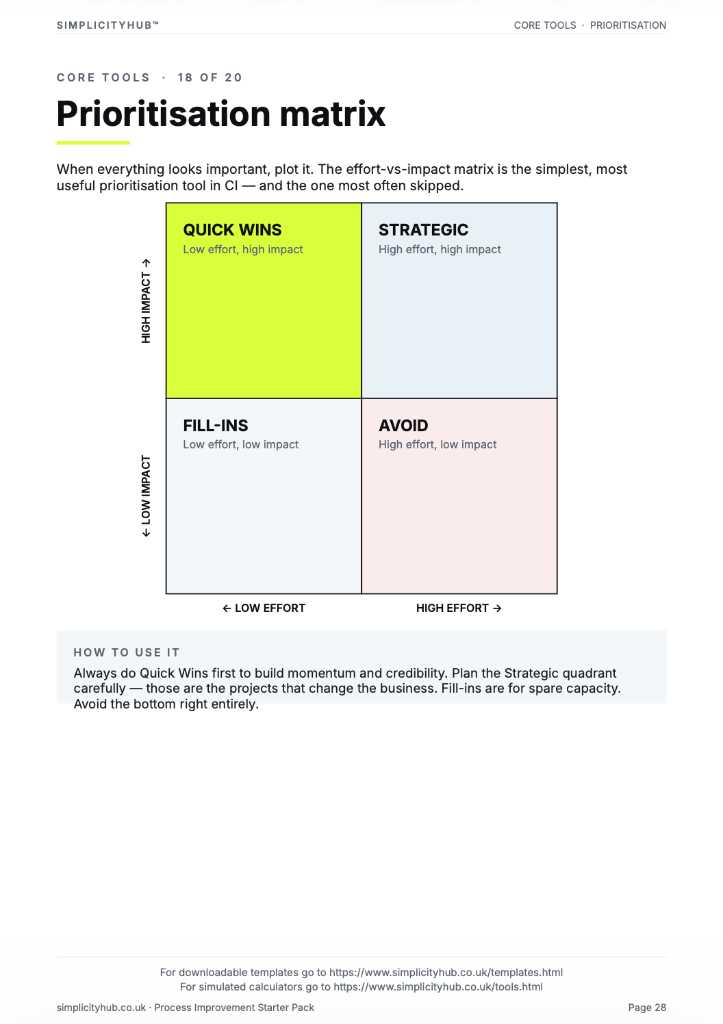
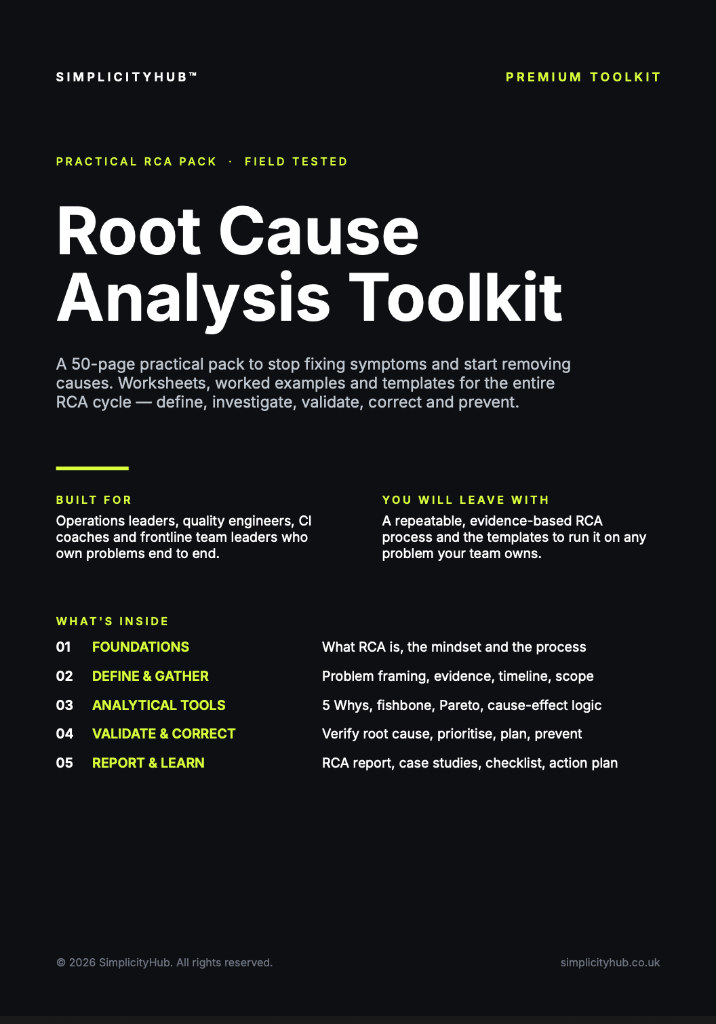
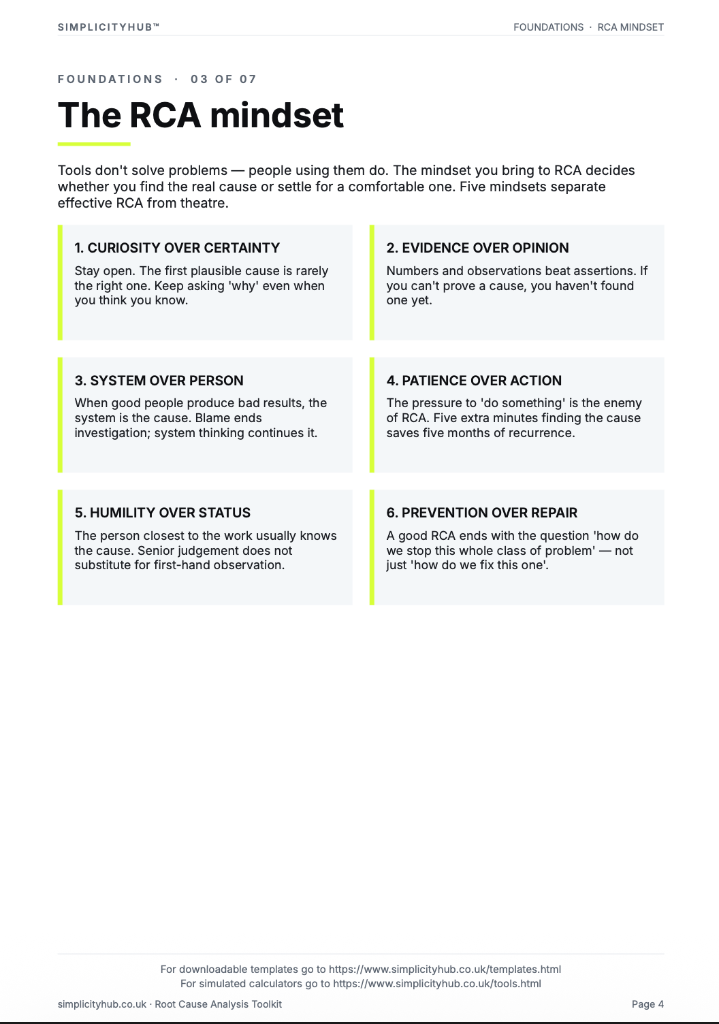
Root Cause Analysis Toolkit
A practical RCA toolkit for defining problems, finding causes, validating evidence and creating action.
A3 Template Pack
A clean A3 problem-solving pack for concise, visual improvement thinking and follow-through.