
What is a Handover Checklist Template?
A Handover Checklist Template provides a structured list of information and actions that must be communicated and confirmed when responsibility for a process, project or task transfers from one person or team to another. It prevents knowledge loss and operational failures at the handover point.
When to use a Handover Checklist Template
Use it at any point where work or responsibility transfers: shift handovers, project closure handovers to process owners, holiday cover arrangements or role transitions. It is particularly critical in high-risk or time-sensitive processes.
Who should use a Handover Checklist Template
- Outgoing shift leaders and operators — ensuring all critical information is communicated before leaving the process
- Incoming operators and team leaders — confirming all critical information has been received before taking responsibility
- Black Belts — transferring project ownership to the process owner at DMAIC project closure
- Operations managers — ensuring consistent handover standards across their team to prevent information gaps
Vote yes and we’ll prioritise a quick walkthrough showing you exactly how to use it.
How to use a Handover Checklist — step by step
- 1Define the handover scope
What process, project or task is being handed over? What period does the handover cover?
- 2Capture current status
Record the current state of all active work: what is complete, what is in progress, what is pending and what is blocked.
- 3Document open issues and risks
List every known problem, near-miss or risk, with its current status and the action being taken.
- 4Record upcoming priorities
List the top 3–5 priorities for the incoming person for the next period. Include deadlines and dependencies.
- 5Confirm escalation contacts
Verify the incoming person knows who to contact for each category of problem.
- 6Conduct a verbal walkthrough
A written checklist alone is not enough for high-risk handovers. Walk through it together verbally.
- 7Both parties sign off
A mutual sign-off confirms the handover is complete and shared responsibility has transferred cleanly.
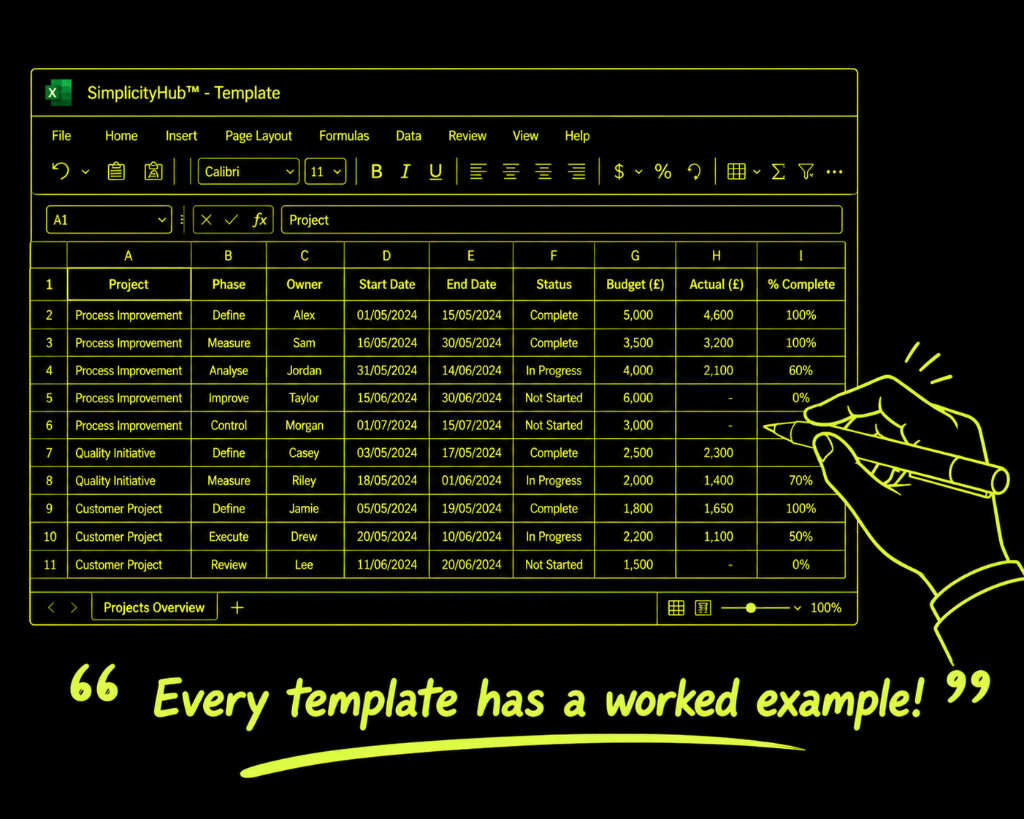
Worked example — ICU Shift Handover
A hospital intensive care unit implemented a structured handover checklist across all shifts — reducing post-handover adverse events by 38% by ensuring all active patient issues, pending results and priority actions were communicated consistently.
Common mistakes — and how to avoid them
Rushing the handover. A poorly executed handover is one of the highest-risk moments in any continuous process. Protect the time allocated to it.
Only handing over what went wrong. Incoming staff need to know everything that is active — not just the problems. Omitting routine but important items causes missed actions.
Not documenting — relying on verbal only. Verbal handovers lose critical detail. The checklist provides a written record that the incoming person can refer back to.
No sign-off. Without mutual sign-off, responsibility is ambiguous. Clear sign-off protects both parties and creates accountability.
Tips for getting better results
Time-box the handover. A structured 10–15 minute handover is more effective than an unstructured 30-minute one. Use the checklist to keep it focused.
Standardise across all shifts and roles. Inconsistent handover practices create gaps that only become visible when something goes wrong. One standard checklist for all.
Review after every significant incident. If an incident traces back to a handover gap, update the checklist immediately. It should evolve with experience.
Frequently asked questions
What should be handed over?
Control plan, updated SOPs, training records, monitoring schedule, escalation guide, and the project closure report.
Who signs off the handover?
Both the project lead and process owner, with the sponsor as witness.
What if the process owner is not ready?
Do not force the handover. Identify gaps and agree a completion date.
What happens to project files after handover?
Archive in a shared location the process owner can access long after the project closes.
Advanced Toolkit Packs — available now
Structured, ready-to-use template packs designed for real improvement work. Pick the pack that matches your project and get started straight away.
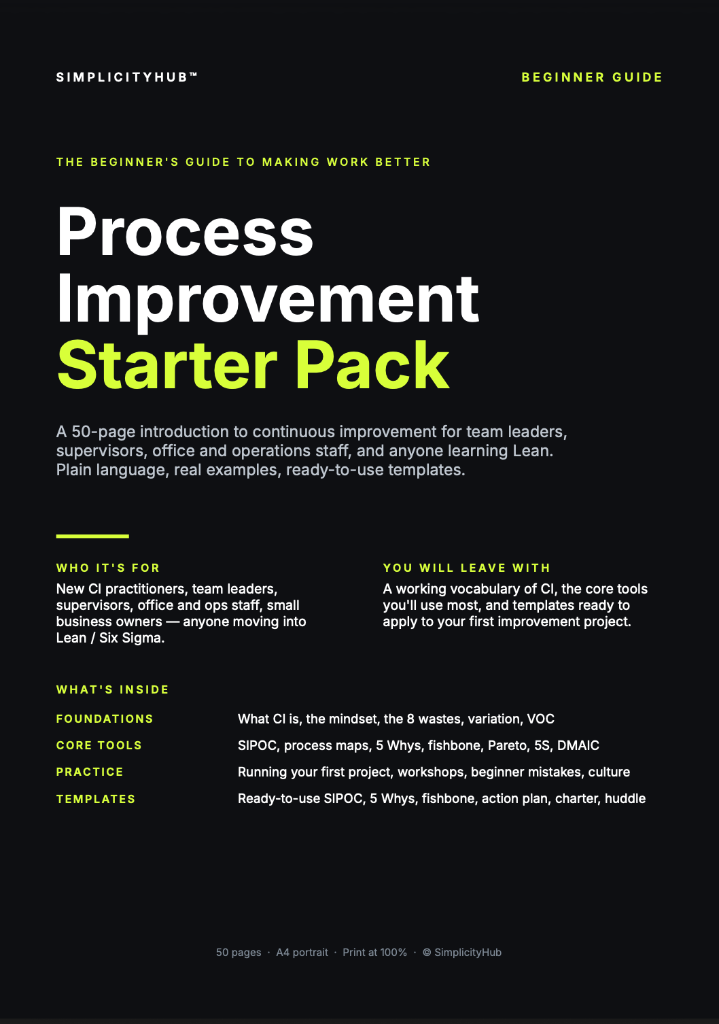
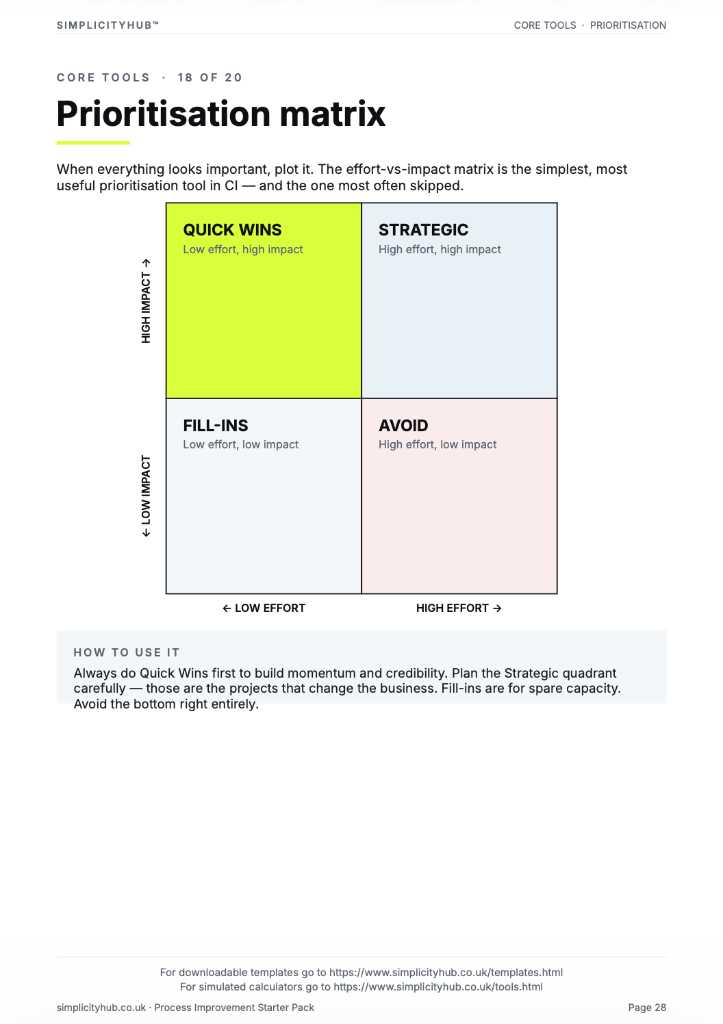
Process Improvement Starter Pack
A starter pack for identifying improvement opportunities, measuring baselines and planning action.
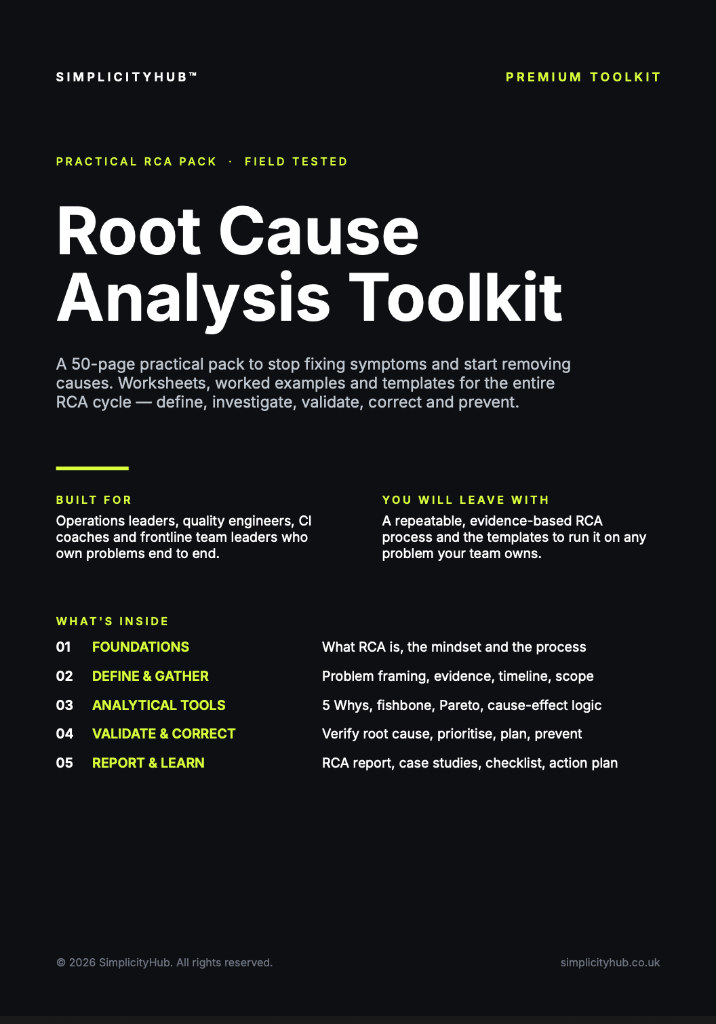
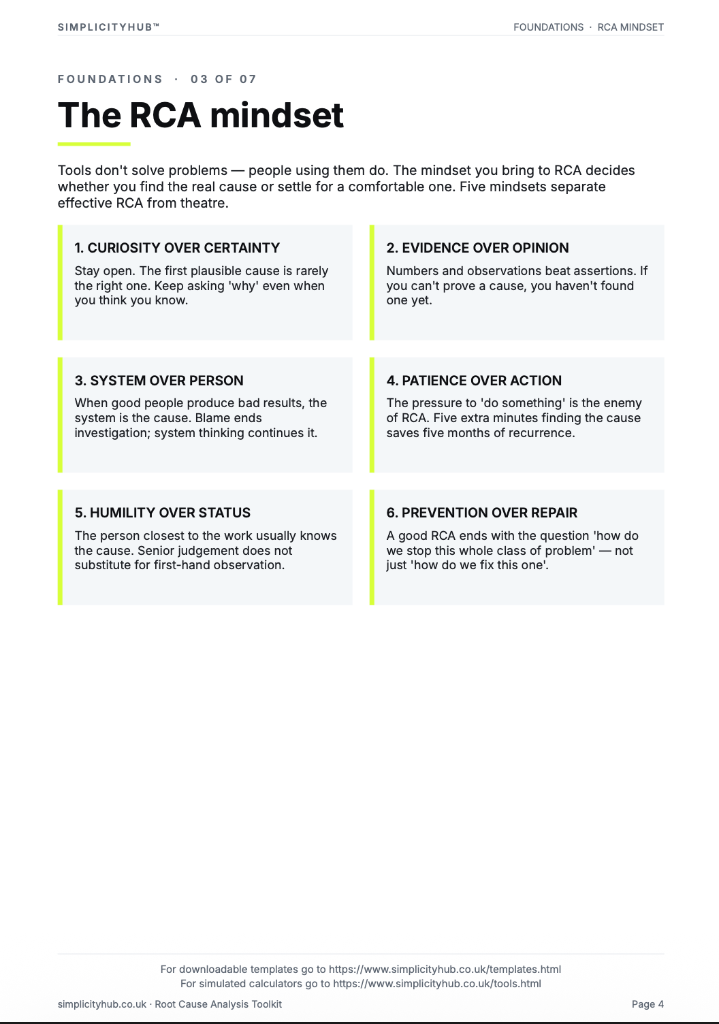
Root Cause Analysis Toolkit
A practical RCA toolkit for defining problems, finding causes, validating evidence and creating action.
A3 Template Pack
A clean A3 problem-solving pack for concise, visual improvement thinking and follow-through.