What is a Simple Solution List Template?
A Simple Solution List Template provides a lightweight structured format for capturing and quickly evaluating a list of potential solutions to a confirmed problem. It is designed for teams that need to move from root cause to action quickly without the formality of a full Solution Selection Matrix.
When to use a Simple Solution List Template
Use it in the Improve phase when you have a clear root cause and a small number of candidate solutions. For more complex decisions with many options and competing priorities, use a Solution Selection Matrix or Pugh Matrix instead.
Who should use a Simple Solution List Template
- Team leaders and supervisors — quickly evaluating and selecting improvement actions for straightforward problems
- Yellow Belts and new Green Belts — working with a simple decision tool before advancing to weighted criteria matrices
- Kaizen event teams — rapidly shortlisting solutions during a time-pressured improvement sprint
- Process owners — making structured improvement decisions without needing a formal project
Vote yes and we’ll prioritise a quick walkthrough showing you exactly how to use it.
How to use a Simple Solution List — step by step
- 1List all candidate solutions
Write every realistic solution to the root cause. Include simple and complex options — filter later.
- 2Confirm each solution addresses the root cause
For each solution, ask: does this directly address the validated root cause? Remove any that don't.
- 3Rate ease of implementation
Simple rating: Easy (can be done this week), Medium (requires some coordination), Hard (requires significant resource or approval).
- 4Rate expected impact
High (likely to fully resolve the problem), Medium (partially resolves), Low (limited impact).
- 5Identify the top candidates
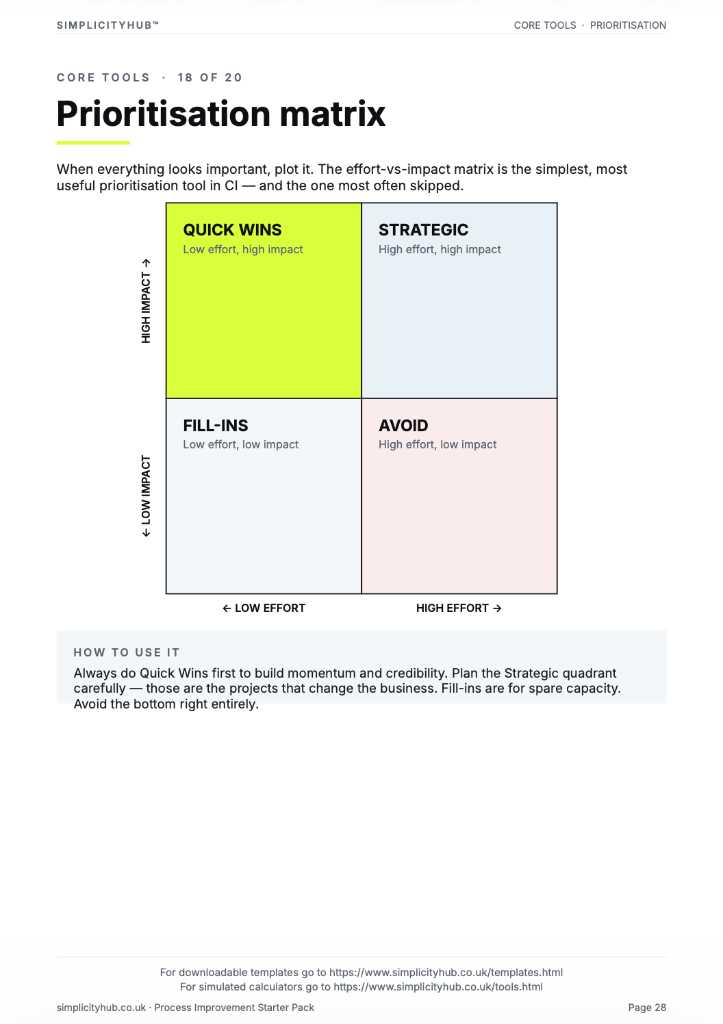
Solutions rated High impact and Easy or Medium are your priority candidates.
- 6Select and assign
Choose the best solution(s), assign an owner and set a target completion date.
- 7Review after implementation
Confirm the solution has resolved the problem. If not, return to the list and try the next candidate.
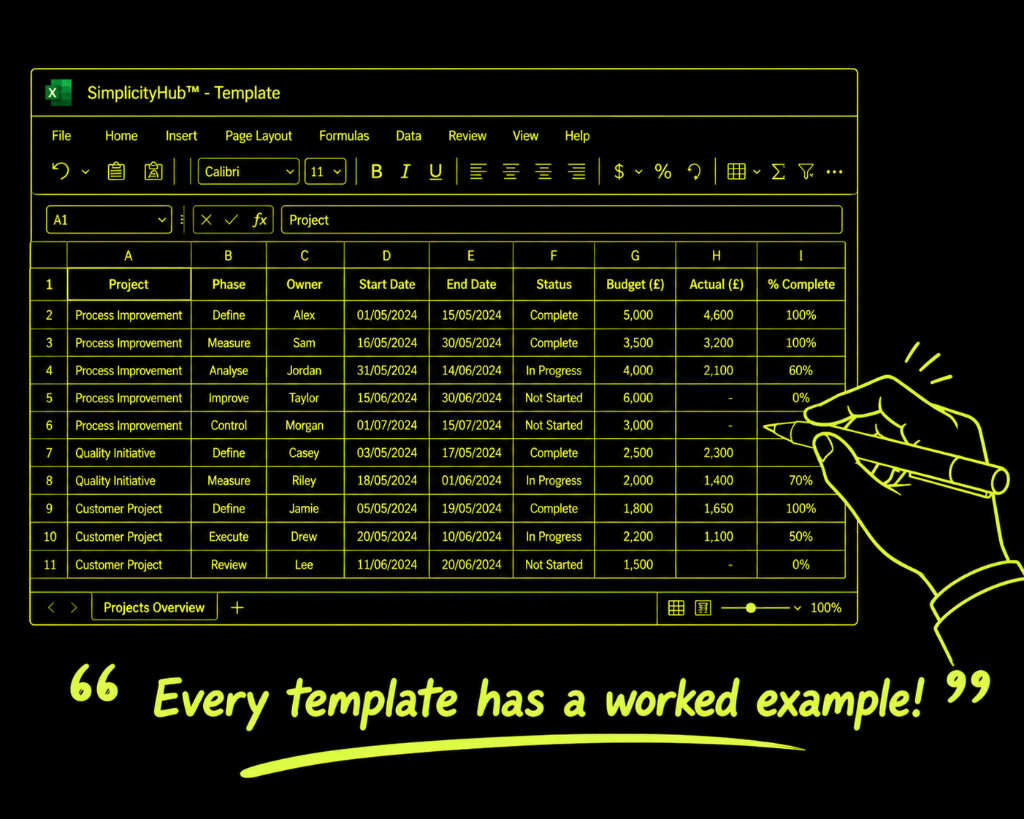
Worked example — Reducing Meeting Over-runs
A project team listed 8 solutions to meeting over-runs, confirmed 5 addressed the root cause (no time allocations on agendas), rated them on ease and impact, and selected 'mandatory timed agenda' as the highest-impact, easiest solution — implementing it within 48 hours.
Common mistakes — and how to avoid them
Selecting the easiest solution instead of the most effective. Ease of implementation is important but should not override impact. An easy solution that doesn't fix the problem wastes time.
Skipping the root cause check. Every solution on the list should be traceable to the validated root cause. Solutions that address symptoms will not hold.
Too many solutions on the list. More than 8–10 options suggests the problem scope is too broad. Narrow the problem statement first, then generate solutions.
No implementation follow-through. A solution selected but not implemented is an idea, not an improvement. Assign an owner and a deadline before the meeting ends.
Tips for getting better results
Do this as a team activity. Five people generating solutions in 15 minutes produces better options than one person spending an hour alone.
Time-box the selection. 30 minutes maximum for solution listing and selection. Speed and momentum matter more than perfection in a simple solution exercise.
Revisit at 2 weeks. A quick 2-week check-in confirms whether the selected solution is working. If not, the second-ranked option is already documented and ready.
Frequently asked questions
When should I generate solutions?
Only after validating root causes. Jumping to solutions before understanding causes is why many projects fail.
How many solutions should I generate?
At least 10-15. Quantity first, quality assessment second.
Should all ideas be captured even if impractical?
Yes. Impractical ideas can spark better ones.
How do I move from list to implementation?
Use a prioritisation tool to select the best, then build into an action plan with owners and dates.
Advanced Toolkit Packs — available now
Structured, ready-to-use template packs designed for real improvement work. Pick the pack that matches your project and get started straight away.
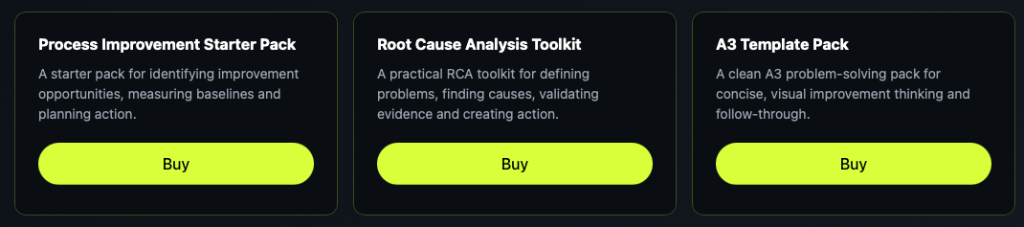
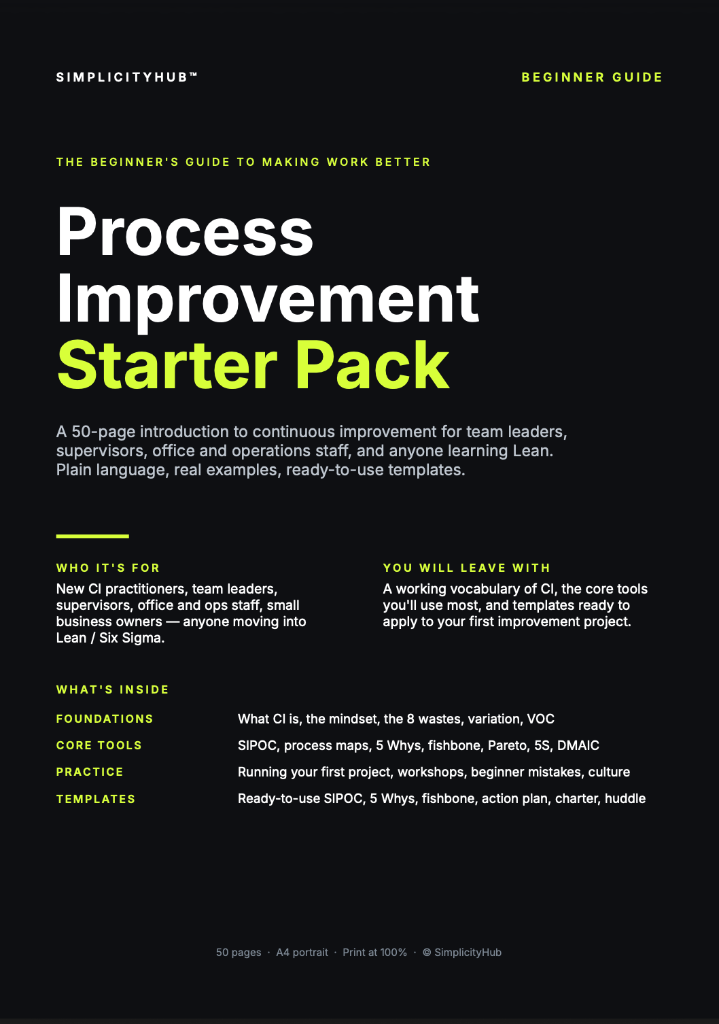
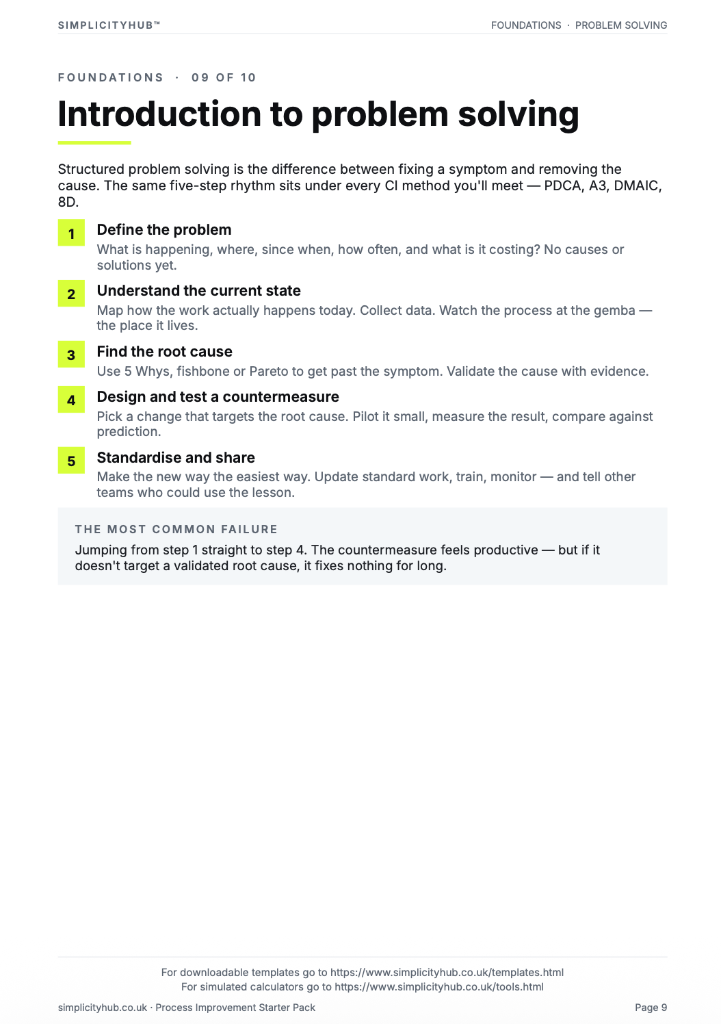
Process Improvement Starter Pack
A starter pack for identifying improvement opportunities, measuring baselines and planning action.
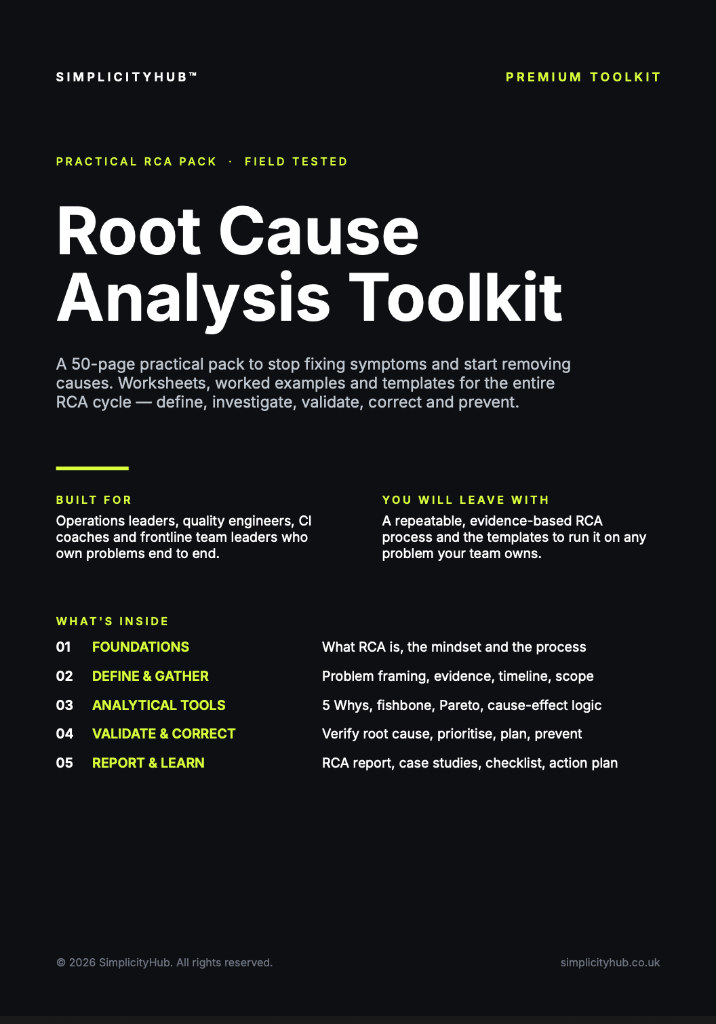
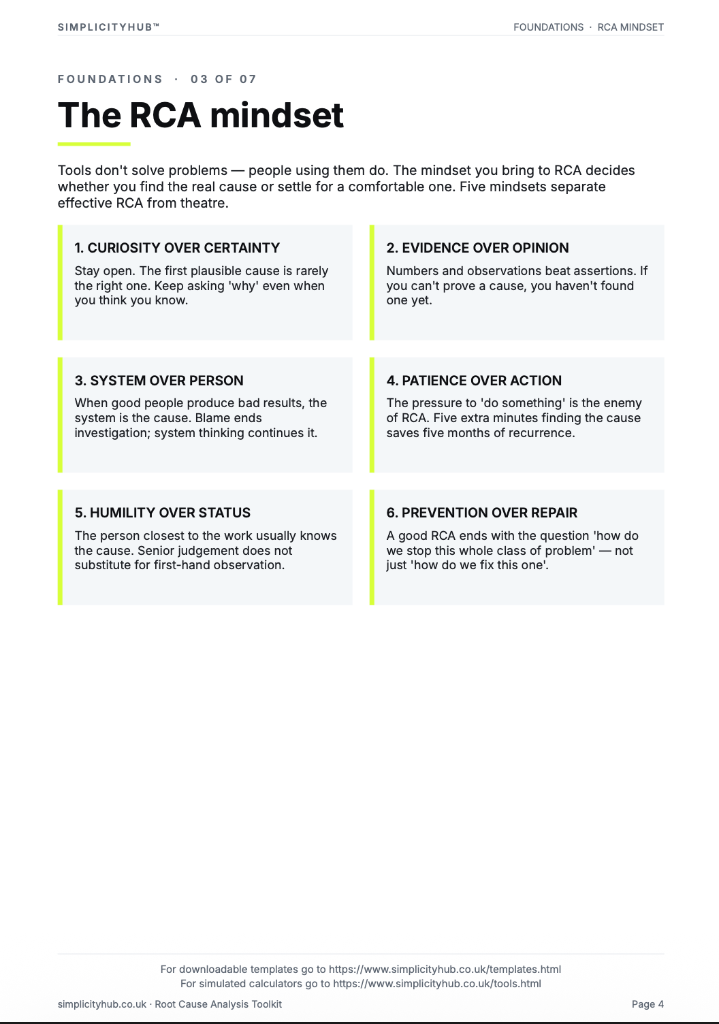
Root Cause Analysis Toolkit
A practical RCA toolkit for defining problems, finding causes, validating evidence and creating action.
A3 Template Pack
A clean A3 problem-solving pack for concise, visual improvement thinking and follow-through.